













Unlocking Your Game: The Ultimate Guide to Bowling Ball Dimensions in 2026
A comprehensive guide covering the precise dimensions, weights, and regulations for all major bowling ball types, including Ten-pin, Duckpin, and Candlepin. Learn how size affects performance and navigating USBC rules.
- Introduction: What Are Bowling Ball Dimensions and Why Do They Matter?
- The Standard: Ten-Pin Bowling Ball Dimensions
- Diameter and Circumference
- Weight Limits and Tolerances
- Beyond Ten-Pin: Dimensions of Other Bowling Ball Types
- Duckpin Bowling Balls
- Five-Pin Bowling Balls
- Candlepin Bowling Balls
- Nine-Pin Bowling Balls
- Comparative Table: Bowling Ball Dimensions
- The Rulebook: USBC and PBA Regulations on Bowling Ball Dimensions
- Key Regulatory Changes
- PBA Professional Standards
- How Dimensions Influence Your Game and Ball Performance
- Inner World: Core Dimensions and Their Dynamic Influence
- Customizing Your Fit: Pro Shop Drilling and Ball Dimensions
- Drilling and Diameter
- Legal Weightouts
- The Evolution of Bowling Ball Dimensions: A Historical Perspective
- Choosing the Right Bowling Ball Dimensions for Your Style
- Conclusion: Mastering Your Game Starts with Understanding Dimensions
- Frequently Asked Questions
- What are the standard bowling ball dimensions for ten-pin bowling?
- Are bowling ball dimensions the same for all types of bowling?
- How does bowling ball diameter affect performance?
- What is the maximum weight for a USBC-approved bowling ball?
- Can I alter the dimensions of my bowling ball?
- What is the role of a pro shop in relation to bowling ball dimensions?
- How do bowling ball dimensions compare between ten-pin and duckpin?
- Are there minimum diameter requirements for bowling balls?
- References
Introduction: What Are Bowling Ball Dimensions and Why Do They Matter?
In the world of precision sports, few factors are as critical yet often overlooked as the physical constraints of the equipment. While many players focus on coverstock chemistry or core dynamics, the fundamental bowling ball size and weight form the baseline of every shot you throw. Understanding these dimensions is not merely academic; it is the blueprint for fair play and the key to unlocking your potential on the lanes.
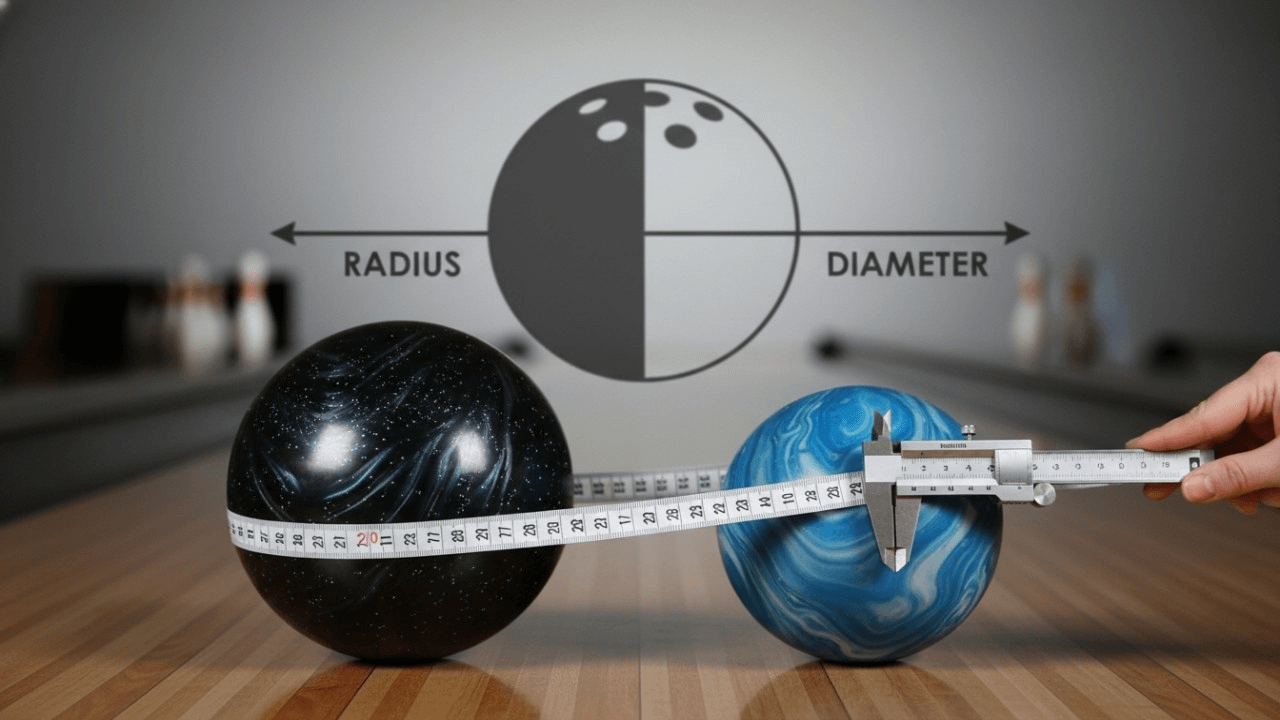
When we discuss "dimensions," we are distinguishing physical measurements—diameter, circumference, and weight—from the broader category of "specifications," which often includes dynamic properties like the Radius of Gyration (RG). According to the USBC bowling ball regulations, strict dimensional tolerances ensure that no player has an unfair mechanical advantage. Whether you are a league bowler looking to improve your carry or a pro shop operator drilling a custom fit, knowing how specific dimensions impact hook potential, speed control, and energy transfer is essential for mastering the modern game.
The Standard: Ten-Pin Bowling Ball Dimensions
Ten-pin bowling is the most globally recognized form of the sport, and its equipment is subject to rigorous standardization by the United States Bowling Congress (USBC). These measurements define the boundaries within which manufacturers must engineer their high-performance equipment.
Diameter and Circumference
The ten pin bowling ball diameter is strictly regulated to ensuring uniformity. A ball must have a minimum diameter of 8.500 inches (21.59 cm) and a maximum of 8.595 inches (21.83 cm). While this range seems narrow, even a fraction of an inch variance can alter how the ball interacts with the lane surface.
Correspondingly, the bowling ball circumference must measure between 26.704 inches and 27.002 inches. These precise limits prevent the use of undersized balls that could reduce deflection off the pins, or oversized balls that might jam in ball returns.
Weight Limits and Tolerances
One of the most common questions regarding specifications concerns bowling ball weight limits. The USBC mandates a strict maximum weight of 16.00 pounds (7.26 kg). While there is technically no minimum weight for a ball to be legal, manufacturers typically produce balls ranging from 6 pounds up to the 16-pound limit to accommodate bowlers of all ages and physical abilities.
Crucially, the weight must be distributed evenly. Following the rule changes effective August 2020, balls weighing more than 10 pounds are allowed up to 3 ounces of static side, finger, or top weight difference, eliminating the need for balance holes to correct static imbalances.
Beyond Ten-Pin: Dimensions of Other Bowling Ball Types
While ten-pin dominates television screens, other variations of the sport rely on vastly different equipment. Understanding the types of bowling ball dimensions across these disciplines highlights the diversity of the sport.
Duckpin Bowling Balls
Duckpin bowling ball dimensions are significantly smaller than their ten-pin counterparts. These balls typically measure between 4.75 and 5.00 inches in diameter. Unlike ten-pin balls, they lack finger holes, requiring the bowler to palm the ball during delivery. The weight is also much lighter, generally restricted to a maximum of approximately 3 pounds 12 ounces.
Five-Pin Bowling Balls
Popular in Canada, five-pin bowling uses balls that are similar in size to duckpin balls. The Canadian 5 Pin Bowlers' Association (C5PBA) specifies that balls should have a diameter between 4.75 and 5.0 inches and weigh between 3 pounds 4 ounces and 3 pounds 12 ounces. Like duckpin, these balls are handheld without finger holes.
Candlepin Bowling Balls
Candlepin utilizes the smallest and lightest regulation balls in the sport. A candlepin ball has a diameter of 4.5 inches—barely larger than a softball—and a maximum weight of 2 pounds 7 ounces. This extreme lightness causes the ball to deflect significantly upon impact, making strikes (knocking down all pins with one ball) incredibly rare.
Nine-Pin Bowling Balls
Nine-pin bowling presents a unique split. In American nine-pin (predominantly played in Texas), bowlers use standard ten-pin equipment with finger holes. However, traditional European nine-pin (Kegel) uses a smaller ball without holes, typically measuring 16 cm (6.3 inches) in diameter and weighing roughly 2.85 kg.
Comparative Table: Bowling Ball Dimensions
|
Type |
Diameter (approx.) |
Weight (Max/Range) |
Finger Holes? |
|
Ten-Pin |
8.500" - 8.595" |
Max 16 lbs |
Yes (Max 5) |
|
Duckpin |
4.75" - 5.00" |
3 lbs 6 oz - 3 lbs 12 oz |
No |
|
Five-Pin |
4.75" - 5.00" |
3 lbs 4 oz - 3 lbs 12 oz |
No |
|
Candlepin |
4.50" |
Max 2 lbs 7 oz |
No |
|
Euro Nine-Pin |
6.30" (16 cm) |
~6.3 lbs (2.85 kg) |
No |
The Rulebook: USBC and PBA Regulations on Bowling Ball Dimensions
Compliance with USBC bowling ball regulations is non-negotiable for sanctioned play. The USBC serves as the national governing body, setting the standards that the Professional Bowlers Association (PBA) and local leagues follow.
Key Regulatory Changes
The landscape of bowling ball dimensions and drilling saw a seismic shift with the 2020 rule change regarding balance holes. Previously, pro shops could drill an extra non-gripping hole to adjust a ball's static weight. As stated by the USBC Equipment Specifications Manual, balance holes are now prohibited. To compensate, the allowance for static side, thumb, and finger weight was increased to 3 ounces. This change ensures that ball motion is determined primarily by the manufacturer's core design and the bowler's skill, rather than artificial manipulation of static weight.
PBA Professional Standards
While the PBA follows USBC equipment rules, they often enforce stricter checks on bowling ball circumference and hardness during televised events. A ball that is softened by chemical cleaners or usage below the minimum hardness of 72 Durometer D is deemed illegal, as it creates an unfair traction advantage on the lane oil.
How Dimensions Influence Your Game and Ball Performance
It is vital to understand how bowling ball dimensions affect performance physically on the lane. The interplay between size, mass, and friction dictates the ball's journey from foul line to pit.
1. Diameter and Contact Patch: A larger diameter creates a larger contact patch with the lane. This increases the surface area available to generate friction, which is essential for the hook phase. Conversely, the smaller diameter of a duckpin ball creates less friction, leading to a straighter ball path.
2. Weight and Carry: Heavier balls (15-16 lbs) carry more kinetic energy into the pins, reducing deflection. A lighter ball may hit the pocket at the same angle but deflect off the head pin, leaving corner pins standing.
3. Circumference and Roll: The bowling ball circumference determines how many rotations the ball makes to cover the 60 feet to the pins. A standard ten-pin ball rotates fewer times than a smaller candlepin ball to cover the same distance, affecting how the core migrates and when the ball enters its "roll" phase.
Inner World: Core Dimensions and Their Dynamic Influence
While the outer dimensions are standardized, the inner dimensions of the weight block (core) vary wildly. The physical size and density shape of the core determine the Radius of Gyration (RG).
· Low RG Cores: These are often physically denser and centered, helping the ball rev up quickly.
· High RG Cores: These have mass distributed further from the center, delaying the hook.
Manufacturers manipulate these internal dimensions to fine-tune ball reaction. However, the outer shell must always remain within the strict diameter and roundness tolerances to ensure the ball rolls true.
Customizing Your Fit: Pro Shop Drilling and Ball Dimensions
The most practical application of dimensional knowledge occurs in the pro shop.
Drilling and Diameter
The ten pin bowling ball diameter dictates the curvature of the ball's surface, which directly impacts how finger and thumb holes are drilled. A pitch (angle of the hole) that works on a flat surface would feel drastically different on the curved surface of a sphere. Pro shop operators use precise jigs to account for the ball's curvature, ensuring the holes align with the bowler's natural hand anatomy.
Legal Weightouts
When a ball is drilled, mass is removed. Pro shops must weigh the ball post-drilling to ensure it remains within the bowling ball weight limits and static weight tolerances. With the elimination of balance holes, getting the layout right the first time is more critical than ever, as drillers can no longer simply drill a hole to remove excess side weight.
The Evolution of Bowling Ball Dimensions: A Historical Perspective
Bowling balls have not always been the precision-engineered spheres we see today. In the 19th century, balls were made of Lignum vitae, a dense hardwood. These organic materials made maintaining consistent dimensions nearly impossible, as wood would warp with humidity.
The introduction of hard rubber in the early 20th century allowed for the standardization of the bowling ball size. The USBC (then ABC) established the 27-inch circumference standard to ensure uniformity across the growing number of bowling centers in America. Today, while materials have shifted to polyester, urethane, and reactive resin, the physical dimensions remain a sacred constant, preserving the historical integrity of scoring records.
Choosing the Right Bowling Ball Dimensions for Your Style
Selecting the right equipment goes beyond picking a favorite color. It requires matching dimensions to your physical game.
· Weight Selection: A general rule of thumb is to use a ball that is approximately 10% of your body weight, up to the 16-pound maximum. However, modern reactive resin cores allow bowlers to drop to 14 or 15 pounds without sacrificing pin carry, thanks to improved energy transfer.
· Hand Size and Span: The span (distance between thumb and finger holes) is derived from your hand's dimensions but constrained by the ball's surface area. A proper fit ensures you can impart rotation without squeezing, reducing injury risk.
Conclusion: Mastering Your Game Starts with Understanding Dimensions
Mastering the sport of bowling requires more than just a consistent arm swing; it demands a deep respect for the tools of the trade. From the strict bowling ball circumference limits that ensure fair competition to the internal core engineering that creates hook, every fraction of an inch matters. Whether you are throwing a massive 16-pound ten-pin ball or a palm-sized candlepin sphere, understanding these dimensions empowers you to make smarter gear choices and interpret lane play with greater clarity. As 2026 approaches, technology may evolve, but the dimensions that define the game remain the solid foundation of every strike.
Frequently Asked Questions
What are the standard bowling ball dimensions for ten-pin bowling?
Ten-pin bowling balls must have a diameter between 8.500 and 8.595 inches (21.59-21.83 cm) and a circumference between 26.704 and 27.002 inches. The maximum weight permitted is 16 pounds (7.26 kg).
Are bowling ball dimensions the same for all types of bowling?
No. Types of bowling ball dimensions vary significantly. Duckpin and Five-pin balls are roughly 4.75-5.0 inches in diameter, while Candlepin balls are even smaller at 4.5 inches. Only American Nine-pin uses standard ten-pin equipment.
How does bowling ball diameter affect performance?
Diameter influences the contact area with the lane. A larger diameter creates more friction potential and deflection resistance. Variations in diameter within the allowed tolerance can subtly affect the ball's roll phase and pin carry.
What is the maximum weight for a USBC-approved bowling ball?
The USBC bowling ball regulations mandate a maximum weight of 16 pounds (7.26 kg). There is no official minimum weight, but most adult performance balls start around 10-12 pounds.
Can I alter the dimensions of my bowling ball?
You cannot alter the physical diameter or circumference. However, you can alter the surface texture (sanding/polishing) and drill gripping holes. Since 2020, drilling weight/balance holes is prohibited.
What is the role of a pro shop in relation to bowling ball dimensions?
Pro shop experts measure your hand to map it onto the ball's spherical dimensions. They ensure that after drilling, the ball's static weights remain within the 3-ounce tolerance allowed by USBC rules.
How do bowling ball dimensions compare between ten-pin and duckpin?
Ten-pin balls are roughly 8.5 inches in diameter and up to 16 lbs. Duckpin balls are approximately 5 inches in diameter and weigh under 4 lbs. This massive difference requires completely different throwing techniques.
Are there minimum diameter requirements for bowling balls?
Yes. For a ten-pin ball to be legal in sanctioned play, it must meet the minimum diameter of 8.500 inches. Balls that fall below this due to excessive resurfacing may be deemed illegal.
References
· BOWL.com: USBC Equipment Specifications and Certifications Manual
· National Duckpin Bowling Congress: Basics

Quality Bowling

Company
Do you have internationally certified production qualifications?
Our factory has passed ISO 9001 quality management system certification, and our products meet ASTM international bowling equipment standards.
Products
What is the noise level of the equipment?
We are well aware of the importance of a quiet and comfortable environment for bowling, so we designed sound insulation cotton and shock-absorbing pads in the equipment area and the lane area to fully reduce the noise and vibration of the equipment during operation, creating a quiet and comfortable sports space for you, allowing you to focus more on enjoying the fun of bowling.
Technology
Is there any charge for remote technical guidance?
Free lifetime remote video diagnostic service to quickly resolve software/settings issues
Installations
Was the equipment installed by professional technicians?
The installation team we dispatched is composed of professional technicians who have undergone rigorous assessment and training and have rich experience in bowling equipment installation. The team uses digital debugging tools throughout the process to ensure that each component of the equipment can be accurately installed and debugged to achieve optimal operating conditions.
Service
Is there any training or guidance service to help customers use the equipment better?
Free on-site or remote training, with a Chinese-English bilingual operation manual + fault code quick reference table to help customers use the equipment better.
You May Also Like
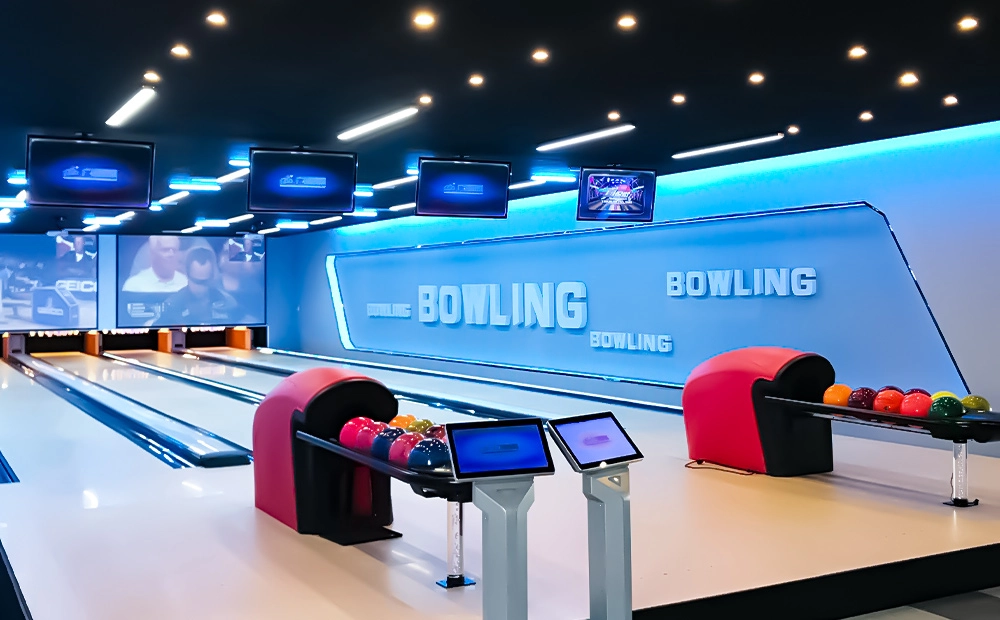
Flying Smart Duckpin Bowling
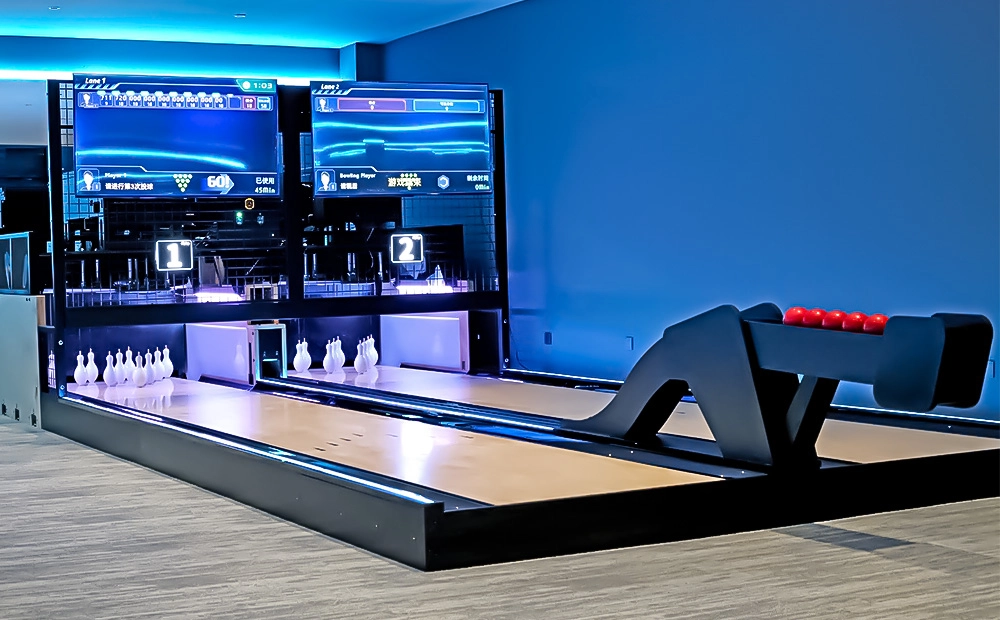
The innovative design of Flying Smart Duckpin Bowling (FSDB) makes it perfect for places like bars, billiard halls, and game centers. It makes people want to come back more often and spend more money. FSDB is fun and competitive, so it will become a new focus for social activities.
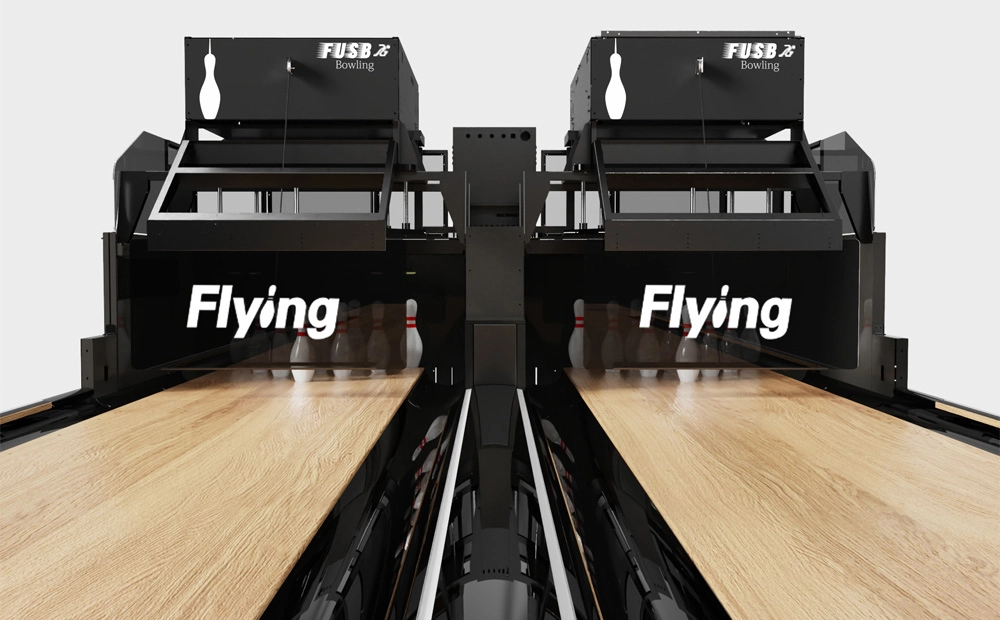
Flying Classic Standard Bowling
Flying Classic Standard Bowling (FCSB) employs the World Standard Competition Scoring System to deliver a more professional bowling experience, enabling bowlers to enjoy a professional-standard match at their convenience.
Flying Ultra Standard Bowling
Flying Ultra Standard Bowling (FUSB) Upgraded Version
The string pinsetter uses the latest technology. It offers a more enjoyable bowling experience thanks to its innovative designs and modern technology.

Get in touch
Contact us
If you contact us now for more details, we can provide you with a custom bowling alley service.
Our service team will get back to you within 24 hours, normally!



Professional Bowling Alley Equipment Manufacturer, a one-stop solution provider for bowling alleys.
Facebook
YouTube
Linkedin
Twitter