


The Ultimate Guide to the Top 15 Bowling Ball Brands [2026 Rankings & Review]
A comprehensive ranking of the top 15 bowling ball brands for 2026, analyzing the dominance of Storm and Brunswick, the rise of independents like Motiv, and the latest technology trends in AI cores and coverstocks.
- Key Takeaways: The 2026 Bowling Brand Landscape
- Understanding the "Big Two" vs. The Independents
- 1. The Storm Ecosystem (Utah-Based)
- 2. The Brunswick Umbrella (Mexico-Based)
- 3. The Independent Contender (Michigan-Based)
- Top 15 Bowling Ball Brands Ranked [2026 Review]
- 1. Storm Bowling
- 2. Hammer Bowling
- 3. Motiv Bowling
- 4. Brunswick Bowling
- 5. Roto Grip
- 6. 900 Global
- 7. Ebonite
- 8. DV8 Bowling
- 9. Columbia 300
- 10. Radical Bowling
- 11. Track Bowling
- 12. Pyramid Bowling
- 13. Swag / California Bowling
- 14. Lane Masters / Legends
- 15. OnTheBallBowling (OTBB)
- 2026 Technology Trends: What's New Inside the Ball?
- Symmetrical vs Asymmetrical Cores in the A.I. Era
- The Rise of "Super-Coverstocks"
- Expert Tips: Choosing the Right Brand for Your Style
- Common Mistakes When Selecting a Brand
- FAQ
- What is the number one bowling ball brand used by pros?
- Are Hammer and Ebonite the same company?
- Which bowling ball brand is best for beginners?
- What is the best bowling ball brand for heavy oil?
- References
Key Takeaways: The 2026 Bowling Brand Landscape
The global bowling market in 2026 is dominated by two massive conglomerates and one fierce independent manufacturer.
While there are dozens of logos on the wall at your local pro shop, most of them come from just three factories. Understanding this hierarchy is the first step to making an informed purchase.
- Top Pick for Innovation: Storm Products (Pioneers of A.I. Core Technology).
- Top Pick for Power: Hammer (Home of the legendary Black Widow series).
- Top Pick for Quality: Motiv (The only major independent US manufacturer).
- Top Pick for Value: Pyramid (Direct-to-consumer pricing).
Understanding the "Big Two" vs. The Independents
Almost every major bowling ball brand is owned by either Storm Products or Brunswick Bowling Products, with Motiv standing as the primary independent rival.
This consolidation means that Bowling Ball Manufacturing Technology is often shared across brands within the same family. For example, a coverstock advance in Brunswick's main line often trickles down to DV8 or Radical.
1. The Storm Ecosystem (Utah-Based)
Storm Products Inc. focuses heavily on scent-infused coverstocks and rapid core innovation. Their umbrella includes:
- Storm: The flagship brand known for strong backend motion.
- Roto Grip: Focuses on control and heavy oil traction.
- 900 Global: Offers tournament-level performance with controlled aggression.
2. The Brunswick Umbrella (Mexico-Based)
Brunswick owns the largest portfolio of historic brands, utilizing their revolutionary HK22 base resin technology across the board:
- Brunswick, Hammer, Ebonite, Columbia 300, Track, DV8, and Radical.
3. The Independent Contender (Michigan-Based)
Motiv Bowling operates its own factory in the USA, using distinct proprietary chemistry like the NeoMark graphic system (which replaces varying patches with integrated coverstock) to ensure zero weak points in the ball's shell.
Top 15 Bowling Ball Brands Ranked [2026 Review]
1. Storm Bowling
Storm is widely considered the #1 brand for innovation, currently leading the market with their "A.I. Core" technology.
Storm consistently pushes the envelope with Reactive Resin Coverstocks that respond faster to friction than any other brand. Their 2025/2026 lineup, featuring the Ion Max and Summit Ascent, utilizes Artificial Intelligence to design core shapes that maximize energy transfer to the pins.
- Best For: Bowlers who want the strongest backend "snap."
- Signature Tech: VLS (Vector Layout System) and Scented Coverstocks.
2. Hammer Bowling
Hammer is the undisputed king of durability and raw hook potential, famous for the slogan "Nothing Hits Like a Hammer."
Now owned by Brunswick, Hammer has retained its gritty identity. The Black Widow 3.0 and Black Widow Mania were among the top-selling balls of 2025. Hammer excels at creating High Performance Bowling Balls that read the lane early and drive through the pin deck with massive force.
- Best For: Heavy oil conditions and bowlers needing aggressive traction.
- Signature Tech: Carbon Fiber infused outer cores (for warranty-backed durability).
-
3. Motiv Bowling
Motiv is the premium choice for bowlers who prioritize manufacturing consistency and American craftsmanship.
Motiv balls are renowned for their "shelf appeal" and durability. Unlike other brands that may absorb oil quickly and die out, Motiv's Duramax coverstock technology is designed to maintain reaction longevity. The Jackal series remains a staple for heavy oil dominance.
- Best For: Tournament players demanding consistent reactions.
- Signature Tech: NeoMark Graphics (integrated into the coverstock, not etched).
4. Brunswick Bowling
Brunswick is the oldest and most versatile brand in the sport, offering the widest range of equipment from entry-level to pro performance.
With the release of the Mesmerize and Vaporize in late 2025, Brunswick demonstrated the power of their HK22 coverstock base. They are a safe, reliable choice for any skill level, offering excellent benchmark motion.
- Best For: Versatility and smooth, predictable arcing motion.
- Signature Tech: DOT (Durability Optimization Technology) which allows for unrestricted drilling layouts.
5. Roto Grip
Roto Grip is marketed as the "King of Grunt," specializing in heavy-rolling balls that ignore over-under lane conditions.
Owned by Storm, Roto Grip balls like the Optimum Idol and X-Cell are favorites on the PBA Tour Equipment truck because they are controllable. When the lanes get tricky, pros often switch to Roto Grip to settle down the reaction.
- Best For: Controlling the pocket and heavy oil.
- Signature Tech: MicroTrax coverstock technology.
6. 900 Global
900 Global has risen rapidly to become a top-tier choice for competitive bowlers, offering a middle ground between Storm's snap and Roto Grip's smooth roll.
Their "Sublime" and "Eternity" lines have seen massive success in the 2025 PBA Elite League. They utilize huge, driving cores that store energy for the back of the lane.
- Best For: Tournament bowlers looking for angular shapes.
7. Ebonite
Ebonite is the legacy brand best known for the "Game Breaker" series, which offers arguably the best value-for-performance in the industry.
Since the Brunswick acquisition, Ebonite has been positioned as a reliable mid-performance brand. The The One remake series has revitalized their high-performance standing.
- Best For: League bowlers wanting pro performance at a mid-range price.
8. DV8 Bowling
DV8 is the "rebel" brand, targeting younger bowlers and two-handers with flashy neon colors and aggressive marketing.
Models like the Heckler and Troublemaker are specifically designed with cores that benefit two-handed drilling layouts (no thumb).
- Best For: Two-handed bowlers and youth players.
9. Columbia 300
Columbia 300 is the go-to brand for entry-level reactive balls and smooth, vintage-style reactions.
The Beast and Nitrous lines are staples for first-time ball buyers. However, their high-performance "Speed" line proves they can still hook with the best of them.
- Best For: Beginners and strokers (straight players).
10. Radical Bowling
Radical is the "mad scientist" brand founded by Mo Pinel, focusing on extreme core dynamics and technical drilling guidelines.
Radical provides the most detailed drilling sheets in the industry. Balls like the ZigZag and Breakaway feature some of the most complex Symmetrical vs Asymmetrical Cores on the market.
- Best For: Data nerds and pro shop operators.
11. Track Bowling
Track emphasizes precision engineering and specific lane-read shapes.
While quieter in marketing than Hammer, Track's Stealth and Archetype series are deadly accurate. They are often described as "angular but controllable."
- Best For: Precision players.
12. Pyramid Bowling
Pyramid is the king of Direct-to-Consumer (DTC) bowling balls, sold primarily through online retailers like bowlingball.com.
By cutting out the middleman, Pyramid offers high-performance specs (like the Fortress Endgame) for $50-$80 less than major brands. Their Path Rising series is arguably the best value entry-level ball in the world.
- Best For: Budget-conscious bowlers.
13. Swag / California Bowling
Swag is a niche brand known for incredibly unique, limited-run designs and a cult following.
They often use softer coverstocks that hook immediately. If you want a ball that nobody else in your league has, this is the brand.
- Best For: Standing out from the crowd.
14. Lane Masters / Legends
Lane Masters specializes in premium modern urethane and two-piece ball construction.
They are one of the few brands still making two-piece balls (where the coverstock is thick and pours directly onto the core), which hits pins with a distinct sound and power.
- Best For: Old-school feel and urethane lovers.
15. OnTheBallBowling (OTBB)
OTBB is the leader in custom visualization, offering balls with copyrighted images (NFL, Disney, etc.).
While mostly polyester spare balls, they are the only choice if you want your dog's face or favorite football team on your equipment.
- Best For: Spare balls and gifts.
2026 Technology Trends: What's New Inside the Ball?
The biggest trend in 2026 is the integration of A.I. into core design and the chemical evolution of coverstocks to combat high-volume oil patterns.
Symmetrical vs Asymmetrical Cores in the A.I. Era
Traditionally, a core was either symmetrical (smooth, stable) or asymmetrical (sharp, angular). In 2026, brands like Storm are using A.I. to design hybrid shapes—cores that look symmetrical but have weight blocks placed to mimic asymmetry. This allows for a ball that retains energy longer but still flips hard at the pins.
The Rise of "Super-Coverstocks"
With bowling centers using more oil to protect lane surfaces, manufacturers have developed "Super-Covers" like Brunswick's HK22 and Storm's Nex (Nano-Extreme)*. These chemical formulas increase the friction coefficient without needing to sand the ball down to a dull finish.
Expert Tips: Choosing the Right Brand for Your Style
Your bowling style should dictate your brand choice more than the logo color.
- For Two-Handed Bowlers: Look at Storm and DV8. Their cores are often designed to stabilize the high rev rates generated by the two-handed release. The Storm "Phaze" series is a favorite here.
- For Speed-Dominant Players: Consider Hammer or Roto Grip. If you throw the ball fast, you need a brand known for "early read" coverstocks that will grab the lane before the ball slides past the pins.
- For Rev-Dominant (Slow/Curvy) Players: Look at Brunswick or Pearl coverstocks from 900 Global. You need a ball that pushes down the lane easily to avoid hooking into the gutter too early.
Common Mistakes When Selecting a Brand
- The "Pro" Trap: Just because a ball is used on PBA Tour Equipment lists doesn't mean it fits your game. Pros bowl on sport patterns with heavy oil; a "Pro" ball might be uncontrollable on a typical house league lane.
- Ignoring Surface: A weak ball from a top brand (like a Storm Tropical Surge) will not hook as much as a strong ball from a budget brand (like a Pyramid Fortress). Don't judge performance solely by price.
FAQ
What is the number one bowling ball brand used by pros?
Storm Products (including Roto Grip and 900 Global) is currently the most registered and used brand family on the PBA Tour, followed closely by the Brunswick family.
Are Hammer and Ebonite the same company?
Yes. As of late 2019, Brunswick acquired Ebonite International. This means Hammer, Ebonite, Track, and Columbia 300 are all manufactured by Brunswick, though they maintain distinct core and coverstock philosophies.
Which bowling ball brand is best for beginners?
Columbia 300 and Pyramid are widely considered the best for beginners. The Columbia 300 "Beast" and Pyramid "Path Rising" offer high-quality reactive resin at an affordable price point.
What is the best bowling ball brand for heavy oil?
Hammer and Roto Grip are typically rated highest for heavy oil. Balls like the Hammer Black Widow 3.0 and Roto Grip Gem series are engineered specifically to dig into heavy oil volumes.
References

Quality Bowling
Products
Can I customize the bowling equipment to fit my venue's theme?
Yes, we offer fully customized solutions, including lane colors, scoring systems, and pinsetter designs to match your venue’s theme.
Is your equipment suitable for beginners?
Our equipment is easy to operate and equipped with auxiliary aiming lines, so even those who are new to bowling can quickly get started.
Service
Is there any training or guidance service to help customers use the equipment better?
Free on-site or remote training, with a Chinese-English bilingual operation manual + fault code quick reference table to help customers use the equipment better.
Customer care
My room is only about 50 or 60 feet long. How short is too short" for bowling lanes?
That depends on what each person likes. It's like asking how low we can put a basketball goal so that it's still fun. If your bowlers are mostly kids or people who haven't bowled much, they might not mind extremely short lanes. But serious league and tournament bowlers won't like a lane that isn't the normal size.
Technology
How can I get the latest technology upgrades?
Our customers can get software updates for free and hardware upgrades at cost price.
You May Also Like
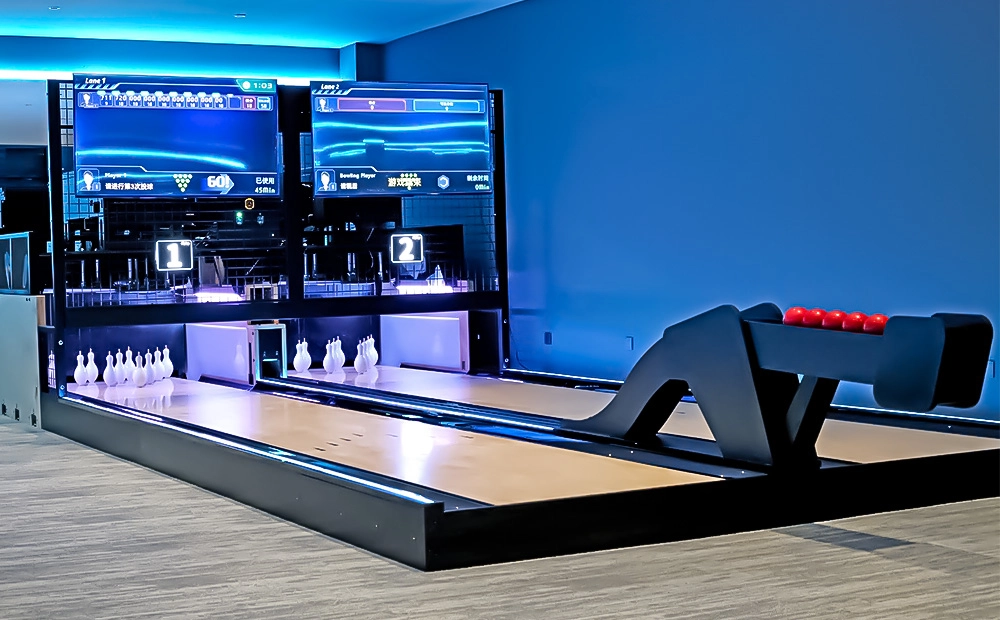
Flying Smart Duckpin Bowling
The innovative design of Flying Smart Duckpin Bowling (FSDB) makes it perfect for places like bars, billiard halls, and game centers. It makes people want to come back more often and spend more money. FSDB is fun and competitive, so it will become a new focus for social activities.
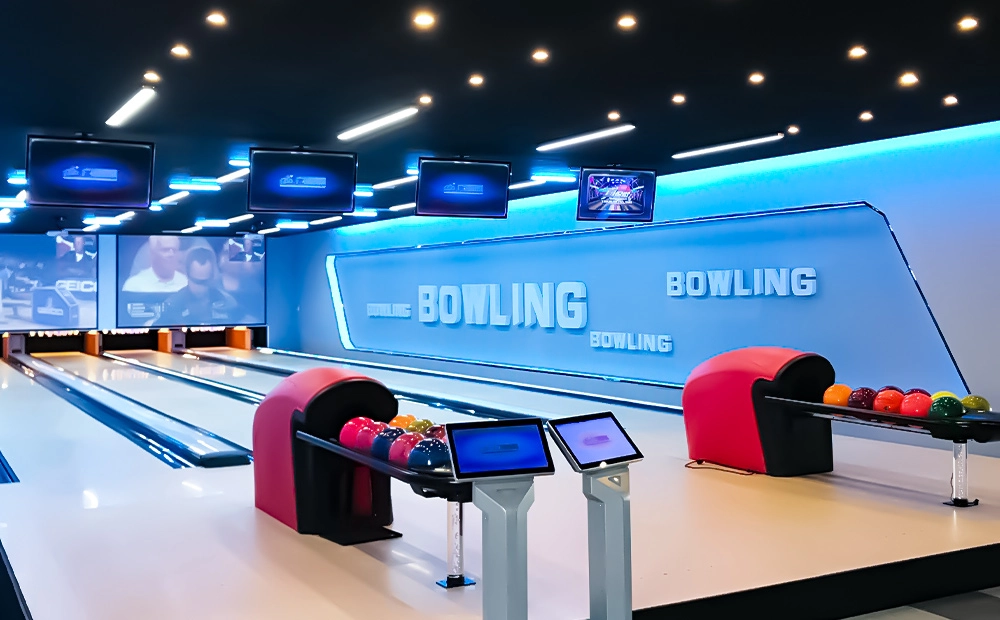
Flying Classic Standard Bowling
Flying Classic Standard Bowling (FCSB) employs the World Standard Competition Scoring System to deliver a more professional bowling experience, enabling bowlers to enjoy a professional-standard match at their convenience.
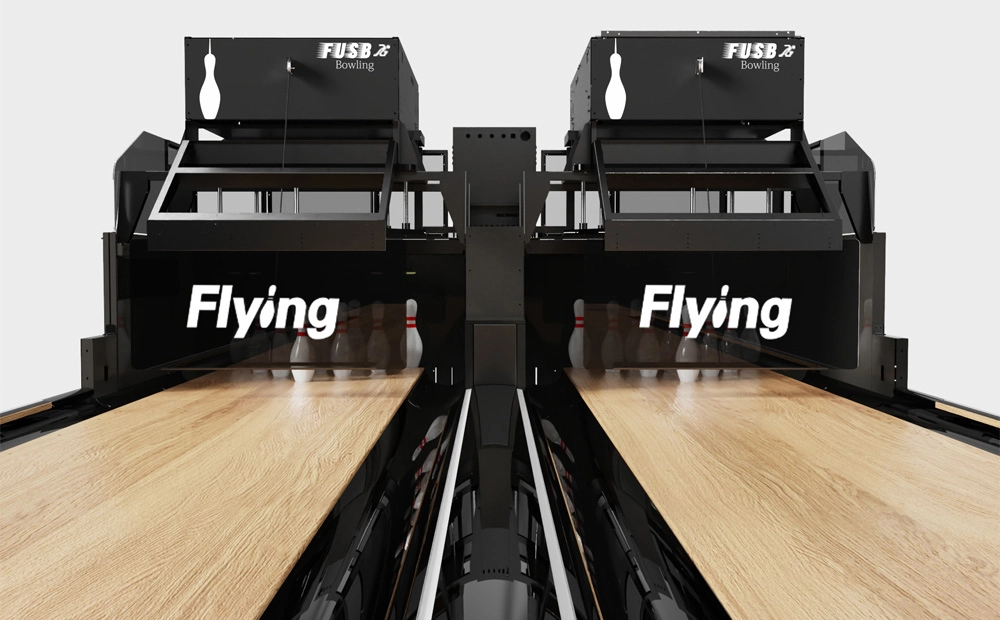
Flying Ultra Standard Bowling
Flying Ultra Standard Bowling (FUSB) Upgraded Version
The string pinsetter uses the latest technology. It offers a more enjoyable bowling experience thanks to its innovative designs and modern technology.

Get in touch
Contact us
If you contact us now for more details, we can provide you with a custom bowling alley service.
Our service team will get back to you within 24 hours, normally!



Professional Bowling Alley Equipment Manufacturer, a one-stop solution provider for bowling alleys.
Facebook
YouTube
Linkedin
Twitter