












Unveiling the Perfect Roll: The Ultimate Guide to Bowling Ball Diameter in 2026
This authoritative guide explores the critical, yet often overlooked, specification of bowling ball diameter. Covering official USBC and PBA regulations for ten-pin bowling, as well as variations for duckpin and candlepin, this article explains the physics behind ball size, its impact on lane reaction, and how to choose the right equipment. It also highlights modern design trends and manufacturing standards to help bowlers of all levels optimize their game.
- Introduction: Why Bowling Ball Diameter Matters More Than You Think
- The Official Rulings: USBC, PBA, and World Bowling Diameter Specifications
- Ten-Pin Bowling Dimensions
- Beyond Ten-Pin: Diameter Across Different Bowling Variants
- Duckpin Bowling
- Candlepin Bowling
- Five-Pin and Nine-Pin
- The Physics of the Roll: How Diameter Influences Ball Performance
- Lane Reaction and Contact Patch
- Energy Transfer and Pin Carry
- Speed and Rev Rate
- Choosing Your Perfect Sphere: Finding the Right Diameter for Your Game
- For Beginners and Youth
- Physical Considerations and Grip
- The Modern Bowling Ball: Diversity in Design and Function
- Visualizing Variety
- Functional Aesthetics
- Manufacturing and Material Science: Crafting the Perfect Diameter
- The Evolution of Standards: A Glimpse at Bowling Ball Diameter History
- Conclusion: Master Your Game, One Diameter at a Time
- Frequently Asked Questions
- What is the standard diameter for a ten-pin bowling ball?
- Does bowling ball diameter change with weight?
- How does diameter affect the hook potential of a bowling ball?
- Are duckpin bowling balls smaller in diameter than ten-pin balls?
- Can I use a bowling ball with a non-regulation diameter in a sanctioned league or tournament?
- What is the relationship between bowling ball diameter and circumference?
- Does bowling ball diameter impact grip and comfort?
- Are there different diameter balls for junior bowlers?
- References
Introduction: Why Bowling Ball Diameter Matters More Than You Think
When a bowler steps onto the approach, their mind is often racing with variables: oil patterns, foot placement, release point, and ball weight. However, one fundamental constant often escapes the average player's notice: bowling ball diameter. While weight and coverstock get the lion's share of attention in pro shops, the physical dimensions of the sphere are the foundation upon which the entire sport is regulated.
Understanding bowling ball specs explained in detail is what separates a casual enthusiast from a serious competitor. The diameter determines the contact patch with the lane, influences how the ball deflects off pins, and dictates the strict boundaries of legal play. Whether you are rolling a strike in a standard ten-pin league or trying your hand at a regional variation like candlepin, the size of the ball is the primary variable defining the physics of the game.
In this comprehensive guide, we will move beyond the basics. We will dissect the official rulings from major governing bodies, explore how diameter influences energy transfer and hook potential, and help you understand choosing bowling ball size not just by weight, but with a holistic understanding of its dimensions.
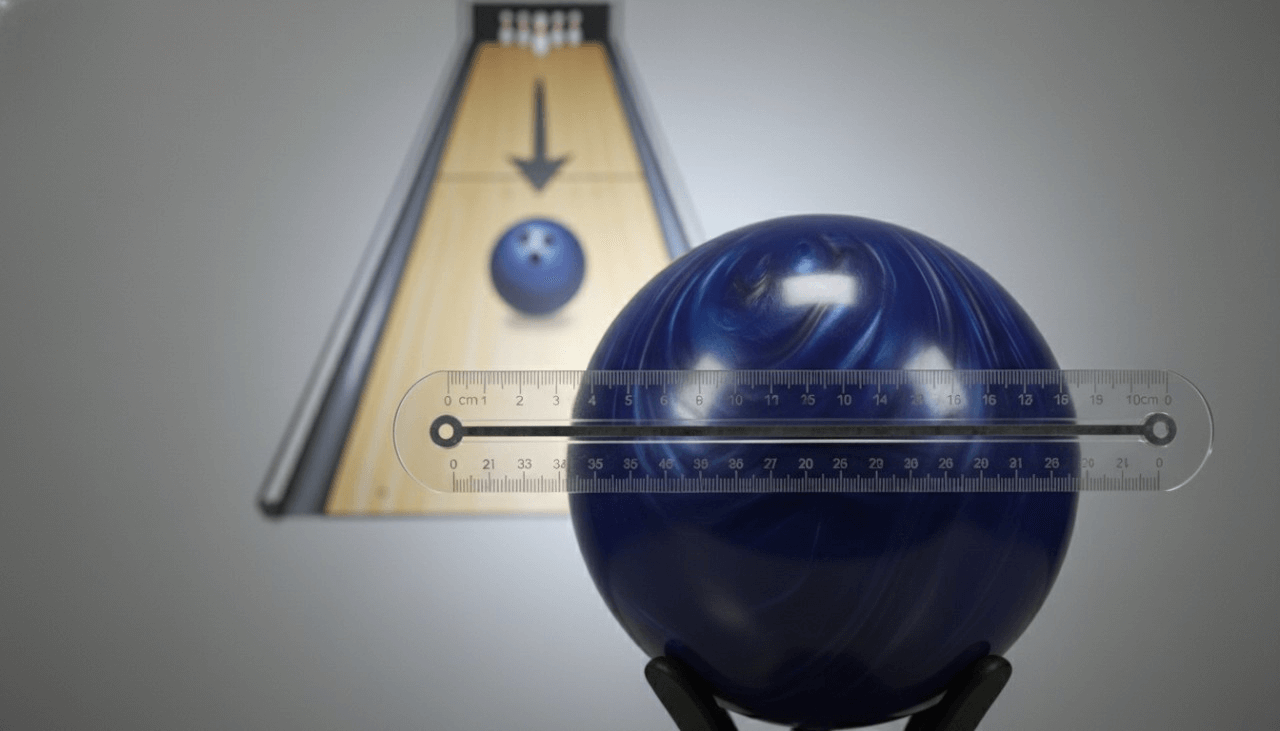
The Official Rulings: USBC, PBA, and World Bowling Diameter Specifications
To ensure fair play across leagues and tournaments, strict standardization is required. The United States Bowling Congress (USBC) and the Professional Bowlers Association (PBA) act as the gatekeepers of these standards.
Ten-Pin Bowling Dimensions
The most common form of the sport globally is ten-pin bowling. According to the USBC bowling ball size regulations, the manufacturing tolerances are incredibly tight to prevent unfair advantages.
· Diameter Range: A regulation ten-pin bowling ball must have a diameter between 8.500 inches (21.59 cm) and 8.595 inches (21.83 cm). As noted in documentation from the USBC and PBA Universal Playing Rules, this measurement must be consistent across the ball's axis.
· Bowling Ball Circumference: Since diameter and circumference are mathematically linked, the regulations also specify that the circumference must fall between 26.704 inches and 27.002 inches.
· Weight vs. Size: It is a common misconception that heavier balls are physically larger. Whether you are throwing a 10-pound ball or a 16-pound ball (the maximum legal weight), the ten-pin bowling ball dimensions regarding diameter remain constant within the 8.5-inch range. As stated by Ten-Pin Dimensions & Drawings, the mass may vary between 10-16 lbs, but the outer shell size is static to ensure the ball interacts with the standard pin spacing correctly.
These specifications are crucial. If a ball expands or shrinks beyond these tolerances due to temperature changes or manufacturing defects, it becomes illegal for use in sanctioned competition.
Beyond Ten-Pin: Diameter Across Different Bowling Variants
While ten-pin is the giant of the industry, regional variations of the sport utilize vastly different equipment. Understanding duckpin bowling ball diameter or candlepin bowling ball size highlights how the scale of the object completely changes the strategy of the game.
Duckpin Bowling
Duckpin bowling, popular in the energetic corridors of the U.S. East Coast, uses a ball that is significantly smaller and lacks finger holes. According to the Physics Factbook and Wikipedia, a regulation duckpin ball typically has a diameter of approximately 4.75 to 5.00 inches. This massive reduction in size compared to the 8.5-inch ten-pin ball makes striking much more difficult, as the ball can easily pass through the "pockets" between pins without knocking them all down.
Candlepin Bowling
Candlepin bowling offers perhaps the greatest challenge regarding accuracy. The balls are the smallest in recognized bowling sports. As referenced by Quora discussions on regulation sizes, candlepin balls share a similar weight class to duckpins but are distinct in their gameplay mechanics. The smaller diameter requires pinpoint precision, as the ball surface area is minimal compared to the target area.
Five-Pin and Nine-Pin
· Five-Pin: Popular in Canada, this variant uses a ball that bridges the gap. As noted in the Physics Factbook, five-pin balls often hover around the 5-inch diameter mark, similar to duckpin, but are used to knock down five pins arranged in a V-shape.
· Nine-Pin: An older variation often associated with historical regulations, nine-pin balls also adhere to specific local standards that differ from the USBC ten-pin homogeneity.
|
Bowling Variant |
Approx. Diameter (Inches) |
Characteristics |
|
Ten-Pin |
8.500" - 8.595" |
Large, finger holes, standardized max weight 16 lbs |
|
Duckpin |
~4.75" - 5.00" |
Small, handheld, no finger holes |
|
Candlepin |
~4.50" |
Smallest, handheld, creates "wood" on the lane |
|
Five-Pin |
~5.00" |
Handheld, rubber band often found on pins, not balls |
The Physics of the Roll: How Diameter Influences Ball Performance
The impact of ball diameter on physics is profound. It isn't just about whether the ball fits in the return machine; it's about Energy, Momentum, and Friction.
Lane Reaction and Contact Patch
The diameter determines the curvature of the ball's surface. A standard 8.5-inch ball creates a specific "footprint" or contact patch where the coverstock meets the oiled lane. According to Ten Pin Doctors, the size of the ball influences control, lane movement, and energy transfer. A larger diameter (within legal limits) theoretically offers a more stable roll phase, while smaller variances could subtly alter the skid length.
Energy Transfer and Pin Carry
Kinetic energy is a product of mass and velocity ($KE = 1/2 mv^2$), but the delivery of that energy depends on diameter. A larger surface area strikes the pins with a wider impact zone. This is why ten-pin bowlers carry significantly higher averages than duckpin bowlers; the 8.5-inch diameter of a ten-pin ball is wide enough to bridge the gap between the 1-3 pocket, transferring energy to both pins simultaneously. In contrast, the smaller diameter of a duckpin ball requires a much more precise hit to achieve a similar chain reaction.
Speed and Rev Rate
While the diameter is fixed, its relationship with the core determines the Radius of Gyration (RG). As explained in USBC specifications found on Bowling Ball Specifications documents, the distribution of mass inside that fixed diameter governs how fast the ball spins. If the diameter were allowed to vary significantly, it would drastically alter the rev rates and hook potential, making the game impossible to regulate.
Choosing Your Perfect Sphere: Finding the Right Diameter for Your Game
When we talk about choosing bowling ball size, we are usually discussing weight and fit, because for ten-pin bowling, the diameter is predetermined. However, understanding diameter is still vital for customization and variant selection.
For Beginners and Youth
For junior bowlers, the visual size of a ten-pin ball can be intimidating. However, manufacturers produce junior balls that maintain the 8.5-inch standard but use lighter cores and shells. According to GoBowling.com, finding the right ball usually starts with weight (often 10% of body weight), but parents should ensure the child can handle the volume of the ball. If the 8.5-inch sphere is too unwieldy for a small child's hand span, switching to a variant like Duckpin or Five-Pin (where the diameter is ~5 inches) can be a better introduction to the sport.
Physical Considerations and Grip
Even though the exterior diameter is 8.5 inches, the "effective" span—the distance between thumb and finger holes—is the critical internal dimension. A bowler with a smaller hand will have a completely different leverage point on the ball's circumference than a bowler with a large hand.
· Tip: Ensure your pro shop operator measures your hand flexibility. The curvature of the ball (circumference) dictates how your fingers rest against the shell.
The Modern Bowling Ball: Diversity in Design and Function
While the bowling ball diameter remains a strict constant in the world of sanctioned play, the visual presentation and internal engineering within that 8.5-inch sphere have exploded with creativity. Modern bowling is as much about aesthetic expression as it is about high scores.
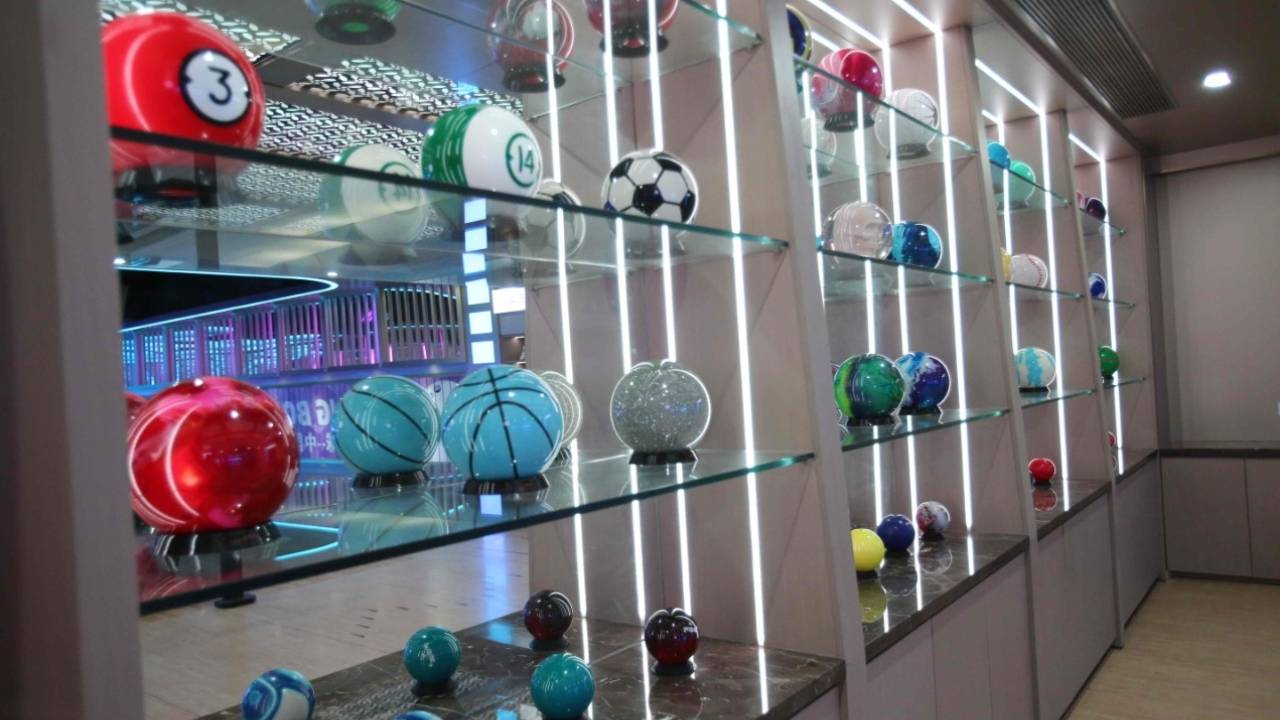
Visualizing Variety
As seen in the image above, the modern pro shop is a showcase of this diversity. While every ball on these illuminated shelves adheres to the strict USBC diameter standards, the designs are limitless. You can see novelty balls designed to look like oversized billiard balls (note the red "3" and green "14" balls), and even balls mimicking other sports, such as the black-and-white soccer ball or the turquoise basketball design.
Functional Aesthetics
This visual variety isn't just for show. The "plastic" or polyester balls—often featuring the most vibrant, glassy designs like the swirled green and purple options—are typically used for shooting spares. Their smooth coverstocks result in very little friction, meaning the ball travels straight. Conversely, the matte or solid-colored balls often hint at reactive resin coverstocks designed for hooking. The display highlights that within the mandated bowling ball circumference, manufacturers can create equipment that looks like a piece of art while serving a distinct mechanical purpose on the lane.
Manufacturing and Material Science: Crafting the Perfect Diameter
Creating a perfect sphere with a diameter of exactly 8.500 to 8.595 inches requires advanced manufacturing.
1. Core Molding: The inner core (which dictates the RG and Differential) is poured first.
2. Coverstock Application: The outer shell is cast around the core. At this stage, the ball is slightly larger than regulation size.
3. Lathe Turning: The ball is placed on a lathe and shaved down to the precise USBC bowling ball size.
4. Polishing and Quality Control: The surface is finished to a specific roughness (Ra), and the diameter is checked with "go/no-go" gauges.
According to Bowling Ball Specifications provided by the USBC, strict rules also apply to drilling. Holes must be for gripping or venting only, and balance holes (once legal) have been largely phased out to tighten the performance window. This ensures that the ball's mass distribution remains within the geometric center of the regulated diameter.
The Evolution of Standards: A Glimpse at Bowling Ball Diameter History
The standardization of bowling ball specs explained in historical documents reveals a chaotic past. Before the formation of the American Bowling Congress (now part of USBC) in 1895, ball sizes and weights varied wildly by region.
According to the Physics Factbook and historical records, early balls were made of Lignum Vitae (hardwood) and were not perfectly spherical. The move to hard rubber in the early 20th century allowed for the precise 8.5-inch standard we see today. This standardization was essential for the introduction of automatic pinsetters; machines require a predictable object diameter to function without jamming.
As we look toward the future, materials will continue to evolve, but the physical diameter is unlikely to change. The infrastructure of bowling—the lane width, gutter depth, and pin spacing—is universally built around the 8.5-inch standard.
Conclusion: Master Your Game, One Diameter at a Time
Bowling is a sport of precision, where success is measured in fractions of an inch. While you cannot choose the diameter of your ten-pin ball, understanding the dimensions helps you appreciate the physics at play. From the 8.5-inch powerhouse used in the PBA to the nimble 5-inch sphere of the duckpin lanes, bowling ball diameter dictates the challenge and the fun.
By ensuring your equipment meets these precise specifications and understanding how the ball's size interacts with the lane, you can make more informed decisions about your arsenal. Whether you are drawn to the novelty designs of a soccer-ball-themed spare ball or the high-tech reactive resin of a performance ball, remember that inside that 27-inch circumference lies the potential for your perfect game.
Frequently Asked Questions
What is the standard diameter for a ten-pin bowling ball?
The standard legal diameter for a ten-pin bowling ball, as set by USBC and other governing bodies, is between 8.500 and 8.595 inches (21.59 to 21.83 cm). This strict tolerance ensures consistency in sanctioned competition.
Does bowling ball diameter change with weight?
No. For ten-pin bowling, all balls 10 pounds and above must conform to the 8.500-8.595 inch diameter range. While lighter balls (under 10 pounds) designed for children can sometimes be slightly smaller, most reputable manufacturers maintain the standard diameter across their entire weight line to ensure proper fit with pinsetting machines.
How does diameter affect the hook potential of a bowling ball?
A ball's diameter, in conjunction with its coverstock and core design, influences its contact area with the lane. While the core (engine) and coverstock (tires) are the primary factors for hook, the diameter plays a subtle role in how the ball 'reads' the lane and transfers energy. A consistent diameter ensures a predictable surface area for friction to act upon.
Are duckpin bowling balls smaller in diameter than ten-pin balls?
Yes, duckpin bowling balls are significantly smaller. They typically range from 4.75 to 5.0 inches (12.06 to 12.7 cm) in diameter, compared to the 8.5-inch diameter of ten-pin balls. They also lack finger holes, which changes the mechanics of the release.
Can I use a bowling ball with a non-regulation diameter in a sanctioned league or tournament?
No. Using a bowling ball that does not meet the official diameter specifications (and other rules) set by organizations like the USBC or PBA is not permitted in sanctioned competition. Using non-compliant equipment would result in disqualification and forfeiture of scores.
What is the relationship between bowling ball diameter and circumference?
Diameter and circumference are directly related by the formula $C = \pi d$ (Circumference = Pi x Diameter). For a ten-pin ball with a diameter between 8.500-8.595 inches, the legal bowling ball circumference range is approximately 26.704 to 27.002 inches.
Does bowling ball diameter impact grip and comfort?
While grip holes are drilled specifically to fit your hand, the ball's overall diameter can subtly affect how it feels in your palm. This is especially true for bowlers with very small hands (who might struggle to span the curvature) or very large hands. However, proper drilling by a pro shop professional compensates for the curvature to ensure a secure grip.
Are there different diameter balls for junior bowlers?
Generally, no. Many manufacturers offer junior or youth bowling balls that adhere to the standard 8.5-inch diameter but are lighter in weight (e.g., 6, 8, or 10 lbs). However, very young children often start with "mini-bowling" or variants like candlepin or duckpin where the balls are inherently smaller in diameter, making them easier to handle before graduating to ten-pin.
References
· What is the size of a regulation bowling ball? - Quora
· Diameter of a Bowling Ball - The Physics Factbook
· What Is the Diameter of a Bowling Ball? - Ten Pin Doctors
· Bowling Ball - Ten-Pin Dimensions & Drawings
· When Bowling In Denver, Choosing The Right Ball Is Crucial - Boondocks

Quality Bowling

Products
Can I customize the bowling equipment to fit my venue's theme?
Yes, we offer fully customized solutions, including lane colors, scoring systems, and pinsetter designs to match your venue’s theme.
What is the noise level of the equipment?
We are well aware of the importance of a quiet and comfortable environment for bowling, so we designed sound insulation cotton and shock-absorbing pads in the equipment area and the lane area to fully reduce the noise and vibration of the equipment during operation, creating a quiet and comfortable sports space for you, allowing you to focus more on enjoying the fun of bowling.
Is your equipment suitable for beginners?
Our equipment is easy to operate and equipped with auxiliary aiming lines, so even those who are new to bowling can quickly get started.
Customer care
My room is only about 50 or 60 feet long. How short is too short" for bowling lanes?
That depends on what each person likes. It's like asking how low we can put a basketball goal so that it's still fun. If your bowlers are mostly kids or people who haven't bowled much, they might not mind extremely short lanes. But serious league and tournament bowlers won't like a lane that isn't the normal size.
Technology
What is the degree of automation of the equipment? Does it support automatic scoring, automatic ball return and other functions?
Fully automated. Our equipment is equipped with an independent intelligent scoring system, and also has automatic ball return and ball up functions to ensure that the game can proceed smoothly, which greatly improves the user experience and reduces labor costs and maintenance difficulties.
You May Also Like
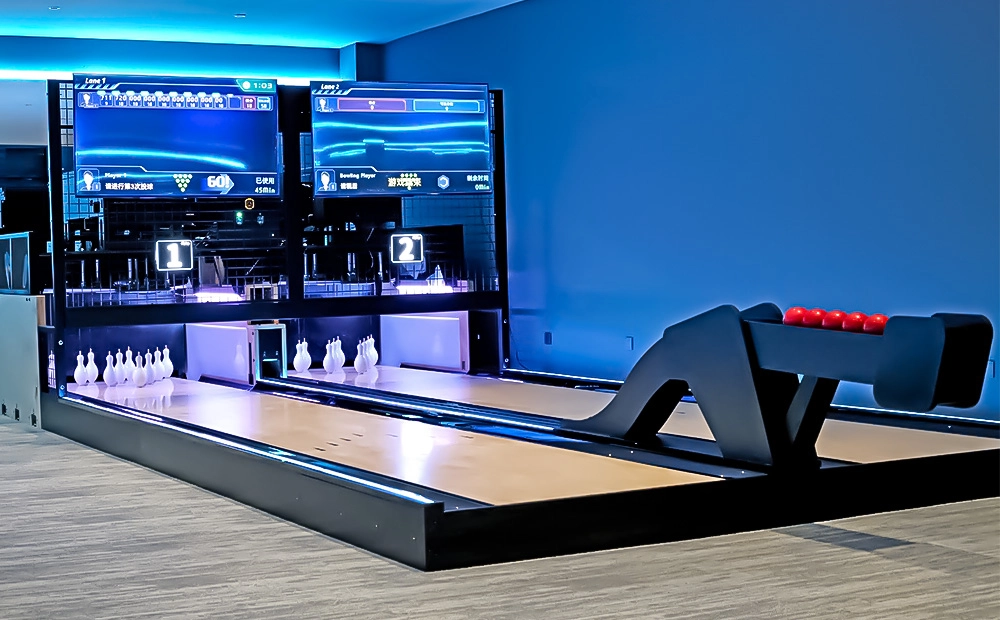
Flying Smart Duckpin Bowling
The innovative design of Flying Smart Duckpin Bowling (FSDB) makes it perfect for places like bars, billiard halls, and game centers. It makes people want to come back more often and spend more money. FSDB is fun and competitive, so it will become a new focus for social activities.
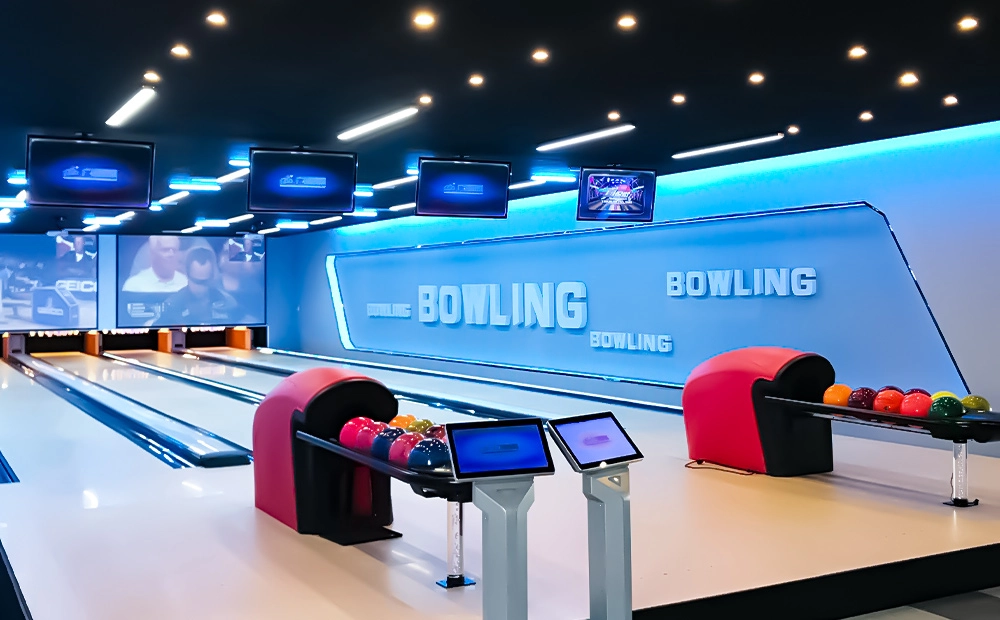
Flying Classic Standard Bowling
Flying Classic Standard Bowling (FCSB) employs the World Standard Competition Scoring System to deliver a more professional bowling experience, enabling bowlers to enjoy a professional-standard match at their convenience.
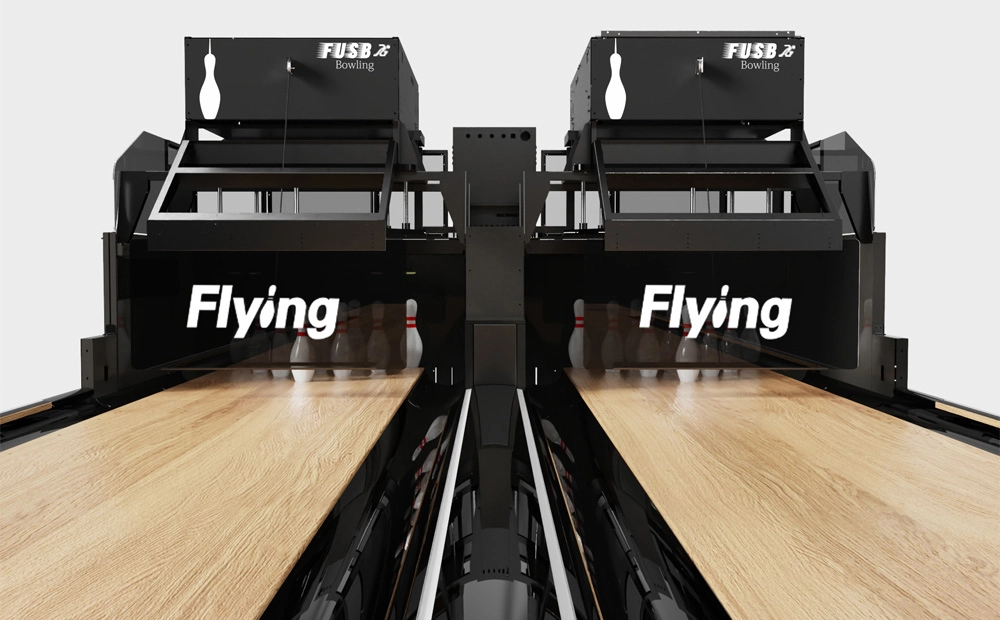
Flying Ultra Standard Bowling
Flying Ultra Standard Bowling (FUSB) Upgraded Version
The string pinsetter uses the latest technology. It offers a more enjoyable bowling experience thanks to its innovative designs and modern technology.

Get in touch
Contact us
If you contact us now for more details, we can provide you with a custom bowling alley service.
Our service team will get back to you within 24 hours, normally!



Professional Bowling Alley Equipment Manufacturer, a one-stop solution provider for bowling alleys.
Facebook
YouTube
Linkedin
Twitter