















How Much Does It REALLY Cost to Open a Bowling Alley in 2026? Your Ultimate Investment Guide
Detailed guide on bowling alley startup costs for 2026. Covers equipment pricing, real estate, ROI, and cost-saving strategies like string pinsetters.
- Key Takeaways: Understanding Your Bowling Alley Investment
- What is the Total Cost to Open a Bowling Alley? (2026 Projections)
- Investment Tiers by Facility Type
- Detailed Breakdown of Essential Bowling Alley Startup Costs
- 1. Real Estate & Facility (Land/Building/Renovation)
- 2. Bowling Equipment & Installation
- 3. Food & Beverage (F&B) Setup
- 4. Furniture, Fixtures & Decor
- 5. Ancillary Entertainment & Attractions
- 6. Licenses, Permits & Legal Fees
- 7. Initial Marketing & Pre-Opening Staffing
- How to Reduce Bowling Alley Startup Costs Effectively
- 1. Renovate an Existing Facility
- 2. Opt for Refurbished Equipment
- 3. Choose String Pinsetters
- 4. Start Smaller, Scale Later
- 5. Buy Direct from Manufacturers
- Funding Your Bowling Alley Business: Essential Financing Options
- What is the Potential ROI and Profitability of a Bowling Alley?
- Conclusion: Strategic Investment for a Thriving Entertainment Hub
- Frequently Asked Questions (FAQ)
- What is the cheapest way to open a bowling alley?
- How much does a single bowling lane cost to install?
- What are the ongoing monthly costs for a bowling alley?
- Is owning a bowling alley a profitable business?
- What's the difference in cost between string and free-fall pinsetters?
- How much does a liquor license cost for a bowling alley?
- What kind of insurance does a bowling alley need?
- How much working capital is recommended for a new bowling alley?
- References
The entertainment industry is evolving rapidly, and for savvy entrepreneurs, the bowling business investment landscape offers a compelling mix of community engagement and potential profitability. However, determining exactly how much capital is required remains a complex challenge. Bowling alley startup costs in 2026 are influenced by a multitude of factors, from the choice between new vs. refurbished bowling equipment to the type of pinsetter technology utilized.
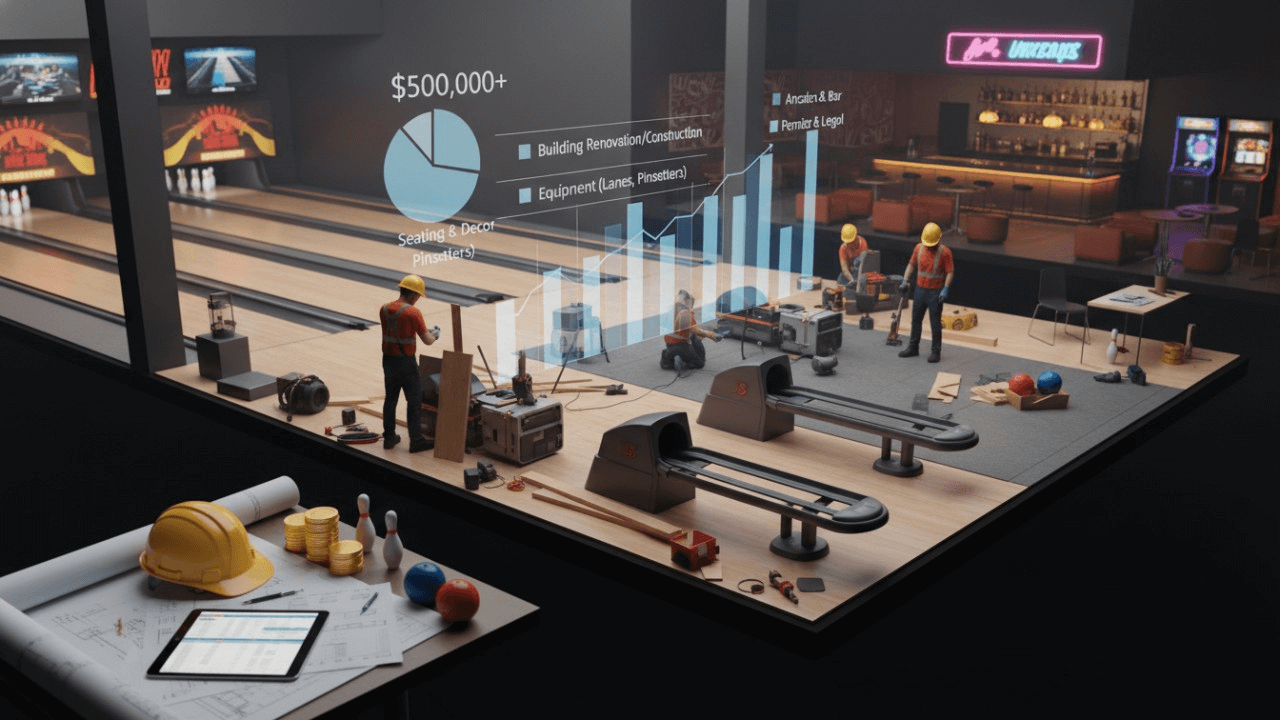
Whether you are planning a boutique lounge or a massive Family Entertainment Center (FEC), understanding the financial requirements is the first step toward success. This guide provides a comprehensive, data-backed breakdown of costs, financing options, and strategies to maximize your return on investment.
Key Takeaways: Understanding Your Bowling Alley Investment
Before diving into the line-item expenses, here is a high-level summary of what to expect when planning your venture:
● Wide Cost Variance: Total startup costs vary significantly, ranging from $600,000 for a small, renovated boutique center to over $20 million for a large, new-build Family Entertainment Center (FEC).
● Major Expense Categories: Significant capital goes toward real estate ($250,000-$2 million+ for land, $100,000-$3 million+ for construction), bowling equipment ($100,000-$1.5 million total), and food & beverage setup ($50,000-$500,000).
● Operational Budgeting: Operational expenses like initial marketing ($20,000-$75,000), licenses/permits ($15,000-$50,000 excluding liquor), and working capital ($100,000-$300,000 for 3-6 months) are critical to budget for.
● Strategic Cost Savings: You can reduce your initial outlay by acquiring an existing facility, utilizing refurbished equipment (saving 30-50%), and choosing more cost-effective string pinsetters.
● ROI Expectations: A typical Return on Investment (ROI) timeline ranges from 3-5 years, with diverse revenue streams from lane rentals, F&B, and ancillary entertainment driving bowling alley profitability.
What is the Total Cost to Open a Bowling Alley? (2026 Projections)
Direct Answer: In 2026, the total investment to open a commercial bowling alley typically ranges from $600,000 to over $6 million. The average cost for a modern, multi-lane facility falls around $4.5 million, though boutique centers can start lower and large entertainment complexes can exceed $20 million depending on location and amenities.
When calculating bowling alley startup costs, the scale of your operation is the primary cost driver. According to recent industry data, a complete commercial 10-lane facility generally requires a minimum of $600,000 just for the basics, with high-end finishes pushing that number significantly higher (Flying Bowling).
Investment Tiers by Facility Type
● Small/Boutique Centers (4-8 lanes):
● Mid-Size Commercial Centers (10-16 lanes):
● Large Family Entertainment Centers (20+ lanes):
● Franchise Options:
Detailed Breakdown of Essential Bowling Alley Startup Costs
Direct Answer: A granular look at expenses reveals that real estate and construction consume the largest portion of the budget (often 50%+), followed by bowling equipment ($40,000–$150,000 per lane), and F&B setup ($75,000–$400,000). Allocating funds for permits, marketing, and a 3-6 month working capital cushion is also mandatory for a successful launch.
To manage your bowling business investment effectively, you must understand where every dollar goes. Below is a detailed breakdown based on 2026 market projections.
1. Real Estate & Facility (Land/Building/Renovation)
This is invariably the largest line item. Whether you lease or buy determines the upfront capital needed.
● Land Acquisition: $250,000 to $2 million+ depending on location.
● Construction/Build-out: Building from scratch can cost $1 million to $3 million+, while major leasehold improvements might range from $200,000 to $1.68 million.
● Cost Per Sq. Ft.: You should budget approximately $70–$150 per square foot for a professional build-out or renovation (Startup Financial Projection).
2. Bowling Equipment & Installation
The cost per bowling lane is a critical metric. In 2026, installing a single lane (including equipment and installation) ranges from $40,000 to $150,000 (Flying Bowling).
● Lane System (Synthetic): $5,000 – $12,000 per lane.
● Pinsetters: This is a major variable.
● Ball Returns & Lifts: $4,000 – $12,000.
● Scoring Systems & Monitors: $2,000 – $8,000.
For a deeper dive into specific equipment pricing, you can refer to this comprehensive bowling lane cost guide.
3. Food & Beverage (F&B) Setup
Modern bowling alleys rely heavily on F&B revenue.
● Full-Service Kitchen & Bar: Requires $150,000 to $500,000 for commercial-grade appliances, ventilation, plumbing, and refrigeration.
● Snack Bar: A simpler setup may start around $50,000 to $75,000 (Startup Financial Projection).
4. Furniture, Fixtures & Decor
Creating the right atmosphere is essential for customer retention.
● Budget: $50,000 to $210,000.
● Items: Lounge seating, masking units, specialty lighting (Cosmic/Glow bowling), and sound systems.
5. Ancillary Entertainment & Attractions
Diversifying beyond bowling increases revenue stability.
● Arcade Games: $50,000 – $400,000 depending on the number and type of games.
● Other Attractions: Laser tag, escape rooms, or VR setups require additional capital but significantly boost the venue's appeal.
6. Licenses, Permits & Legal Fees
Red tape comes with a price tag.
● General Permits: Business, health, fire, and safety permits typically cost $15,000 – $50,000.
● Liquor License: This varies wildly by jurisdiction. In some areas, it is a nominal fee; in quota-controlled states, it can be a six-figure investment.
7. Initial Marketing & Pre-Opening Staffing
● Marketing: Allocate $20,000 to $75,000 for website development, grand opening campaigns, and signage.
● Staffing: Budget $50,000 – $150,000 for hiring and training key management and staff for the months leading up to the opening.
How to Reduce Bowling Alley Startup Costs Effectively
Direct Answer: To lower startup costs, consider renovating an existing commercial space rather than building new, and opt for refurbished equipment to save 30-50%. Additionally, selecting string pinsetters over traditional free-fall models can reduce upfront machinery costs by roughly $10,000 per lane while slashing long-term maintenance expenses.
Smart investors know that bowling alley profitability begins with controlling the initial burn rate. Here are proven strategies to launch for less:
1. Renovate an Existing Facility
Converting a vacant "big box" store or warehouse can reduce shell construction costs by up to 30% compared to a ground-up build. However, always conduct due diligence to avoid hidden structural or utility issues.
2. Opt for Refurbished Equipment
High-quality used or factory-refurbished equipment is a viable option for many startups. Purchasing refurbished lanes and pinsetters can save 30-50% on equipment expenses without significantly compromising the player experience.
3. Choose String Pinsetters
The debate between String vs. Free-fall pinsetters is pivotal for cost control.
● Upfront Savings: String machines cost $8,000 – $20,000 per lane, compared to $20,000 – $45,000 for free-fall.
● Operational Savings: They require fewer moving parts, less energy, and reduced maintenance, lowering total lane costs by 25–40% (Flying Bowling).
4. Start Smaller, Scale Later
Adopt a "Lean Launch" strategy. Begin with fewer lanes (e.g., 6-8) and a streamlined menu. As the business generates cash flow, you can reinvest in expansion and additional attractions.
5. Buy Direct from Manufacturers
Buying direct can help avoid distributor markups. Establishing a relationship with manufacturers often leads to better technical support and potential bulk discounts on parts and supplies.
Funding Your Bowling Alley Business: Essential Financing Options
Direct Answer: Financing a bowling alley is commonly achieved through SBA 7(a) loans, which offer up to $5 million with favorable terms, or equipment leasing to reduce upfront capital strain. For larger entertainment centers, attracting private investors or venture capital is a frequent path, while crowdfunding can support smaller, community-focused projects.
Securing the necessary capital is often the biggest hurdle. Here are the primary vehicles for funding:
● SBA Loans (e.g., SBA 7(a) Loan): These government-backed loans are popular for small businesses. They generally require a 10-20% equity injection but offer long repayment terms and lower interest rates.
● Equipment Leasing: Instead of buying pinsetters and furniture outright, leasing them spreads the cost over several years, preserving your cash for working capital.
● Traditional Bank Loans: Commercial loans require a solid business plan, strong credit history, and significant collateral. They are best suited for entrepreneurs with existing assets.
● Private Investors & Venture Capital: For high-growth FEC concepts, selling equity to angel investors or VCs can provide the substantial capital needed for a mega-center launch.
● Crowdfunding: Platforms like Kickstarter or equity crowdfunding sites can generate initial capital and build a loyal customer base before you even open your doors.
What is the Potential ROI and Profitability of a Bowling Alley?
Direct Answer: Bowling alley profitability is generally robust for modern centers, with net profit margins ranging from 15% to 25%. A well-managed venue can generate $36,750 per lane annually, and investors typically see a full Return on Investment (ROI) within 3 to 5 years, with cash flow break-even often occurring around month 14.
The global bowling market is growing, projected to reach USD 25.6 billion by 2034 (Verified Market Reports). This growth is driven by the shift toward "retail-tainment."
● Diverse Revenue Streams: Successful centers do not rely on bowling alone.
● Typical ROI Timeline: For a $1.5 million to $2 million investment, a 3-5 year payback period is standard.
● Success Factors: Locations with high average household income (e.g., >$100,000), effective digital marketing, and superior customer service are non-negotiable for achieving the upper end of profit margins.
Conclusion: Strategic Investment for a Thriving Entertainment Hub
Opening a bowling alley represents a significant, yet potentially highly rewarding, business venture. The initial bowling alley startup costs are highly variable, dictated by scale, location, new construction versus renovation, and the scope of amenities offered.
By thoroughly understanding the detailed cost breakdown—from real estate and specialized equipment to F&B setup and critical pre-opening expenses—aspiring proprietors can craft a robust financial model. Strategic decisions to mitigate costs, such as opting for string pinsetters or refurbished bowling equipment, coupled with a focus on diverse revenue streams and an exceptional customer experience, are paramount for achieving strong profitability and a favorable return on investment.
With careful planning and a clear vision, a bowling alley can become a vibrant, profitable community entertainment destination in 2026 and beyond.
Frequently Asked Questions (FAQ)
What is the cheapest way to open a bowling alley?
The cheapest way is typically to renovate an existing commercial space (instead of new construction), install 4-8 lanes, opt for refurbished bowling equipment, and choose more affordable string pinsetters. This approach can bring entry costs down to $500,000-$800,000.
How much does a single bowling lane cost to install?
A standard bowling alley lane, including the lane surface, pinsetter, and scoring system, typically costs between $25,000 and $75,000 per lane to install. The wide range depends heavily on whether you choose new vs. used equipment and the type of pinsetter technology (string vs. free-fall).
What are the ongoing monthly costs for a bowling alley?
Average monthly operating costs can be around $87,771, with major expenses including staff payroll (approx. $49,542/month for full operations), commercial rent ($20,000/month), utilities ($3,000-$30,000/month), and equipment maintenance.
Is owning a bowling alley a profitable business?
Yes, owning a bowling alley can be highly profitable, especially if it diversifies revenue streams. Centers that include strong food and beverage sales (30-50% of revenue), arcade games, and event hosting can achieve net profit margins of 15-25%.
What's the difference in cost between string and free-fall pinsetters?
String pinsetters typically cost less upfront, ranging from $8,000-$12,000 per lane, and have lower maintenance requirements. Free-fall pinsetters are more traditional but pricier, costing $15,000-$45,000+ per lane, with higher ongoing maintenance needs.
How much does a liquor license cost for a bowling alley?
The cost of a liquor license varies significantly by state and local municipality, ranging from a few thousand dollars to several hundred thousand dollars in highly regulated markets. It is often one of the most substantial single licensing fees.
What kind of insurance does a bowling alley need?
A bowling alley requires various types of insurance, including general liability, property insurance, workers' compensation, liquor liability (if serving alcohol), and potentially commercial auto insurance. Annual premiums often range from $5,000-$15,000+.
How much working capital is recommended for a new bowling alley?
It is recommended to have $100,000 to $500,000 in working capital to cover initial operational deficits for the first 3-6 months. Some detailed financial models suggest needing reserves up to $943,000 to sustain the business until it reaches cash flow break-even.
References
● How Much Does a Bowling Lane Cost in 2026? - Estimated Prices
● Bowling Alley Installation Cost: Your Ultimate 2026 Guide for Home & Commercial
● How Much Money to Open a Bowling Alley? Cost & ROI Guide 2025
● Projected Bowling Equipment Costs in 2026: Insights and Projections
● What are Startup Costs for Bowling Alley?
● Bowling Centers Market Size and Trends 2025-2033: Comprehensive Outlook

Quality Bowling
Technology
Can old equipment be upgraded?
We provide personalized transformation solutions for different venues, such as replacing old pinsetter machines with the latest string pinserrer machines , LED interactive lanes, etc.
Customer care
My room isn't quite long enough. Can you install slightly shorter lanes that are non-regulation length?
Of course, we can customize bowling lanes according to your venue.
Products
Can I customize the bowling equipment to fit my venue's theme?
Yes, we offer fully customized solutions, including lane colors, scoring systems, and pinsetter designs to match your venue’s theme.
What is the noise level of the equipment?
We are well aware of the importance of a quiet and comfortable environment for bowling, so we designed sound insulation cotton and shock-absorbing pads in the equipment area and the lane area to fully reduce the noise and vibration of the equipment during operation, creating a quiet and comfortable sports space for you, allowing you to focus more on enjoying the fun of bowling.
Company
Do you have independent R&D capabilities?
We have set up an independent R&D department and have launched a number of new equipment and innovative technologies such as the smart scoring system, Flying Smart Duckpin, and oil drop machine in the past three years.
You May Also Like
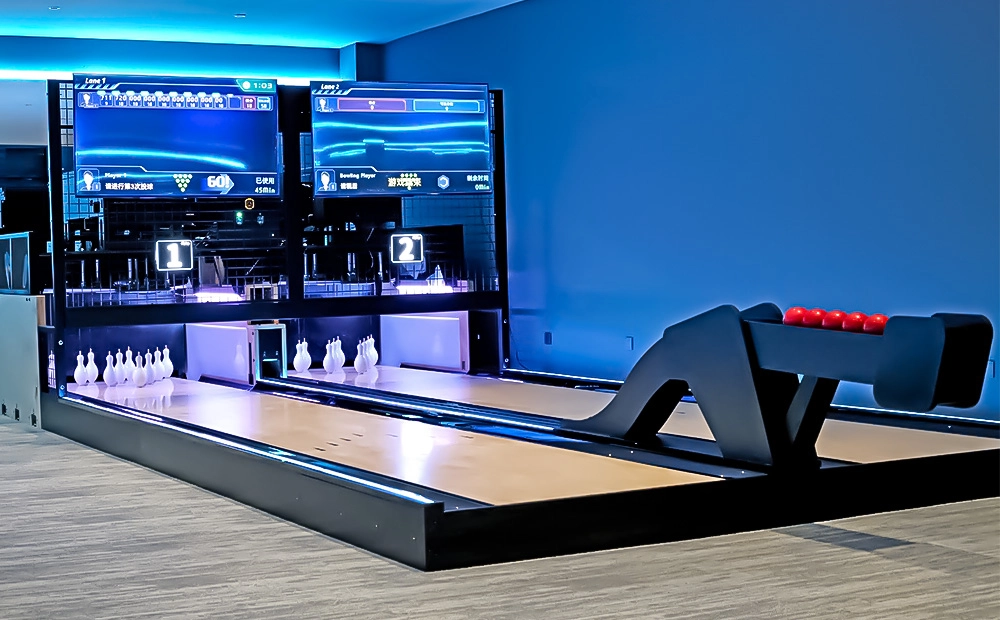
Flying Smart Duckpin Bowling
The innovative design of Flying Smart Duckpin Bowling (FSDB) makes it perfect for places like bars, billiard halls, and game centers. It makes people want to come back more often and spend more money. FSDB is fun and competitive, so it will become a new focus for social activities.
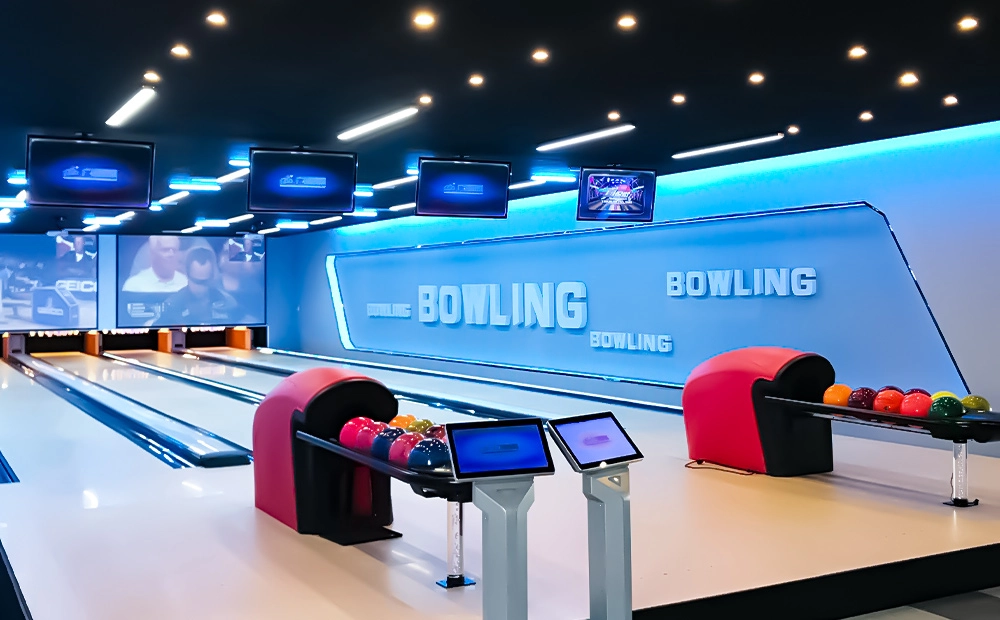
Flying Classic Standard Bowling
Flying Classic Standard Bowling (FCSB) employs the World Standard Competition Scoring System to deliver a more professional bowling experience, enabling bowlers to enjoy a professional-standard match at their convenience.
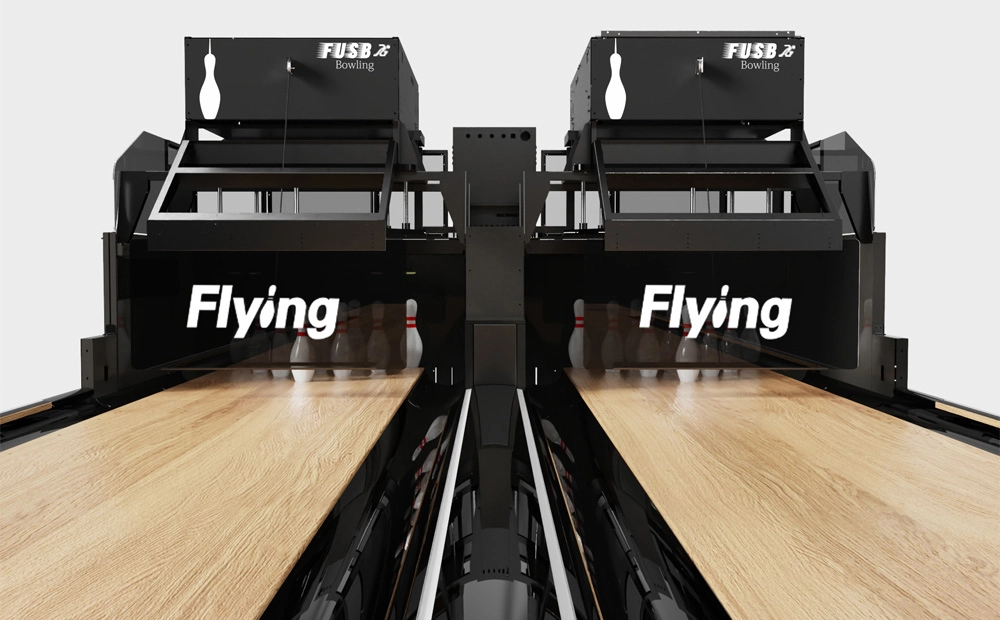
Flying Ultra Standard Bowling
Flying Ultra Standard Bowling (FUSB) Upgraded Version
The string pinsetter uses the latest technology. It offers a more enjoyable bowling experience thanks to its innovative designs and modern technology.

Get in touch
Contact us
If you contact us now for more details, we can provide you with a custom bowling alley service.
Our service team will get back to you within 24 hours, normally!



Professional Bowling Alley Equipment Manufacturer, a one-stop solution provider for bowling alleys.
Facebook
YouTube
Linkedin
Twitter