















Bowling Alley ROI in 2026: Maximize Profitability & Shorten Your Payback Period
Maximize your 2026 bowling alley investment. Explore profit margins of 15-30%, revenue diversification strategies, and typical payback periods of 3-5 years.
- Key Takeaways: Your Fast Track to Bowling Alley Profitability
- What is Return on Investment (ROI) for a Bowling Alley?
- How to Calculate Bowling Alley ROI
- Key Factors Influencing Bowling Alley ROI
- Initial Investment Costs for a Bowling Alley (2026 Estimates)
- Maximizing Revenue Streams for Higher ROI
- Strategies to Optimize Your Bowling Alley's ROI
- Mini Bowling Alley ROI vs. Traditional Bowling
- Understanding the Bowling Alley Payback Period
- Is a Bowling Alley Profitable in 2026?
- Conclusion: Unlocking Your Bowling Alley's Full Profit Potential
- FAQ
- What is the average ROI for a bowling alley?
- How long does it take for a bowling alley to break even or pay back the initial investment?
- What are the main revenue streams for a bowling alley?
- How much does it cost to open a bowling alley in 2026?
- Are mini bowling alleys more profitable than traditional ones?
- What are typical net profit margins for bowling alleys or FECs?
- What factors most influence a bowling alley's profitability?
- Can a bowling alley franchise offer better ROI?
- References
Investing in the entertainment industry requires a keen eye for numbers and operational efficiency. As we move through 2026, bowling alley profitability remains a robust topic for investors, with the industry generating billions annually and evolving into comprehensive Family Entertainment Centers (FECs). Understanding the Return on Investment (ROI) is not just about counting lane fees; it is about leveraging diverse revenue streams, from high-margin food and beverage sales to arcade integration.
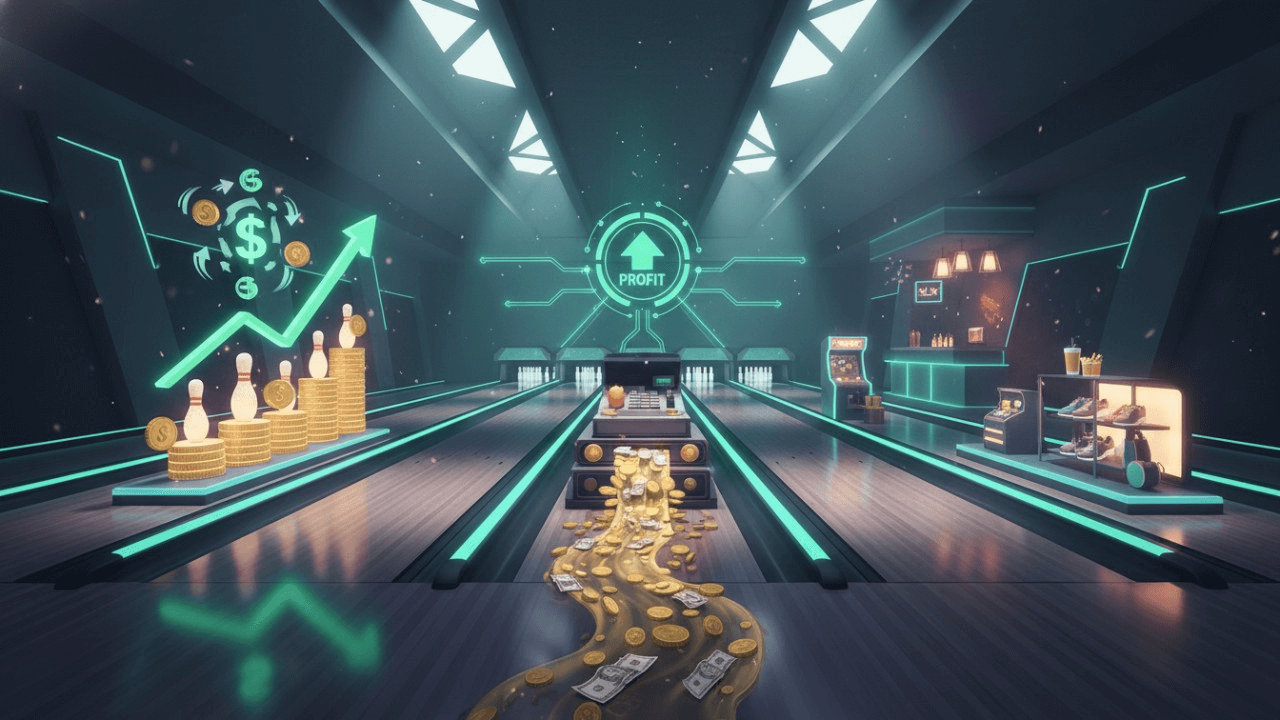
This guide provides a deep dive into bowling alley investment metrics, cost breakdowns, and strategic insights to help you calculate your potential returns and shorten your payback period bowling alley owners typically face.
Key Takeaways: Your Fast Track to Bowling Alley Profitability
● Strong ROI Potential: Bowling alleys typically offer a Return on Investment (ROI) between 15% and 40%, with payback periods ranging from 1.5 to 7 years depending on the business model (Traditional vs. Mini/Boutique).
● Diversification is Key: To maximize bowling alley net profit margins, owners must diversify beyond lane rentals. Food & Beverage (F&B) can account for 30-50% of total revenue, while arcades and events can contribute up to 20%.
● Variable Initial Investment: Costs vary drastically. A single bowling alley franchise cost and build-out can range from $300,000 to $4 million, whereas mini-bowling lanes cost between $20,000 and $90,000 per lane.
● Operational Efficiency: Strategic location, efficient floor layouts, and modern equipment (like string pinsetters) directly impact the bottom line, helping sustain margins of 10-30%.
● Mini Bowling Advantage: Smaller setups often yield faster returns, with payback periods as short as 1.5 to 3 years due to lower overhead and space requirements.
What is Return on Investment (ROI) for a Bowling Alley?
Return on Investment (ROI) in the context of a bowling alley is the ratio of net profit to the total cost of the investment, expressed as a percentage. Ideally, for every dollar invested, a healthy bowling center should return between $1.15 and $1.40 over a specific period.
ROI is the ultimate yardstick for business viability. It tells you how efficiently your capital is working. In the bowling industry, the average ROI typically falls between 15% and 40%. This variance depends heavily on whether the center is a traditional league-based alley or a modern FEC. According to recent industry data, well-managed centers can generate annual revenues ranging from $600,000 to $2.5 million, securing net profit margins of 15% to 25% after operating costs Flying Bowling.
How to Calculate Bowling Alley ROI
To calculate ROI, use the formula: `(Net Profit / Total Investment) x 100%`. This requires a granular understanding of both your upfront capital expenditure and your ongoing operational net income.
Accurately forecasting your ROI involves breaking down two critical components:
● Net Profit: This is your Total Revenue minus all Operational Costs (rent, utilities, labor, COGS) and amortization of your initial investment. Research indicates that the U.S. bowling industry is growing, with a projected annual growth rate of 3.5% through 2027, suggesting stable revenue potential for well-positioned businesses Flying Bowling.
● Total Investment: This encompasses every dollar spent before opening day. It includes real estate down payments, renovation/build-out costs, equipment (lanes, pinsetters, furniture), franchise fees, initial marketing blitzes, and working capital reserves.
Key Factors Influencing Bowling Alley ROI
The primary factors influencing ROI are location, revenue diversification, operational cost control, and management efficiency. A strategic combination of these elements can push profit margins from the industry average of 15% closer to the 30% mark.
● Location and Layout: High foot traffic is non-negotiable. Urban or suburban sites near shopping centers or residential hubs drive consistent volume. Furthermore, efficient space utilization affects how many revenue-generating units (lanes, arcade cabinets, tables) you can fit per square foot.
● Revenue Diversification: Relying solely on lane fees is a mistake. Modern centers boost profitability by offering diverse streams. Data shows that integrating food and beverage services is critical, often contributing significantly to the bottom line Flying Bowling.
● Operational Cost Control: Energy-efficient equipment, such as string pinsetters, can substantially reduce maintenance and electricity expenses. Keeping labor costs optimized through smart scheduling is also vital.
● Management Efficiency: The customer experience drives repeat business. A well-trained staff ensures that high-margin F&B orders are processed quickly, directly impacting revenue.
Initial Investment Costs for a Bowling Alley (2026 Estimates)
The initial investment for a bowling alley in 2026 ranges widely from $300,000 for small independent setups to over $4 million for large-scale entertainment centers. Understanding these costs is the first step in calculating your break-even point.
Here is a breakdown of typical startup costs:
● Franchise Fees: If you opt for a franchise model for brand recognition, expect fees between $30,000 and $50,000.
● Real Estate & Build-out: This is the largest variable, ranging from $300,000 to $4,000,000. This includes leasehold improvements, soundproofing, and aesthetic design.
● Bowling Lane Equipment: The machinery and lanes themselves can consume upwards of 70% of your equipment budget. For those analyzing the market, knowing the specific bowling lane cost is essential for accurate forecasting.
● Mini Bowling Lanes: For tighter spaces, mini bowling is an attractive option, costing between $20,000 and $90,000 per lane (excluding venue construction).
● Marketing & Grand Opening: To ensure a strong launch, budget $20,000 to $50,000 for initial promotions.
● Working Capital: Never launch without a cushion to cover payroll and inventory for the first few months.
Maximizing Revenue Streams for Higher ROI
To maximize ROI, bowling alleys must cultivate multiple revenue streams; Food & Beverage alone can generate 30-50% of total revenue. Successful centers function as hybrid entertainment venues rather than just sports facilities.
● Lane Rentals & Per-Game Fees: While this is the core offering, it should only be the starting point of your revenue model.
● Food & Beverage (F&B): This is the highest margin category. According to Flying Bowling, F&B sales are impactful, often contributing 40% to 50% of total revenue.
● Arcades & Redemption Games: These are known as "silent earners." Profit margins on arcade games can range from 70% to 90%, significantly boosting overall profitability Flying Bowling.
● Event Packages: Corporate team building, birthday parties, and holiday events allow for bundled pricing (lanes + shoes + food), which increases the average spend per head.
● Leagues & Tournaments: These provide a guaranteed base of recurring revenue during off-peak weeknights.
Strategies to Optimize Your Bowling Alley's ROI
Optimizing ROI requires a focus on high-margin offerings, dynamic pricing, and technology integration. Implementing these strategies can help maintain bowling alley net profit margins at the upper end of the 15-30% range.
● Focus on High-Margin Offerings: Since F&B and arcade games have higher margins than lane rentals (due to equipment wear and tear), design your flow to push customers toward these areas. Waitstaff should be trained to upsell premium food items and drinks lane-side.
● Dynamic Pricing Models: distinct pricing for peak hours (Friday/Saturday nights) versus off-peak times helps maximize revenue per lane hour.
● Technology Integration: Modern POS systems, online booking engines, and card-based arcade systems reduce theft and streamline operations. Efficient systems allow you to track which games or menu items are performing best.
● Customer Loyalty Programs: Data suggests that retaining a customer is cheaper than acquiring a new one. Loyalty programs encourage repeat visits and higher lifetime value.
Mini Bowling Alley ROI vs. Traditional Bowling
Mini bowling alleys often deliver a faster ROI (1.5–3 years) compared to traditional centers due to significantly lower startup costs and space requirements.
Mini bowling is increasingly popular as an add-on to existing businesses like bars or FECs because it monetizes underutilized space without the massive infrastructure of full-size lanes.
Understanding the Bowling Alley Payback Period
The payback period for a bowling alley typically ranges from 3 to 5 years for full-scale centers, while mini-bowling setups can see returns in as little as 18 months.
A full return on investment usually materializes within 3 to 5 years, particularly if the business effectively integrates food and beverage services Flying Bowling. Similarly, a well-managed 8–12 lane center is projected to reach its break-even point within this same timeframe. Factors accelerating this period include aggressive marketing during the grand opening and securing high-margin corporate event contracts early on.
Is a Bowling Alley Profitable in 2026?
Yes, bowling alleys are profitable in 2026, with net profit margins commonly falling between 15% and 30%.
The perception of bowling as a dying industry is outdated. The modern "boutique" or FEC model is thriving. The U.S. bowling industry generated $4.8 billion in 2024 and is on a growth trajectory Flying Bowling. Profitability hinges on diversified bowling alley revenue streams and stringent cost management. Centers that fail often do so because they neglect the F&B and entertainment aspects, relying too heavily on low-margin league play.
A detailed understanding of bowling alley profitability in 2026: Are Bowling Alleys Profitable in 2026?
Conclusion: Unlocking Your Bowling Alley's Full Profit Potential
Investing in a bowling alley in 2026 offers a compelling opportunity for substantial financial returns. With bowling alley profitability anchored by diverse revenue streams and modern operational efficiencies, investors can expect net margins of 15-30%. Whether you are considering a massive FEC or a compact mini-bowling addition, the key to a short payback period lies in strategic planning, robust F&B offerings, and creating an immersive guest experience. By analyzing bowling alley franchise costs and optimizing your business model, you can build a lucrative venture that stands the test of time.
FAQ
What is the average ROI for a bowling alley?
The average ROI for a bowling alley typically ranges from 15% to 40%, indicating a strong return on investment for well-managed operations. This figure can fluctuate based on location and the diversity of revenue streams.
How long does it take for a bowling alley to break even or pay back the initial investment?
The payback period for a bowling alley can vary significantly, from 1.5-3 years for mini bowling operations to 3-7 years for traditional or franchise bowling centers. Breakeven points are often achieved within 14-36 months.
What are the main revenue streams for a bowling alley?
Key bowling alley revenue streams include lane rentals and per-game fees, food and beverage sales (often 30-50% of total revenue), event packages, leagues and tournaments, shoe rentals, and ancillary income from arcades (up to 20%).
How much does it cost to open a bowling alley in 2026?
Initial bowling alley investment costs can range from $300,000 to $4 million for traditional or franchise bowling centers. Mini bowling setups cost $20,000-$90,000 per lane, excluding venue construction.
Are mini bowling alleys more profitable than traditional ones?
Mini bowling alleys often offer faster payback periods (1.5-3 years) due to lower initial investment costs and smaller space requirements, making them highly attractive, especially when integrated into Family Entertainment Centers.
What are typical net profit margins for bowling alleys or FECs?
Well-run bowling centers and Family Entertainment Centers (FECs) commonly report bowling alley net profit margins ranging from 10% to 30%, depending on efficiency and diversification of revenue.
What factors most influence a bowling alley's profitability?
Profitability is heavily influenced by location, effective management of operational costs, robust diversification of revenue streams (especially F&B), marketing effectiveness, and overall customer experience.
Can a bowling alley franchise offer better ROI?
Franchises can offer structured support, established brand recognition, and proven operational models, potentially leading to more predictable ROI and a smoother path to profitability, though initial franchise fees are an additional cost.
References
● Flying Bowling - How Profitable are Bowling Alley in 2026?
● Startup Financial Projection - 5 KPIs of Bowling Alleys Business
● DealStream Insights - Bowling Alley Due Diligence Guide

Quality Bowling
Service
Do you provide regular maintenance services?
You can sign an annual maintenance agreement, which includes quarterly inspections, lubrication maintenance, system upgrades and other services.
What are the free cases during the warranty period, and what are the cases that require additional charges?
Covering failures caused by material/workmanship defects, providing free labor and parts repairs; non-quality damage will be charged at cost, and a detailed quotation will be provided for confirmation before repair.
Products
Can I customize the bowling equipment to fit my venue's theme?
Yes, we offer fully customized solutions, including lane colors, scoring systems, and pinsetter designs to match your venue’s theme.
Company
What are the advantages of your brand compared with other international brands?
Compared with other international brands, our equipment has significant price advantages and lower maintenance costs. We provide customers with more cost-effective options by optimizing the design and manufacturing process while ensuring high quality and compliance with USBC international standards.
Customer care
Do I get a discount if my bowling lanes are shorter than standard length?
Shorter lanes require additional labor to cut and splice materials, which offsets any potential material savings. As a result, pricing remains the same regardless of lane length.
You May Also Like
Flying Smart Duckpin Bowling
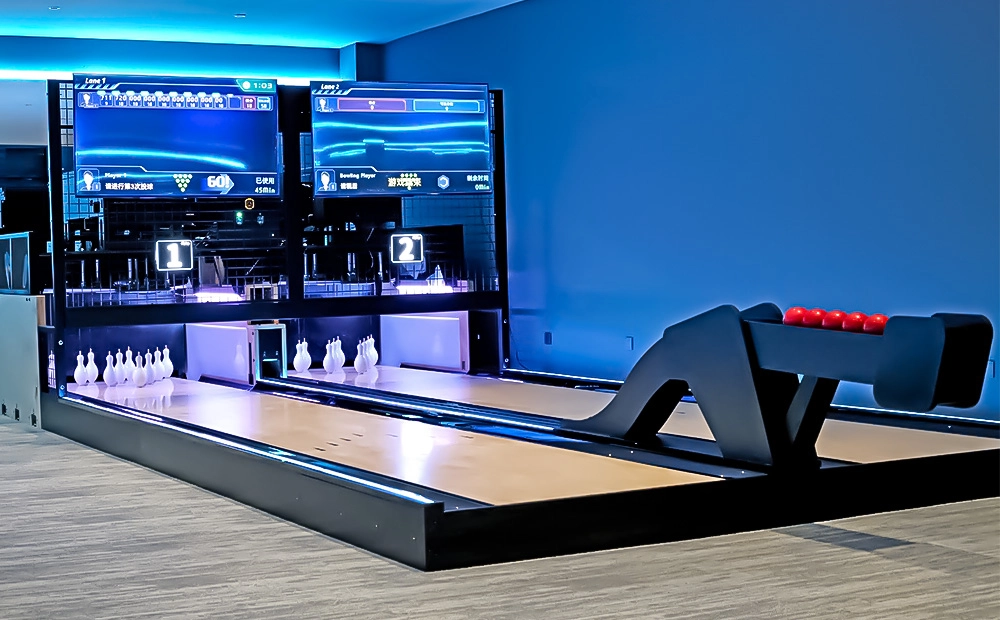
The innovative design of Flying Smart Duckpin Bowling (FSDB) makes it perfect for places like bars, billiard halls, and game centers. It makes people want to come back more often and spend more money. FSDB is fun and competitive, so it will become a new focus for social activities.
Flying Classic Standard Bowling
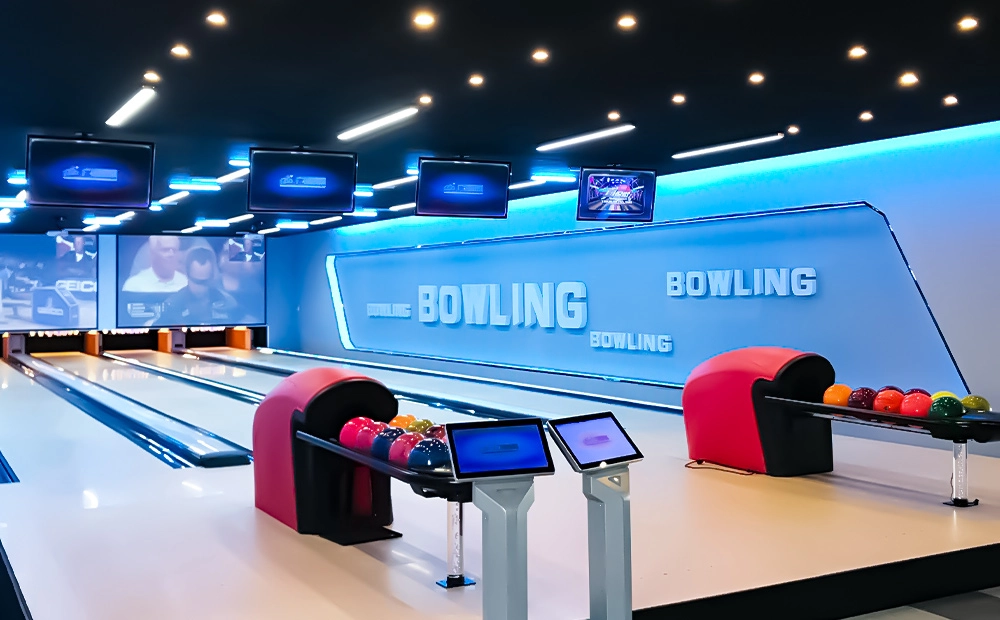
Flying Classic Standard Bowling (FCSB) employs the World Standard Competition Scoring System to deliver a more professional bowling experience, enabling bowlers to enjoy a professional-standard match at their convenience.
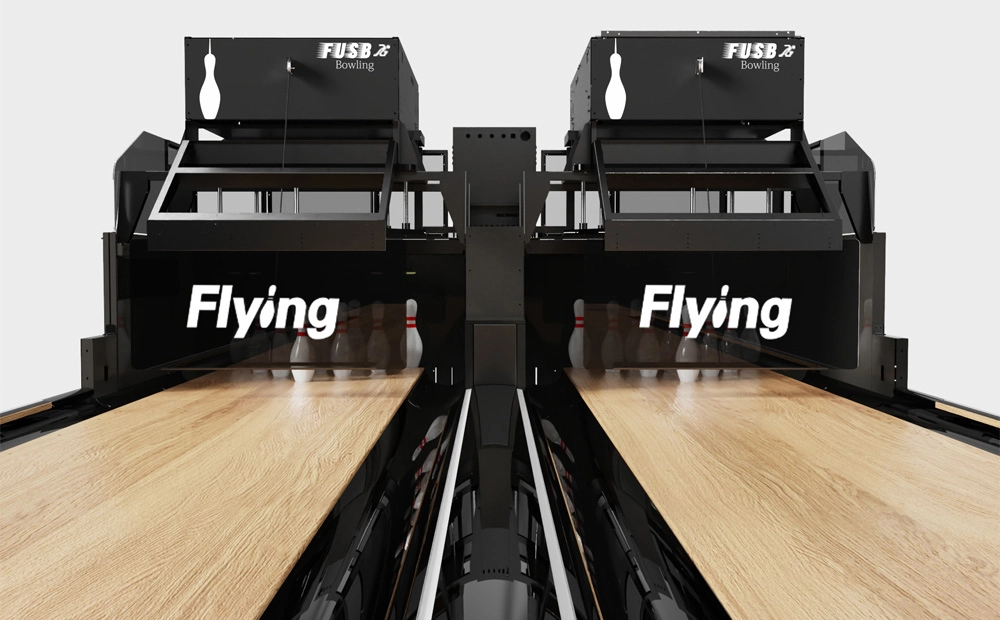
Flying Ultra Standard Bowling
Flying Ultra Standard Bowling (FUSB) Upgraded Version
The string pinsetter uses the latest technology. It offers a more enjoyable bowling experience thanks to its innovative designs and modern technology.

Get in touch
Contact us
If you contact us now for more details, we can provide you with a custom bowling alley service.
Our service team will get back to you within 24 hours, normally!



Professional Bowling Alley Equipment Manufacturer, a one-stop solution provider for bowling alleys.
Facebook
YouTube
Linkedin
Twitter