















The 2026 Blueprint for Bowling Lane Width: Dimensions, Boards, and Precision Specs
This comprehensive guide explores the technical dimensions of a professional bowling lane, focusing on the 41.5-inch regulation width, the 39-board targeting system, and the evolving material science of 2026 synthetic lanes.
- Standard Bowling Lane Width: The 41.5-Inch Foundation
- Understanding the 41.5-Inch Playing Surface
- Why Precision Matters: Entry Angles and Width
- Edge-to-Edge vs. Playing Surface
- Mastering the 39-Board System
- The Anatomy of Lane Boards
- The Math of the Board
- 2026 Innovations: Optical Tracking and Synthetic Manufacturing
- Gutters, Channels, and Total Lane Footprint
- Gutter Specifications
- Flat vs. Round Gutters in 2026
- Planning for 2026: Ball Returns and Multi-Lane Spacing
- The Lateral Impact of Ball Returns
- Calculating Center Width for Large Configurations
- 2026 Tech Integration: Scoring and AR
- Material Science: Width Stability in Synthetic vs. Wood
- Humidity and Expansion
- High-Density Phenolic Laminates
- Maintenance and Leveling
- Conclusion
- FAQ
- References
In the world of professional ten-pin bowling, precision is measured in millimeters, not inches. For center owners, architects, and competitive athletes, understanding the exact geometry of a bowling lane is the difference between a high-performance environment and a recreational novelty. As we move into 2026, the integration of Augmented Reality (AR) tracking, advanced synthetic laminates, and string pinsetter conversions has added new layers of complexity to traditional USBC equipment specifications.
This guide provides a deep dive into the blueprint of a modern bowling lane, bridging the gap between historical wooden standards and the high-tech requirements of the current era.
Standard Bowling Lane Width: The 41.5-Inch Foundation
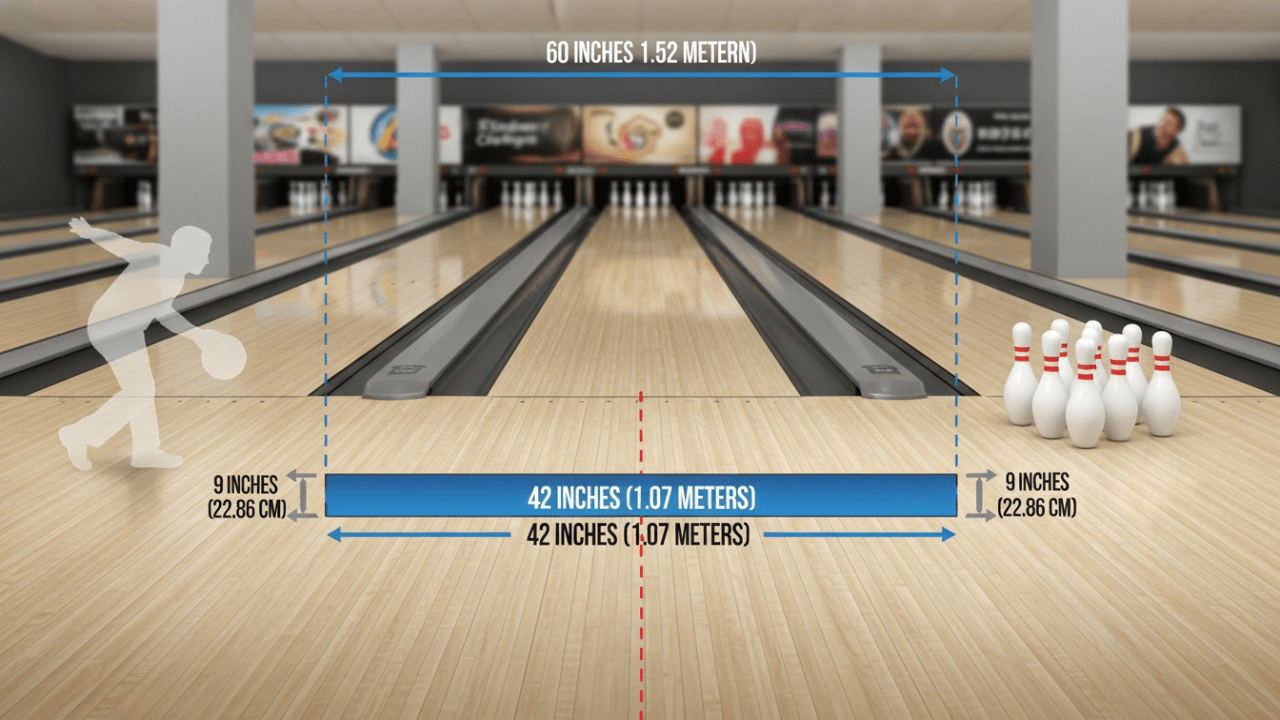
The fundamental measurement of a competitive bowling lane is its surface width. According to the United States Bowling Congress (USBC), the regulation lane width is 41.5 inches (105.4 cm). While this number sounds straightforward, its implementation requires rigorous adherence to tolerance levels to ensure fair play across different venues.
Understanding the 41.5-Inch Playing Surface
In a professional setting, the 41.5-inch measurement refers specifically to the width of the lane bed—the area where the ball travels. This measurement excludes the gutters (channels). In 2026, the USBC allows for a tolerance of plus or minus 1/2 inch. While this might seem like a generous margin, elite bowlers can feel even a quarter-inch difference in how their ball interacts with the lane edge.
Why Precision Matters: Entry Angles and Width
The width of the lane dictates the maximum "swing" a bowler can apply to their shot. A ball entering the pocket at the ideal 4-to-6-degree angle requires a specific lateral path. If a lane is even slightly narrow or wide, the mathematical coordinates for the "break point" shift. In modern centers, where oil patterns are applied with micronic precision, the physical width of the lane must be perfectly consistent from the foul line to the headpin to prevent unpredictable ball motion.
Edge-to-Edge vs. Playing Surface
It is vital to distinguish between the playing surface and the total structural width. While the lane is 41.5 inches wide, the inclusion of the lane dividers (cappings) and the physical substructure can add several inches to the facility's footprint. In high-end 2026 installations, architects prioritize the 'flush-fit' model, where the transition from the lane surface to the gutter is seamless, minimizing turbulence for the ball should it track near the channel.
Mastering the 39-Board System
To a casual observer, a bowling lane is a single slab of material. To a professional, it is a grid of 39 distinct zones. The bowling alley board count is universally set at 39, and this system is the primary language used for targeting and lane play.
The Anatomy of Lane Boards
Historically, lanes were constructed from 39 individual strips of maple and pine wood. In the modern era of synthetic vs wood lane width, manufacturers use high-pressure laminates that feature printed or etched board lines. These lines are not merely aesthetic; they are essential for the "39-board system" used by bowlers to calculate their strike line.
The Math of the Board
Each board is approximately 1.06 inches (2.69 cm) wide. By dividing the 41.5-inch surface into 39 boards, the sport creates a coordinate system:
· Board 1: The board closest to the right gutter (for a right-hander).
· Board 20: The exact center of the lane (the "headpin" board).
· Board 39: The board closest to the left gutter.
2026 Innovations: Optical Tracking and Synthetic Manufacturing
In 2026, the 39-board system has evolved. Modern synthetic lanes are now manufactured with "smart-grain" technology. This involves embedding subtle UV-reflective markers or high-contrast edge lines within the laminate layers. These allow for integrated AR projectors to overlay targeting grids directly onto the lane width. Despite these technological overlays, the underlying 1.06-inch board width remains the standard for USBC certification, ensuring that a bowler’s physical muscle memory remains valid across generations of technology.
Gutters, Channels, and Total Lane Footprint
A lane is only one part of the total equation. To calculate the space required for an installation, one must account for the gutter and channel dimensions.
Gutter Specifications
A standard gutter is 9.25 inches wide. Every regulation lane is flanked by two gutters, bringing the total width of a single lane unit to approximately 60 inches, or 5 feet.
· Width: 9.25 inches (23.5 cm) per gutter.
· Depth: The gutter must be deep enough to prevent a ball from jumping back onto the lane but shallow enough to allow for efficient ball return mechanics.
· Total Footprint: 41.5" (Lane) + 18.5" (Two Gutters) = 60".
Flat vs. Round Gutters in 2026
In contemporary center design, we are seeing a shift toward "multi-profile" gutters. High-end competitive centers often utilize round-bottom gutters, which are favored for their ability to center the ball quickly for the return system. However, "flat-bottom" gutters are becoming popular in boutique centers that use hydraulic bumper systems. These bumpers, which can be deployed for recreational play, require specific width tolerances to ensure they don't impede the 41.5-inch regulation surface when retracted.
Planning for 2026: Ball Returns and Multi-Lane Spacing
When designing a center in 2026, the 5-foot lane width is only the beginning. The "Power Pair" configuration—two lanes sharing a single ball return—is the standard building block of bowling architecture.
The Lateral Impact of Ball Returns
There are two primary methods for ball return: surface and underground.
· Surface Returns: These sit between a pair of lanes, usually requiring an additional 12 to 15 inches of width between the two gutters. This increases the total width of a pair to roughly 11.5 feet.
· Underground Returns: These allow for a narrower profile between lanes, often used in space-constrained urban "boutique" centers. However, they require significant slab-depth planning.
Calculating Center Width for Large Configurations
When planning for large-scale facilities, the cumulative width must account for the lanes, gutters, returns, and maintenance walkways.
· 12-Lane Center: Approximately 75–80 feet of width.
· 24-Lane Center: Approximately 150–160 feet of width.
· 48-Lane Center: Approximately 300+ feet of width.
2026 Tech Integration: Scoring and AR
The modern blueprint must also include space for integrated lane-side scoring tablets and AR projector mounts. These components often require wiring conduits that run parallel to the lane. Designers must ensure that these additions do not infringe upon the regulation lane width or the safety zones required for pinsetter maintenance.
Material Science: Width Stability in Synthetic vs. Wood
The debate of synthetic vs wood lane width is largely settled in favor of synthetic materials for 2026 centers, but the physical properties of these materials are still subject to environmental factors.
Humidity and Expansion
Traditional wood lanes (maple/pine) are notoriously susceptible to humidity. In high-moisture environments, wood fibers expand, causing the lane to "crown" (arc upward in the center) or "dish" (sink in the center). This physical distortion changes the effective width and playability of the lane. A crowned lane effectively "narrows" the playable surface because the ball naturally wants to fall off the center ridge toward the gutters.
High-Density Phenolic Laminates
Most 2026 installations utilize high-density phenolic laminates. These synthetic surfaces offer near-zero thermal expansion, ensuring that the 41.5-inch width remains constant regardless of the climate control within the building. These materials are also harder, preventing the "tracking" (physical grooves) that used to develop on old wooden lanes from repeated ball impact.
Maintenance and Leveling
Regardless of material, the USBC requires lanes to be level across their width within a tolerance of 0.040 inches. Regular maintenance checklists in 2026 include digital leveling—using laser-guided tools to ensure the lane is perfectly flat from board 1 to board 39. Any deviation in levelness across the 41.5-inch span will cause the ball to "drift," mimicking the effects of a lane that is physically wider or narrower than it actually is.
Conclusion
The technical specifications of a bowling lane are a masterclass in functional design. From the 41.5-inch regulation playing surface to the intricate 39-board targeting system, every dimension serves a purpose in the pursuit of competitive balance. As we look toward the future of the sport in 2026, these measurements remain the bedrock upon which new technologies—like AR overlays and smart-tracking—are built. Whether you are building a new center or refining your game, the blueprint of the lane is your map to success.
FAQ
What is the exact width of a professional bowling lane?
The standard width is 41.5 inches, with a USBC-allowed tolerance of plus or minus 1/2 inch.
How many boards are in a bowling lane width?
There are exactly 39 boards across the width of a standard ten-pin lane.
How wide is a bowling lane including the gutters?
Including both gutters (9.25 inches each), the total width of a single lane unit is approximately 60 inches (5 feet).
Are duckpin bowling lanes narrower than ten-pin lanes?
No, the lane surface width of 41.5 inches is consistent across most common formats, including duckpin and candlepin, though pin and ball sizes differ.
How wide is an individual board on a bowling lane?
Each board is approximately 1.06 inches wide.
What is the width requirement for the approach area?
The approach must be no less than the width of the lane (41.5 inches), but in practice, it typically matches the 60-inch total footprint of the lane and gutters combined.
Does lane oil affect the perceived width of the lane?
Physically, no. However, oil patterns dictate the "usable" width. A heavy oil pattern in the middle might make the lane feel "narrower" as the ball hooks later, whereas a dry lane feels "wider" because the ball reacts earlier across more boards.
How much space is needed for a pair of bowling lanes?
A pair of lanes typically requires a total width of 11.5 feet to accommodate two lanes, four gutters, and a central ball return system.
References
· United States Bowling Congress (USBC): Equipment Specifications and Certifications Manual (2025-2026 Edition).
· ASTM International: Standard Practice for Construction of Bowling Alleys and Synthetic Surfaces.
· International Bowling Museum and Hall of Fame: Historical Evolution of Lane Dimensions.
· Brunswick Bowling Products: Technical Installation Guide for Pro Lane™ Synthetic Systems.
· QubicaAMF: Center Development and Architectural Planning Guide (2026 Update).

Quality Bowling


Products
Can I customize the bowling equipment to fit my venue's theme?
Yes, we offer fully customized solutions, including lane colors, scoring systems, and pinsetter designs to match your venue’s theme.
Can you provide customized bowling alley design solutions?
Yes, we provide full customization services from space planning, equipment selection to theme design.
Installations
How long does it take to install the equipment?
It takes about 7-15 days for a standard venue, and it takes an average of 2 days to install a fairway.
Technology
Are your products compliant with European safety standards?
Yes, all of our products meet the required EU safety and regulatory standards.
Service
Do you provide regular maintenance services?
You can sign an annual maintenance agreement, which includes quarterly inspections, lubrication maintenance, system upgrades and other services.
You May Also Like
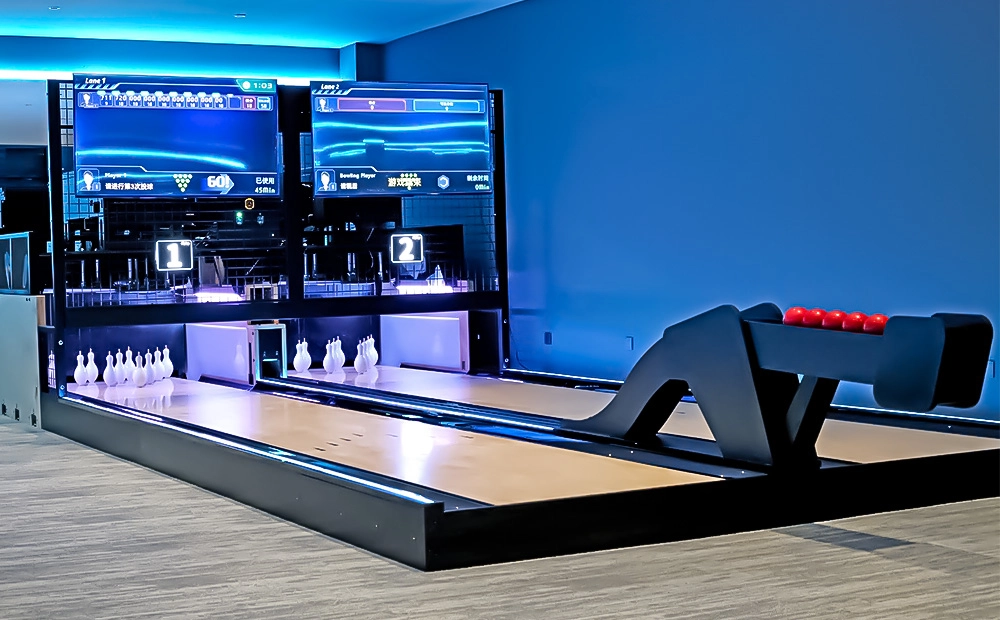
Flying Smart Duckpin Bowling
The innovative design of Flying Smart Duckpin Bowling (FSDB) makes it perfect for places like bars, billiard halls, and game centers. It makes people want to come back more often and spend more money. FSDB is fun and competitive, so it will become a new focus for social activities.
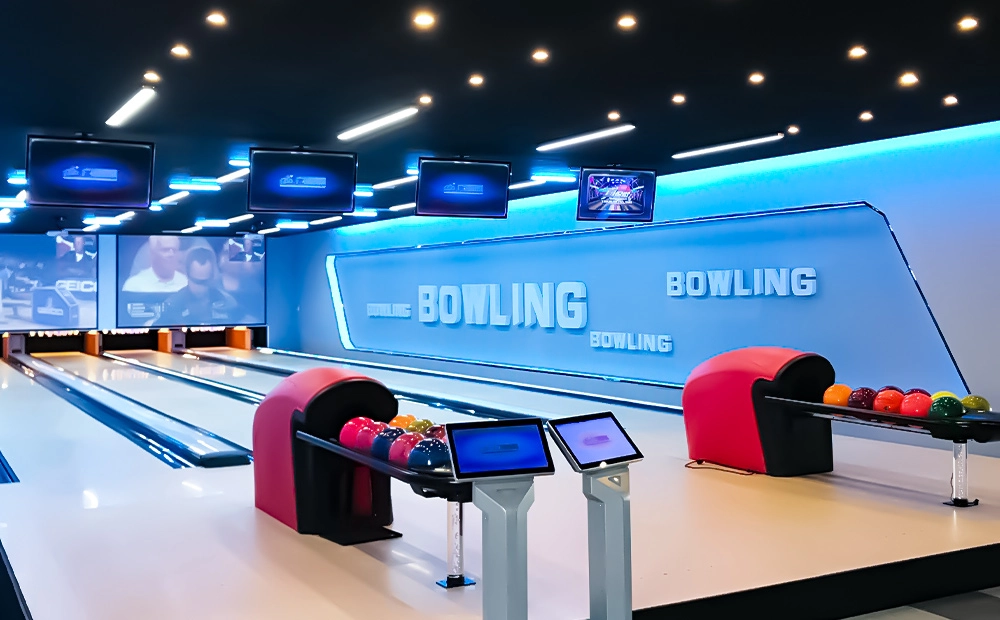
Flying Classic Standard Bowling
Flying Classic Standard Bowling (FCSB) employs the World Standard Competition Scoring System to deliver a more professional bowling experience, enabling bowlers to enjoy a professional-standard match at their convenience.
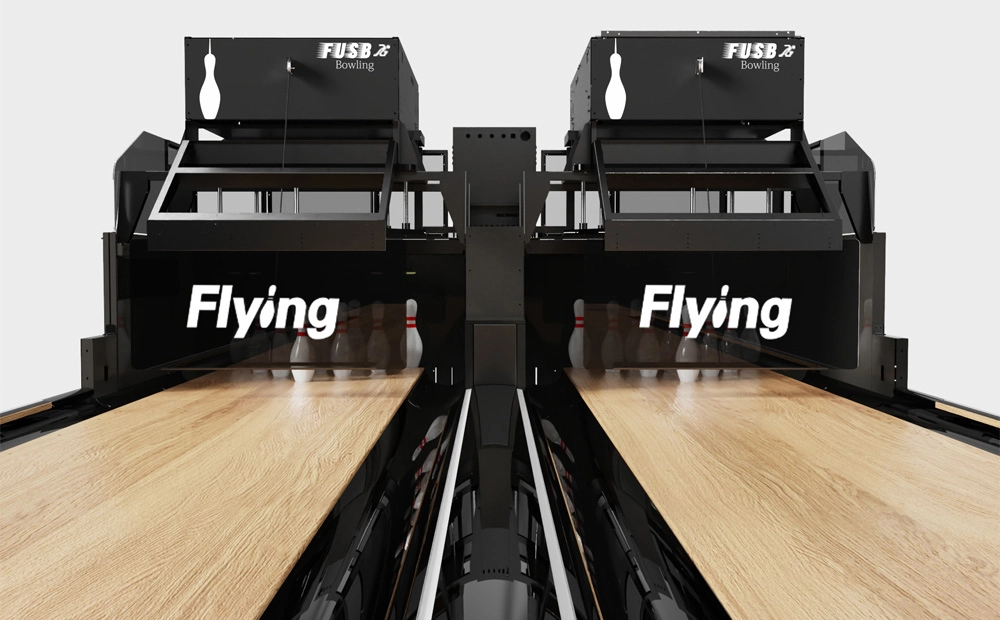
Flying Ultra Standard Bowling
Flying Ultra Standard Bowling (FUSB) Upgraded Version
The string pinsetter uses the latest technology. It offers a more enjoyable bowling experience thanks to its innovative designs and modern technology.

Get in touch
Contact us
If you contact us now for more details, we can provide you with a custom bowling alley service.
Our service team will get back to you within 24 hours, normally!



Professional Bowling Alley Equipment Manufacturer, a one-stop solution provider for bowling alleys.
Facebook
YouTube
Linkedin
Twitter