













How Long is a Bowling Lane? The Definitive 2026 Guide to Length, Space, and Professional Specs
This definitive guide breaks down the official 60-foot bowling lane length, the total 100-foot spatial footprint required for modern facilities, and the latest 2026 technological specs for smart lanes and string-pin systems.
- The Core Metric: Distance from Foul Line to Head Pin
- Why 60 Feet?
- Tolerance and 2026 Tech Updates
- The Full Footprint: How Much Total Space Do You Actually Need?
- The Breakdown of the 100-Foot Footprint:
- Anatomy of the Width: Boards, Gutters, and Channels
- Variations: Standard vs. Alternative Formats
- Duckpin and Candlepin Bowling
- Mini-Bowling Systems
- String-Pin Alley Dimensions
- Physics of the Length: How Distance Affects Your Hook
- The Impact of Topography
- FAQ: Essential Lane Dimensions
- References
In the world of professional sports, few metrics are as sacred as the 60-foot distance in bowling. However, as we move into 2026, the question "How long is a bowling lane?" has evolved. While the core playing surface remains constant, the total spatial footprint required to house a modern, high-tech bowling environment has expanded due to new player expectations, advanced pinsetting technology, and augmented reality (AR) integrations.
Whether you are a competitive bowler looking to master lane transitions or a developer planning a luxury home installation, understanding the literal and technical dimensions of a bowling lane is the foundation of success. This guide provides the most current specifications, including the latest 2026 USBC (United States Bowling Congress) standards and smart-lane innovations.
The Core Metric: Distance from Foul Line to Head Pin
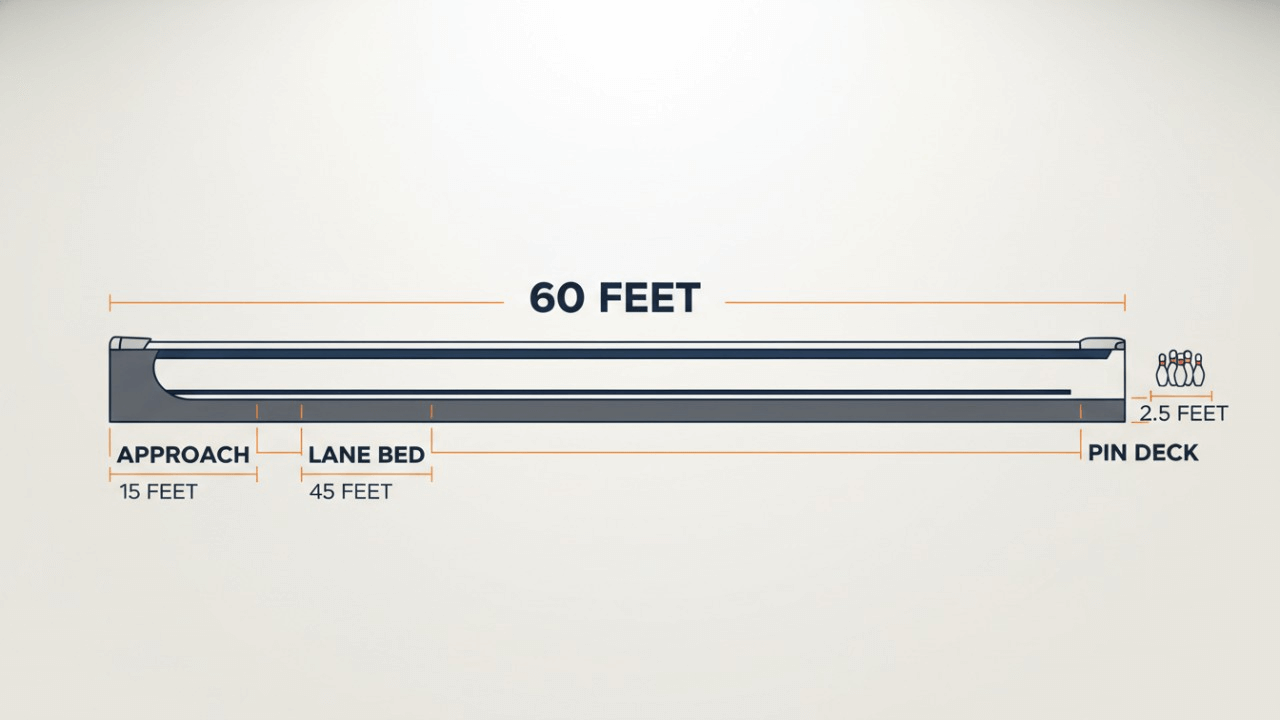
The most critical measurement in bowling is the 60-foot (18.29-meter) distance from the foul line to the center of the head pin. This is the official USBC regulation lane dimension that defines the playing field for ten-pin bowling worldwide.
Why 60 Feet?
It is important to note that the measurement stops at the center of the head pin spot, not at the end of the lane surface. The total synthetic or wood surface actually extends roughly 62 feet 10 inches to include the pin deck. This 60-foot window is calculated to provide the optimal time for a ball to transition from skid to hook and eventually into the "roll" phase, which is essential for maximizing pin carry.
Tolerance and 2026 Tech Updates
In professional play, even 1/2 inch of variation can drastically alter how a ball reacts to oil patterns. By 2026, traditional physical markers have largely been augmented by laser-guided foul line sensors. Modern facilities now use LIDAR-based systems to ensure that the foul line to head pin distance is accurate to within a fraction of a millimeter. For professional tournaments, USBC inspectors now utilize automated scanners to verify that the lane remains level within a 0.040-inch tolerance, ensuring a truly fair playing field.
The Full Footprint: How Much Total Space Do You Actually Need?
If you are researching home bowling alley space requirements, the 60-foot figure is misleading. To build a functional lane, you must account for the player's approach, the machine area, and the service aisle. In the industry, this is known as the "100-Foot Rule."
The Breakdown of the 100-Foot Footprint:
1. The Seating/Concourse Area (12–15 Feet): This is the space behind the approach where players wait, interact with scoring tablets like the QubicaAMF BES NV, and store their gear.
2. The Approach (16–17 Feet): While the USBC minimum is 15 feet, most modern installations prefer 17 feet. This accommodates professional bowlers with longer strides and allows for the installation of AR projection hardware overhead.
3. The Playing Lane (60 Feet): The standard distance from foul line to head pin.
4. The Pin Deck and Machine Room (5–8 Feet): This area houses the pinsetter. Modern string-pin systems (like the Brunswick Boost ST) are more compact than traditional free-fall machines, but they still require depth for the ball pit and soundproofing.
5. The Service Aisle (3–4 Feet): A critical but often overlooked component. Technicians need at least 3 feet of space behind the machines for maintenance and access to the power units.
Total Estimated Depth: 96 to 105 feet.
Anatomy of the Width: Boards, Gutters, and Channels
While length gets the most attention, the bowling lane width and boards are what dictate strategy. A standard lane is exactly 41.5 inches wide, consisting of 39 individual boards. These boards are the "DNA" of the sport, acting as a coordinate system for targeting.
· The 39-Board Layout: Bowlers use these boards to calculate their "break point." In 2026, smart-lanes often feature LED board indicators that can highlight specific target paths for training.
· Gutters (Channels): Each lane is flanked by two 9.25-inch gutters. These are designed with a 1.875-inch depth to ensure that errant balls are captured efficiently without bouncing back into the field of play.
· Total Width: When you include the capping, division rails, and ball return system, a single lane requires approximately 60 inches (5 feet) of width. For a pair of lanes (the standard building unit), you should plan for a total width of roughly 11 feet 6 inches.
Variations: Standard vs. Alternative Formats
Not every bowling experience requires 100 feet of space. In 2026, "social bowling" has seen a massive rise in alternative formats that modify the standard bowling lane length.
Duckpin and Candlepin Bowling
These regional favorites use smaller balls and pins. Duckpin bowling dimensions are typically shorter, often around 60 feet total but with a significantly smaller footprint for the pinsetters.
Mini-Bowling Systems
Popular in urban "eatertainment" venues, mini-bowling lanes range from 30 to 45 feet in length. These systems use 5-pound balls and are not USBC-certified, but they offer a high-intensity social experience for venues with limited square footage.
String-Pin Alley Dimensions
A major shift in 2026 is the widespread adoption of USBC-certified string pinsetters. While the lane length remains 60 feet, the string pin alley dimensions allow for a shallower pit area. String pins require a minimum of 35 inches from the end of the lane to the ball cushion, whereas traditional machines often need more clearance for mechanical sweeps.
Physics of the Length: How Distance Affects Your Hook
The 60-foot length isn't an arbitrary number; it is a masterclass in friction physics. The ball's journey is divided into three zones:
1. The Skid Zone: The first 15–20 feet where the oil is heaviest. The ball slides with minimal friction.
2. The Hook Zone: The mid-lane where the oil tapers off. This is where the core of the ball begins to take over, changing the ball's direction.
3. The Roll Zone: The final 5–10 feet. Here, the ball must stop hooking and start rolling end-over-end into the "pocket" (the space between the 1 and 3 pins).
The Impact of Topography
In 2026, the elite level of the sport focuses on topography. Because lanes are never perfectly flat, gravity plays a role alongside friction. A lane that tilts just 0.040 inches toward the gutter can make a "heavy oil" pattern feel like a "dry" one. Advanced facilities now provide bowlers with digital topography maps, allowing them to adjust their launch angle based on the structural microscopic slopes of the specific 60-foot stretch they are playing on.
FAQ: Essential Lane Dimensions
Is a bowling lane exactly 60 feet long?
The playing surface from the foul line to the head pin is exactly 60 feet. However, the total synthetic surface, including the pin deck is approximately 62 feet 10 inches.
How much space is needed for a home bowling alley?
For a full regulation setup, you need a room roughly 100 feet long. This includes the approach, the lane, the pinsetter, and the service aisle.
How wide is a standard bowling lane?
The lane surface is 41.5 inches wide and consists of 39 individual boards. Including the gutters, the total width is approximately 60 inches.
Do string-pin systems change the lane length?
No. For USBC certification, the 60-foot foul-line-to-head-pin distance must be maintained regardless of whether the machine is string-based or free-fall.
What is the length of the approach area?
The minimum regulation length is 15 feet, though 17 feet is the preferred professional standard in modern centers.
References
· United States Bowling Congress (USBC). (2025). Equipment Specifications and Certifications Manual.
· Brunswick Bowling & Billiards. (2026). Spark Immersive Projection & Lane Installation Guide.
· QubicaAMF Worldwide. (2025). Spatial Planning for New Center Development: The 100-Foot Standard.
Kegel Training Center. (2026). Topography and Ball Motion: The Science of Friction in Modern Bowling.

Quality Bowling
Installations
How long does it take to install the equipment?
It takes about 7-15 days for a standard venue, and it takes an average of 2 days to install a fairway.
Was the equipment installed by professional technicians?
The installation team we dispatched is composed of professional technicians who have undergone rigorous assessment and training and have rich experience in bowling equipment installation. The team uses digital debugging tools throughout the process to ensure that each component of the equipment can be accurately installed and debugged to achieve optimal operating conditions.
Service
What are the free cases during the warranty period, and what are the cases that require additional charges?
Covering failures caused by material/workmanship defects, providing free labor and parts repairs; non-quality damage will be charged at cost, and a detailed quotation will be provided for confirmation before repair.
Products
Is your equipment suitable for beginners?
Our equipment is easy to operate and equipped with auxiliary aiming lines, so even those who are new to bowling can quickly get started.
Technology
How can I get the latest technology upgrades?
Our customers can get software updates for free and hardware upgrades at cost price.
You May Also Like
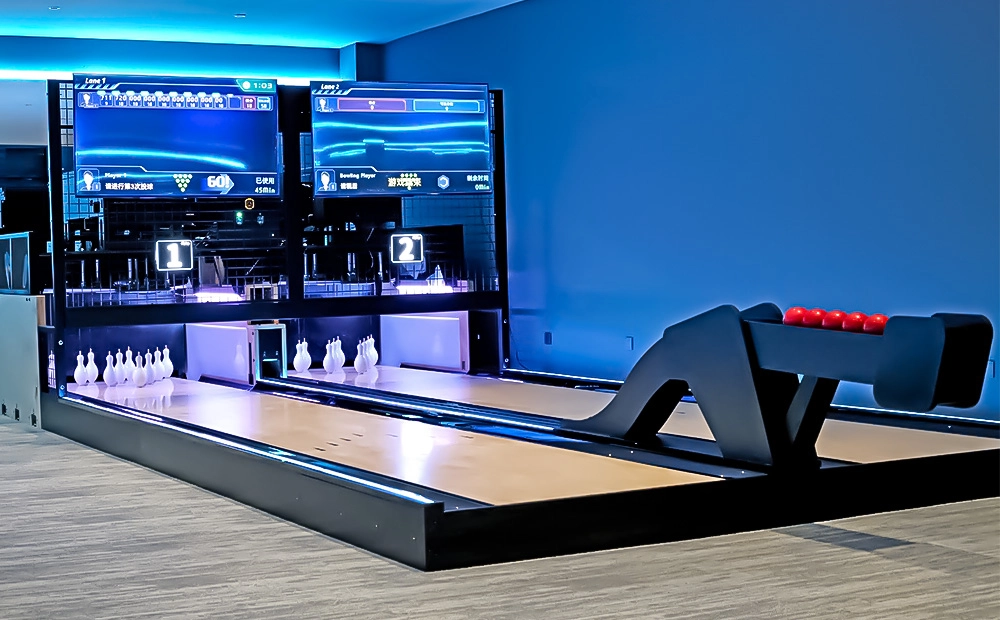
Flying Smart Duckpin Bowling
The innovative design of Flying Smart Duckpin Bowling (FSDB) makes it perfect for places like bars, billiard halls, and game centers. It makes people want to come back more often and spend more money. FSDB is fun and competitive, so it will become a new focus for social activities.
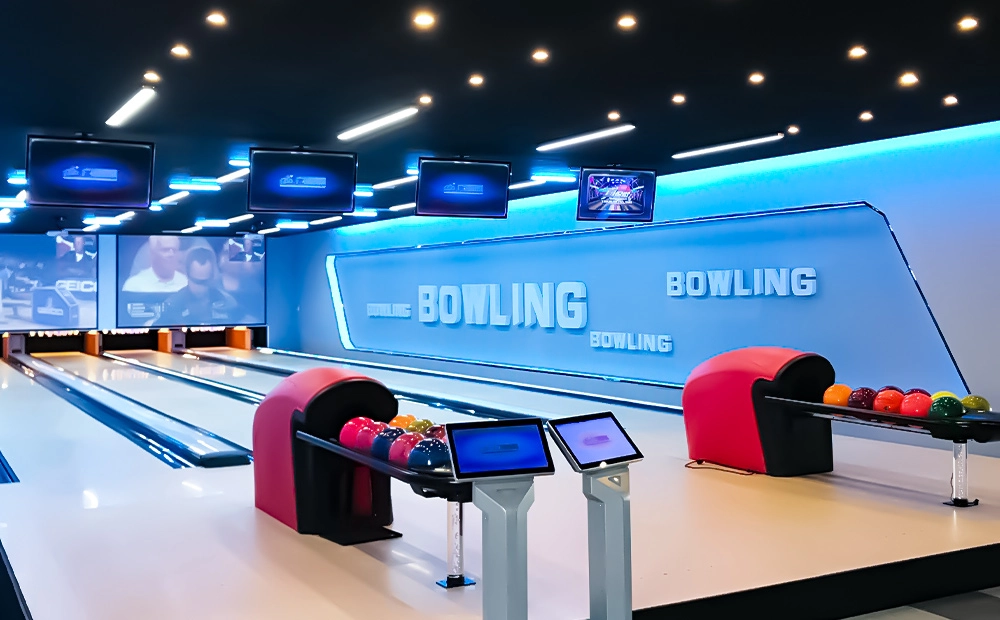
Flying Classic Standard Bowling
Flying Classic Standard Bowling (FCSB) employs the World Standard Competition Scoring System to deliver a more professional bowling experience, enabling bowlers to enjoy a professional-standard match at their convenience.
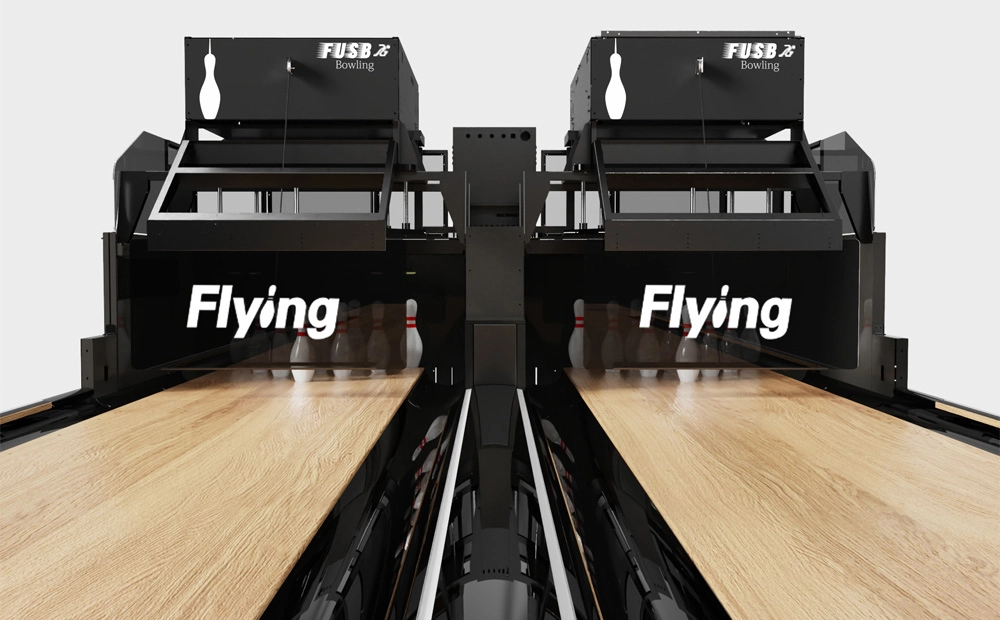
Flying Ultra Standard Bowling
Flying Ultra Standard Bowling (FUSB) Upgraded Version
The string pinsetter uses the latest technology. It offers a more enjoyable bowling experience thanks to its innovative designs and modern technology.

Get in touch
Contact us
If you contact us now for more details, we can provide you with a custom bowling alley service.
Our service team will get back to you within 24 hours, normally!



Professional Bowling Alley Equipment Manufacturer, a one-stop solution provider for bowling alleys.
Facebook
YouTube
Linkedin
Twitter