















Bowling Alley Lane Size: The 2026 Ultimate Planning & Dimension Guide
A comprehensive guide to bowling lane dimensions, including USBC regulation specifications, total architectural footprint requirements, and technical considerations for modern string pinsetters versus traditional machines.
- The Core Measurements: Regulation Ten-Pin Lane Size
- The 60-foot Rule and Total Surface Length
- Standard Width and Gutter Specifications
- The Total Footprint: Calculating Room Length
- Width Requirements for Multiple Lanes
- Vertical Clearance and Sub-Flooring
- The 17-inch Slab Depression
- Bowling Alley Ceiling Height and Acoustics
- Alternative Bowling Sizes: Duckpin and Mini-Bowling
- Frequently Asked Questions
- What is the official length of a bowling lane?
- How wide is a standard bowling lane?
- How much space do you need for a home bowling alley?
- Does the lane size include the approach area?
- What are the ceiling height requirements?
- How deep is the pit for the pinsetter machine?
- How many boards are in a bowling lane?
- Can I install a bowling lane in a standard two-car garage?
- References
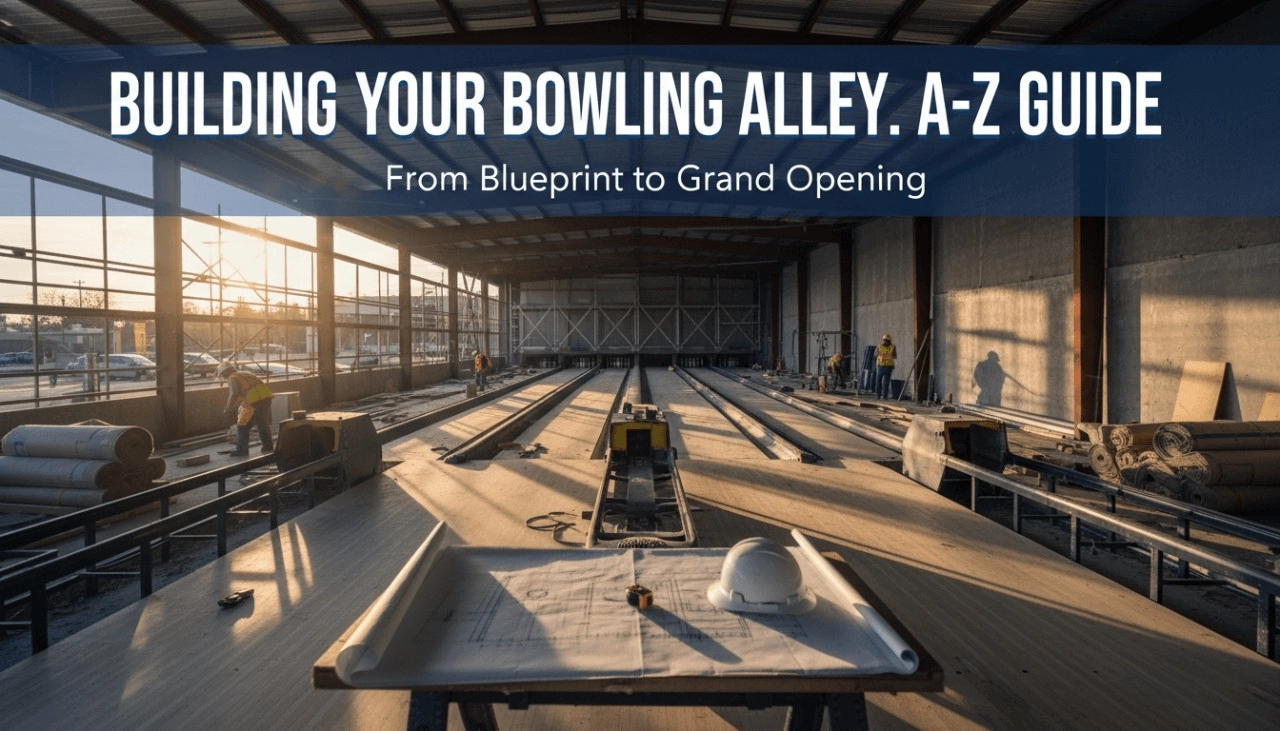
Designing a bowling facility in 2026 requires a precise balance of traditional athletic standards and modern space-saving technology. Whether you are an architect planning a commercial center or a homeowner designing a luxury recreation room, understanding the regulation bowling lane dimensions is the first step toward a successful installation. Beyond the wood and synthetic surfaces, the total bowling alley footprint encompasses specialized machinery zones, player approaches, and social seating areas that must be calculated with millimeter precision.
The Core Measurements: Regulation Ten-Pin Lane Size
The most critical measurement in the sport of bowling is the distance from the foul line to the center of the headpin (the 1-pin). According to USBC lane specifications, this distance must be exactly 60 feet. While many casual players believe the lane ends at the pins, the physical structure extends further to accommodate the pin deck and the pit area.

The 60-foot Rule and Total Surface Length
When measuring for a professional installation, the bowling lane length in meters is approximately 18.29 meters from the foul line to the headpin. However, the total playing surface—including the pin deck where the pins are spotted—actually measures 62 feet 10 and 3/16 inches (approximately 19.16 meters). This ensures that the pins have a stable foundation and that the ball has sufficient space to travel through the full pin array.
Standard Width and Gutter Specifications
The playable surface of a regulation lane is 41.5 inches wide, typically constructed from 39 to 40 individual boards. Including the gutters on both sides, the total width of a single lane unit is approximately 60 inches (5 feet). As documented on Dimensions.com, gutters must have a width of 9.25 inches and a depth of 1.875 inches to meet official standards. These narrow tolerances are essential for ensuring that ball dynamics remain consistent across different venues.
The Total Footprint: Calculating Room Length
A common mistake in planning is only accounting for the 60-foot lane. In reality, a complete bowling experience requires nearly double that distance to account for the approach, the machinery, and the spectators.
· The Approach Zone: This is the area where the bowler walks and delivers the ball. While 15 feet is the absolute minimum, the professional standard is 16 to 17 feet to allow for a full four- or five-step delivery.
· The Pinsetter Machine Room: This is the "engine room" of the alley. Traditional free-fall pinsetters require significant depth—roughly 8 to 9 feet—while modern string pinsetters, which are becoming the 2026 standard for social and residential venues, offer a more compact profile. However, USBC rules for string pinsetters still require a minimum distance of 35 inches from the end of the lane to the ball cushion to prevent pins from rebounding back into play.
· The Service Zone: Often overlooked, a maintenance aisle of 3 to 4.5 feet is required behind the machines. This allows technicians to safely service the pinsetter machine space requirements without dismantling the equipment.
· Seating and Social Area: To accommodate modern scoring consoles and social seating, plan for an additional 8 to 12 feet.
In total, a "back-of-wall to front-of-seating" plan should allot approximately 88 to 100 linear feet for a complete regulation experience.
Width Requirements for Multiple Lanes
When planning the home bowling alley width, efficiency is found in pairs. A single lane requires a minimum room width of about 7 to 8 feet to avoid a "tunnel" feel. However, because two lanes can share a central ball return system, a pair of lanes typically fits into a space only 11 feet 6 inches wide.
For commercial venues, service aisles are mandatory. A 30-inch (2.5 feet) gap between pairs of lanes or between the lane and the side wall is recommended to allow for easy access to the pinsetter room and to ensure players do not feel cramped during their delivery. As noted in the UFC Design Standards for Bowling Centers, providing generous circulation space is key to both safety and accessibility.
Vertical Clearance and Sub-Flooring
Architectural integration often fails at the floor level. A professional bowling lane is not simply laid on top of a flat concrete floor; it requires a specialized foundation to ensure a flush finish with the surrounding room.
The 17-inch Slab Depression
To achieve a seamless transition from the bowler's seating area to the approach, architects typically design a 17-inch concrete slab depression. This "pit" allows for the 12-inch sub-structure and the 5-inch lane surface to sit flush with the rest of the facility's flooring. In residential garage conversions where a slab depression isn't possible, a "step-up" approach is used, which may require a ramp to meet ADA accessibility standards.
Bowling Alley Ceiling Height and Acoustics
The bowling alley ceiling height is critical for both the installation of overhead scoring monitors and the management of acoustics. A minimum of 8 feet is required, but 10 to 12 feet is the professional recommendation. Higher ceilings allow for better ventilation and the installation of acoustic buffers—essential for dampening the 100+ decibel impact of a 16-pound ball hitting the pins. According to reports from Fusion Bowling, ceilings lower than 9 feet often necessitate wall-mounted scoring displays rather than preferred overhead units.
Alternative Bowling Sizes: Duckpin and Mini-Bowling
If the 100-foot requirement is prohibitive, 2026 trends point toward boutique alternatives. Comparing duckpin vs tenpin lane size, while traditional duckpin can use the full 60-foot length, "Social Duckpin" variants often utilize a 32-to-35-foot layout. These lanes use smaller, lighter balls (approx. 3.75 lbs) and do not require finger holes, making them ideal for urban entertainment centers with a smaller bowling alley footprint.
Mini-Bowling (often referred to as "Rollerball") provides a 27-to-45-foot solution that is perfect for home basements or small bars. These systems use 12-meter (approx. 39 feet) lanes and string pinsetters, drastically reducing the structural load and maintenance requirements compared to full-size ten-pin installations.
Frequently Asked Questions
What is the official length of a bowling lane?
The regulation distance from the foul line to the center of the headpin is 60 feet (18.29 meters). However, the total physical length of the lane bed including the pin deck is approximately 62 feet 10 inches.
How wide is a standard bowling lane?
A regulation lane surface is 41.5 inches wide. When including the two 9.25-inch gutters, the total width of a single lane is approximately 60 inches or 5 feet.
How much space do you need for a home bowling alley?
For a full regulation setup, you need a room roughly 100 feet long. This covers the seating (12'), approach (16'), lane (63'), and machine/service area (9'). For width, a single lane needs at least 7-8 feet, while a pair needs about 11.5 feet.
Does the lane size include the approach area?
No. The 60-foot regulation length starts specifically at the foul line and ends at the headpin. The approach area is a separate section behind the foul line, typically 15 to 17 feet long.
What are the ceiling height requirements?
The absolute minimum is 8 feet from the lane surface, but 10 to 12 feet is preferred to accommodate overhead monitors, lighting, and better sound acoustics.
How deep is the pit for the pinsetter machine?
Standard machines require a pit depth of about 4.75 inches from the top of the pin deck to the pit floor. Architecturally, a 17-inch slab depression is standard for the entire lane area to ensure a flush-floor finish.
How many boards are in a bowling lane?
A standard lane consists of 39 to 40 boards. Players use these boards as visual targets to calculate the ball's path and hook potential.
Can I install a bowling lane in a standard two-car garage?
A standard garage is typically 20-24 feet deep, which is insufficient for a 60-foot regulation lane. However, it is an ideal size for a mini-bowling system or a modified "short lane" setup.
References
· USBC: String Pinsetter Frequently Asked Questions
· Dimensions.com: Bowling Lane Dimensions & Drawings
· WBDG: UFC 4-740-01NF Design: Bowling Centers
· FlyingBowling: Ten-Pin vs Duck pin Bowling Comparison

Quality Bowling


Company
What are the advantages of your brand compared with other international brands?
Compared with other international brands, our equipment has significant price advantages and lower maintenance costs. We provide customers with more cost-effective options by optimizing the design and manufacturing process while ensuring high quality and compliance with USBC international standards.
Products
Is your equipment suitable for beginners?
Our equipment is easy to operate and equipped with auxiliary aiming lines, so even those who are new to bowling can quickly get started.
Installations
How long does it take to install the equipment?
It takes about 7-15 days for a standard venue, and it takes an average of 2 days to install a fairway.
Technology
Can old equipment be upgraded?
We provide personalized transformation solutions for different venues, such as replacing old pinsetter machines with the latest string pinserrer machines , LED interactive lanes, etc.
Customer care
Do I get a discount if my bowling lanes are shorter than standard length?
Shorter lanes require additional labor to cut and splice materials, which offsets any potential material savings. As a result, pricing remains the same regardless of lane length.
You May Also Like
Flying Smart Duckpin Bowling
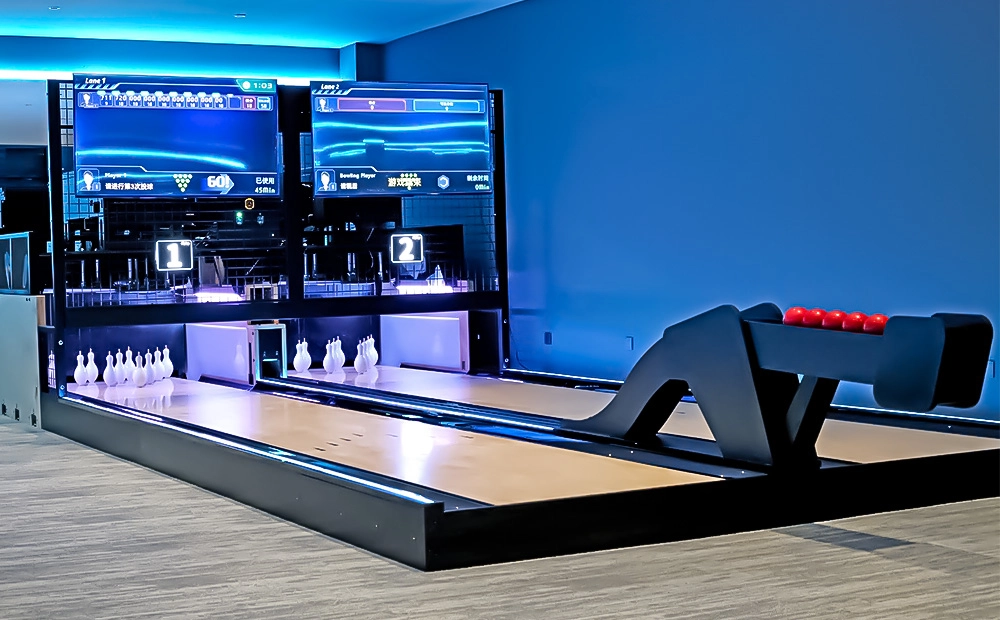
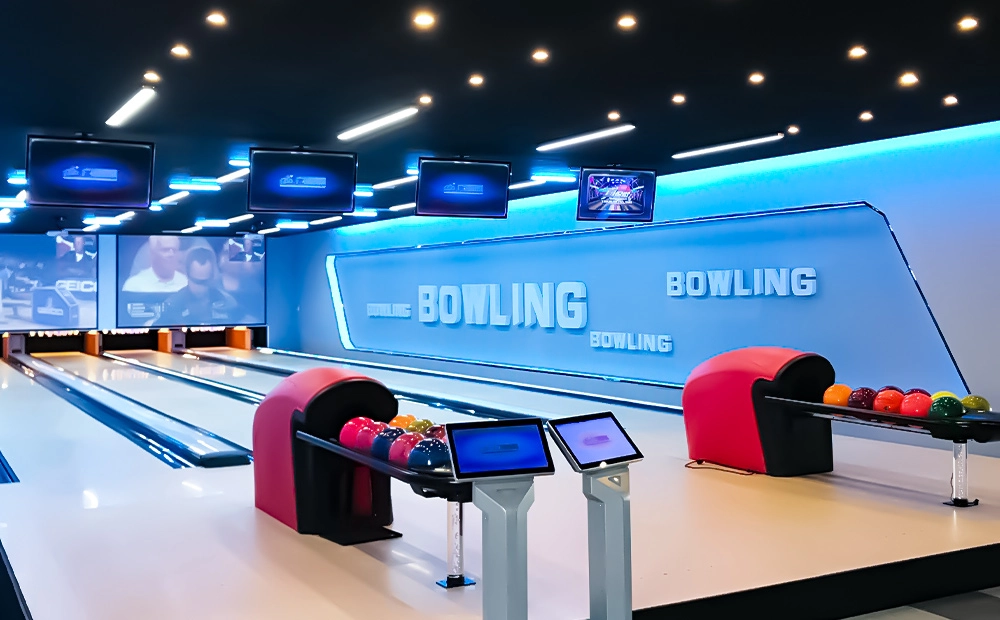
The innovative design of Flying Smart Duckpin Bowling (FSDB) makes it perfect for places like bars, billiard halls, and game centers. It makes people want to come back more often and spend more money. FSDB is fun and competitive, so it will become a new focus for social activities.
Flying Classic Standard Bowling
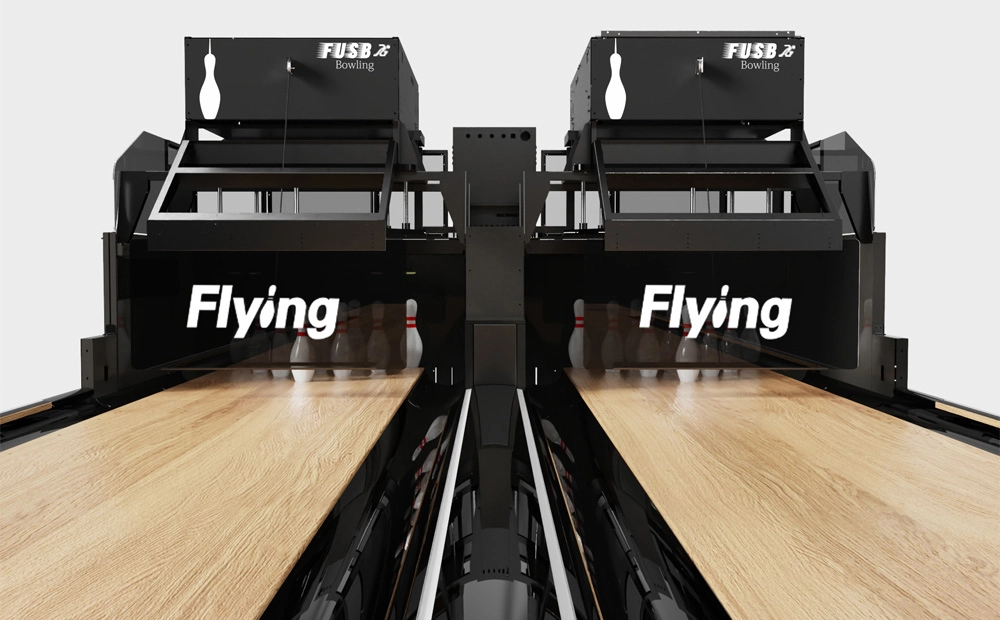
Flying Classic Standard Bowling (FCSB) employs the World Standard Competition Scoring System to deliver a more professional bowling experience, enabling bowlers to enjoy a professional-standard match at their convenience.
Flying Ultra Standard Bowling
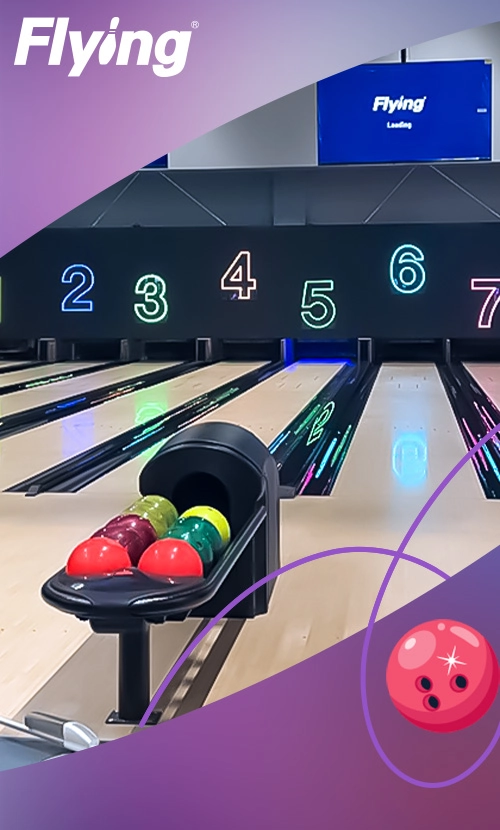
Flying Ultra Standard Bowling (FUSB) Upgraded Version
The string pinsetter uses the latest technology. It offers a more enjoyable bowling experience thanks to its innovative designs and modern technology.

Get in touch
Contact us
If you contact us now for more details, we can provide you with a custom bowling alley service.
Our service team will get back to you within 24 hours, normally!



Professional Bowling Alley Equipment Manufacturer, a one-stop solution provider for bowling alleys.
Facebook
YouTube
Linkedin
Twitter