














The 2026 Masterclass: Bowling Alley Installation from Concept to First Strike
A comprehensive 2026 guide to bowling alley installation, covering costs, string pinsetter technology, and residential vs. commercial specifications for a seamless build.
- Executive Summary: The State of Bowling Installation in 2026
- What Entails a Professional Bowling Alley Installation?
- Phase 1: Spatial Dynamics and Structural Pre-Requisites
- Phase 2: The 2026 Investment Guide (Cost Analysis)
- Phase 3: Selecting Your Core Technology
- Phase 4: Step-by-Step Installation Timeline
- Expert Tips: Avoiding Common Installation Pitfalls
- FAQs
- How much space is actually needed for a home bowling alley?
- What is the cost difference between string and free-fall pinsetters?
- How long does the physical installation process take?
- Can I install a bowling lane in a basement with low ceilings?
- What is the ROI for a commercial bowling center in 2026?
- Do I need special permits for residential bowling lanes?
- What is the lifespan of synthetic bowling lanes?
- Does a home bowling alley increase property value?
- References
The landscape of turnkey bowling center construction has shifted dramatically. Gone are the days of dark, smoke-filled alleys; 2026 demands high-tech, hybrid entertainment centers that blend immersive gaming with social luxury. Whether you are a homeowner seeking the ultimate basement upgrade or an investor eyeing the $19.56 billion global bowling market, the path to a perfect strike begins with precision engineering.
Since 2005, manufacturers like Flying Bowling Co., Ltd. have driven this evolution, moving from heavy mechanical systems to streamlined, energy-efficient solutions. This masterclass breaks down the modern installation process, ensuring your project meets the rigorous demands of the 2026 standard.
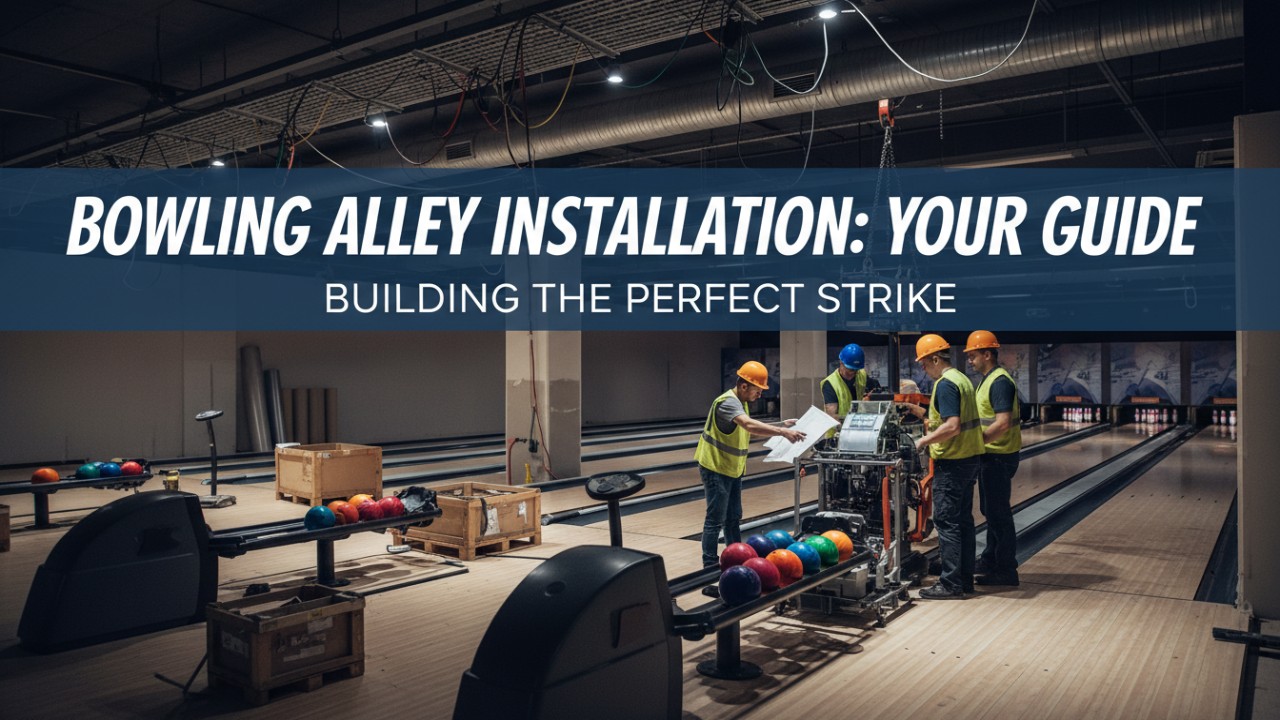
Executive Summary: The State of Bowling Installation in 2026
What defines a modern installation?
A 2026-ready bowling project is characterized by the integration of string pinsetter technology and boutique entertainment center design, prioritizing energy efficiency and multi-use floor plans over traditional league-only layouts.
The industry has pivoted toward flexibility and sustainability. Investors and homeowners must recognize three critical shifts before breaking ground:
- Timeline Velocity: Standard commercial projects now target a 12-16 week completion window, while residential single-lane setups can be finished in 4-8 weeks due to modular manufacturing.
- The Hybrid Model: Pure bowling venues are fading. The new standard combines lanes with arcade zones, laser tag, or duckpin layouts to maximize revenue per square foot.
- Budget Realities: Material costs have stabilized, but labor and tech integration have shifted the financial focus toward automation to reduce long-term operating expenses.
What Entails a Professional Bowling Alley Installation?
What is the core engineering process?
A comprehensive bowling alley installation is the precise architectural integration of a specialized substructure, synthetic lane surface (HPL), automated pinsetting machinery, and ball return network into a climate-controlled environment.
It is not merely placing equipment on a concrete slab. It is a three-phase synchronization of construction, mechanics, and software:
- Sub-Floor Engineering: Achieving a surface tolerance of 0.040 inches is non-negotiable. Even a millimeter of variance can cause ball drift, ruining the player experience.
- Mechanical Assembly: Installing the "heart" of the lane—the pinsetter and ball return accelerator—requires specialized power drops and safety caging.
- Digital Integration: Modern scoring is no longer just infrared sensors; it involves camera-based tracking systems (BES X or Sync) that gamify every roll.
Phase 1: Spatial Dynamics and Structural Pre-Requisites
How much space do you actually need?
Strict residential bowling lane dimensions require a minimum length of 87 feet from the back of the approach to the rear of the pinsetter service aisle, with a width of 11.5 feet per pair of lanes.
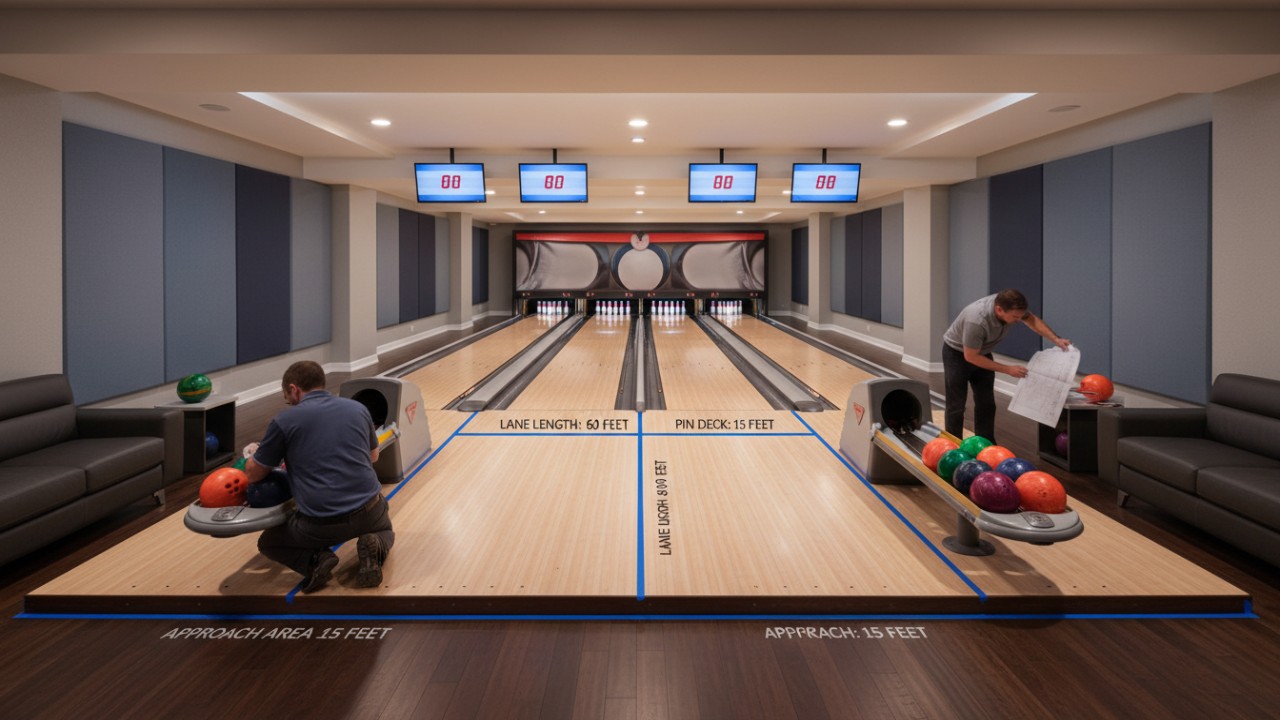
Ignoring spatial constraints is the number one cause of project delays. Before ordering equipment, verify these structural pillars:
- Standard Dimensions: While 87 feet is regulation, boutique setups can utilize 30-45 foot "Duckpin" lanes if space is tight. However, full regulation play allows for no compromise on length.
- Vertical Clearance: A ceiling height of 10-12 feet is preferred. This accommodates the 120-inch projection screens and masking units that define modern boutique entertainment center design.
- Acoustics & Isolation: In 2026, soundproofing is advanced. You must install acoustic sub-flooring cradles to isolate impact noise, preventing the 90dB crash of pins from bleeding into upstairs living areas or adjacent offices.
- HVAC Considerations: Synthetic lanes are sensitive to humidity. Relative humidity must be kept between 40-50% to maintain the integrity of the lane oil patterns and prevent machinery rust.
Phase 2: The 2026 Investment Guide (Cost Analysis)
What does a bowling alley cost in 2026? Expect to invest between $90,000 and $180,000 for a turnkey residential pair of lanes, while commercial centers benefit from economies of scale, averaging $45,000 to $80,000 per lane for larger installations.
For more cost analysis, please refer to our 2025 cost guide for bowling alley construction.
Financial planning requires transparency. Here is where the money goes:
- Residential Costs: The premium stems from custom logistics. Getting 12-foot lane panels into a basement often requires specialized crews and equipment.
- Commercial Factors: Commercial projects (10+ lanes) lower the per-unit cost but require heavier infrastructure investment in fire suppression and server rooms.
- Hidden Costs: Do not overlook freight shipping (often international), specialized 3-phase electrical runs, and recurring SaaS licensing for scoring software.
- New vs. Refurbished: While used equipment saves 30% upfront, maintenance costs can triple. New 2026 models from manufacturers like Flying Bowling come with CE and RoHS certifications, ensuring safety and lower energy bills.
Phase 3: Selecting Your Core Technology
Which pinsetter system drives ROI? The industry debate of string pinsetter vs free-fall cost has largely been settled: String pinsetters are the superior choice for 90% of new venues due to having 75% fewer moving parts and consuming 50% less energy.
Choosing your "engine" dictates your long-term profitability:
- Pinsetter Wars:
- String Pinsetters: Use nylon cords to reset pins. They are quiet, require no specialized mechanic, and are now USBC certified for competitive play. Brands like Flying Bowling have perfected this technology to feel identical to free-fall.
- Free-Fall: The traditional choice. While purists love the sound, they require a full-time mechanic and significantly more safety barriers.
- Lane Surfaces: High-Pressure Laminate (synthetic) is the industry standard. Unlike wood, it never needs resurfacing—only daily oiling.
- Scoring Systems: Modern systems are social hubs. They allow players to order food from the console, take selfies, and play "Angry Birds" style bowling games.
Phase 4: Step-by-Step Installation Timeline
How long does the build take? A standard installation follows a rigid 8-week critical path once the site is "white box" ready (clean walls, poured concrete, and power active).
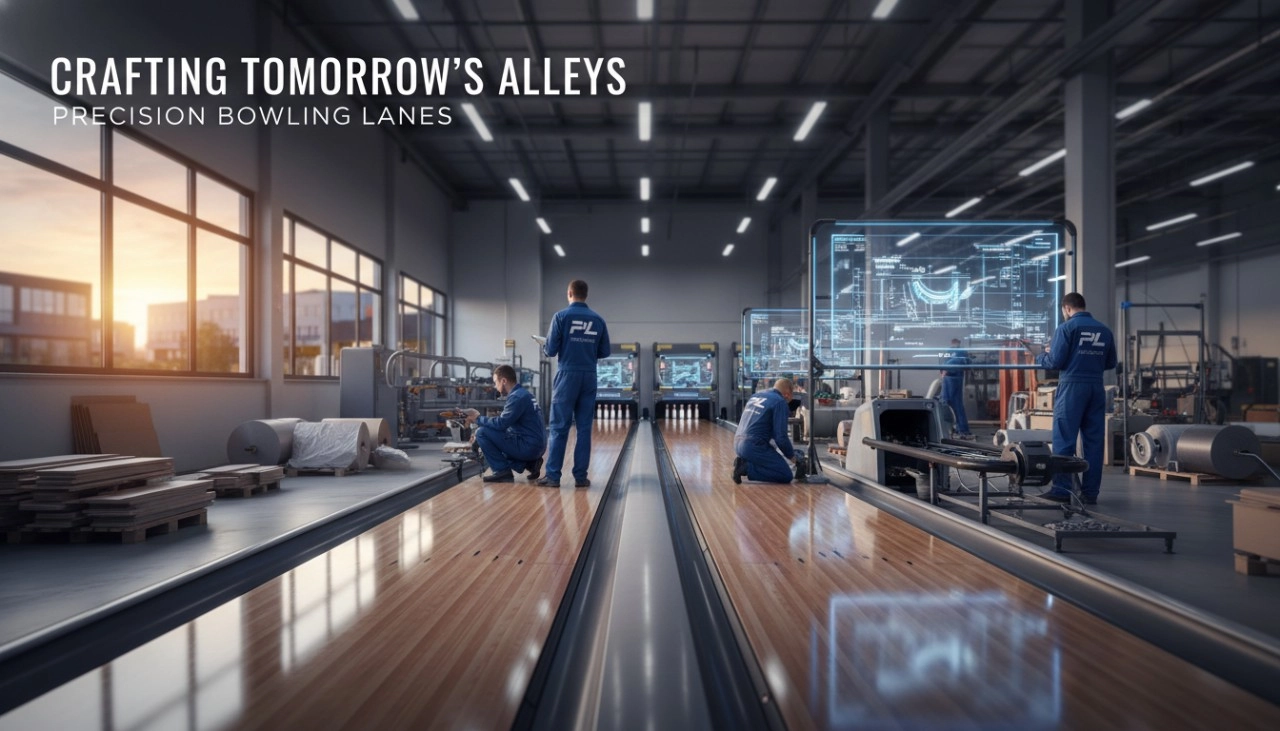
Flying Bowling Co., Ltd., with its massive 10,000-square-meter workshop, emphasizes that manufacturing lead time runs parallel to site prep. Here is the schedule:
- Weeks 1-2 (Foundation): The team surveys the concrete slab. If it is not level, self-leveling compound is applied. The wood or steel I-joist foundation (Cribbing) is framed.
- Weeks 3-4 (Surface & Mechanics): The heavy lifting occurs. Synthetic lane panels are laid, and the heavy pinsetter chassis is bolted to the rear foundation.
- Weeks 5-6 (The Nervous System): Electricians wire the ball return pumps (underground or above-ground) and connect the scoring cameras to the central server.
- Weeks 7-8 (Calibration): The "burn-in" phase. Lanes are oiled, pins are cycled thousands of times to test reliability, and staff is trained on bowling alley foundation requirements and safety protocols.
Expert Tips: Avoiding Common Installation Pitfalls
Where do projects usually fail? The most expensive mistakes happen before the first truck arrives. Failing to account for bowling alley foundation requirements—specifically the flatness of the concrete—can warp your $100,000 investment within months.
- The Power Trap: Pinsetters are power-hungry (even string ones). Failing to provide dedicated, clean circuits can cause constant machine resets during gameplay.
- Access Issues: A lane panel is huge. If your access route involves a tight 90-degree turn or a small elevator, you may need to crane materials in before the roof is finished.
- Foundation Flaws: Concrete must not only be level but cured. Green concrete releases moisture that can delaminate the synthetic lane overlay.
- Permit Delays: In residential zones, inspectors often confuse bowling machinery with industrial manufacturing equipment. Clarify that this is "amusement machinery" early in the permitting process.
FAQs
How much space is actually needed for a home bowling alley?
A standard regulation lane requires approximately 87 feet in length from the start of the approach to the back of the pinsetter machine. Width requirements are generally 11.5 to 12 feet for a standard pair of lanes. However, for "Duckpin" or mini-bowling, this can be reduced to 35-40 feet.
What is the cost difference between string and free-fall pinsetters?
String pinsetter vs free-fall cost analysis shows that string machines are 20-30% cheaper upfront. More importantly, operational costs are 90% lower because they do not require a specialized mechanic or expensive spare parts inventories.
How long does the physical installation process take?
Once the room is ready, physical installation typically takes 10 to 14 days for a 2-4 lane residential project. Commercial projects of 10+ lanes typically require 3 to 6 weeks. This excludes the 3-6 month manufacturing lead time.
Can I install a bowling lane in a basement with low ceilings?
Yes, but you may need to sacrifice overhead monitors. A minimum height of 9-10 feet is ideal, but functional lanes can be installed with slightly less clearance if specialized masking units are used and HVAC ductwork is routed carefully.
What is the ROI for a commercial bowling center in 2026?
Modern boutique centers often see an ROI of 20-35% annually. Centers that integrate boutique entertainment center design with high-margin food and beverage programs typically see payback periods of 2 to 4 years.
Do I need special permits for residential bowling lanes?
Generally, no specific "bowling" permit is needed, but standard electrical and building permits apply. However, if you are building a specific addition to house the lanes, standard zoning setback rules will strictly apply.
What is the lifespan of synthetic bowling lanes?
Modern synthetic lanes are incredibly durable and can last 40+ years with proper care. Unlike old wood lanes, they do not require sanding or resurfacing, only regular cleaning and oiling to protect the surface.
Does a home bowling alley increase property value?
It acts as a high-value differentiator for luxury properties. While it may not add dollar-for-dollar construction cost to a standard appraisal, it significantly increases marketability and the "wow" factor for high-net-worth buyers.
References
- Bowling Lane Cost Guide 2025-2026
- Global Bowling Market Size & Forecast 2025-2033
- 2024 PBA String Pinsetter Report
- Bowling Center Market Growth 2025-2030

Quality Bowling
Products
Can I choose the color and brand logo of the equipment?
Personalized customization is supported, including lane color, LOGO, theme lighting system, etc.
Is your equipment suitable for beginners?
Our equipment is easy to operate and equipped with auxiliary aiming lines, so even those who are new to bowling can quickly get started.
Are environmentally friendly materials used?
All wood products are USBC certified, the paint complies with EU REACH standards, and environmental testing reports are provided
Company
Do you have internationally certified production qualifications?
Our factory has passed ISO 9001 quality management system certification, and our products meet ASTM international bowling equipment standards.
Installations
How long does it take to install bowling equipment?
The installation process can take between 2-4 weeks, depending on the size of the project and the specific type of equipment being installed.
You May Also Like
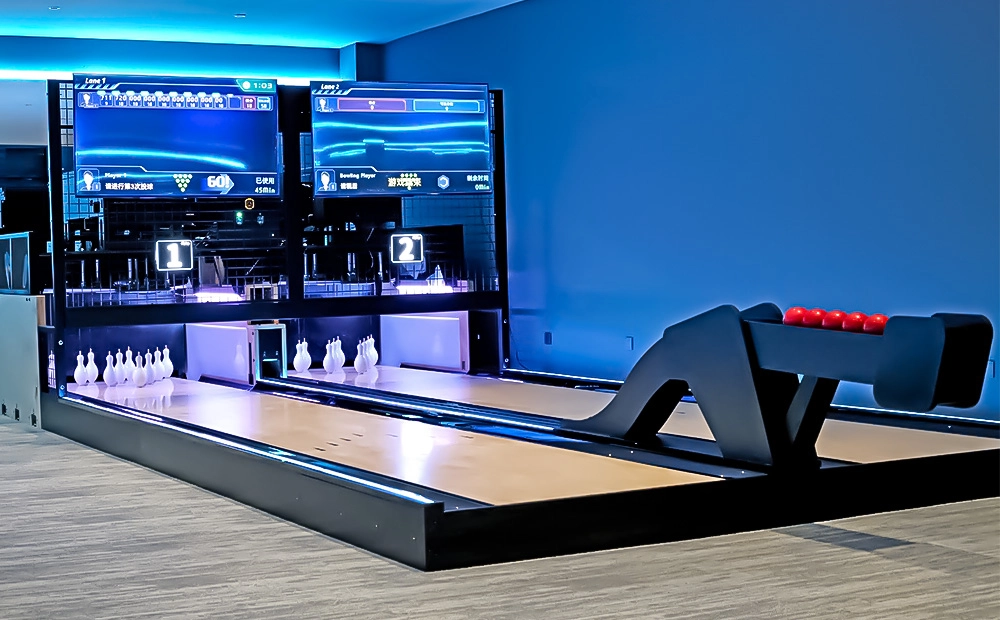
Flying Smart Duckpin Bowling
The innovative design of Flying Smart Duckpin Bowling (FSDB) makes it perfect for places like bars, billiard halls, and game centers. It makes people want to come back more often and spend more money. FSDB is fun and competitive, so it will become a new focus for social activities.
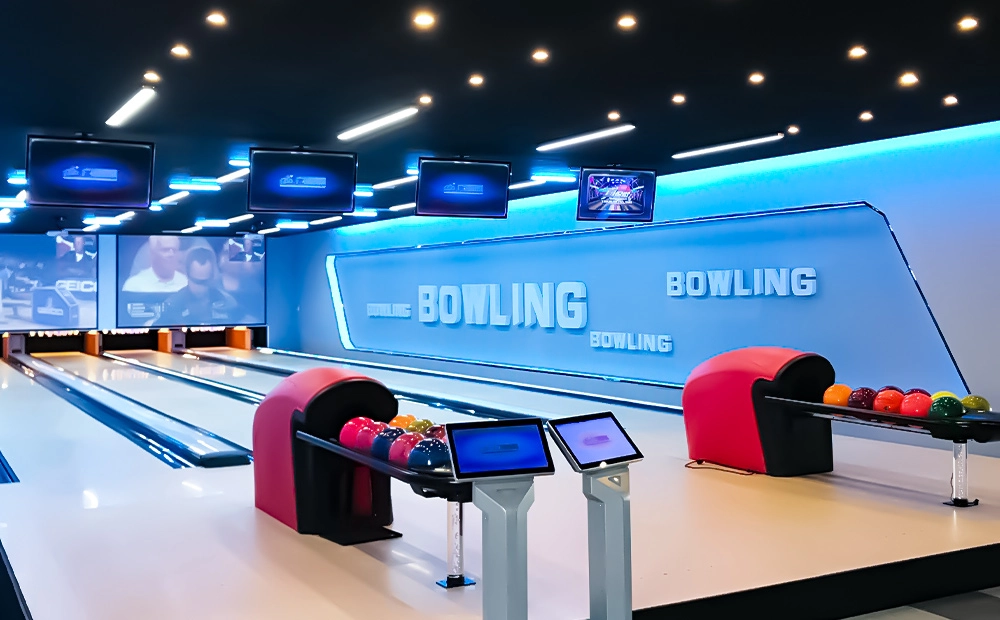
Flying Classic Standard Bowling
Flying Classic Standard Bowling (FCSB) employs the World Standard Competition Scoring System to deliver a more professional bowling experience, enabling bowlers to enjoy a professional-standard match at their convenience.
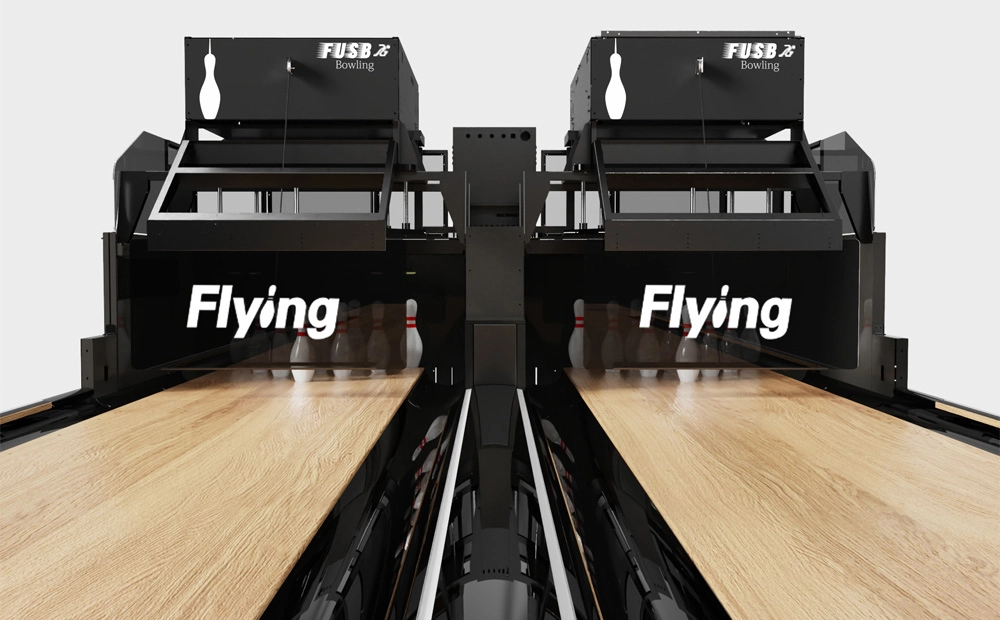
Flying Ultra Standard Bowling
Flying Ultra Standard Bowling (FUSB) Upgraded Version
The string pinsetter uses the latest technology. It offers a more enjoyable bowling experience thanks to its innovative designs and modern technology.

Get in touch
Contact us
If you contact us now for more details, we can provide you with a custom bowling alley service.
Our service team will get back to you within 24 hours, normally!



Professional Bowling Alley Equipment Manufacturer, a one-stop solution provider for bowling alleys.
Facebook
YouTube
Linkedin
Twitter