















How Much Does It Cost to Build a Bowling Alley? 2025 Investment & ROI Guide
Building a bowling alley is a significant capital undertaking, ranging from $80,000 to over $150,000 per lane depending on the luxury level and location. However, looking at the cost in isolation is a mistake. The modern bowling business is driven by the 'entertainment multiplier'—where food, beverage, and tech-driven gaming create a robust ROI. By carefully weighing new vs. used equipment, choosing the right ownership model (franchise vs. independent), and securing adequate working capital, investors can turn these startup costs into a high-yielding asset. Don't just plan for the build; plan for the business.
- Total Investment Overview: What to Expect in 2025
- Estimated Price Ranges: Boutique Alleys vs. Large FECs
- Average Cost Per Lane Breakdown (Construction + Equipment)
- Understanding the "Experience" Factor
- Real Estate Costs: New Construction vs. Renovation
- Ground-Up Construction vs. Retrofitting
- Leasing vs. Buying: Analyzing Land Acquisition Costs
- HVAC, Acoustic Treatment, and Flooring
- Equipment Breakdown: New vs. Used & Tech Options
- String Pinsetters vs. Traditional Free-Fall
- New vs. Used Bowling Equipment Prices
- Investment in Scoring Systems and POS
- Operational & Hidden Costs: Beyond the Lanes
- Working Capital
- Regional Costs: Licenses and Permits
- Interior Design and F&B Equipment
- Business Model Impact: Franchise vs. Independent Ownership
- Franchise Fees vs. Branding
- Consultancy Costs
- Financial Viability: ROI and Break-Even Analysis
- Projecting Revenue Per Lane
- Typical EBITDA Margins
- Timeline to Break-Even
- Conclusion
- FAQ
The bowling industry has undergone a massive transformation. Gone are the days of smoky, dimly lit alleys catering solely to league professionals. Today, the industry is dominated by high-end Family Entertainment Centers (FECs) and boutique "duckpin" social lounges. For investors looking at this sector in 2025, the primary question is: how much does it cost to build a bowling alley, and is the return worth the capital?
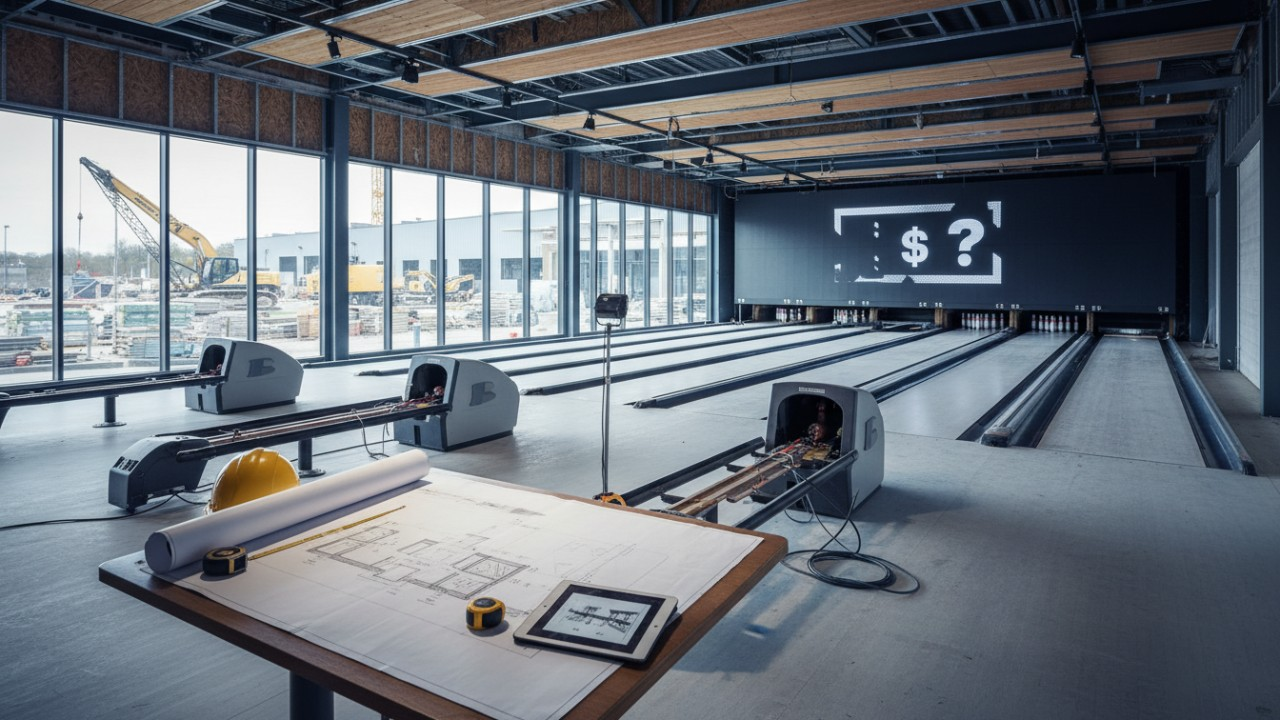
Building a modern bowling center is a significant undertaking that requires a blend of real estate acumen, operational planning, and entertainment technology. Whether you are retrofitting an industrial warehouse or building from the ground up, understanding the financial landscape is critical. This guide provides a detailed breakdown of bowling alley startup costs, equipment pricing, and the bowling center ROI analysis necessary to succeed in the current market.
Total Investment Overview: What to Expect in 2025
When approaching a project of this magnitude, "it depends" is a frustrating but accurate answer. However, for 2025 financial planning, we can narrow down the figures based on industry averages and the specific "tier" of the facility you intend to build.
Estimated Price Ranges: Boutique Alleys vs. Large FECs
The scope of your project defines your budget. In the current market, we generally see two distinct business models:
- The Boutique Social Hub: These are smaller venues (6 to 12 lanes) often located in urban centers. They focus heavily on high-margin craft cocktails and gourmet food. The lanes are shorter (often duckpin or mini-bowling) or utilize string pinsetter technology to save space.
- The Large Family Entertainment Center (FEC): These are massive facilities (16 to 32+ lanes) that incorporate arcades, laser tag, and party rooms.
For 2025, the cost per bowling lane 2025 averages significantly higher than a decade ago due to the integration of technology.
- Low-End / Economy: $80,000 - $100,000 per lane (total project cost).
- Mid-Range / Standard FEC: $110,000 - $135,000 per lane.
- High-End / Luxury Boutique: $150,000+ per lane.
Average Cost Per Lane Breakdown (Construction + Equipment)
It is crucial to distinguish between the cost of the equipment and the cost of the project.
- Equipment Costs: Solely for the pinsetters, lane beds, ball returns, and scoring monitors, you are looking at roughly $18,000 to $45,000 per lane.
- Construction & Fit-Out: This makes up the bulk of the remaining expense. This includes soundproofing, electrical upgrades for heavy machinery, HVAC systems capable of managing large crowds, and specialized carpentry for the approach area.
Understanding the "Experience" Factor
Why have costs risen? The answer lies in the "Experience Economy." Modern customers demand immersive environments. You aren't just paying for wood and pins; you are paying for interactive LED lane projections, augmented reality scoring systems, and lounge-style furniture. While these features inflate the initial bowling alley startup costs, they allow operators to charge premium prices per hour, directly impacting the bottom line.
Real Estate Costs: New Construction vs. Renovation
Your real estate strategy is the single largest variable in your budget. The decision between ground-up construction and renovation will dictate your timeline and capital expenditure.
Ground-Up Construction vs. Retrofitting
Building a new facility offers the ultimate customization. You can design the column spacing perfectly to accommodate lane widths (roughly 11.5 feet for a pair of lanes). However, with construction material costs remaining high in 2025, a new build can cost between $250 and $400 per square foot depending on your region.
Retrofitting an existing warehouse or big-box retail store (like a former department store) is a popular strategy to control costs. These "big box" locations often already have the necessary ceiling height (minimum 10-12 feet) and column grids that can work with bowling layouts. Retrofitting can save 20-30% on structural costs, but beware of hidden plumbing or electrical issues.
Leasing vs. Buying: Analyzing Land Acquisition Costs
If you choose to lease, you reduce your upfront capital risk, but your monthly overhead increases. In prime urban locations suitable for boutique alleys, rent can range from $25 to $60 per square foot annually. If you have the capital, purchasing the land turns the business into a dual asset: the operating business and the real estate appreciation.
HVAC, Acoustic Treatment, and Flooring
A bowling center is a loud, high-energy environment.
- Acoustics: You must budget for acoustic ceiling baffles and wall treatments. Without them, the sound of crashing pins and arcade games becomes unbearable, shortening the average dwell time of your guests.
- HVAC: The heat load in an FEC is massive due to the density of people and electronics. An under-powered HVAC system is a fatal error in this industry.
- Foundation: The concrete slab beneath the lanes must be perfectly level. Any variance can ruin the ball roll and damage expensive synthetic lane equipment.
Equipment Breakdown: New vs. Used & Tech Options
The heart of your operation is the lane equipment. This is where technology choices heavily influence both upfront pricing and long-term operational costs.
To dive deeper into the specifics of selecting gear that fits your business model, you should consult resources like The 6 Ultimate Guide to Bowling Alley Equipment for Commercial Success, which breaks down the nuances of machinery selection.
String Pinsetters vs. Traditional Free-Fall
This is the biggest debate in the industry today.
- Free-Fall Pinsetters: The traditional heavy machinery that physically picks up and sets pins. They satisfy bowling purists and are required for sanctioned league play. However, they are expensive to buy, energy-hungry, and require a full-time specialized mechanic.
- String Pinsetters: Pins are attached to durable nylon strings. When knocked down, they are pulled back into a rack.
- Capital Cost: Roughly 30-40% cheaper than free-fall.
- Operational Cost: Use 75% less electricity and require almost no specialized maintenance.
- Verdict: Unless you are building a center specifically for professional leagues, string pinsetters are the superior financial choice for 2025 investors.
New vs. Used Bowling Equipment Prices
Investors with a tight budget often look at new vs used bowling equipment prices.
- Used/Refurbished: You can acquire refurbished pinsetters and wood lanes for 50-60% of the cost of new equipment. However, installation costs remain high, and maintenance on older machines will be frequent.
- New Synthetic Lanes: Synthetic lanes (phenolic laminates) look like wood but are incredibly durable and require less oiling and conditioning. While the upfront cost is higher, the longevity and "glow-in-the-dark" capabilities (for Cosmic Bowling) make them the industry standard.
Investment in Scoring Systems and POS
The scoring system is your interface with the customer. Modern systems from providers like QubicaAMF or Brunswick SYNK are not just scorekeepers; they are marketing tools. They integrate with your Point of Sale (POS) to allow food ordering from the lanes, manage waiting lists, and run loyalty programs. Expect to spend $3,000 to $5,000 per lane on high-end scoring and server infrastructure.
Operational & Hidden Costs: Beyond the Lanes
Many aspiring owners calculate construction and equipment but fail to account for the soft costs that arise before opening day.
Working Capital
You cannot open your doors with zero cash in the bank. You must calculate a 6-month cash reserve. This "working capital" covers payroll, utilities (which are high for bowling centers), and inventory restocking while you build your customer base. A typical 12-lane center should have $150,000 to $250,000 in liquid working capital post-construction.
Regional Costs: Licenses and Permits
- Liquor License: In the modern FEC model, alcohol sales often account for 30-40% of revenue. Depending on your state or city, a liquor license can cost anywhere from $5,000 to over $300,000 (in quota states like Florida or Pennsylvania).
- Zoning: Bowling alleys require specific zoning for entertainment and noise. Legal fees to secure these variances can add up quickly.
Interior Design and F&B Equipment
The "Instagram moment" is currency. You need a budget for high-quality furniture (sofas, not plastic chairs), ambient lighting, and wall murals. Additionally, the kitchen is a major cost center. A full-service kitchen capable of serving pizzas, burgers, and appetizers for a 200-person capacity venue will require $100,000 to $200,000 in commercial kitchen equipment.
Business Model Impact: Franchise vs. Independent Ownership
How you enter the market affects your cost structure.
Franchise Fees vs. Branding
Franchising (e.g., joining a brand like Bowlero or a smaller regional franchise) offers a playbook but comes with costs.
- Franchise: Expect initial fees of $30,000 - $50,000 and ongoing royalties of 5-7% of gross revenue. The benefit is brand recognition and purchasing power.
- Independent: You save the royalties, but you bear the cost of branding, website development, and marketing from scratch. You also lack the bulk buying power for food and beverage.
Consultancy Costs
If you go independent, hiring a bowling industry consultant is highly recommended. For a fee of $15,000 to $30,000, they can help design the layout, select the right mix of attractions, and prevent construction errors that could cost ten times that amount.
Financial Viability: ROI and Break-Even Analysis
Ultimately, every investor asks: is owning one bowling alley profitable in the current economy? The short answer is yes, provided the business model is diversified. For a detailed breakdown of profitability metrics, you can read more here: is owning one bowling alley profitable.
Projecting Revenue Per Lane
A bowling center ROI analysis starts with revenue per lane.
- Occupancy: A healthy center aims for 10,000 to 12,000 lines bowled per lane, per year.
- Average Revenue Per Game: $5.00 - $8.00 depending on time of day.
- Shoe Rental: $4.00 - $5.00 per person.
However, the real money is in the "ancillary spend." For every $1 spent on bowling, a well-run FEC generates $1.50 to $2.00 in food, beverage, and arcade revenue.
Typical EBITDA Margins
Modern Entertainment Centers are high-margin businesses once fixed costs are covered.
- Bowling margins: 90%+ (very low variable cost once built).
- Arcade margins: 80-90%.
- F&B margins: 20-30%.
Overall, a successful FEC can expect EBITDA (Earnings Before Interest, Taxes, Depreciation, and Amortization) margins of 20% to 35%.
Timeline to Break-Even
Given the high upfront bowling alley startup costs, the payback period is longer than a standard retail shop but the asset value is higher.
- Standard Scenario: 3 to 4 years to return initial capital investment.
- Aggressive Scenario: 2.5 years (high-volume location with strong bar sales).
For a standard 12-lane facility costing $2.5 million to build, generating $1.5 million in annual revenue with a 25% margin results in $375,000 annual profit, leading to a roughly 6-7 year complete ROI, though cash flow becomes positive much sooner.
Conclusion
Building a bowling alley is a significant capital undertaking, ranging from $80,000 to over $150,000 per lane depending on the luxury level and location. However, looking at the cost in isolation is a mistake. The modern bowling business is driven by the 'entertainment multiplier'—where food, beverage, and tech-driven gaming create a robust ROI.
The days of relying solely on lineage fees are over. Success in 2025 requires a holistic approach: integrating immersive technology, serving high-quality food and drink, and creating a social atmosphere. By carefully weighing new vs used bowling equipment prices, choosing the right ownership model (franchise vs. independent), and securing adequate working capital, investors can turn these startup costs into a high-yielding asset. Don't just plan for the build; plan for the business.
FAQ
What is the average cost per lane to build a bowling alley?
On average, the cost ranges from $18,000 to $45,000 per lane for the equipment alone. When including construction, seating, and technology, the total investment typically spans between $80,000 and $150,000 per lane depending on whether it is a boutique venue or a standard center.
Is owning a bowling alley profitable in 2025?
Yes, modern bowling centers are highly profitable, often seeing profit margins between 15% and 25%. Centers that diversify revenue streams with high-quality food, beverage, and arcade games (FEC model) tend to generate a higher ROI than traditional 'bowling-only' alleys.
How much space do I need to build a 10-lane bowling alley?
You should plan for approximately 1,000 square feet per lane to accommodate the approach, the lane itself, the pinsetter area, and necessary seating/walking areas. For a 10-lane alley with a small bar and reception, you would need a minimum of 10,000 to 12,000 square feet.
What is the cost difference between string pinsetters and free-fall pinsetters?
String pinsetters are generally 30-40% cheaper to purchase and install than traditional free-fall machines. Furthermore, they significantly reduce ongoing operational costs due to lower energy consumption and fewer mechanical parts requiring maintenance.

Quality Bowling
Products
What is the noise level of the equipment?
We are well aware of the importance of a quiet and comfortable environment for bowling, so we designed sound insulation cotton and shock-absorbing pads in the equipment area and the lane area to fully reduce the noise and vibration of the equipment during operation, creating a quiet and comfortable sports space for you, allowing you to focus more on enjoying the fun of bowling.
How to deal with the differences in power/specification standards in different countries?
Support 110V—240V voltage adaptation, comply with international safety certifications such as CE/UL, and provide localized standard transformation services.
Installations
How long does it take to install the equipment?
It takes about 7-15 days for a standard venue, and it takes an average of 2 days to install a fairway.
Customer care
My room isn't quite long enough. Can you install slightly shorter lanes that are non-regulation length?
Of course, we can customize bowling lanes according to your venue.
Service
Do you provide regular maintenance services?
You can sign an annual maintenance agreement, which includes quarterly inspections, lubrication maintenance, system upgrades and other services.
You May Also Like
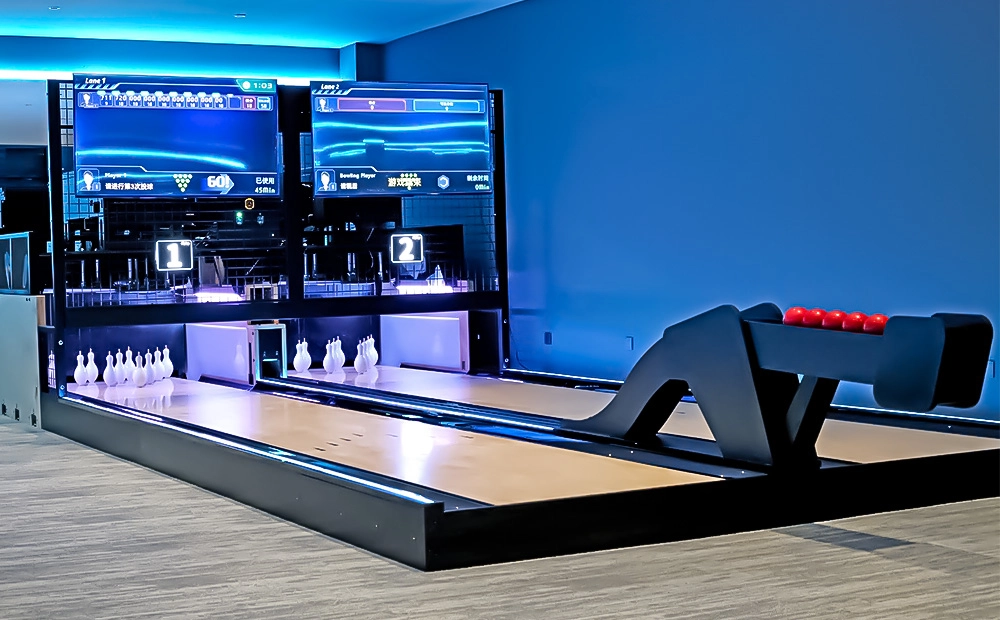
Flying Smart Duckpin Bowling
The innovative design of Flying Smart Duckpin Bowling (FSDB) makes it perfect for places like bars, billiard halls, and game centers. It makes people want to come back more often and spend more money. FSDB is fun and competitive, so it will become a new focus for social activities.
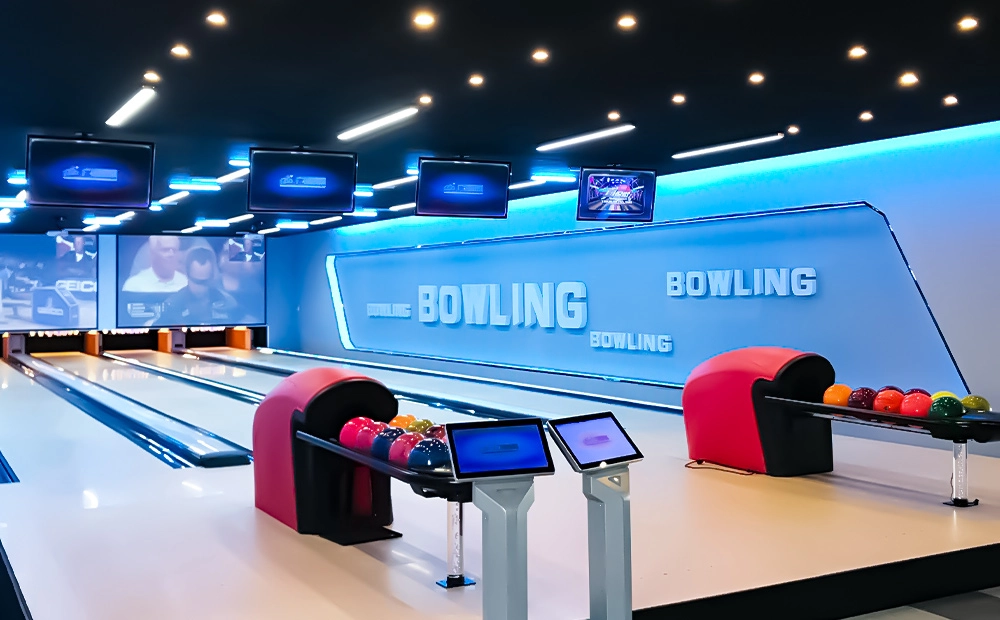
Flying Classic Standard Bowling
Flying Classic Standard Bowling (FCSB) employs the World Standard Competition Scoring System to deliver a more professional bowling experience, enabling bowlers to enjoy a professional-standard match at their convenience.
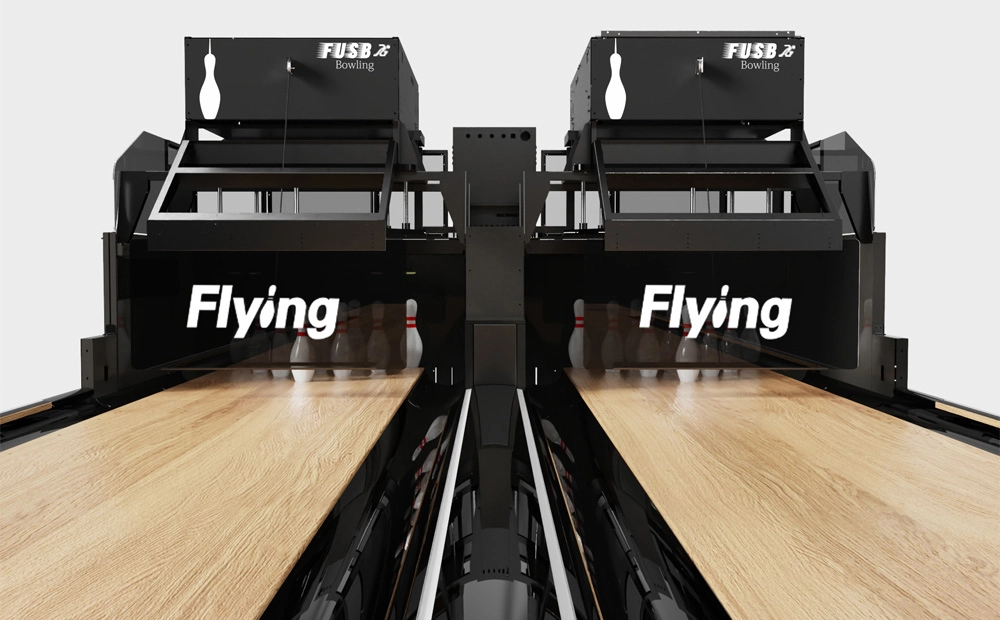
Flying Ultra Standard Bowling
Flying Ultra Standard Bowling (FUSB) Upgraded Version
The string pinsetter uses the latest technology. It offers a more enjoyable bowling experience thanks to its innovative designs and modern technology.

Get in touch
Contact us
If you contact us now for more details, we can provide you with a custom bowling alley service.
Our service team will get back to you within 24 hours, normally!



Professional Bowling Alley Equipment Manufacturer, a one-stop solution provider for bowling alleys.
Facebook
YouTube
Linkedin
Twitter