















Bowling Alley for Sale: A Guide to Costs, Profitability, and Building Your Own
This comprehensive guide analyzes the costs and profitability of the bowling industry in 2024-2025. It covers investment data for buying existing alleys, building new 10-lane centers, and installing home bowling lanes, while detailing operating costs and profit margins.
- Introduction
- How much does it cost to buy a bowling alley?
- Is owning a bowling alley profitable?
- How much does it cost to build a 10 lane bowling alley?
- How much does a home bowling alley cost?
- What is the average profit margin for a bowling alley?
- How much does a single bowling lane cost?
- How much revenue does a bowling alley generate?
- Is a bowling alley a good business investment?
- What are the operating costs of a bowling alley?
- Conclusion
- References
Introduction
Imagine owning a business where the sound of crashing pins translates directly into revenue. The bowling industry has undergone a massive renaissance in the last decade, shifting from smoky league halls to vibrant Family Entertainment Centers (FECs) that generate diverse income streams. Whether you are an investor looking to acquire a turnkey profitable business, a developer planning a 10-lane boutique alley, or a homeowner dreaming of a private luxury lane, understanding the financials is critical.
This guide breaks down the real-world costs, profit margins, and investment potential of the bowling industry in 2024-2025. By analyzing current market data and construction estimates, we answer the most pressing questions for aspiring owners and investors.
How much does it cost to buy a bowling alley?
The cost to purchase an existing bowling alley varies significantly based on location, the number of lanes, and the condition of the facility. Unlike building from scratch, buying an existing business often includes the real estate, equipment, and an existing customer base.
According to BizBuySell and recent market listings, the price for an existing bowling alley typically ranges from $300,000 to over $3 million.
· Small / Rural Centers: Older centers in rural areas with 6–12 lanes often sell for $300,000 to $600,000. These may require significant renovations.
· Mid-Size Operational Centers: A standard 16–24 lane facility in a suburban area with a functional kitchen and bar typically lists between $900,000 and $1.5 million.
· Large / Modern FECs: High-revenue Family Entertainment Centers (FECs) that include arcades, laser tag, and modern dining can command prices upwards of $3 million to $5 million.
Investors should note that the business valuation is often calculated as a multiple of EBITDA (Earnings Before Interest, Taxes, Depreciation, and Amortization), usually between 3x and 5x for this industry.
Is owning a bowling alley profitable?
Yes, owning a bowling alley can be highly profitable, provided the business model has evolved beyond "bowling only." Modern success relies on the "hybrid model" or Family Entertainment Center (FEC) approach.
According to IBISWorld and industry reports, the bowling industry generates over $4 billion annually in the US alone. The key to profitability is diversification. Centers that rely solely on lane rentals (lineage) often struggle with thin margins. However, venues that integrate high-margin revenue streams see significantly better returns:
· Food & Beverage (F&B): Margins on alcohol and food can exceed 75%.
· Arcade & Games: These often have a profit margin of 80-90% as there is no Cost of Goods Sold (COGS) after the initial equipment purchase.
Data from Bowling.com and other industry analysts suggests that successful centers operate with a cash flow of 25-33% of gross revenue, making it one of the more robust cash-generating businesses in the entertainment sector.
How much does it cost to build a 10 lane bowling alley?
Building a new 10-lane bowling alley is a significant capital investment that involves construction, specialized equipment, and interior fit-outs. This size is popular for "boutique" alleys often found in bars, hotels, or luxury entertainment zones.
Estimates from Flying Bowling and construction data indicate that a turnkey 10-lane facility costs between $1.5 million and $2.5 million. The breakdown typically looks like this:
· Equipment Cost: $45,000 – $60,000 per lane (Total: $450k – $600k).
· Construction & Build-out: $100 – $200 per square foot. A 10-lane alley requires roughly 10,000 – 12,000 sq ft, leading to construction costs of $1 million to $1.5 million.
· Furniture & Technology: $150,000 – $300,000 for POS systems, shoe rentals, and lounge seating.
Costs can be reduced by using string pinsetters, which are becoming the industry standard for boutique centers due to lower upfront costs and reduced maintenance requirements compared to traditional free-fall pinsetters.
How much does a home bowling alley cost?
Installing a bowling alley in a private residence is a luxury home improvement project that has grown in popularity. The costs are higher per lane than commercial setups due to the custom nature of the installation and logistics.
According to HomeGuide and specialized installers, the cost for a single-lane home bowling alley ranges from $75,000 to $100,000.
· Single Lane: $75,000 – $100,000.
· Two-Lane Setup: $110,000 – $175,000 (Cost per lane decreases slightly when pairing them).
· Mini-Bowling: For homeowners with limited space (under 50 feet), "mini-bowling" installations are available for $35,000 to $90,000.
This price typically includes the lane surface, pinsetter machine (usually string-based for homes), ball return system, and computerized scoring. It does not usually include the room construction, electrical, or HVAC work required to prepare the space.
What is the average profit margin for a bowling alley?
The profit margin for a bowling alley is heavily influenced by how well the venue maximizes "dwell time" (how long a customer stays) and ancillary spending.
According to startup financial models and industry analysis, the average net profit margin for a well-managed bowling center falls between 15% and 30%.
· Traditional Alleys: Centers focusing primarily on leagues may see lower margins (10–15%) due to discounted pricing and lower F&B spend.
· Modern FECs: Venues offering "eatertainment" (dining + bowling + arcade) target EBITDA margins of 20% to 35%.
To achieve the higher end of this range, labor costs must be kept between 20-30% of revenue, and Cost of Goods Sold (COGS) for food and beverage should remain under 30%.
How much does a single bowling lane cost?
When budgeting for equipment replacement or new construction, knowing the unit cost of a lane is essential. This figure includes the synthetic lane surface, the pinsetter, the ball return, and the scoring system.
· New Commercial Lane: According to SportSurge and equipment suppliers, a brand new commercial lane setup averages $45,000 per lane.
· Used/Refurbished Lane: Buying refurbished equipment can lower the cost to $18,000 – $25,000 per lane.
· Home/Custom Lane: As noted previously, custom residential lanes command a premium, averaging $75,000+ for a single turnkey installation.
Technological upgrades, such as interactive LED lane projections (which gamify the lane surface), can add an additional $10,000 to $15,000 per lane.
How much revenue does a bowling alley generate?
Revenue potential is directly tied to the number of lanes and the diversity of offerings. A key metric in the industry is "revenue per lane."
According to Bowling.com, a standard center can expect to generate approximately $36,750 per lane, per year in bowling revenue alone.
· 10-Lane Center: ~$367,500/year from bowling + F&B revenue.
· 24-Lane Center: ~$882,000/year from bowling + F&B revenue.
However, total revenue is often much higher when non-bowling income is included. In a modern FEC model, bowling often accounts for only 40-50% of total revenue, with the remaining 50-60% coming from the bar, restaurant, and arcade. Consequently, a successful 20-lane FEC can easily generate $2 million to $3 million in total annual gross revenue.
Is a bowling alley a good business investment?
Yes, bowling alleys are considered a stable and potentially lucrative investment in the current "experience economy." Consumers are increasingly shifting spending from material goods to experiences, benefiting social venues like bowling alleys.
Expert analysis from Flying Bowling and Sunbelt Business Brokers highlights several investment pros:
1. Resilience: The industry has recovered strongly post-pandemic, with a projected growth rate of 3.5% annually through 2025.
2. High Barriers to Entry: The high startup cost and real estate requirements protect existing owners from rapid competitor saturation.
3. Cash Business: Bowling is largely a cash/credit business with no accounts receivable and minimal inventory spoilage compared to pure restaurants.
However, it is capital intensive. The best ROI is found in upgrading older centers into modern entertainment hubs or building boutique alleys in high-traffic urban areas.
What are the operating costs of a bowling alley?
Running a bowling alley involves high fixed costs (rent/mortgage) and significant variable costs (labor/utilities). Understanding these expenses is vital for cash flow management.
A breakdown of typical operating costs includes:
· Labor (Payroll): The largest expense, typically 30-40% of total revenue. This includes front desk, mechanics, bartenders, and servers.
· Rent / Mortgage: Depending on location, this is usually 15-20% of revenue, though it can be higher in prime urban zones.
· Utilities: Bowling centers consume high amounts of energy for lighting, HVAC, and pinsetter operation. Costs average $10,000 to $25,000 per month for mid-sized centers.
· Maintenance: According to Flying Bowling maintenance guides, owners should budget $1,500 to $3,000 per lane annually for parts, oil, and technician labor.
· Insurance: Liability and property insurance typically cost $3,000 to $7,000 per month.
Conclusion
The bowling industry has successfully pivoted from a sport-focused model to a lucrative entertainment-focused business. With profit margins reaching up to 30% for well-optimized centers and total annual revenues often exceeding $2 million, it represents a compelling investment opportunity. Whether you are building a 10-lane boutique alley for $2 million or installing a $75,000 home lane, the key to success lies in diversifying revenue streams and leveraging modern technology like string pinsetters to reduce operating costs.
References
· Flying Bowling - Cost to Build Bowling Alley 2025
· BizBuySell - Bowling Alleys For Sale
· HomeGuide - Home Bowling Alley Cost

Quality Bowling
Technology
Are your products compliant with European safety standards?
Yes, all of our products meet the required EU safety and regulatory standards.
Can old equipment be upgraded?
We provide personalized transformation solutions for different venues, such as replacing old pinsetter machines with the latest string pinserrer machines , LED interactive lanes, etc.
Service
How long do you provide warranty service?
The whole machine is under warranty for 2 years, and the core components (motor/mainboard) are extended to 3 years, and the maintenance is at cost price for life.
Do you provide regular maintenance services?
You can sign an annual maintenance agreement, which includes quarterly inspections, lubrication maintenance, system upgrades and other services.
Customer care
Do I get a discount if my bowling lanes are shorter than standard length?
Shorter lanes require additional labor to cut and splice materials, which offsets any potential material savings. As a result, pricing remains the same regardless of lane length.
You May Also Like
Flying Smart Duckpin Bowling
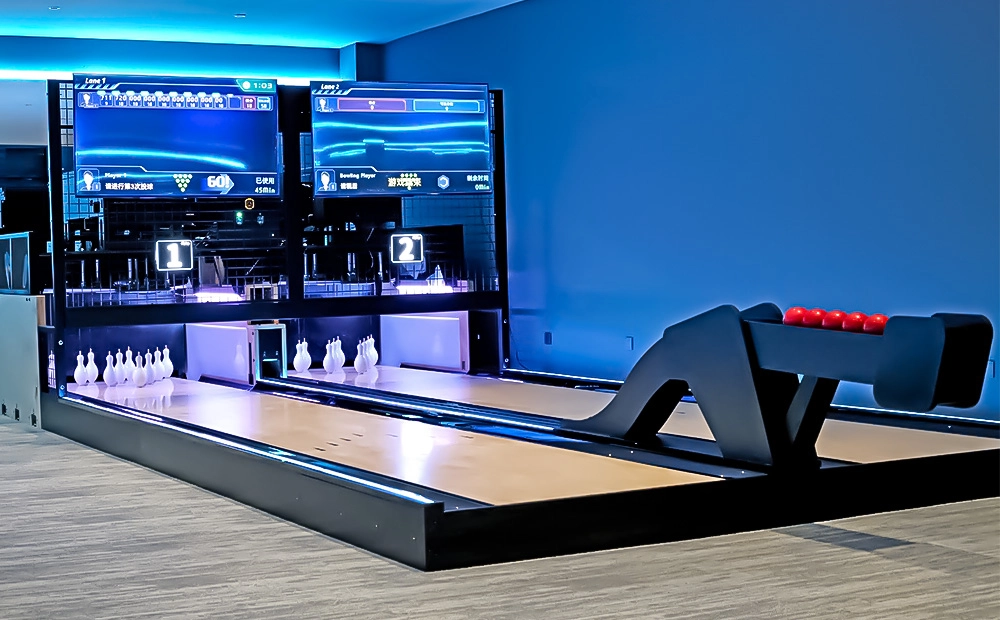
The innovative design of Flying Smart Duckpin Bowling (FSDB) makes it perfect for places like bars, billiard halls, and game centers. It makes people want to come back more often and spend more money. FSDB is fun and competitive, so it will become a new focus for social activities.
Flying Classic Standard Bowling
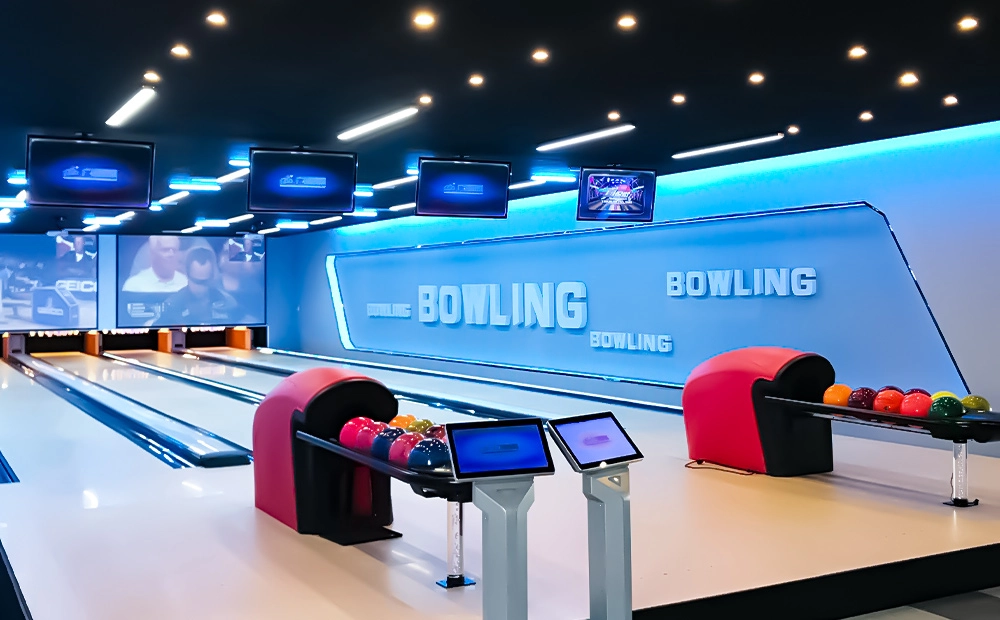
Flying Classic Standard Bowling (FCSB) employs the World Standard Competition Scoring System to deliver a more professional bowling experience, enabling bowlers to enjoy a professional-standard match at their convenience.
Flying Ultra Standard Bowling
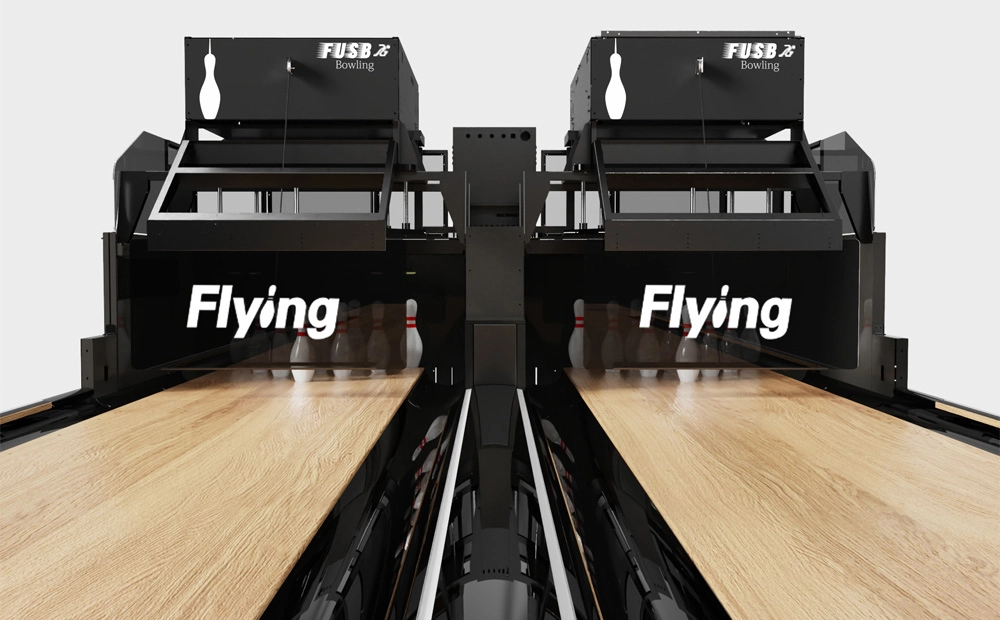
Flying Ultra Standard Bowling (FUSB) Upgraded Version
The string pinsetter uses the latest technology. It offers a more enjoyable bowling experience thanks to its innovative designs and modern technology.

Get in touch
Contact us
If you contact us now for more details, we can provide you with a custom bowling alley service.
Our service team will get back to you within 24 hours, normally!



Professional Bowling Alley Equipment Manufacturer, a one-stop solution provider for bowling alleys.
Facebook
YouTube
Linkedin
Twitter