






How Much Does a Bowling Ball Really Cost? Your Ultimate 2025-2026 Price Guide & Buying Strategy
This ultimate guide breaks down bowling ball prices for 2025-2026, ranging from $50 entry-level options to $350+ high-performance models. It covers hidden costs like drilling, maintenance, and accessories, helping bowlers make informed purchasing decisions based on skill level and budget.
- Introduction: Understanding Your Bowling Ball Investment
- Average Bowling Ball Prices: A Quick Snapshot by Category
- Decoding Bowling Ball Types & Their Corresponding Price Tiers
- House Balls: The "Free" Option
- Plastic/Polyester Balls: Your Entry into Ownership
- Urethane Bowling Balls: The Controllable Hook
- Reactive Resin Bowling Balls: Performance & Hook Potential
- Key Factors Driving Bowling Ball Prices Explained
- Beyond the Ball: The True Cost of Bowling Ball Ownership
- Drilling & Fitting Costs
- Essential Accessories
- Maintenance Costs
- New vs. Used Bowling Balls: A Cost-Benefit Analysis
- Where to Buy Your Bowling Ball: Channel Comparison
- Choosing the Right Bowling Ball for Your Budget & Skill Level
- Is Buying Your Own Bowling Ball Worth It? A Rental vs. Ownership Breakdown
- Frequently Asked Questions
- Why are some bowling balls so much more expensive than others?
- How much does it cost to get a bowling ball drilled?
- Can I use a house ball for serious bowling?
- What's the best bowling ball for a beginner on a budget?
- Do bowling balls lose their hook over time?
- Is it cheaper to buy a bowling ball online or at a pro shop?
- What's the difference between urethane and reactive resin balls in terms of price and performance?
- How often should I clean my bowling ball, and does it affect its lifespan?
Introduction: Understanding Your Bowling Ball Investment
Walking into a pro shop or browsing an online retailer can be overwhelming. With prices ranging from the cost of a nice dinner to that of a car payment, the question "How much does a bowling ball really cost?" is more complex than a simple price tag. For many, the transition from renting house balls to owning personal equipment is a significant milestone. It represents a shift from casual fun to a focused pursuit of consistency and higher scores.
Investing in your own gear is about more than just the purchase price; it is an investment in your game. A custom-fitted ball reduces hand fatigue, prevents injury, and creates the consistency required to improve. However, the initial sticker price is just one component. To truly budget for this sport, you must understand the complete financial picture—from the coverstock material to the drilling fees and ongoing maintenance.

Average Bowling Ball Prices: A Quick Snapshot by Category
Before diving into the technical details, it is helpful to have a general baseline. According to market data from major retailers in late 2025, bowling ball prices can be broadly categorized by performance level. Keep in mind that these are typically "undrilled" prices.
· Plastic / Polyester (Entry-Level): $50 – $100
· Urethane (Control/Vintage): $100 – $170
· Entry-Level Reactive Resin: $100 – $150
· Mid-Performance Reactive: $150 – $200
· High-Performance Reactive: $200 – $350+
While high-end balls promise aggressive hook potential, they are not always the best choice for every bowler. Understanding the price-to-performance ratio is crucial for maximizing your value.
Decoding Bowling Ball Types & Their Corresponding Price Tiers
House Balls: The "Free" Option
While effectively free to use at the alley, house balls come with a hidden performance cost. They are drilled with generic "conventional" grips that force you to squeeze the ball, often leading to poor release mechanics and hand strain. They lack a weight block (core) designed for hook, limiting your scoring potential.
Plastic/Polyester Balls: Your Entry into Ownership
Typical Price Range: $50 – $100
This is the most common starting point. Plastic balls, such as the Brunswick T-Zone or Columbia 300 White Dot, feature a polyester coverstock that is durable and produces very little friction on the lane. This makes them ideal for beginners learning to throw straight or for advanced bowlers shooting spares. Because the technology is established and manufacturing is less complex, these remain the most affordable option.
Urethane Bowling Balls: The Controllable Hook
Typical Price Range: $100 – $170
Urethane balls, like the popular Hammer Purple Pearl Urethane or Storm Mix, bridge the gap between plastic and reactive resin. They offer a smooth, controllable arc rather than a sharp snap. They are favored by two-handed bowlers and pros on dry lane conditions. The price reflects the specialized material which is more costly to produce than standard polyester.
Reactive Resin Bowling Balls: Performance & Hook Potential
This category sees the widest price variance due to the complexity of the "cores" (weight blocks) and coverstock chemistries.
· Entry-Level Reactive ($100 - $150): Models like the Storm Tropical Surge or Brunswick Rhino are excellent first steps into hooking the ball. They use softer coverstocks than plastic to grip the lane but feature simpler core designs that are forgiving for new bowlers.
· Mid-Performance Reactive ($150 - $200): Balls in this tier, such as the Hammer Black Widow Tour V1 or Ebonite Game Breaker series, offer a versatile reaction. They are designed for typical "house shots" (the oil pattern found in most leagues) and provide a balance of power and control.
· High-Performance Reactive ($200 - $350+): The flagship models, such as the Storm Ion Max or Hammer Black Widow 3.0, utilize advanced asymmetrical cores and chemically engineered coverstocks for heavy oil conditions. These are the "Ferraris" of bowling balls—high maintenance and high cost, but capable of incredible performance in the right hands.
Key Factors Driving Bowling Ball Prices Explained
Why does one ball cost $90 and another $300? Several factors influence the final bowling ball cost:
1. Coverstock Technology: The outer shell is the most expensive part of the ball. Developing reactive resin blends that absorb oil at specific rates requires significant R&D. High-performance balls often use "particle" or "hybrid" additives that increase manufacturing costs.
2. Core Design: Simple pancake cores in plastic balls are cheap to mold. Complex asymmetrical cores found in high-performance balls require precise engineering and multi-step casting processes to ensure they tilt and flare correctly.
3. Research & Development (R&D): Top brands like Storm, Brunswick, and Motiv invest heavily in physics testing to create new ball motions. This R&D cost is amortized into the price of their top-tier releases.
Beyond the Ball: The True Cost of Bowling Ball Ownership
Many first-time buyers are surprised to learn that the price on the shelf is not the final price. You must factor in the customization required to make the ball fit your hand.
Drilling & Fitting Costs
According to 2025 pro shop pricing standards, you should budget for the following:
· Standard/Conventional Drilling: $30 – $50. (Common for plastic balls).
· Custom/Fingertip Drilling: $50 – $80. This includes measuring your hand for a precise fit, which is essential for reactive resin balls.
· Inserts & Slugs: If you want soft finger inserts (grips) or a smooth thumb slug for a consistent release, expect to pay an additional $10–$20 for the set.
Essential Accessories
To protect your investment, you will need gear:
· Bag: A simple single-ball tote costs around $20–$30, while a 3-ball roller can range from $150–$200.
· Shoes: Entry-level performance shoes start at $40–$60. High-end models with interchangeable soles can exceed $200.
· Maintenance Supplies: A microfiber towel ($10) and a bottle of ball cleaner ($15) are mandatory to keep your reactive ball from losing its hook.
Maintenance Costs
Reactive resin balls are like sponges; they absorb oil. To maintain performance:
· Resurfacing: ~$25 – $40 per service. Recommended every 60 games to remove scratches.
· Detox/Oil Extraction: ~$20 – $30 per service. Essential every 50-100 games to "bleed" the oil out of the coverstock.
New vs. Used Bowling Balls: A Cost-Benefit Analysis
If a $250 price tag is out of reach, the used market is a viable alternative. Pro shops often sell "plugged and redrilled" balls.
· Pros: You can often find high-performance balls for $50–$80 fully drilled. It’s a low-risk way to try different brands or reactions.
· Cons: Used balls have a finite lifespan. A used reactive ball may already be "dead" (saturated with oil), offering little hook. You also lose the manufacturer's warranty.
Where to Buy Your Bowling Ball: Channel Comparison
· Local Pro Shops:
o Pros: Expert advice, fit guarantee, and often bundled pricing (e.g., buying the ball there might get you a discount on drilling).
o Cons: Limited in-stock inventory compared to online warehouses.
· Online Retailers:
o Pros: Massive selection, lower upfront ball prices, and customer reviews.
o Cons: You still have to pay a local pro shop to drill it, and some shops charge a "bring-your-own-ball" fee that can negate the online savings.
Choosing the Right Bowling Ball for Your Budget & Skill Level
· Beginners: Stick to a Plastic or Entry-Level Reactive ball. Total investment (Ball + Drilling) should be under $160.
· League Bowlers: A Mid-Performance ball provides the best versatility for typical league nights. Budget $200–$250 total.
· Tournament Bowlers: You will eventually need an "arsenal" of 3-6 balls to cover different oil patterns, easily pushing costs over $1,000.
Is Buying Your Own Bowling Ball Worth It? A Rental vs. Ownership Breakdown
Mathematically, ownership pays off quickly. If you bowl once a week and rent shoes ($4) and pay for games, buying a basic pair of shoes ($40) pays for itself in just 10 weeks. Similarly, while a house ball is free, the cost of inconsistency is high. A personal ball increases your average, makes the game more enjoyable, and reduces the risk of wrist strain. For any bowler visiting the lanes more than once a month, the investment is financially and physically sound.
Frequently Asked Questions
Why are some bowling balls so much more expensive than others?
Higher prices are primarily due to advanced coverstock chemistries (like reactive resin hybrids) and complex engineered cores that boost performance. Premium brands also factor in significant R&D costs to ensure specific hook potentials on heavy oil conditions.
How much does it cost to get a bowling ball drilled?
For a ball purchased outside the shop, drilling typically costs between $50 and $80 for a custom fingertip fit. If you buy the ball from the pro shop, they may include drilling or offer a significant discount, often bringing the drilling cost down to $30–$50.
Can I use a house ball for serious bowling?
While possible, it is not recommended. House balls are drilled for a "one-size-fits-all" grip, which requires excessive squeezing. This leads to inconsistency and potential injury. A custom-drilled ball is essential for developing a proper release and achieving high scores.
What's the best bowling ball for a beginner on a budget?
For straight bowlers, a plastic ball like a Brunswick T-Zone ($50-$60) is best. For beginners wanting to learn to hook, an entry-level reactive ball like the Storm Tropical Surge ($100-$120) offers excellent value and performance without being uncontrollable.
Do bowling balls lose their hook over time?
Yes. Reactive resin balls absorb lane oil, which eventually clogs the pores of the coverstock, reducing friction. Regular cleaning and professional "detox" services can extend the life, but heavy use will eventually deaden the reaction after 150-200+ games.
Is it cheaper to buy a bowling ball online or at a pro shop?
Online prices for the ball itself are often lower. However, when you add shipping and the full-price drilling fee charged by pro shops for "outside" equipment, the total cost is often comparable. Pro shops add value through fitting expertise and warranty support.
What's the difference between urethane and reactive resin balls in terms of price and performance?
Urethane balls ($100-$170) provide a smooth, early hook and are great for control. Reactive resin balls ($120-$350+) are designed for a sharp, angular backend reaction. Reactive balls generally cost more due to the complexity of the resin formulas used to create friction.
How often should I clean my bowling ball, and does it affect its lifespan?
You should clean your ball with a dedicated cleaner after every session. This prevents oil from soaking deep into the coverstock. Consistent cleaning significantly extends the ball's lifespan and maintains its hook potential for years rather than months.

Quality Bowling
Installations
Was the equipment installed by professional technicians?
The installation team we dispatched is composed of professional technicians who have undergone rigorous assessment and training and have rich experience in bowling equipment installation. The team uses digital debugging tools throughout the process to ensure that each component of the equipment can be accurately installed and debugged to achieve optimal operating conditions.
Service
How to complain if you are not satisfied with the after-sales service?
You can directly contact the Global Service Director (email: mike@flyingbowling.com/phone: 0086 18011785867), and we promise to issue a solution within 24 hours.
Products
What is the noise level of the equipment?
We are well aware of the importance of a quiet and comfortable environment for bowling, so we designed sound insulation cotton and shock-absorbing pads in the equipment area and the lane area to fully reduce the noise and vibration of the equipment during operation, creating a quiet and comfortable sports space for you, allowing you to focus more on enjoying the fun of bowling.
What types of bowling equipment do you have?
Flying Classic Standard Bowling (FCSB), Flying Smart Duckpin Bowling (FSDB), Flying Ultra Standard Bowling (FCSB Ultra)
Technology
Are your products compliant with European safety standards?
Yes, all of our products meet the required EU safety and regulatory standards.
You May Also Like
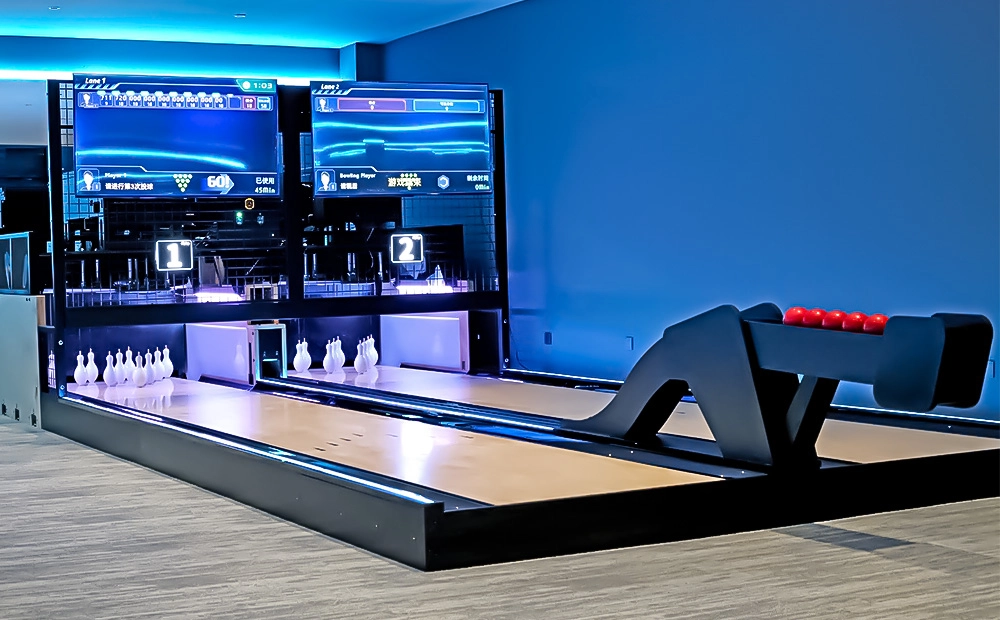
Flying Smart Duckpin Bowling
The innovative design of Flying Smart Duckpin Bowling (FSDB) makes it perfect for places like bars, billiard halls, and game centers. It makes people want to come back more often and spend more money. FSDB is fun and competitive, so it will become a new focus for social activities.
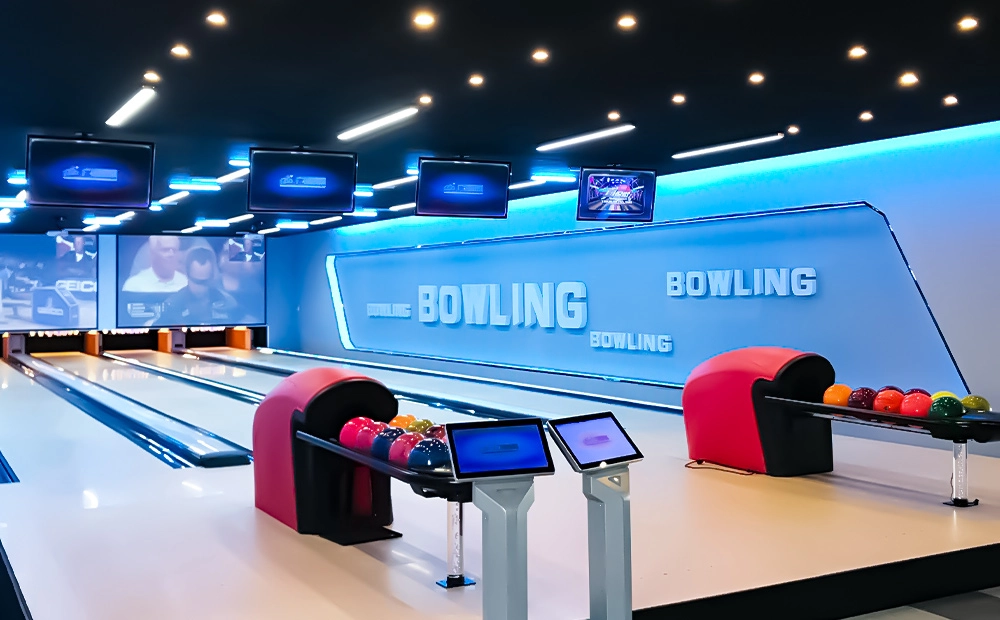
Flying Classic Standard Bowling
Flying Classic Standard Bowling (FCSB) employs the World Standard Competition Scoring System to deliver a more professional bowling experience, enabling bowlers to enjoy a professional-standard match at their convenience.
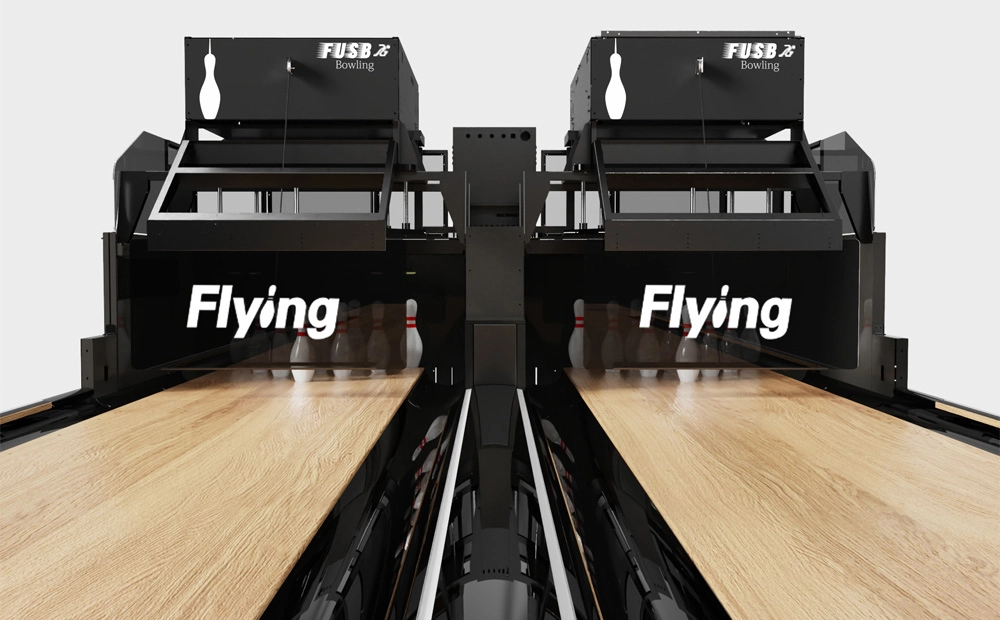
Flying Ultra Standard Bowling
Flying Ultra Standard Bowling (FUSB) Upgraded Version
The string pinsetter uses the latest technology. It offers a more enjoyable bowling experience thanks to its innovative designs and modern technology.

Get in touch
Contact us
If you contact us now for more details, we can provide you with a custom bowling alley service.
Our service team will get back to you within 24 hours, normally!


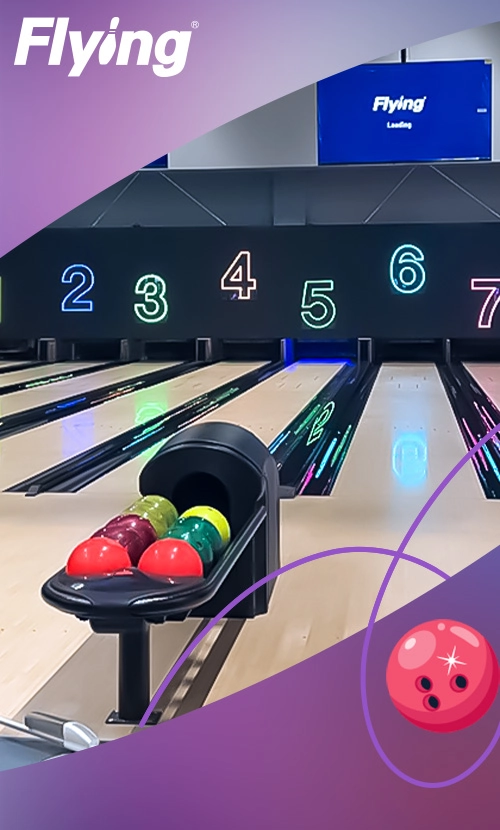
Professional Bowling Alley Equipment Manufacturer, a one-stop solution provider for bowling alleys.
Facebook
YouTube
Linkedin
Twitter