















How much does a bowling alley setup cost per lane?
- Bowling Alley Setup Cost: How much does a bowling alley setup cost per lane?
- 1) How much does a bowling alley setup cost per lane (equipment-only vs. total project)?
- 2) What are the major equipment components and typical cost items to budget per lane?
- 3) How much does the building, footprint and construction add per lane?
- 4) New equipment vs. used equipment — savings, risks and procurement best practices
- 5) What are the expected recurring & maintenance costs per lane?
- 6) Financing, returns and payback — how to evaluate per-lane ROI?
- 7) Installation timeline, commissioning and vendor selection tips
- 8) Regulatory, permitting, accessibility and insurance considerations that affect cost
- Quick procurement checklist for equipment buyers
- Summary and next steps for buyers
- Why choose Flying Bowling for equipment procurement and project support?
- References
Bowling Alley Setup Cost: How much does a bowling alley setup cost per lane?
Opening or expanding a bowling center requires balancing equipment quality, buildout standards, and local construction costs. There isn't a single number that fits every market, but industry-validated ranges and componentized budgets make planning realistic. Below are the most common buyer questions with practical, procurement-focused answers and up-to-date ranges to guide purchases.
1) How much does a bowling alley setup cost per lane (equipment-only vs. total project)?
Typical ranges (industry consensus):
- Equipment-only (new lanes, pinsetters, ball returns, scoring, conveyors, lighting & basic seating): approximately $40,000–$80,000 per lane. Higher-end solutions and High Quality scoring/amenity packages can push this higher.
- Full per-lane cost when allocating shell/buildout, MEP (mechanical/electrical/plumbing), FF&E, permits and soft costs: $80,000–$200,000+ per lane, depending heavily on regional construction costs, building reuse vs. new construction, and amenity level (bowling lounges, F&B, arcade, VR, etc.).
Why ranges are wide: suppliers (QubicaAMF, Brunswick and others) offer basic-to-High Quality equipment packages; site work and local labor rates vary considerably; and centers that bundle entertainment (laser tag, F&B) raise per-lane capital allocation. For many small independent centers, a practical planning figure is $100,000 per lane as a conservative budget that covers decent new equipment plus a modest buildout in many U.S. markets.
2) What are the major equipment components and typical cost items to budget per lane?
Key equipment line items and indicative ranges (per lane or per-unit where appropriate):
- Lane systems (synthetic lane surface, approach, gutter assemblies): $6,000–$12,000 per lane.
- Automatic pinsetters/pinspotter machines: $15,000–$35,000 each (one per lane).
- Ball return systems and conveyors: $2,000–$6,000 per lane.
- Automatic scoring consoles/monitors and PC/server systems: $1,500–$6,000 per lane (higher for immersive scoring and 3D displays).
- Pins, balls inventory (initial): $500–$2,000+ per lane (depends on ball stock strategy).
- Mechanical room & spare parts kit (shared across lanes): budget $5,000–$20,000 for commons parts and tools.
- Furniture, seating, lane-specific lighting and décor: $2,000–$8,000 per lane.
These are equipment-focused figures; installation labor, calibration, and commissioning are usually quoted separately but can add 10–25% to equipment costs.
3) How much does the building, footprint and construction add per lane?
Construction allocation depends on whether you retrofit an existing industrial space or build new. Useful planning heuristics:
- Smaller centers (8–16 lanes) often need a building footprint that allocates roughly 600–1,200 sq ft per lane when you include lanes, approaches, seating, concourse and support areas. Larger entertainment centers increase per-lane area due to lounges and F&B.
- Commercial construction costs vary widely by region — in many U.S. markets, commercial shell + core fit-out ranges from $120–$400 per sq ft (2024–2025 ranges). Allocating this to a per-lane footprint is the main driver of per-lane construction cost.
Example (illustrative): If you allocate 800 sq ft per lane and local construction is $200/sq ft, the construction share per lane = 800 x $200 = $160,000 per lane. That highlights why total per-lane project costs often exceed equipment-only budgets.
4) New equipment vs. used equipment — savings, risks and procurement best practices
Pros/cons:
- Used equipment can save 30–70% on equipment line items. It’s attractive for startups with limited capital. Typical pitfalls: hidden wear (pinsetter gear, lane surfaces), obsolete electronics, and higher short-term maintenance.
- New equipment offers supplier warranties, modern diagnostics, energy efficiencies, and better customer experience (LED scoring, themed lanes). New pinspotters and lane systems reduce downtime and long-term maintenance costs.
Procurement tips:
- Require maintenance logs and condition inspections when buying used. Budget for reconditioning (refurbished pinsetters often require $5k–$15k each in parts/labor).
- Get life-cycle cost estimates (parts, labor hours/year, mean time to repair) from vendors for both new and used gear.
- Consider warranty extensions or preventive maintenance contracts — these can be cost-effective and reduce downtime risk.
5) What are the expected recurring & maintenance costs per lane?
Ongoing operating and maintenance cost drivers:
- Routine mechanical maintenance (pinsetters, conveyors, lane oiling equipment): plan $1,000–$4,000 per lane per year, depending on traffic and local labor rates.
- Lane oil & consumables: $100–$300 per lane per month for oil and cleaning (higher with heavy play and league schedules).
- Electricity & HVAC allocation: depends on size and climate; bowling centers can have sizeable HVAC bills — budgeting a facility-level energy cost and allocating per lane can be useful.
- Software and licensing (scoring systems, POS, online booking): $200–$1,000+ per lane annually depending on capabilities and integrations.
Tip: Ask equipment vendors for typical parts-failure rates and annual service-hour estimates for budgeting operational expense (OpEx).
6) Financing, returns and payback — how to evaluate per-lane ROI?
Key metrics & steps:
- Estimate revenue per lane: consider average hourly lane rate, league reservations, open-play utilization, and ancillary revenue (F&B, arcade, events). A mature center's revenue per lane varies massively by market and mix; use conservative local market tests to estimate utilization.
- Calculate contribution margin per lane after variable costs (staffing, utilities allocated to play time, consumables).
- Apply capex amortization: if you invest $100,000 per lane and target a simple payback of 5–8 years, you need net cash flow per lane in the range of $12,500–$20,000 per year.
- Financing: SBA loans, equipment financing, or vendor leasing/financing are common. Equipment leases can preserve working capital but compare total cost of financing vs. buying outright.
Because centers bundle entertainment, many investors evaluate ROI on the whole facility (total project IRR) rather than a strict per-lane payback.
7) Installation timeline, commissioning and vendor selection tips
Typical timeline (single-phase large install):
- Design & permitting: 2–6 months (site dependent).
- Shell construction & utilities: 3–9 months.
- Equipment delivery, installation & commissioning for lanes: 2–8 weeks once ready to receive equipment; complex centers may phase lanes.
Vendor selection checklist:
- Choose experienced vendors with references for complete projects (not just parts sales).
- Confirm warranty, spare-parts availability and local service capability.
- Request a line-item equipment & installation quote and a realistic timeline for commissioning.
- Negotiate training on-site and first-year preventive maintenance packages.
8) Regulatory, permitting, accessibility and insurance considerations that affect cost
Items to include in your budget and timeline:
- Local building permits and inspections; fire & life-safety compliance can add costs and time.
- ADA accessibility requirements (ramps, restroom modifications, accessible lanes/seating) — plan design costs early.
- Insurance (property, liability, business interruption) — High Qualitys depend on property value, location, and safety systems.
- Environmental (oil/chemicals disposal) — ensure you budget for compliant disposal of lane oils and cleaning agents.
Quick procurement checklist for equipment buyers
- Define target experience level (family bowl, boutique cosmic, High Quality lounge) — this determines equipment tier.
- Obtain at least three detailed vendor quotes (including installation, training, spare parts and lead times).
- Ask vendors for local references and visit recently completed installations.
- Budget for at least 10–20% contingency in capex for concealed site conditions and minor scope changes.
- Plan a spare-parts kit and preventive maintenance contract into year-one operating budget.
Summary and next steps for buyers
Start with an equipment-only budget and then layer in realistic construction and operating allocations. For many projects, a conservative planning number is $80,000–$150,000 per lane when you include both equipment and reasonable construction allocation. Lower-cost projects (used equipment, minimal fit-out) can get under $80k per lane; High Quality entertainment centers often exceed $150k–$200k per lane.
Work with experienced suppliers early (design stage) and secure multiple quotes, service plans and a detailed installation schedule. That approach reduces surprises and helps ensure predictable commissioning and ROI.
Why choose Flying Bowling for equipment procurement and project support?
Flying Bowling combines deep industry expertise, global procurement reach and turnkey project management. Key advantages:
- Comprehensive new and refurbished equipment options to match budgets and experience targets.
- Transparent, line-item quotes including installation, training and spare-parts packages.
- Local service networks and preventive-maintenance plans to reduce downtime and lifecycle costs.
- Design support that aligns building footprint, lane flow and guest experience to maximize utilization and ancillary revenue.
Contact Flying Bowling early in your planning to get realistic per-lane cost modeling and vendor-coordinated scheduling.
References
- QubicaAMF — Industry resources and white papers on bowling center equipment and planning. Accessed 2026-01-24: https://www.qubicaamf.com
- Brunswick Bowling — Product catalogs and equipment specifications for lanes, pinsetters and scoring systems. Accessed 2026-01-24: https://www.brunswickbowling.com
- Bowling Proprietors' Association of America (BPAA) — Industry guidance and operational best practices. Accessed 2026-01-24: https://bpaa.com
- IBISWorld — Market research report, Bowling Centers in the US (industry revenue and trends). Accessed 2026-01-24: https://www.ibisworld.com
- Statista — Industry revenue and market statistics for bowling and amusement centers. Accessed 2026-01-24: https://www.statista.com
- US Small Business Administration & business startup guides — financing options and small business planning resources. Accessed 2026-01-24: https://www.sba.gov

Quality Bowling
Products
Can I customize the bowling equipment to fit my venue's theme?
Yes, we offer fully customized solutions, including lane colors, scoring systems, and pinsetter designs to match your venue’s theme.
How to deal with the differences in power/specification standards in different countries?
Support 110V—240V voltage adaptation, comply with international safety certifications such as CE/UL, and provide localized standard transformation services.
Technology
Are your products compliant with European safety standards?
Yes, all of our products meet the required EU safety and regulatory standards.
Can old equipment be upgraded?
We provide personalized transformation solutions for different venues, such as replacing old pinsetter machines with the latest string pinserrer machines , LED interactive lanes, etc.
Service
How long do you provide warranty service?
The whole machine is under warranty for 2 years, and the core components (motor/mainboard) are extended to 3 years, and the maintenance is at cost price for life.
You May Also Like
Flying Smart Duckpin Bowling
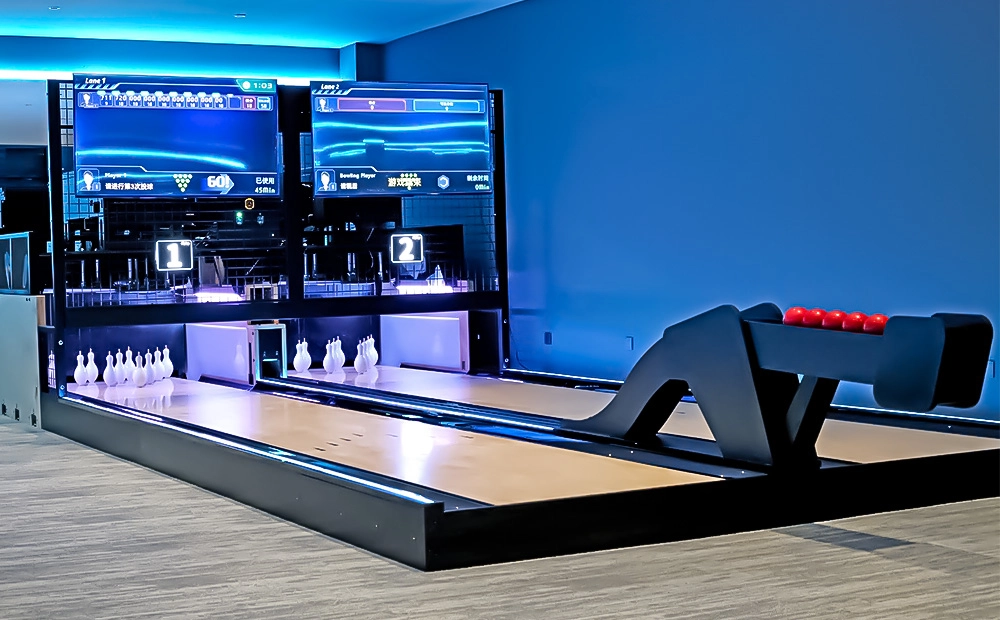
The innovative design of Flying Smart Duckpin Bowling (FSDB) makes it perfect for places like bars, billiard halls, and game centers. It makes people want to come back more often and spend more money. FSDB is fun and competitive, so it will become a new focus for social activities.
Flying Classic Standard Bowling
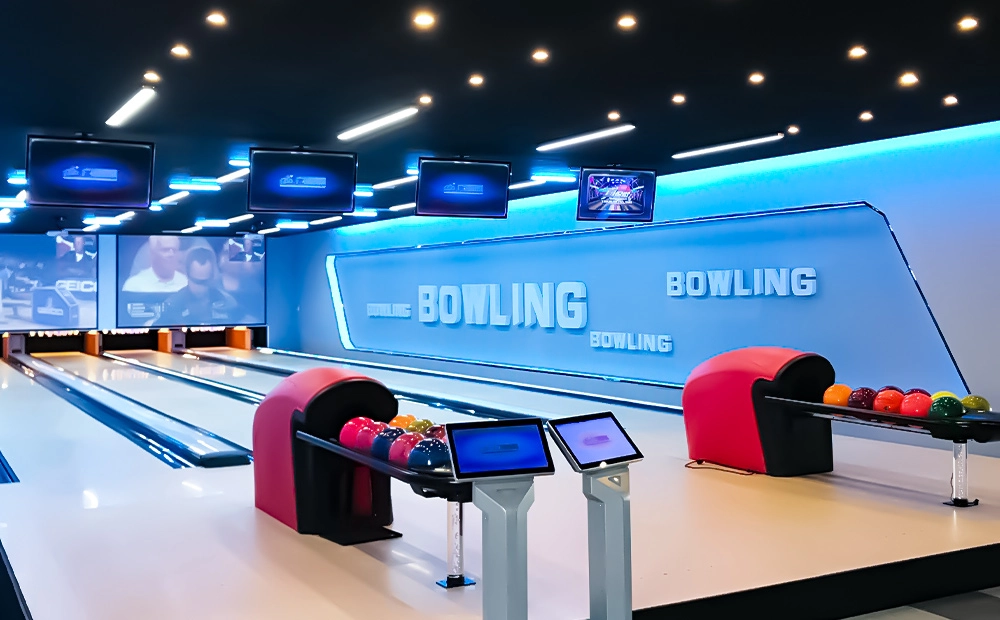
Flying Classic Standard Bowling (FCSB) employs the World Standard Competition Scoring System to deliver a more professional bowling experience, enabling bowlers to enjoy a professional-standard match at their convenience.
Flying Ultra Standard Bowling
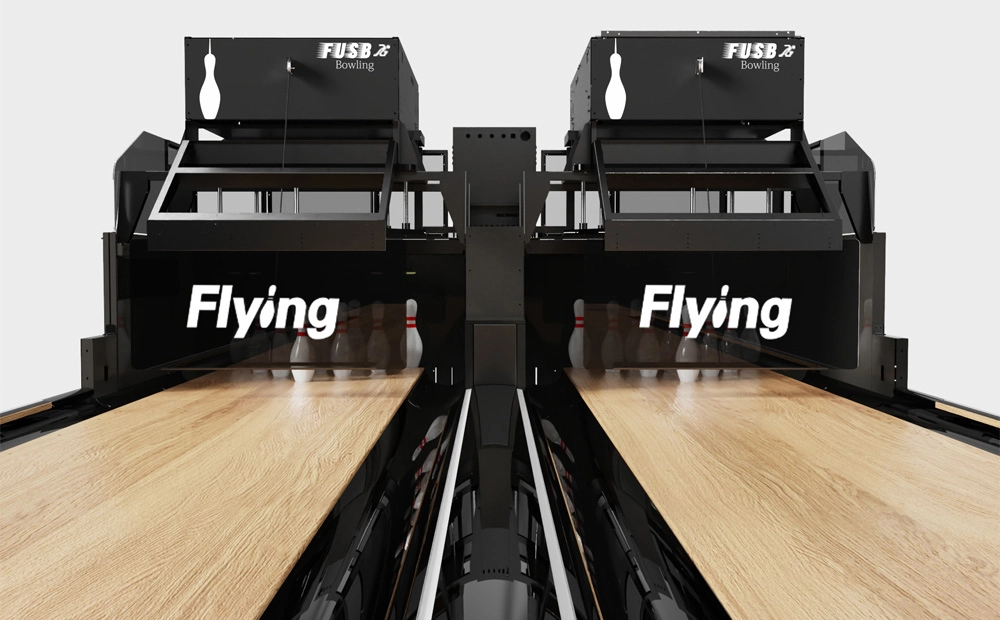
Flying Ultra Standard Bowling (FUSB) Upgraded Version
The string pinsetter uses the latest technology. It offers a more enjoyable bowling experience thanks to its innovative designs and modern technology.

Get in touch
Contact us
If you contact us now for more details, we can provide you with a custom bowling alley service.
Our service team will get back to you within 24 hours, normally!



Professional Bowling Alley Equipment Manufacturer, a one-stop solution provider for bowling alleys.
Facebook
YouTube
Linkedin
Twitter