















Mastering the Lanes: Exactly How Many Pins Are in Ten-Pin Bowling?
This guide answers the fundamental question of how many pins are in ten-pin bowling—precisely ten. We delve into the standard dimensions and anatomy of the pins, the strategic significance of the triangular arrangement, and the rules of the game. Furthermore, we explore scoring methods, including the elusive perfect game; compare ten-pin to other variations like duckpin and candlepin; and trace the fascinating history from nine-pins to the modern standard.
- Introduction: The Core Question Answered
- The Anatomy of Ten-Pin Bowling Pins
- Standard Dimensions
- Material Composition
- Weight Regulations
- The Iconic Pin Arrangement: A Closer Look
- The Four Rows
- Strategic Significance
- Gameplay Basics: How Ten-Pin Bowling Works
- Understanding the Scoring System
- The Basics
- Strikes and Spares
- The Perfect Game
- Beyond Ten-Pin: Other Bowling Variations
- A Glimpse into History: The Evolution of Bowling Pins
- From Nine to Ten
- Conclusion
- FAQ
- References
Introduction: The Core Question Answered
When stepping onto the polished wood of a bowling alley, the focal point of the game is immediately clear: the target at the end of the lane. To answer the most fundamental question of the sport directly: Ten-pin bowling uses precisely 10 pins.
This specific number is not arbitrary; it defines the game's name, its strategy, and its global standardization. These ten targets are arranged in an iconic equilateral triangle, known as the "pin deck," standing exactly 60 feet away from the foul line. While the answer—ten—might seem simple, understanding the nuance of how these pins are constructed, arranged, and numbered is what separates a casual recreational bowler from a league veteran.
Whether you are aiming for a strike or trying to convert a difficult split, the physics of the game rely entirely on the interaction between the bowling ball and these ten distinct obstacles. Understanding the pin count and arrangement is fundamental to mastering the lanes, as it dictates the geometry of the perfect shot.
The Anatomy of Ten-Pin Bowling Pins
To the untrained eye, a bowling pin is simply a white wooden club. However, the manufacturing and regulation of these pins are feats of engineering overseen by governing bodies like the United States Bowling Congress (USBC). A standard pin is far more complex than it appears.
Standard Dimensions
According to regulation standards, a ten-pin bowling pin stands 15 inches (38.1 cm) tall. Its width varies along the vertical axis to create its distinctive shape, measuring 4.75 inches (12.065 cm) at its widest point, known as the "belly." The base of the pin is roughly 2.03 inches in diameter, just wide enough to provide stability without making them impossible to knock down.
Material Composition
Modern pins are typically constructed from a core of hard rock maple. This wood is chosen for its durability and acoustic properties—that satisfying "crack" you hear upon impact is largely due to the maple density. The wooden core is then encapsulated in a thick, durable plastic or Surlyn coating. This coating protects the wood from the repeated high-velocity impact of 15-pound bowling balls and allows for the application of the nylon ring around the neck, which protects the pin during pinsetter handling.
Weight Regulations
Weight is a critical factor in how pins react (pin action). A standard pin must weigh between 3 pounds, 6 ounces and 3 pounds, 10 ounces. Even a variance of a few ounces can drastically change how the pins fly when hit. If pins are too heavy, strikes become rare; if they are too light, they fly too erratically. The center of gravity is also strictly regulated to ensure the pin doesn't tip over too easily from lane vibration but falls readily when struck by the ball.
The Iconic Pin Arrangement: A Closer Look
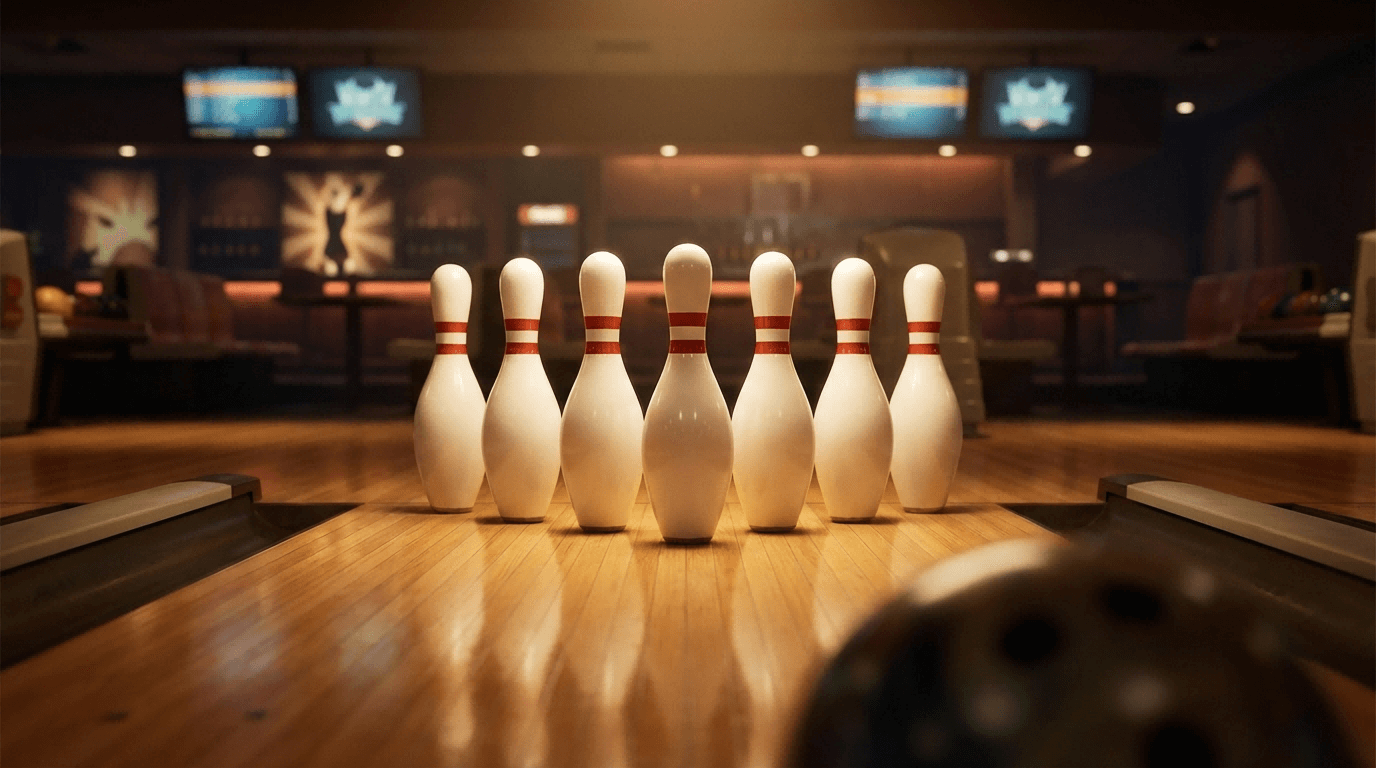
The ten pins are not placed randomly; they form a perfect equilateral triangle with the point facing the bowler. Each pin has a specific number, 1 through 10, though the numbers are not printed on the pins themselves. Understanding this numbering system is vital for communication and strategy.
The Four Rows
The triangle consists of four rows:
1. The Head Pin (Pin 1): This is the single pin at the very front, closest to the bowler.
2. The Second Row (Pins 2 and 3): Located behind the head pin. The 2-pin is to the left, and the 3-pin is to the right.
3. The Third Row (Pins 4, 5, 6): The 5-pin sits directly behind the head pin (in the center of the triangle).
4. The Back Row (Pins 7, 8, 9, 10): This is the widest part of the setup. The 7-pin is the back-left corner, and the 10-pin is the back-right corner.
Strategic Significance
For a right-handed bowler, the ideal strike ball hits the "pocket" between the 1-pin and the 3-pin. For a left-handed bowler, the target is the 1-2 pocket. Hitting the head pin dead-center usually results in a split, where the front pins are cleared, but pins on the outer edges (like the 7 and 10) remain standing. This geometric arrangement ensures that luck is minimized and precision is rewarded.
Gameplay Basics: How Ten-Pin Bowling Works
The objective of ten-pin bowling is straightforward: knock down as many pins as possible over the course of a game. A standard game consists of 10 frames. In each of the first nine frames, a bowler is allowed up to two rolls to knock down all ten pins.
· If all ten pins are knocked down on the first roll, it is a Strike. The frame is over.
· If pins remain after the first roll, the bowler rolls again. If the remaining pins are cleared, it is a Spare.
· If pins still remain after the second roll, it is an Open Frame.
The 10th frame is special. If a bowler rolls a strike or a spare in the 10th frame, they are awarded bonus rolls (up to three total rolls in the frame) to complete their score. This unique ending allows for dramatic finishes and determines the maximum possible score.
Understanding the Scoring System
While modern alleys utilize automatic electronic scoring, understanding how the math works is essential for tracking progress and strategy.
The Basics
In an open frame, you simply add the number of pins knocked down. If you knock down 4 on the first ball and 3 on the second, your score for that frame is 7.
Strikes and Spares
The complexity arises with bonuses:
· Spare (/): Worth 10 points plus the number of pins knocked down on the very next roll. For example, if you get a spare and then roll a 7 on your next turn, the spare frame is worth 17 points (10 + 7).
· Strike (X): Worth 10 points plus the total of the next two rolls. This is where scores compound quickly. A "turkey" (three strikes in a row) makes the first strike frame worth 30 points (10 + 10 + 10).
The Perfect Game
A perfect game consists of 12 consecutive strikes (one for each of the first nine frames, plus three in the tenth frame). The calculation is 30 points per frame multiplied by 10 frames, resulting in the coveted score of 300.
Beyond Ten-Pin: Other Bowling Variations
While ten-pin is the most ubiquitous form of bowling worldwide, it is not the only version. Several regional variations exist, some of which use different pin counts or shapes.
· Candlepin Bowling: Popular in New England and Atlantic Canada, this game also uses 10 pins. However, the pins are tall, thin cylinders that look like candles. The ball is much smaller (about 2.5 lbs) and has no finger holes. A unique rule in candlepin is that fallen pins (dead wood) are left on the lane to be used strategically.
· Duckpin Bowling: Similar to ten-pin in arrangement (10 pins in a triangle), but the pins are shorter and squatter. The ball is small like in candlepin. Because the pins are lighter but stable, strikes are incredibly rare.
· Nine-Pin Bowling (Kegel): The historical predecessor to ten-pin. The 9 pins are arranged in a diamond shape rather than a triangle. The goal is often to knock down the surrounding pins while leaving the center pin (the Kingpin) standing, or to knock them all down, depending on the specific regional rules (popular in Texas and parts of Europe).
· Five-Pin Bowling: Exclusively popular in Canada, this uses 5 pins arranged in a V-shape. The pins have a rubber band around the middle to increase bounce, and each pin has a different point value (the center pin is worth 5 points).
A Glimpse into History: The Evolution of Bowling Pins
The history of why we use ten pins is a fascinating mix of ancient tradition and legal maneuvering.
From Nine to Ten
Bowling games date back to ancient Egypt, but the direct ancestor of the modern game is European Ninepins. Brought to America by Dutch and German settlers, Ninepins became a gambling craze in the early 19th century. The game was so associated with vice and gambling that several states, notably Connecticut and New York, passed laws effectively banning "the game of bowling with nine pins."
According to bowling lore (and supported by historical records), enthusiasts circumvented this law by adding a tenth pin and rearranging the formation from a diamond to a triangle. Because the law specifically forbade "nine pins," the new "ten-pin" game was technically legal. This loophole not only saved the sport but improved it; the triangular setup allowed for more dynamic pin action and the development of the modern game we know today. By 1895, the American Bowling Congress (ABC) was formed to standardize these rules, cementing the 10-pin setup as the official standard.
Conclusion
So, to answer the question: Ten-pin bowling consistently and exclusively uses ten pins. However, the game is defined by more than just this number. It is the physics of the 15-inch maple pins, the strategy of the equilateral triangle, and the cumulative excitement of the scoring system that make the sport enduringly popular.
From its clever historical origins as a way to dodge gambling laws to its current status as a global sport, the ten-pin setup has proven to be the perfect balance of skill and spectacle. Next time you approach the lane, take a moment to appreciate those ten pins standing at attention—they are the guardians of a rich history and the key to a perfect game.
FAQ
Q: How many pins are in a standard game of bowling?
A: A standard game, specifically ten-pin bowling, always uses 10 pins. These pins are arranged in a precise triangular formation at the end of the lane.
Q: What is the arrangement of pins in ten-pin bowling?
A: The pins are arranged in an equilateral triangle with four rows. From front to back, the rows contain 1, 2, 3, and 4 pins, respectively.
Q: How many pins are in the back row of a ten-pin bowling setup?
A: There are four pins in the back row of a ten-pin bowling setup. This is the widest part of the triangular formation.
Q: What are the dimensions of a standard bowling pin?
A: A standard bowling pin is typically 15 inches (38 cm) tall. It measures about 4.75 inches (12 cm) in diameter at its widest point.
Q: How many frames are in a game of ten-pin bowling?
A: A game of ten-pin bowling consists of 10 frames. Players get two rolls per frame, except for bonus rolls in the tenth frame.
Q: What is a 'perfect game' in ten-pin bowling?
A: A perfect game is achieved by rolling a strike in every single frame, including all bonus rolls in the tenth frame. This results in the maximum possible score of 300 points.
Q: Are there different types of bowling that use a different number of pins?
A: Yes, while ten-pin is most common, variations like Nine-Pin Bowling (9 pins) and Five-Pin Bowling (5 pins) exist. Other forms like Candlepin and Duckpin bowling also use 10 pins but with different equipment and rules.
Q: Why are there 10 pins in ten-pin bowling?
A: Ten-pin bowling evolved from an older game called 'Ninepins'. The tenth pin was added and the arrangement changed to a triangle to circumvent laws that had outlawed ninepin bowling in certain areas in the past.
References
· United States Bowling Congress (USBC). "Equipment Specifications and Certifications Manual." Bowl.com. [Official source for pin dimensions, weight, and material composition regulations].
· International Bowling Museum and Hall of Fame. "History of Bowling." [Source for the historical evolution from Ninepins to Ten-pins and the 19th-century anti-gambling laws].
· Professional Bowlers Association (PBA). "The Rules of Bowling." [General reference for scoring and gameplay mechanics].

Quality Bowling

Company
Do you have independent R&D capabilities?
We have set up an independent R&D department and have launched a number of new equipment and innovative technologies such as the smart scoring system, Flying Smart Duckpin, and oil drop machine in the past three years.
Technology
Are your products compliant with European safety standards?
Yes, all of our products meet the required EU safety and regulatory standards.
Installations
How long does it take to install the equipment?
It takes about 7-15 days for a standard venue, and it takes an average of 2 days to install a fairway.
Service
What are the free cases during the warranty period, and what are the cases that require additional charges?
Covering failures caused by material/workmanship defects, providing free labor and parts repairs; non-quality damage will be charged at cost, and a detailed quotation will be provided for confirmation before repair.
Customer care
Do I get a discount if my bowling lanes are shorter than standard length?
Shorter lanes require additional labor to cut and splice materials, which offsets any potential material savings. As a result, pricing remains the same regardless of lane length.
You May Also Like
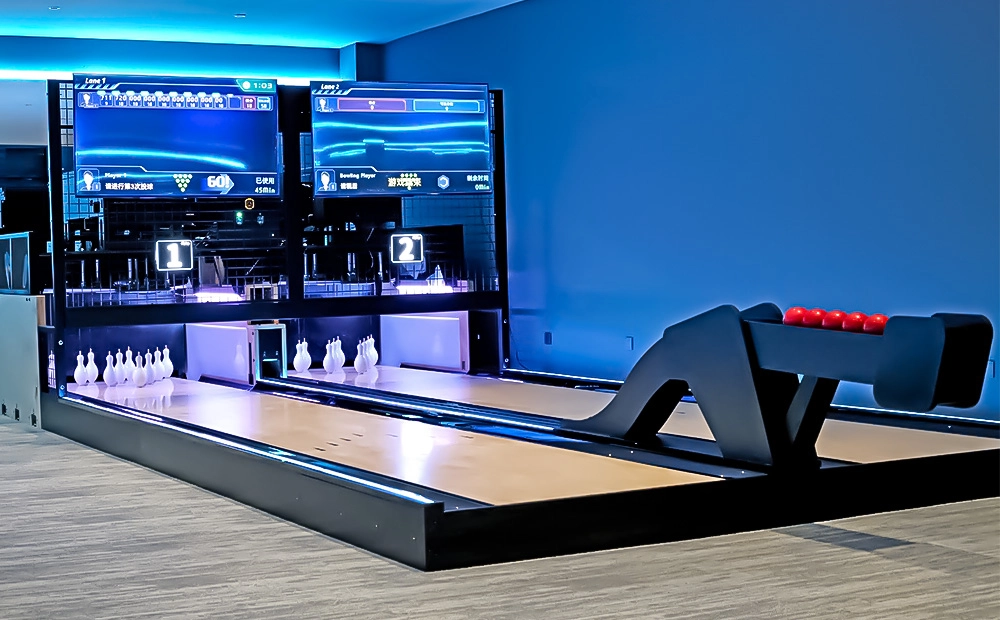
Flying Smart Duckpin Bowling
The innovative design of Flying Smart Duckpin Bowling (FSDB) makes it perfect for places like bars, billiard halls, and game centers. It makes people want to come back more often and spend more money. FSDB is fun and competitive, so it will become a new focus for social activities.
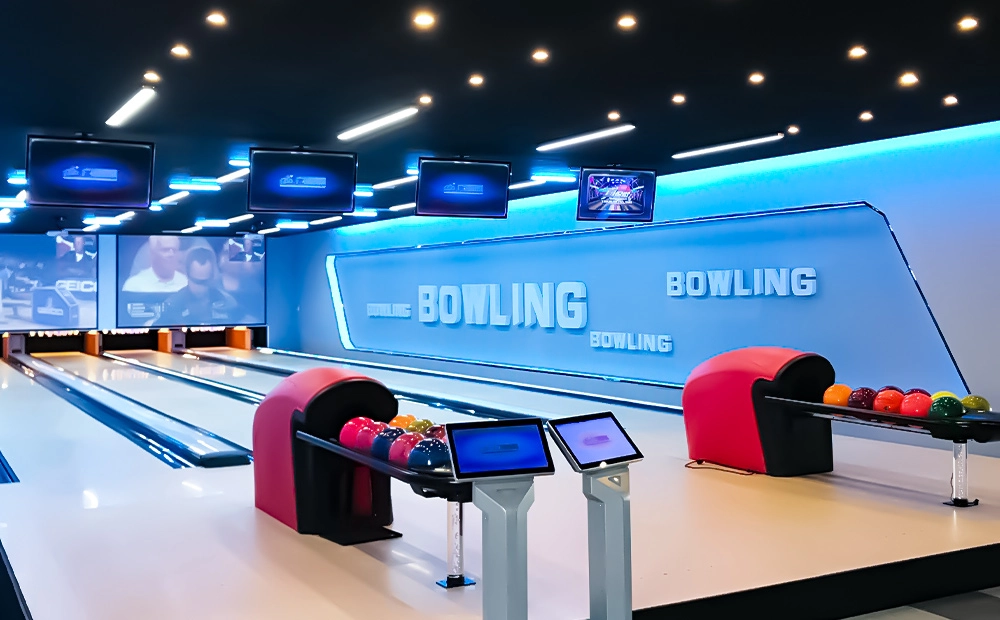
Flying Classic Standard Bowling
Flying Classic Standard Bowling (FCSB) employs the World Standard Competition Scoring System to deliver a more professional bowling experience, enabling bowlers to enjoy a professional-standard match at their convenience.
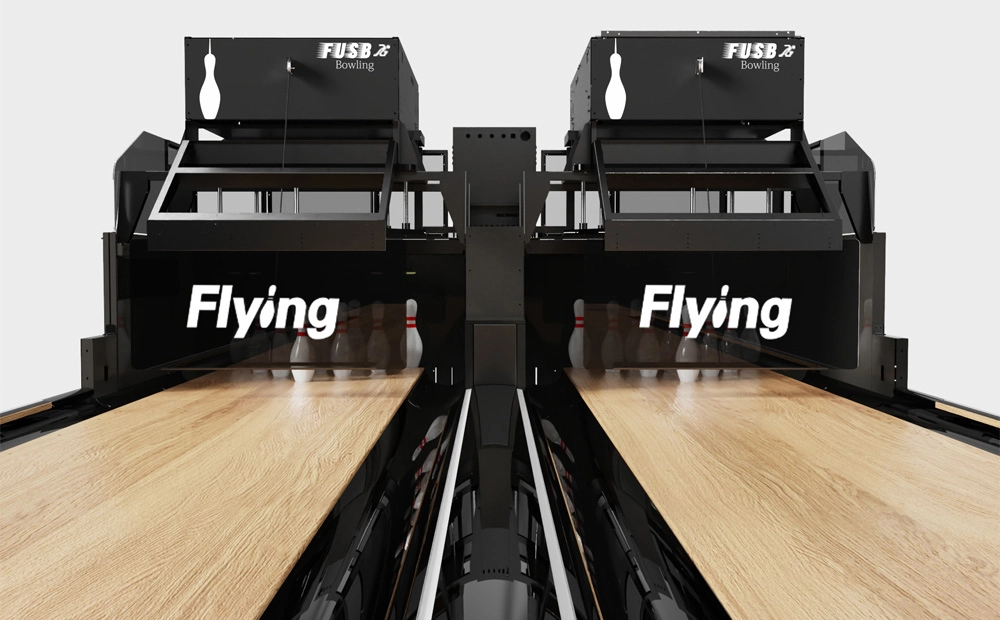
Flying Ultra Standard Bowling
Flying Ultra Standard Bowling (FUSB) Upgraded Version
The string pinsetter uses the latest technology. It offers a more enjoyable bowling experience thanks to its innovative designs and modern technology.

Get in touch
Contact us
If you contact us now for more details, we can provide you with a custom bowling alley service.
Our service team will get back to you within 24 hours, normally!



Professional Bowling Alley Equipment Manufacturer, a one-stop solution provider for bowling alleys.
Facebook
YouTube
Linkedin
Twitter