















Mastering the Bowling Alley Business Plan: Your Blueprint for Profit and Fun
A comprehensive guide to writing a bowling alley business plan, covering startup costs, revenue streams, and the shift to Family Entertainment Centers (FECs).
- Introduction: Why Your Bowling Alley Needs a Winning Business Plan
- 1. Executive Summary: Your Bowling Alley's Pitch Deck to Success
- 2. Company Description: Defining Your Bowling Oasis
- 3. Market Analysis: Pinpointing Your Audience and Competition
- 4. Products and Services: More Than Just Lanes
- 5. Marketing and Sales Strategy: Striking the Right Chords
- 6. Operational Plan: Keeping the Balls Rolling Smoothly
- 7. Management Team: Your League of Extraordinary Bowlers
- 8. Financial Plan: Projecting Your Path to Profitability
- 9. Funding Request: Securing the Capital for Your Vision
- Conclusion: Launching Your Bowling Alley Dream
- FAQ
- What are the essential components of a bowling alley business plan?
- How much does it typically cost to start a bowling alley?
- What are the primary revenue streams for a bowling alley?
- How can a bowling alley attract customers and compete effectively?
- What permits and licenses are required to open a bowling alley?
- How long does it typically take for a bowling alley to become profitable?
- Should a bowling alley offer food and beverages?
- What are key market trends impacting the bowling industry?
- References

Introduction: Why Your Bowling Alley Needs a Winning Business Plan
The era of dingy, smoke-filled bowling alleys is over. Today, the industry is experiencing a renaissance, transforming into vibrant Family Entertainment Centers (FECs) that blend high-tech gaming, gourmet dining, and social experiences. According to recent industry analysis, the U.S. bowling industry generated approximately $4.8 billion in revenue in 2024, driven largely by this shift toward experiential entertainment.
However, entering this lucrative market requires more than just passion for the sport; it demands a rigorous roadmap. A comprehensive bowling alley business plan is critical for securing funding and guiding your operations through the complex landscape of modern entertainment. It articulates your vision to investors, proving that you understand the nuance between a traditional alley and a profitable modern venue. This guide will walk you through the essential elements that make your business plan stand out to stakeholders.
1. Executive Summary: Your Bowling Alley's Pitch Deck to Success
The Executive Summary is the most critical section of your plan; it is often the only part busy investors read fully. It must capture the essence of your bowling alley business plan in a concise, compelling pitch.
· Mission & Vision: clearly define your concept. Are you building a boutique 10-lane lounge for young professionals, or a massive 40-lane FEC for families? Your vision should align with current market demands for "eatertainment."
· Unique Value Proposition (UVP): Briefly explain why your center will succeed where others fail. This could be proprietary technology, a chef-driven menu, or an untapped location.
· Financial Snapshot: Highlight your key numbers immediately. State your total funding requirement (e.g., $2M–$5M for a new build) and your projected ROI. As noted in recent reports, well-managed centers can achieve net profit margins of 10–20%, with high-performing FECs often exceeding that range.
2. Company Description: Defining Your Bowling Oasis
This section details the legal and structural backbone of your business. Investors need to know who owns the company and how it is organized.
· Legal Structure: Define whether you are an LLC, C-Corp, or Partnership. This impacts your taxation and liability—crucial factors when dealing with high-liability assets like heavy machinery and alcohol service.
· The Concept: Articulate your brand identity. The modern trend is moving away from "leagues only" toward a hybrid model. Describe your target atmosphere: is it 'Cosmic Bowling' neon energy or a rustic-chic 'Boutique Bowl' vibe?
· Long-term Objectives: Where do you see the business in 5 or 10 years? Goals might include expanding to multiple locations or integrating franchise models.
3. Market Analysis: Pinpointing Your Audience and Competition
Don't rely on guesswork. Your market analysis must be grounded in data.
· Target Demographics: While families remain a staple, the adult demographic (18+) now accounts for a significant portion of market share—over 60% in some segments according to Mordor Intelligence. This shift validates the need for upscale bar and lounge areas.
· Market Trends: The industry is growing at a CAGR of roughly 3–4%. The biggest trend is the "FEC" model, where bowling is just the anchor for other revenue streams like arcades and laser tag.
· Competitive Analysis: Identify local competitors. Do not just look at other bowling alleys; your competition includes movie theaters, TopGolf, and Dave & Buster's. Evaluate their pricing per game and F&B (Food & Beverage) quality to find your gap in the market.
4. Products and Services: More Than Just Lanes
In the modern bowling financial model, relying solely on lane revenue is a mistake. Successful centers now aim for a revenue mix where bowling accounts for only 40–50% of total income, with F&B and amusements making up the rest.
· Core Bowling Offerings: Detail your lane products. Will you offer traditional ten-pin, or the increasingly popular "HyperBowling" that gamifies the experience for non-bowlers? Will you use string pinsetters? These newer machines reduce maintenance costs and energy usage, a key operational advantage.
· Food and Beverage Strategy: Your menu can be a massive profit driver. Data indicates that centers elevating their food offering to "restaurant quality" see higher guest dwell times and spending.
· Ancillary Revenue: innovative revenue streams are vital. This includes arcade games (often high margin), pro shops, birthday party packages, and corporate event hosting. A robust arcade section alone can contribute 15–20% of total revenue.
5. Marketing and Sales Strategy: Striking the Right Chords
Your bowling center marketing strategy must be digital-first.
· Online Presence: A professional website with real-time lane reservation capability is mandatory. SEO efforts should target local keywords like "birthday parties near me" or "corporate team building [City Name]."
· Local Initiatives: Partner with local schools and corporate HR departments. League bowlers provide steady base revenue, but corporate events provide the high-margin "gravy."
· Promotional Tactics: Implement dynamic pricing (higher rates on Friday/Saturday nights). Loyalty programs are also highly effective; rewarding frequent bowlers with free games or appetizers encourages repeat visits.
6. Operational Plan: Keeping the Balls Rolling Smoothly
This section demonstrates that you understand the nuts and bolts of running the facility.
· Facility Layout: Flow is everything. Ensure the bar is centrally located to serve both bowlers and walk-in diners. The layout should minimize bottlenecks at the shoe rental counter.
· Technology & Equipment: Detail your choice of pinsetters and scoring systems. As mentioned, string pinsetters are gaining popularity for their reliability. You also need a robust POS system that integrates lane management with kitchen orders.
· Staffing: You will need a mix of technical staff (mechanics for pinsetters) and customer-facing staff (servers, hosts). Training programs for customer service are essential to differentiate your venue from the "grumpy alley" stereotype.
7. Management Team: Your League of Extraordinary Bowlers
Investors bet on the jockey, not just the horse.
· Key Personnel: Highlight the experience of your General Manager. Do they have a background in hospitality or entertainment management?
· Organizational Structure: Provide an organizational chart showing the hierarchy from owners to shift managers.
· Advisory Board: If you lack specific experience (e.g., culinary management), list advisors or consultants who fill those gaps.
8. Financial Plan: Projecting Your Path to Profitability
This is the heart of your bowling alley business plan. You must be realistic about bowling alley startup costs.
· Startup Costs: Industry estimates for a new commercial build-out range from $80,000 to $100,000+ per lane depending on the level of luxury and equipment (Is Owning a Bowling Alley Profitable-Flying Bowling). A 12-lane center could easily require $2M–$3M in initial capital.
· Revenue Projections: Base your revenue on "lineage" (games per lane per day). A healthy center might average 10,000–12,000 lines per lane annually. Don't forget to project F&B spend per head (e.g., $15 per person).
· Operating Expenses: Account for rent, utilities (which can be high), insurance, and labor. Labor typically runs 25–30% of gross revenue.
· Break-Even Analysis: Most bowling alleys aim to break even operationally within 18–24 months, though paying back the full initial investment typically takes 3–5 years.
9. Funding Request: Securing the Capital for Your Vision
· Total Requirement: clearly state the dollar amount you need.
· Use of Funds: Breakdown the usage: e.g., 40% construction, 30% equipment, 20% working capital, 10% marketing.
· Investor Returns: Outline the exit strategy or dividend distribution plan. Emphasize the stability of the business model; bowling has historically been recession-resistant compared to other high-ticket entertainment.
Conclusion: Launching Your Bowling Alley Dream
A meticulously crafted bowling alley business plan is your roadmap to navigating the complexities of this capital-intensive industry. It serves as a living document that guides your strategic decisions, from site selection to grand opening. By grounding your plan in real-world data and adhering to modern FEC trends, you position yourself not just to open a bowling alley, but to build a profitable, enduring entertainment brand. Now is the time to take these insights and start writing your future success story.
FAQ
What are the essential components of a bowling alley business plan?
An Executive Summary, Company Description, Market Analysis, Products & Services, Marketing Plan, Operational Plan, Management Team, and a detailed Financial Plan.
How much does it typically cost to start a bowling alley?
Startup costs vary widely, but industry data suggests a range of $80,000 to $100,000 per lane for new commercial construction. A full modern center often requires between $2 million and $6 million depending on size and amenities.
What are the primary revenue streams for a bowling alley?
Key revenue streams include lane rentals, shoe rentals, food and beverage sales (often 30-40% of revenue), arcade games, pro shop sales, and corporate event bookings.
How can a bowling alley attract customers and compete effectively?
Effective strategies include strong branding, digital marketing (SEO, social media), community engagement, unique events, competitive pricing, and exceptional customer service.
What permits and licenses are required to open a bowling alley?
Requirements vary by location but often include business licenses, zoning permits, health permits (for food service), liquor licenses (critical for profitability), and fire safety inspections.
How long does it typically take for a bowling alley to become profitable?
Profitability timelines depend on initial investment and efficiency, but many bowling alleys aim for operational break-even within 18-24 months and full ROI in 3-5 years.
Should a bowling alley offer food and beverages?
Yes, absolutely. Offering a high-quality food and beverage menu is essential for modern centers, often contributing significantly to the bottom line and increasing customer dwell time.
What are key market trends impacting the bowling industry?
Trends include a massive shift toward the Family Entertainment Center (FEC) model, adoption of string pinsetters to lower costs, and "eatertainment" concepts that prioritize high-quality dining.
References
· Mordor Intelligence: Bowling Centers Market Size & Share Analysis - Industry Research Report
· IBISWorld: Bowling Centers in the US - Market Size, Industry Analysis, Trends and Forecasts
· Flying-Bowling: Is Owning a Bowling Alley Profitables in 2025?
· Startup Financial Projection: How to Open a Bowling Alley - Costs and Revenue
· QTO Estimating: How Much Does It Cost to Build Bowling Alley

Quality Bowling

Company
Do you have internationally certified production qualifications?
Our factory has passed ISO 9001 quality management system certification, and our products meet ASTM international bowling equipment standards.
Products
How to deal with the differences in power/specification standards in different countries?
Support 110V—240V voltage adaptation, comply with international safety certifications such as CE/UL, and provide localized standard transformation services.
Can I customize the bowling equipment to fit my venue's theme?
Yes, we offer fully customized solutions, including lane colors, scoring systems, and pinsetter designs to match your venue’s theme.
Technology
Are your products compliant with European safety standards?
Yes, all of our products meet the required EU safety and regulatory standards.
Service
How long do you provide warranty service?
The whole machine is under warranty for 2 years, and the core components (motor/mainboard) are extended to 3 years, and the maintenance is at cost price for life.
You May Also Like
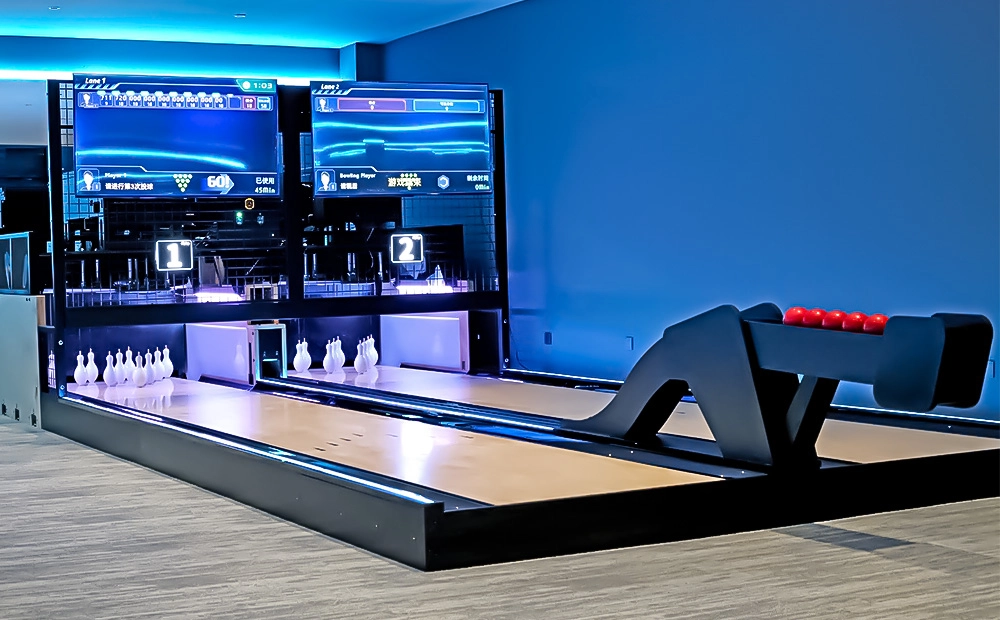
Flying Smart Duckpin Bowling
The innovative design of Flying Smart Duckpin Bowling (FSDB) makes it perfect for places like bars, billiard halls, and game centers. It makes people want to come back more often and spend more money. FSDB is fun and competitive, so it will become a new focus for social activities.
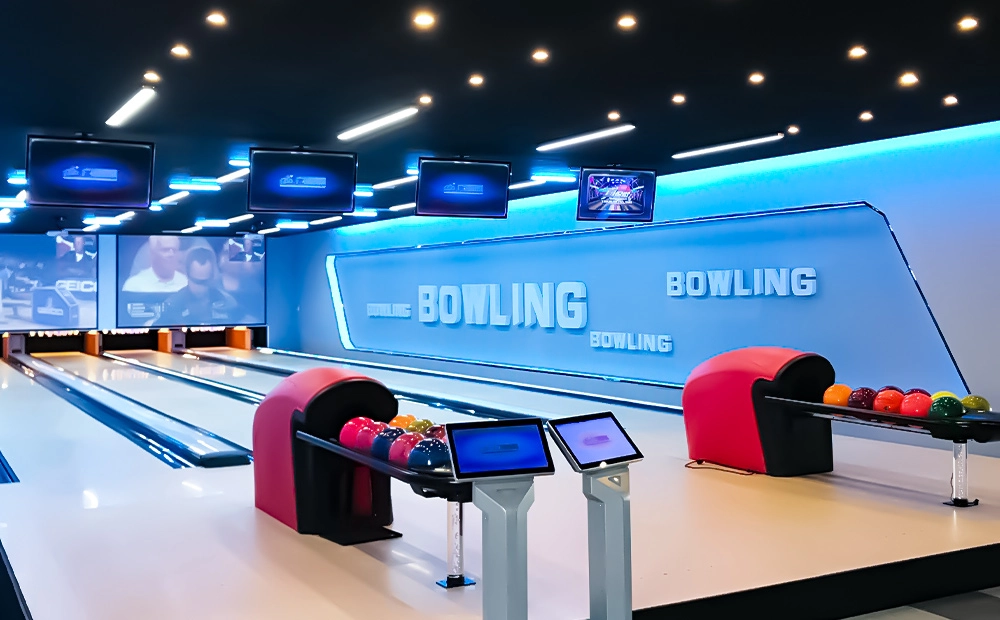
Flying Classic Standard Bowling
Flying Classic Standard Bowling (FCSB) employs the World Standard Competition Scoring System to deliver a more professional bowling experience, enabling bowlers to enjoy a professional-standard match at their convenience.
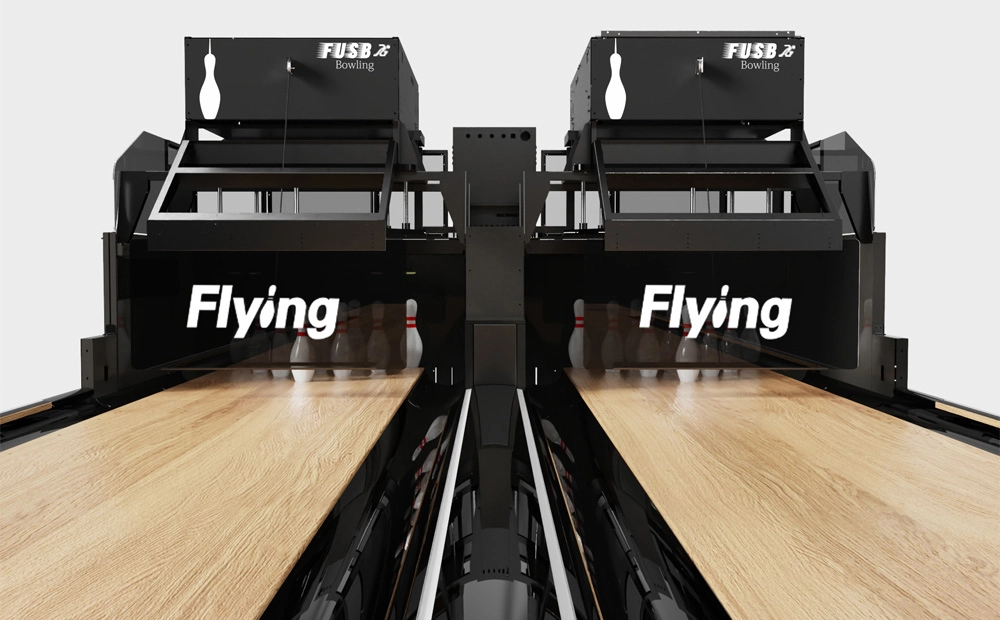
Flying Ultra Standard Bowling
Flying Ultra Standard Bowling (FUSB) Upgraded Version
The string pinsetter uses the latest technology. It offers a more enjoyable bowling experience thanks to its innovative designs and modern technology.

Get in touch
Contact us
If you contact us now for more details, we can provide you with a custom bowling alley service.
Our service team will get back to you within 24 hours, normally!



Professional Bowling Alley Equipment Manufacturer, a one-stop solution provider for bowling alleys.
Facebook
YouTube
Linkedin
Twitter