















Duckpin Bowling Lane Size: The Definitive Guide to Official & Compact Dimensions
A comprehensive guide to duckpin bowling lane dimensions, detailing the critical differences between official NDBC regulation sizes (60ft) and popular compact commercial options (31-38ft). Includes data tables, total footprint calculators, and expert planning advice.
- Introduction to Duckpin Bowling: A Compact Classic
- Official Regulation Duckpin Lane Dimensions (NDBC Standards)
- The Key Measurement: Foul Line to Headpin
- Lane Width: Consistent with Tenpin
- Approach Area Dimensions
- Pin Deck Area & Pin Spacing
- Gutter Width & Ball Return Channels
- Summary Table: Official Regulation Dimensions
- Understanding the Total Footprint: Beyond Just the Lane
- The Full Length: Lane + Approach + Pinsetter
- Required Side Clearances
- Minimum Ceiling Height Requirements
- Duckpin vs. Tenpin Bowling: A Detailed Size Comparison
- Compact & Home Duckpin Lane Sizes: What to Expect
- The Rise of Mini & Customizable Lanes
- Common Compact Dimensions
- Manufacturer Examples
- Considerations for Home Installation
- Planning Your Duckpin Bowling Space: A Practical Guide
- Step-by-Step Measurement
- Multiple Lane Configurations
- Maintenance and Longevity Considerations
- Conclusion: Choosing the Right Duckpin Lane Size
- Frequently Asked Questions
- What is the official regulation length of a duckpin bowling lane?
- What is the total space required for a single duckpin lane, including machinery?
- Are duckpin bowling lanes wider or narrower than tenpin lanes?
- Can I install a duckpin bowling lane in my home with limited space?
- What is the standard length of the approach area for a duckpin lane?
- What are the key dimensions for duckpins and duckpin bowling balls?
- Are there minimum ceiling height requirements for duckpin bowling lanes?
- How does the size of a duckpin lane impact gameplay compared to tenpin?
- References
Introduction to Duckpin Bowling: A Compact Classic
Duckpin bowling is experiencing a renaissance. Once a regional treasure of the American Northeast, this challenging yet accessible sport is rapidly expanding into entertainment centers, breweries, and private homes worldwide. For enthusiasts, architects, and business owners, however, one question looms larger than any other: What is the actual size of a duckpin bowling lane?
The answer is not always straightforward. A quick online search might yield conflicting numbers—ranging from 60 feet to as short as 30 feet. This confusion stems from the difference between official sport regulation (NDBC) standards and the compact commercial systems designed for social gaming.
This guide serves as the definitive resource for duckpin lane dimensions. Whether you are aiming to host sanctioned league play or looking to maximize fun in a limited footprint, we break down every inch of the required space.
Official Regulation Duckpin Lane Dimensions (NDBC Standards)
For those seeking authenticity or planning to host sanctioned National Duckpin Bowling Congress (NDBC) leagues, strict adherence to regulation dimensions is mandatory. Surprisingly to many, the playing surface of a regulation duckpin lane is virtually identical in size to a standard tenpin lane.
The Key Measurement: Foul Line to Headpin
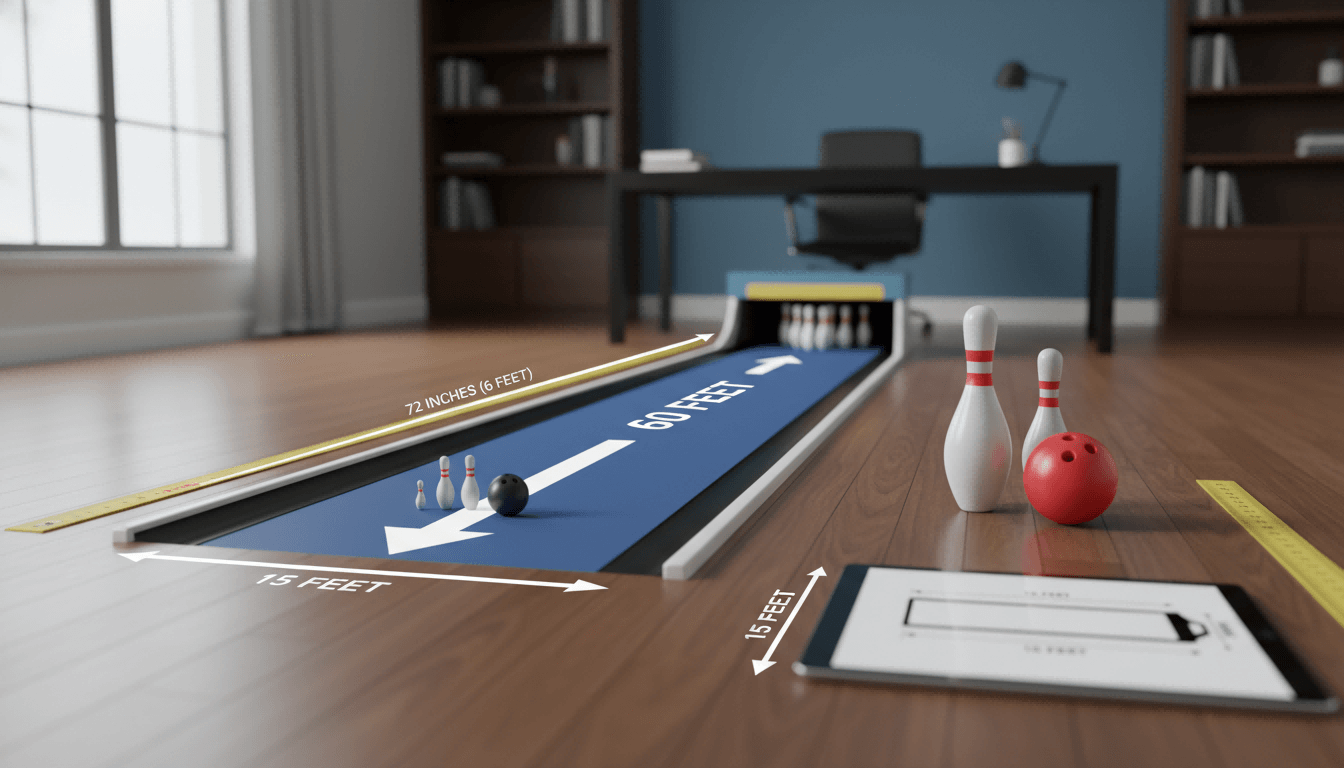
According to NDBC standards, the distance from the foul line to the center of the headpin is exactly 60 feet (18.29 meters). This 60-foot measurement is the "golden rule" for regulation play, ensuring that the physics of the ball roll and the challenge of the game remain consistent with historical standards.
Lane Width: Consistent with Tenpin
The playable surface width is also consistent with tenpin bowling. The lane must measure between 41.5 and 42 inches (105.4 – 106.7 cm). This standard ensures that the smaller duckpin balls have the appropriate surface area to traverse, requiring high precision from the bowler.
Approach Area Dimensions
The approach is the area where the bowler executes their steps before releasing the ball.
· Standard Length: Minimum of 15 feet (4.57 meters).
· Function: This provides ample room for a 3-to-5-step delivery, critical for generating the speed needed to knock down the squat, stable duckpins.
Pin Deck Area & Pin Spacing
The pin deck is where the unique nature of duckpin bowling shines. While the triangular layout mimics tenpin, the spacing is precise.
· Pin Configuration: Equilateral triangle.
· Spacing: 12 inches (30.48 cm) from center-to-center of adjacent pins.
· Pin Size: Duckpins are significantly smaller, standing approx. 9.4 inches (23.9 cm) tall with a diameter of roughly 4.125 inches (10.5 cm).
Gutter Width & Ball Return Channels
· Gutter Width: Approximately 9.25 inches (23.5 cm) wide.
· Ball Return: In regulation centers, ball returns are often underground or have a dedicated track (capping) between lanes, adding roughly 10-12 inches of width per pair of lanes.
Summary Table: Official Regulation Dimensions
|
Dimension |
Imperial |
Metric |
|
Lane Length (Foul Line to Headpin) |
60 ft |
18.29 m |
|
Lane Width (Playable) |
41.5 - 42 in |
105.4 - 106.7 cm |
|
Approach Length |
15 ft |
4.57 m |
|
Gutter Width |
~9.25 in |
~23.5 cm |
|
Pin Spacing (Center-to-Center) |
12 in |
30.48 cm |
|
Total Length (Approach + Lane + Deck) |
~78 - 80 ft |
~23.8 - 24.4 m |
Understanding the Total Footprint: Beyond Just the Lane
Planning a space requires more than just knowing the lane length. You must account for the "Total Footprint," which includes the machinery behind the scenes and the safety zones for players.
The Full Length: Lane + Approach + Pinsetter
For a regulation installation, the total linear footage required is significant.
· Pinsetter Machinery: Requires 3 to 5 feet behind the pin deck.
· Service Aisle: A service walkway of 2-3 feet is standard behind the machines.
· Total Calculation: 15' (Approach) + 60' (Lane) + 3' (Deck) + 5' (Machine/Service) = ~83 to 90 feet (25 – 27 meters).
Required Side Clearances
Never install lanes wall-to-wall without clearance.
· Side Aisles: Allow at least 2-3 feet on the exterior sides for maintenance access and ball return mechanics.
· Seating Area: If you plan to add bowler seating, add another 10-12 feet of depth behind the approach area.
Minimum Ceiling Height Requirements
While the lane itself sits on the floor, the machinery needs headroom.
· Pinsetters: Modern string pinsetters are compact, but traditional free-fall machines are taller.
· Overhead Ball Returns: If your system uses an overhead gravity return, you need a minimum ceiling height of 9 to 10 feet (2.7 – 3 meters) to allow gravity to do its work safely.
Duckpin vs. Tenpin Bowling: A Detailed Size Comparison
|
Feature |
Duckpin Bowling |
Tenpin Bowling |
|
Lane Length |
60 ft (Regulation) |
60 ft |
|
Lane Width |
41.5 in |
41.5 in |
|
Pin Height |
~9.4 in |
15 in |
|
Ball Diameter |
~5 in |
~8.5 in |
|
Ball Weight |
3 lb 6 oz - 3 lb 12 oz |
6 - 16 lbs |
|
Rolls Per Frame |
3 |
2 |
Impact on Gameplay: Despite the identical lane size, the smaller ball in duckpin bowling has a much harder time carrying strikes. The 60-foot distance feels longer because the target (the pins) is smaller, and the ball has no finger holes, requiring a palm-style delivery that demands finesse over raw power.
Compact & Home Duckpin Lane Sizes: What to Expect
This is where the confusion often lies. The booming market for "Social Duckpin" or "Mini Duckpin" (often found in bars and arcades) does not typically use regulation dimensions.
The Rise of Mini & Customizable Lanes
Manufacturers like Funk and Flying Bowling have developed systems specifically for venues where an 80+ foot footprint is impossible. These are often marketed as "Duckpin" but are technically "Mini-Duckpin" or "Boutique" lanes.
Common Compact Dimensions
· Total Footprint: Instead of 85+ feet, these systems can fit into 31 to 38 feet (9.5 - 11.5 meters) total.
· Scaled Down Lanes: The lane surface itself might be shortened to 30-40 feet.
· Integrated Approaches: The approach area is often shortened to 6-10 feet.
Manufacturer Examples
· Funk Bowling: Offers compact solutions where a 2-lane setup can start at roughly 10.5 feet (3.2 m) wide and 32 feet 9 inches (10 m) total length.
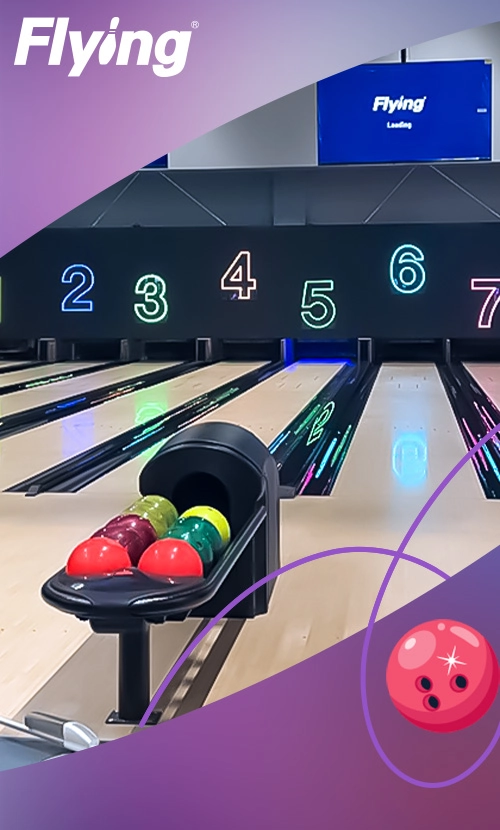
· Flying Bowling: Provides modules with a 38-foot (11.58 m) foul-line-to-headpin measurement, bridging the gap between ultra-mini and full regulation.
· Brunswick Duckpin Social: Can be installed in as little as 31 feet of depth, optimizing revenue per square foot.
Considerations for Home Installation
If installing in a basement or garage:
1. Ceiling Height: Ensure at least 8 feet for comfortable play, though 7 feet may suffice for some ultra-compact string pinsetters.
2. Noise: Compact string pinsetters are quieter than free-fall machines, but soundproofing is still recommended.
3. Power: Most compact units run on standard household power (110V/220V single phase), unlike commercial 3-phase machines.
Planning Your Duckpin Bowling Space: A Practical Guide
Step-by-Step Measurement
1. Measure Total Depth: Measure from the back wall to where you want the seating to begin. If you have less than 40 feet, you are looking at a "Mini" system. If you have 90+ feet, you can go Regulation.
2. Identify Obstructions: Locate support columns. Lanes cannot wrap around columns. You need a clear line of sight.
3. Check Width: For a single lane, you need roughly 6-7 feet of width (lane + gutters + casing). For a pair (two lanes), plan for 11-12 feet of width.
Multiple Lane Configurations
· The Pair System: Bowling lanes are traditionally installed in pairs (1 & 2, 3 & 4) sharing a ball return. This saves width (approx. 11.5 feet per pair).
· Flow: Ensure there is a clear walkway (minimum 4 feet) behind the seated area for servers or spectators to pass without disturbing bowlers.
Maintenance and Longevity Considerations
· Synthetic vs. Wood: Modern compact lanes use phenolic synthetic laminates (like glow-in-the-dark overlays). These require less oil and maintenance than traditional wood but still need daily dusting.
· String Pinsetters: The "secret weapon" of compact lanes. They use cords to reset pins, reducing moving parts by 80% and nearly eliminating the need for a dedicated mechanic.
Conclusion: Choosing the Right Duckpin Lane Size
Your choice of duckpin lane size depends entirely on your goal. If you are building a venue for competitive leagues, the 60-foot regulation standard is non-negotiable. However, if your goal is social entertainment, high ROI, or a killer home game room, compact systems in the 30-40 foot range offer the same thrill in half the space.
Regardless of the size, the joy of duckpin bowling—the three rolls, the small ball, the challenging pins—remains a timeless experience.
Frequently Asked Questions
What is the official regulation length of a duckpin bowling lane?
The official regulation length from the foul line to the headpin is 60 feet (18.29 meters). This is identical to the length of a standard tenpin bowling lane.
What is the total space required for a single duckpin lane, including machinery?
For a regulation setup, you need a total linear depth of 86 to 90 feet (26-27 meters). This includes the 15-foot approach, 60-foot lane, pin deck, and space for the pinsetter and service aisle. Compact commercial versions can fit in as little as 31 to 40 feet.
Are duckpin bowling lanes wider or narrower than tenpin lanes?
They are the same width. A standard duckpin lane has a playable width of 41.5 to 42 inches (105.4-106.7 cm), just like tenpin. However, the gutters are slightly smaller in some compact variations.
Can I install a duckpin bowling lane in my home with limited space?
Yes. "Mini" or "Social" duckpin systems are designed specifically for homes and small venues. These can be customized to fit spaces as short as 30 feet and often use standard household power.
What is the standard length of the approach area for a duckpin lane?
The standard approach area is 15 feet (4.57 meters) long. This provides enough room for the bowler to take a 3-to-5-step delivery before releasing the ball.
What are the key dimensions for duckpins and duckpin bowling balls?
A standard duckpin is approx. 9.4 inches (23.9 cm) tall. A duckpin ball has a diameter of 4.75 to 5 inches and weighs between 3 lb 6 oz and 3 lb 12 oz. It has no finger holes.
Are there minimum ceiling height requirements for duckpin bowling lanes?
Yes. While play happens on the floor, pinsetter machinery requires clearance. A minimum ceiling height of 9 to 10 feet (2.7-3 meters) is recommended for overhead ball returns, though some compact string pinsetter systems can work with ceilings as low as 7-8 feet.
How does the size of a duckpin lane impact gameplay compared to tenpin?
While the lane dimensions are similar, the gameplay is harder. The smaller ball and squat pins create smaller "strike pockets." The 60-foot length demands more precision because the ball is lighter and more susceptible to deflection upon impact.
References
· National Duckpin Youth Association - Basics & Rules
Quality Bowling

Products
Is your equipment suitable for beginners?
Our equipment is easy to operate and equipped with auxiliary aiming lines, so even those who are new to bowling can quickly get started.
Can you provide customized bowling alley design solutions?
Yes, we provide full customization services from space planning, equipment selection to theme design.
Service
What is the warranty on your bowling equipment?
We provide a standard 1-year warranty on all equipment, with extended warranties available upon request.
Is there any training or guidance service to help customers use the equipment better?
Free on-site or remote training, with a Chinese-English bilingual operation manual + fault code quick reference table to help customers use the equipment better.
If there is a problem with the equipment, how long will it take you to respond?
We promise to provide a solution within 12 hours (24 hours for overseas customers), and serious failures will be handled first.
You May Also Like
Flying Smart Duckpin Bowling
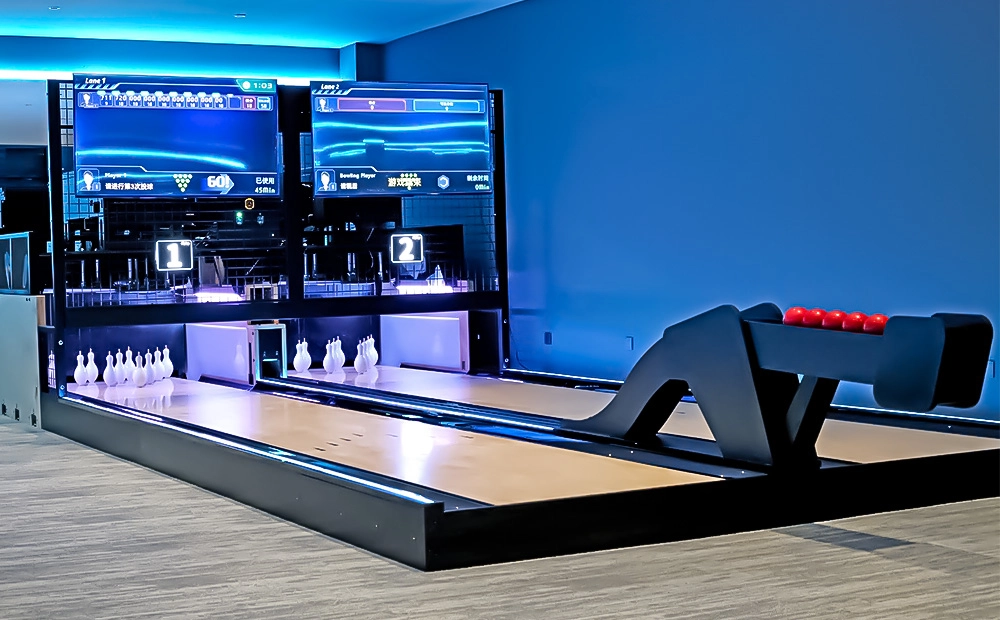
The innovative design of Flying Smart Duckpin Bowling (FSDB) makes it perfect for places like bars, billiard halls, and game centers. It makes people want to come back more often and spend more money. FSDB is fun and competitive, so it will become a new focus for social activities.
Flying Classic Standard Bowling
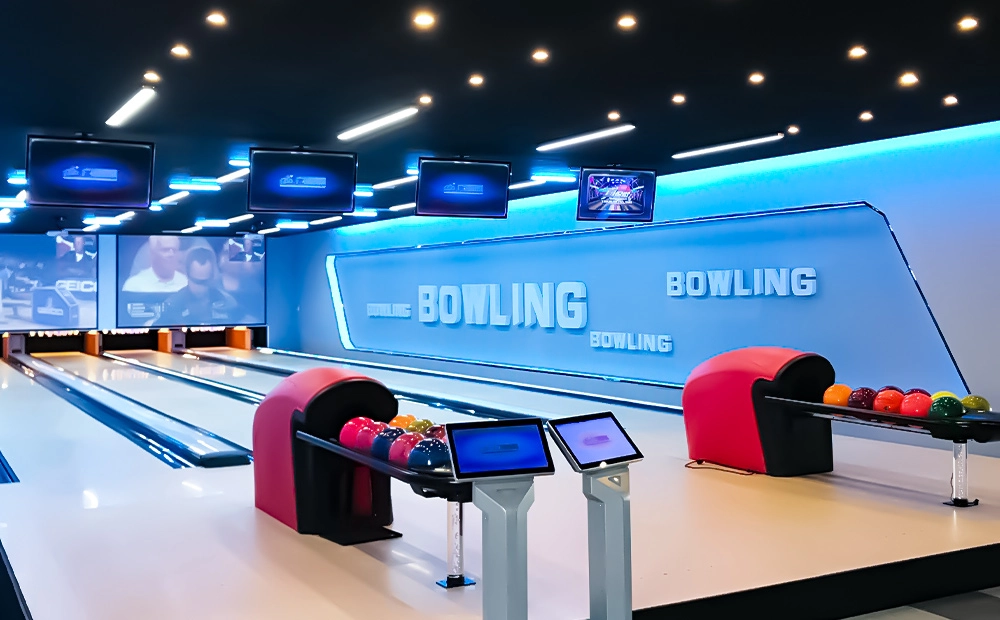
Flying Classic Standard Bowling (FCSB) employs the World Standard Competition Scoring System to deliver a more professional bowling experience, enabling bowlers to enjoy a professional-standard match at their convenience.
Flying Ultra Standard Bowling
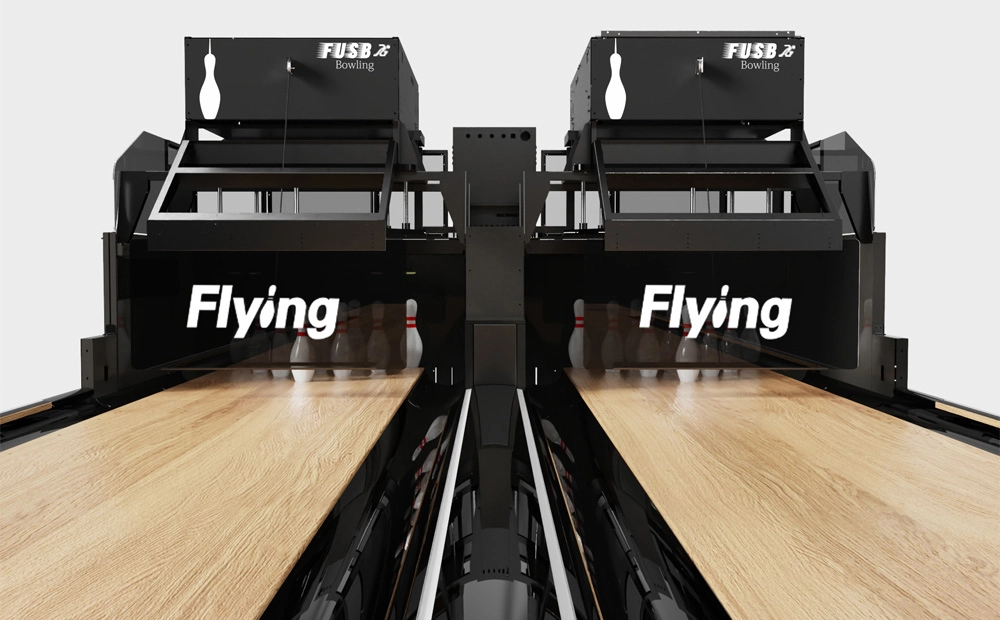
Flying Ultra Standard Bowling (FUSB) Upgraded Version
The string pinsetter uses the latest technology. It offers a more enjoyable bowling experience thanks to its innovative designs and modern technology.

Get in touch
Contact us
If you contact us now for more details, we can provide you with a custom bowling alley service.
Our service team will get back to you within 24 hours, normally!



Professional Bowling Alley Equipment Manufacturer, a one-stop solution provider for bowling alleys.
Facebook
YouTube
Linkedin
Twitter