














The Ultimate Guide to Choosing a Bowling Lane Manufacturer: Precision Engineering & Trends (2026)
A comprehensive guide detailing the precision engineering, material science, and modern trends defining top-tier bowling lane manufacturers in 2026. Learn how to choose the right vendor, the benefits of synthetic lanes, and the future of string pinsetter technology.
- What Defines a Tier-1 Bowling Lane Manufacturer?
- How to Choose the Right Bowling Lane Manufacturer for Your Center
- Benefits of Synthetic vs. Traditional Wood Lanes in Manufacturing
- Precision Engineering: Automated Testing Rigs and Quality Control
- The Manufacturing Process: From Raw Materials to Lane Installation
- Comparing Modern Equipment: String Pinsetters vs. Mechanical Pinsetters
- Conclusion: The Future of Bowling Lane Construction
- Call to Action: Build Your Dream Bowling Alley Today
- Frequently Asked Questions
- What is a bowling lane manufacturer?
- How much does it cost to buy a bowling lane directly from a manufacturer?
- What materials do bowling lane manufacturers use?
- How do manufacturers test the durability of bowling lanes?
- Do bowling lane manufacturers install the lanes as well?
- What is the difference between synthetic and wood lanes?
- Why are manufacturers switching to string pinsetters?
- How long does it take a manufacturer to build and install a bowling alley?
The commercial bowling industry is undergoing a massive technological shift, moving away from traditional carpentry toward advanced composite material science and automated robotics. For investors, developers, and entertainment center operators, selecting the right manufacturing partner dictates the operational lifespan and profitability of the venue. This guide breaks down the precision engineering, physics testing, and quality control standards that define the industry's leading manufacturers in 2026.
Key Takeaways
- Top-tier manufacturers must adhere strictly to United States Bowling Congress (USBC) and World Bowling certification standards.
- Modern synthetic bowling lanes utilize high-density phenolic laminates, offering superior durability and eliminating the need for frequent resurfacing.
- Automated testing rigs and scaled physics modeling are now mandatory in R&D to ensure uniform friction coefficients and kinetic energy transfer.
- The industry is rapidly transitioning to string pinsetters due to lower energy consumption, reduced maintenance costs, and integration with AI-driven diagnostics.
What Defines a Tier-1 Bowling Lane Manufacturer?
A tier-1 bowling lane manufacturer is a full-service entity that designs, engineers, and installs lane surfaces and mechanical systems in strict compliance with USBC and World Bowling certification standards. They do not merely supply parts; they engineer end-to-end solutions that guarantee competitive fairness and longevity.
According to comprehensive industry guides from Brunswick Bowling, starting a successful center requires a vendor capable of blending traditional woodworking craftsmanship with modern composite materials and Internet of Things (IoT) technology.
Key differentiators of elite manufacturers include:
- Comprehensive Warranties: Offering multi-decade guarantees on synthetic overlays and substructures.
- Post-Installation Support: Providing 24/7 technical support for scoring systems and mechanical pinsetters.
- Innovation in Ball Returns: Engineering kinetic energy-absorbing ball return systems that prevent damage to modern reactive resin bowling balls.
How to Choose the Right Bowling Lane Manufacturer for Your Center
Choosing the right vendor requires conducting a technical needs assessment that evaluates their supply chain for high-grade composite materials, custom architectural capabilities, and seamless software integration for scoring and POS systems. Getting this wrong can lead to misaligned lanes, dead spots, and costly operational downtime.
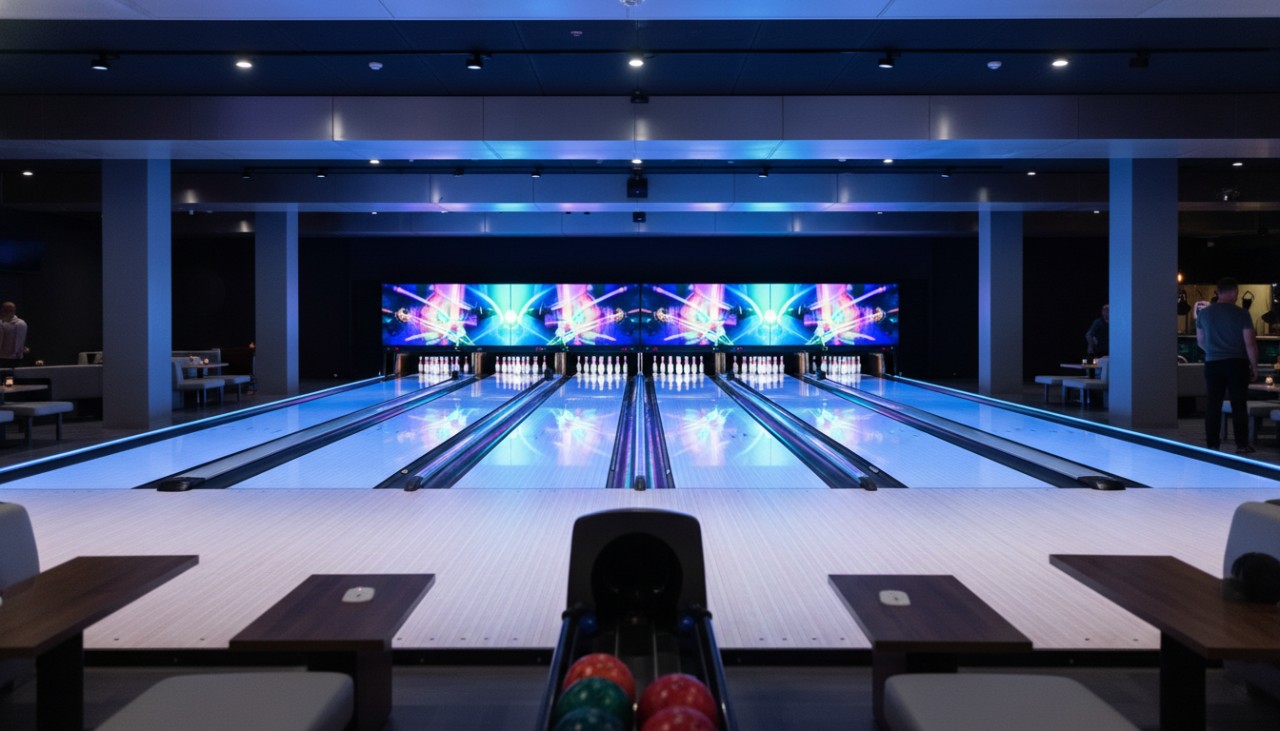
Before committing to a custom bowling alley installation, center owners must evaluate the manufacturer based on specific criteria:
- Residential vs. Commercial Expertise: Residential setups prioritize aesthetic integration and noise reduction, whereas commercial entertainment centers require high-throughput durability.
- Supply Chain Transparency: The vendor must reliably source high-grade Hard Rock Maple, Southern Yellow Pine, and advanced synthetic phenolic laminates.
- Software Ecosystem Integration: A superior manufacturer ensures their physical lanes integrate flawlessly with digital scoring systems, POS terminals, and lane management software.
Benefits of Synthetic vs. Traditional Wood Lanes in Manufacturing
Synthetic lanes dominate modern manufacturing because they eliminate the costly need for frequent resurfacing, resist denting from aggressive modern bowling balls, and provide uniform friction coefficients for predictable oil pattern behavior.
Historically, alleys relied on solid maple for the approach and pin deck, with pine making up the middle of the lane. However, the evolution of bowling ball core dynamics and coverstocks necessitated a more resilient surface. Today, synthetic bowling lanes are the industry standard. Research from US Bowling highlights that synthetic overlays drastically reduce maintenance overhead while providing a superior bowler experience.
| Feature | Synthetic Bowling Lanes | Traditional Wood Lanes |
|---|---|---|
| Material Composition | High-density phenolic laminates over MDF | Solid Hard Rock Maple and Southern Yellow Pine |
| Durability | Extremely high; resists denting and gouging | Moderate; susceptible to wear from heavy impacts |
| Maintenance Needs | Low; requires daily oiling and basic cleaning | High; requires frequent sanding, recoating, and oiling |
| Performance Consistency | Uniform friction coefficients across all lanes | Varies based on wood grain, age, and climate |
| Lifespan | 20+ years with minimal structural degradation | 10-15 years before requiring complete replacement |
Precision Engineering: Automated Testing Rigs and Quality Control
Manufacturers ensure optimal lane conditions by utilizing scaled physics and friction testing rigs, deploying automated multi-lane tracks to measure kinetic energy transfer, speed, and track resilience before full-scale commercial deployment. This level of bowling equipment engineering separates premium brands from budget suppliers.
In modern R&D laboratories, engineers rely on highly specialized equipment to simulate decades of wear in a matter of weeks.
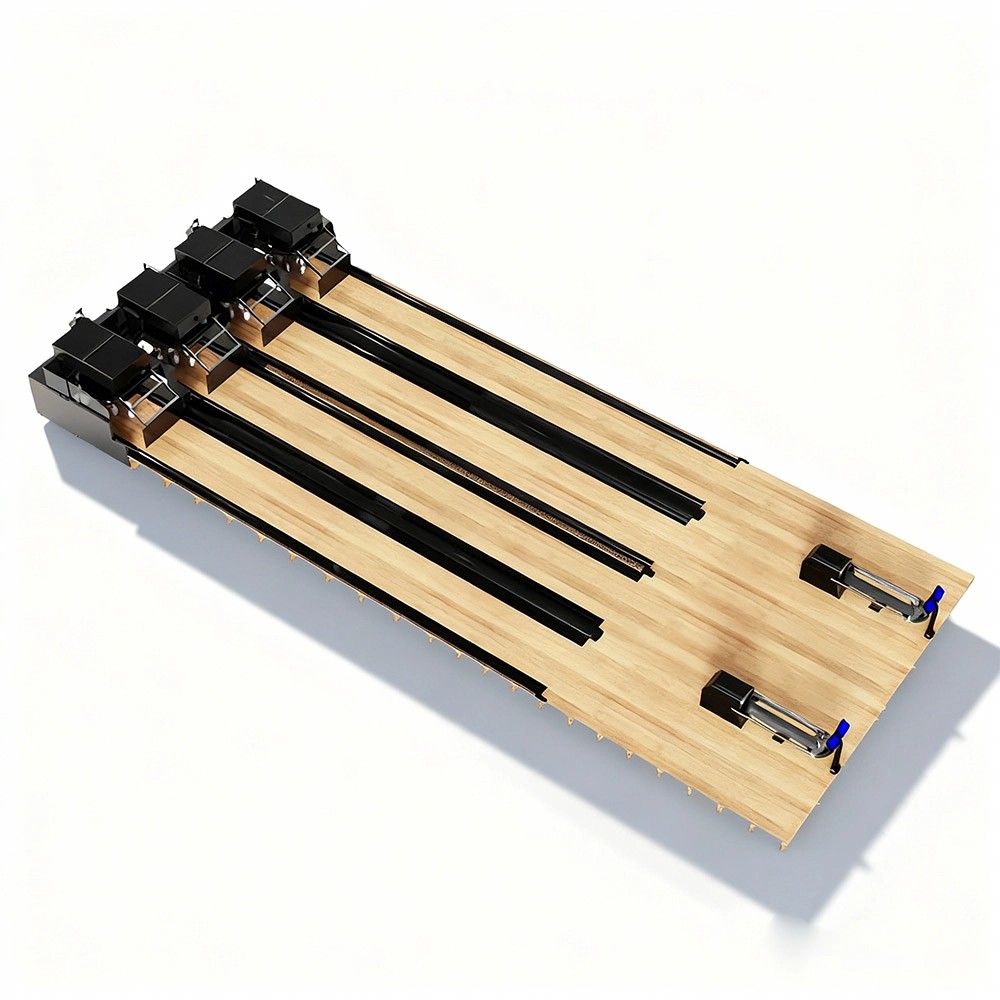
This clean, high-angle 3D setup features a rectangular platform crafted from light-toned, natural-grained wood. It incorporates four parallel black recessed tracks running its length. At the top of the board, four identical black box-like units with metallic hinges act as automated starting gates. At the bottom, two smaller black units feature bright blue-tipped levers used to reset the mechanisms.
The data derived from these minimalist, high-tech testing rigs ensures flawless performance. By measuring how objects travel down these recessed black channels, engineers can:
- Fine-tune the impact resistance of the pin deck.
- Optimize the automated launcher mechanisms to simulate consistent ball delivery.
- Adjust the understructure supports to guarantee perfect energy dispersion upon impact.
The Manufacturing Process: From Raw Materials to Lane Installation
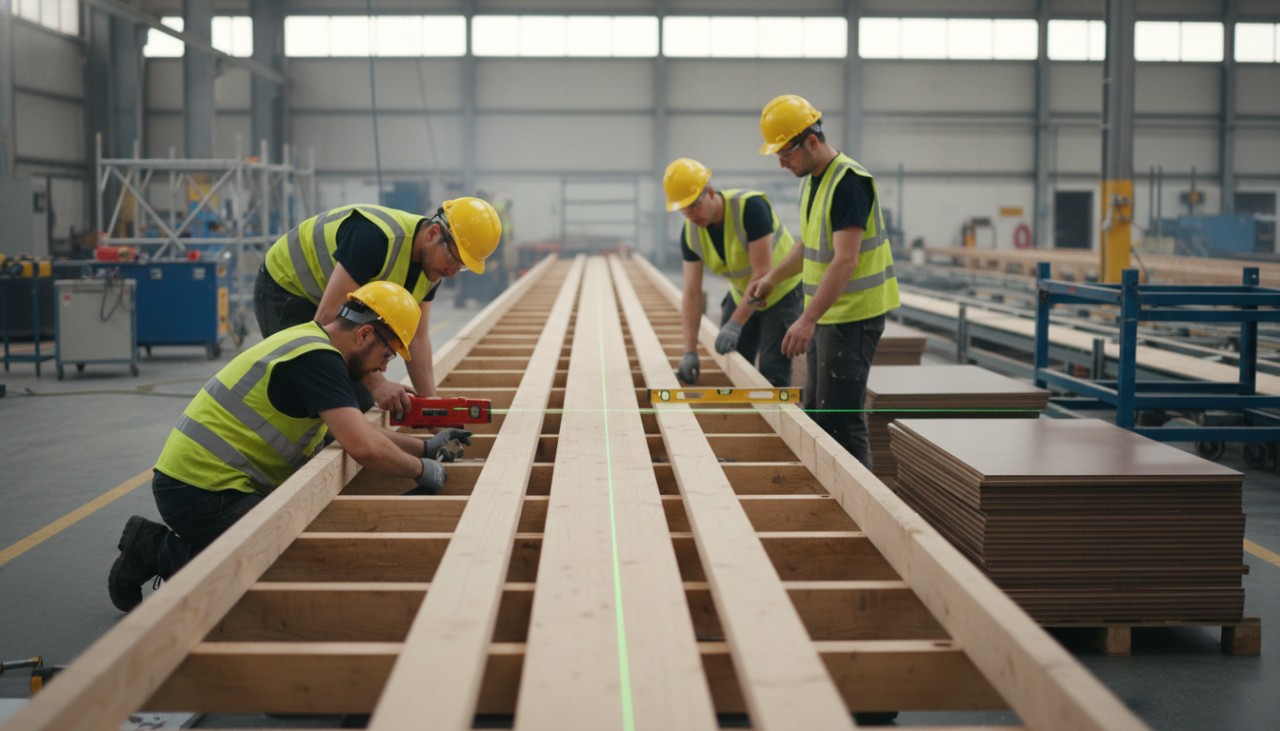
The manufacturing process moves through four strict phases: precision milling of foundational substructures, seamless splicing of synthetic panels, automated ball return integration, and final laser-leveling to meet USBC specifications.
Working with USBC certified lane builders guarantees that the physical construction meets the exact tolerances required for professional play.
- Phase 1: Substructure Fabrication. Precision milling and laminating of foundational substructures using I-joists and Medium-Density Fiberboard (MDF) to prevent warping.
- Phase 2: Surface Application. Applying the textured approach area and synthetic lane panels using seamless splicing techniques to ensure a perfectly flat transition.
- Phase 3: Hardware Integration. Installing the heavy-duty pin deck, flat gutters, and automated ball return engineering.
- Phase 4: Calibration. Final laser-leveling, rigorous USBC specification checks, and initial lane conditioning (oiling).
Comparing Modern Equipment: String Pinsetters vs. Mechanical Pinsetters
String pinsetters are replacing traditional mechanical free-fall pinsetters due to their mechanically simpler design, which drastically reduces operational costs, lowers energy consumption, and requires fewer moving parts.
For decades, the complex, gear-heavy free-fall pinsetter was the only option. However, as detailed in technical comparisons by QubicaAMF, the shift toward string technology is revolutionizing the manufacturing sector.
- Operational Efficiency: String pinsetters use up to 80% less electricity than traditional models.
- Maintenance: With fewer moving parts, the need for specialized, highly-paid mechanics is practically eliminated.
- Bowler Acceptance: Modern string pinsetters have been refined to mimic the exact pin action of free-fall machines, gaining widespread acceptance in professional leagues.
- Smart Diagnostics: Manufacturers are now integrating AI-driven diagnostics into string models, allowing center operators to monitor machine health via smartphone apps.
Conclusion: The Future of Bowling Lane Construction
The future of bowling lane construction hinges on sustainable manufacturing materials, energy-efficient operations, and the integration of smart sensors with augmented reality projections for boutique centers.
As we look toward the end of the decade, the industry is prioritizing engineering precision and long-term partnerships over quick installations. The growing trend of custom-designed lanes featuring interactive, gamified LED projections requires manufacturers to be as much software developers as they are hardware builders. Selecting a manufacturer that embraces these technological advancements is the key to future-proofing your investment.
Call to Action: Build Your Dream Bowling Alley Today
Contact our team of manufacturing experts today to request our full 2026 product catalog and discuss custom lane designs, advanced pinsetter technology, and flexible installation timelines for your personalized project estimate.
Frequently Asked Questions
What is a bowling lane manufacturer?
A bowling lane manufacturer is a specialized company that designs, engineers, and produces the physical lane surfaces, substructures, and associated equipment (like pinsetters and ball returns) used in bowling alleys.
How much does it cost to buy a bowling lane directly from a manufacturer?
Costs typically range from $45,000 to $65,000 per lane for commercial installations, which includes the synthetic lane surface, pinsetters, ball returns, and scoring systems, though custom residential setups may vary.
What materials do bowling lane manufacturers use?
Modern manufacturers primarily use synthetic materials like high-density phenolic laminates over MDF or wood substrates. Traditional lanes use a combination of hard rock maple for the approach/pin deck and softer pine for the middle lane.
How do manufacturers test the durability of bowling lanes?
Manufacturers use precision testing rigs, including scaled multi-lane track systems with automated launchers, to simulate repeated heavy impacts, measure friction coefficients, and ensure the surface withstands long-term wear.
Do bowling lane manufacturers install the lanes as well?
Yes, most tier-1 manufacturers offer end-to-end services, providing certified installation teams to ensure the lanes are laser-leveled and meet strict USBC specifications.
What is the difference between synthetic and wood lanes?
Synthetic lanes are engineered for extreme durability, require no resurfacing, and offer consistent performance. Wood lanes offer a traditional aesthetic and softer feel but require frequent oiling, sanding, and recoating.
Why are manufacturers switching to string pinsetters?
String pinsetters are mechanically simpler, require significantly less maintenance, consume less electricity, and reduce overall operational costs compared to traditional free-fall mechanical pinsetters.
How long does it take a manufacturer to build and install a bowling alley?
From the initial order to final installation, the process generally takes between 12 to 24 weeks, depending on the scale of the project, custom engineering requirements, and manufacturing lead times.

Quality Bowling
Service
Is there any training or guidance service to help customers use the equipment better?
Free on-site or remote training, with a Chinese-English bilingual operation manual + fault code quick reference table to help customers use the equipment better.
What is the warranty on your bowling equipment?
We provide a standard 1-year warranty on all equipment, with extended warranties available upon request.
Products
What is the noise level of the equipment?
We are well aware of the importance of a quiet and comfortable environment for bowling, so we designed sound insulation cotton and shock-absorbing pads in the equipment area and the lane area to fully reduce the noise and vibration of the equipment during operation, creating a quiet and comfortable sports space for you, allowing you to focus more on enjoying the fun of bowling.
What types of bowling equipment do you have?
Flying Classic Standard Bowling (FCSB), Flying Smart Duckpin Bowling (FSDB), Flying Ultra Standard Bowling (FCSB Ultra)
What material is used for the bowling lane? How long is its lifespan?
It is made of high-strength maple wood + synthetic composite material, and has been treated with anti-corrosion. Under normal use, its lifespan exceeds 15 years.
You May Also Like
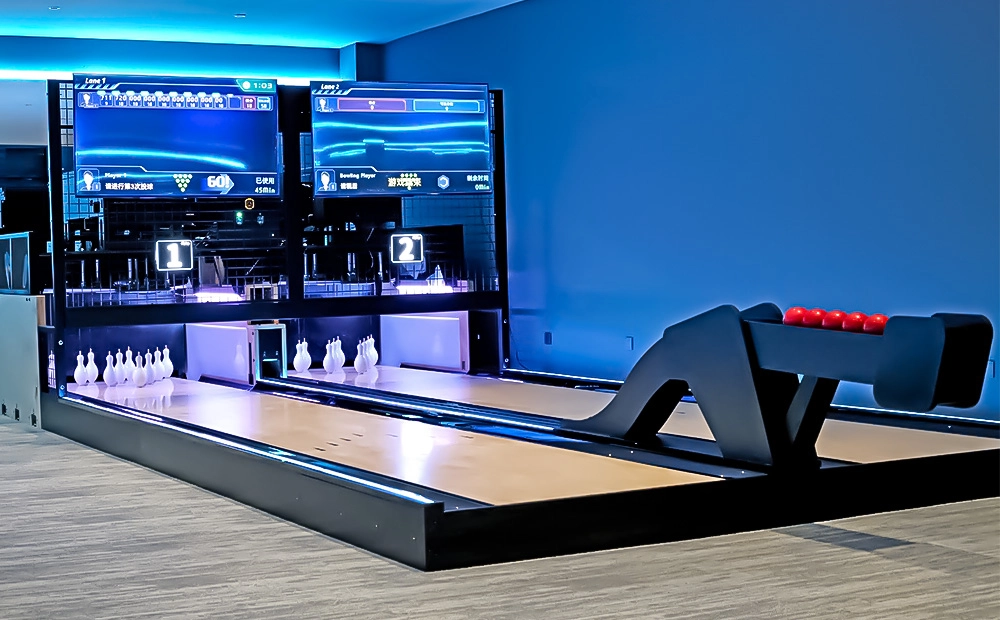
Flying Smart Duckpin Bowling
The innovative design of Flying Smart Duckpin Bowling (FSDB) makes it perfect for places like bars, billiard halls, and game centers. It makes people want to come back more often and spend more money. FSDB is fun and competitive, so it will become a new focus for social activities.
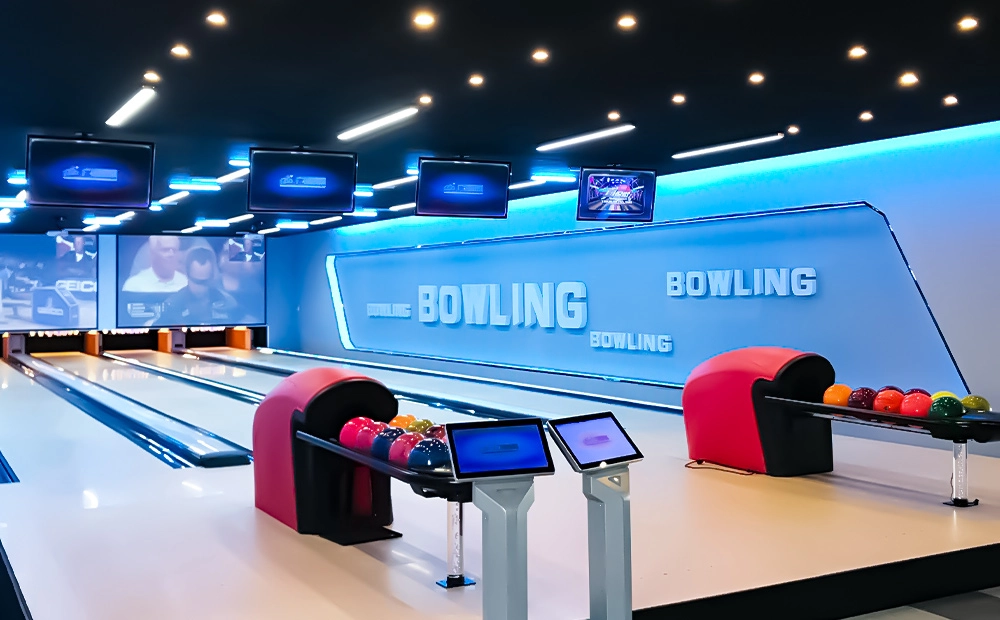
Flying Classic Standard Bowling
Flying Classic Standard Bowling (FCSB) employs the World Standard Competition Scoring System to deliver a more professional bowling experience, enabling bowlers to enjoy a professional-standard match at their convenience.
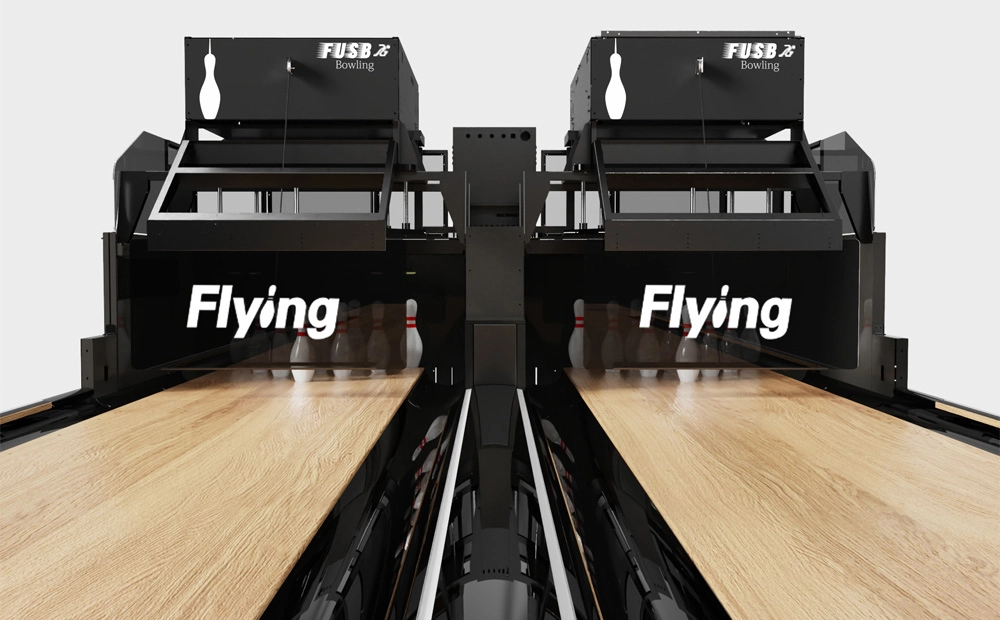
Flying Ultra Standard Bowling
Flying Ultra Standard Bowling (FUSB) Upgraded Version
The string pinsetter uses the latest technology. It offers a more enjoyable bowling experience thanks to its innovative designs and modern technology.

Get in touch
Contact us
If you contact us now for more details, we can provide you with a custom bowling alley service.
Our service team will get back to you within 24 hours, normally!



Professional Bowling Alley Equipment Manufacturer, a one-stop solution provider for bowling alleys.
Facebook
YouTube
Linkedin
Twitter