


how many boards are in a bowling lane | Fly Bowling Expert Guide
- 1. How many boards are in a bowling lane?
- 2. How are the boards numbered, and why does it matter?
- 3. What materials are used in bowling lane boards?
- 4. How do oil patterns interact with the board system?
- 5. What are the maintenance requirements for bowling lane boards?
- 6. Wood vs. synthetic: what to specify when procuring lane surfaces
1. How many boards are in a bowling lane?
A regulation ten-pin bowling lane has 39 boards, each approximately 1.06 inches (27 mm) wide, for a total playing surface width of 41.5 inches (1,054 mm). This is a fixed USBC standard with a tolerance of ±½ inch—any lane outside this range cannot be certified for sanctioned play.
The 41.5-inch width is not arbitrary. It is calibrated so that the 39-board system creates a precise targeting geometry: a ball thrown at the correct angle to the 1–3 pocket (for right-handers) must cross specific board numbers at specific points down the lane. If lanes were wider or narrower, every targeting reference used by coaches and competitive bowlers would need to be recalibrated.
2. How are the boards numbered, and why does it matter?
Boards are numbered 1 through 39, starting from the right edge for right-handed bowlers (or left edge for left-handed bowlers). Board 1 is the edge closest to the right gutter; board 20 is the center; board 39 is the left edge.
This numbering system is the foundation of all modern targeting and coaching:
- Arrows (targeting triangles): The seven targeting arrows embedded in the lane approximately 15 feet past the foul line sit at boards 5, 10, 15, 20, 25, 30, and 35—each five boards apart. A right-handed bowler aiming at the second arrow from the right is targeting board 10.
- Stance positioning: Coaches give stance adjustments in board numbers. "Move two boards left" is a specific, repeatable instruction; "move a little left" is not.
- Oil pattern notation: Lane technicians describe oil patterns using board numbers—"oil applied from board 5 to board 35, 40 feet long." This standardized language allows patterns to be replicated accurately across different venues and machines.
- Approach dots: Two sets of dots in the approach area (at 12 ft and 15 ft from the foul line) are placed at boards 5, 10, 15, 20, 25, 30, and 35—the same spacing as the arrows—for consistent foot positioning.
For venue operators, understanding board-based targeting is important when training staff to explain the sport to new bowlers, and when evaluating whether lane resurfacing has preserved consistent board spacing and surface uniformity.
3. What materials are used in bowling lane boards?
Traditional wood lanes use two different species in combination: hard maple for the first 15 boards from each edge (the high-wear zones where the ball lands and pin impact occurs) and softer pine for the middle 9 boards (the lower-wear carry zone between the landing area and the pins). This composite construction was standardized in the 20th century to balance durability in high-impact zones with consistency in the middle.
Wood lanes require resurfacing every 2–5 years depending on traffic volume, and refinishing (sanding and resealing) more frequently. They are sensitive to humidity and temperature changes, which can cause board warping and affect ball reaction if climate control is inadequate.
Synthetic lanes (HPL or SPL panels) have largely replaced wood in new installations since the 1990s. They replicate the visual appearance of wood—boards are printed onto the surface—while offering:
- Lifespan of 20–30 years with proper maintenance
- Resurfacing interval of 5–10 years (versus 2–5 for wood)
- Consistent surface hardness and friction regardless of humidity
- Lower maintenance cost over the full lifecycle
For new facility construction in 2026, synthetic lanes are the standard recommendation. Wood is maintained in established centers where the customer base has strong preferences for the traditional surface feel.
4. How do oil patterns interact with the board system?
Lane oil is applied in precise patterns defined by board numbers. A typical "house shot" (the oil pattern used in most recreational bowling centers) applies oil heavily in the center boards (approximately boards 8–32) and less oil on the outside boards (1–7 and 33–39).
This creates a self-correcting effect: a ball thrown too far outside (toward board 1) encounters less oil and more friction, causing it to hook back toward the pocket. A ball thrown too far inside encounters more oil and less friction, causing it to skid further before hooking. Recreational bowlers benefit from this forgiving pattern; competitive "sport patterns" distribute oil more evenly to eliminate the self-correcting effect.
For operators, oil pattern management is a direct service quality issue:
- Apply oil consistently and at the correct volume—under-oiling accelerates lane surface wear and makes ball reaction unpredictable
- Track oil application frequency and volume with a lane conditioning machine log
- Inspect boards at the 40-foot zone (the oil "break point") for unusual wear patterns, which indicate inconsistent oil application
5. What are the maintenance requirements for bowling lane boards?
Daily (during operating hours):
- Apply lane conditioner with a lane machine before opening. Most commercial centers apply oil once daily; high-volume centers may apply twice.
- Inspect for visible debris or damage before opening.
Weekly:
- Clean lane surface with lane cleaner to remove oil carrydown buildup in the back portion of the lane (beyond the oil pattern, approximately boards 40–60 ft).
- Check ball return for oil contamination that transfers to house balls.
Annual (or as needed):
- Synthetic lanes: Buff and reapply surface finish using lane resurfacing machine. Check for gouges or edge separation at board boundaries.
- Wood lanes: Sand and refinish as surface wear dictates. Inspect for warped boards, particularly in humid environments. Replace individual boards showing cracking or severe delamination.
Every 5–10 years (synthetic) or 2–5 years (wood):
- Full resurfacing to restore original surface hardness and oil absorption characteristics. Consult the lane surface manufacturer's specification for your specific product—resurfacing intervals vary by product and traffic volume.
Procurement implication: When evaluating synthetic lane surfaces, ask suppliers for the expected resurfacing interval at your anticipated weekly traffic volume. A surface rated for 7-year resurfacing intervals at 500 games/week may require resurfacing in 3–4 years at 1,000 games/week. This affects your 10-year maintenance budget significantly.
6. Wood vs. synthetic: what to specify when procuring lane surfaces
| Factor | Wood (Maple/Pine) | Synthetic HPL/SPL |
|---|---|---|
| Upfront cost | $15,000–$18,000/lane | $10,000–$15,000/lane |
| Lifespan | 15–25 years | 20–30 years |
| Resurfacing interval | Every 2–5 years | Every 5–10 years |
| Humidity sensitivity | High (warping risk) | None |
| Ball reaction | Traditional feel; preferred by some purists | Consistent; minimally different from wood |
| New installation recommendation | Only for renovation of existing wood centers | Standard for all new builds |
For any new construction project, synthetic lanes are the correct specification. The lower upfront cost, longer lifespan, lower maintenance frequency, and climate independence make wood an economically inferior choice for new builds in virtually every scenario.
Flying Bowling manufactures synthetic lane surfaces, string pinsetters, ball return systems, and scoring solutions with CE certification and installation support across 40+ countries. Contact Flying Bowling at flybowling.com for specifications and procurement consultation.
- 1. How many boards are in a bowling lane?
- 2. How are the boards numbered, and why does it matter?
- 3. What materials are used in bowling lane boards?
- 4. How do oil patterns interact with the board system?
- 5. What are the maintenance requirements for bowling lane boards?
- 6. Wood vs. synthetic: what to specify when procuring lane surfaces
Quality Bowling
You May Also Like
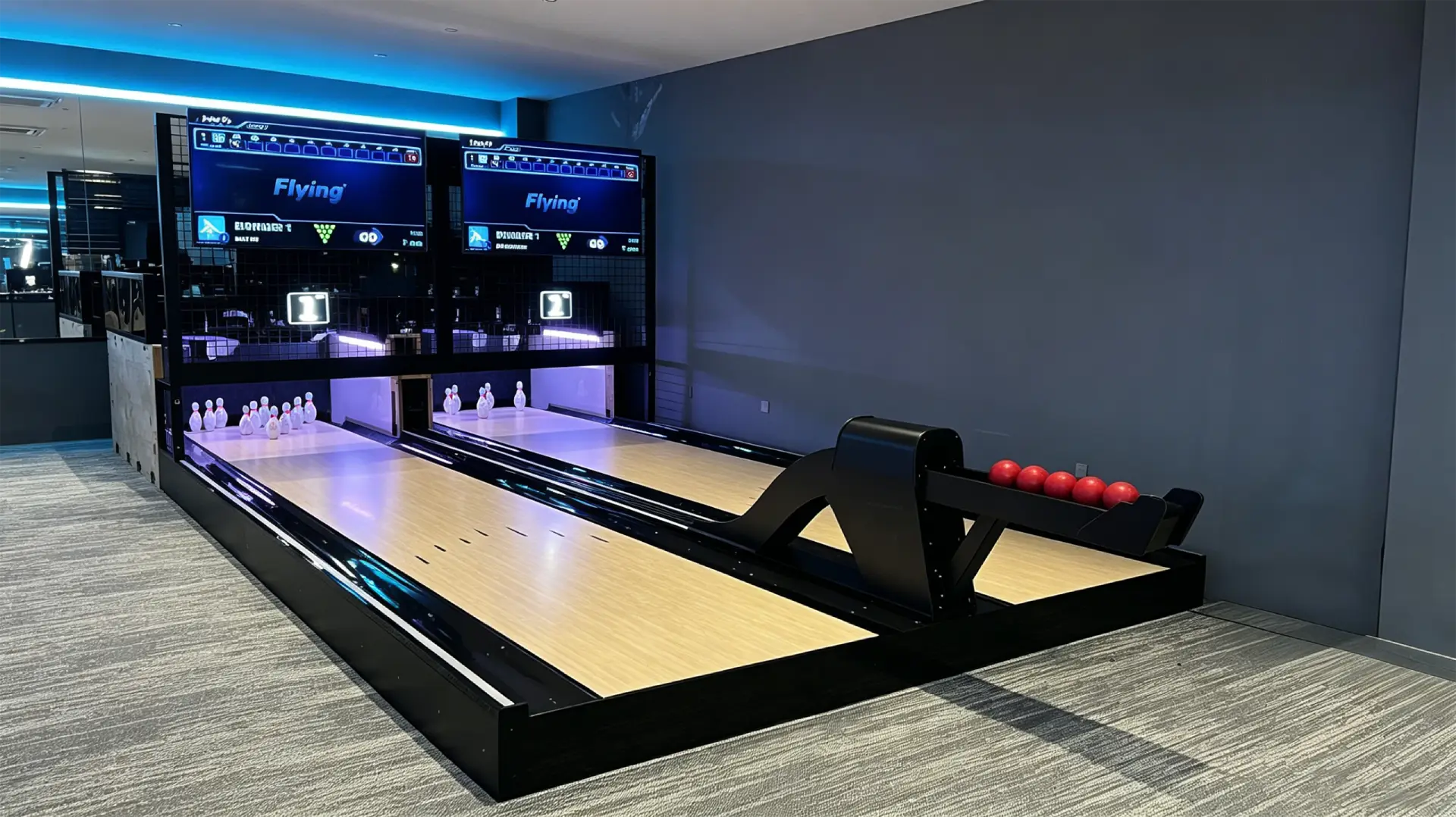
Flying Smart Duckpin Bowling
The innovative design of Flying Smart Duckpin Bowling (FSDB) makes it perfect for places like bars, billiard halls, and game centers. It makes people want to come back more often and spend more money. FSDB is fun and competitive, so it will become a new focus for social activities.
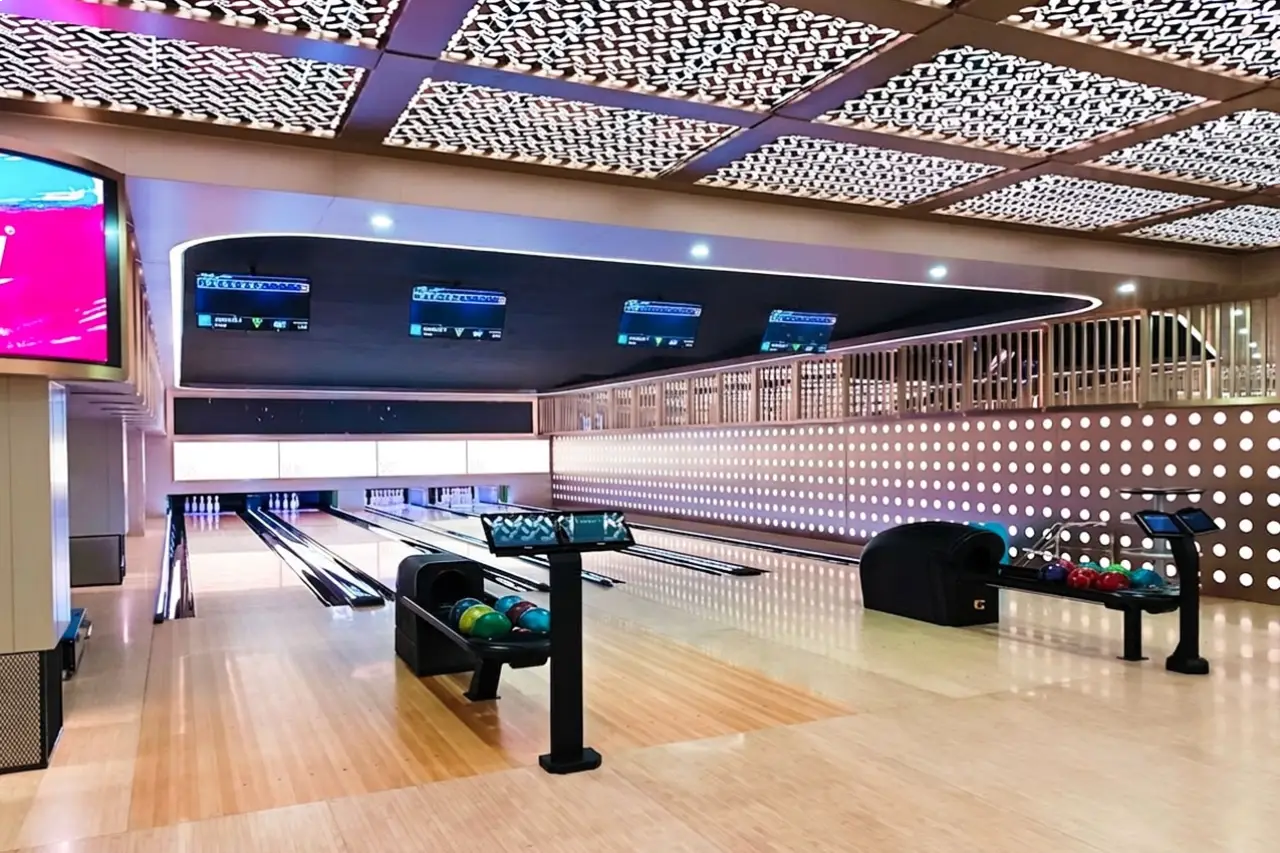
Flying Classic Standard Bowling
Flying Classic Standard Bowling (FCSB) employs the World Standard Competition Scoring System to deliver a more professional bowling experience, enabling bowlers to enjoy a professional-standard match at their convenience.
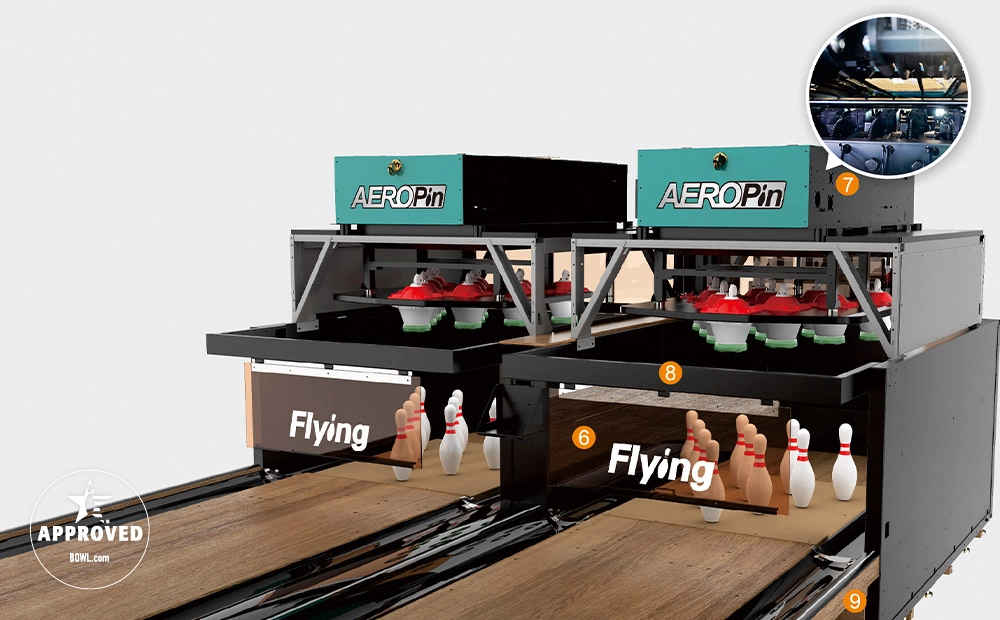
AEROPIN: USBC-Certified Commercial Bowling String Pinsetter for High-Traffic Venues
The AEROPIN is Flying Bowling's highest-specification string pinsetter, purpose-built for bowling center investors and operators who cannot afford downtime. Fully USBC-certified (Permit SP-11), it meets the strictest international competition standards while delivering the operational economics that protect your bottom line — a 10,000+ hour MTBF, sub-8-second pin cycle, and 15% lower energy consumption versus traditional systems.
Whether you are breaking ground on a new facility or modernizing an existing center, the AEROPIN integrates into your project as a complete, turnkey solution. Flying Bowling handles equipment supply, lane installation, commissioning, and after-sales support across 40+ countries — so your venue opens on schedule and runs without interruption from day one.

Get in touch
Contact us
If you contact us now for more details, we can provide you with a custom bowling alley service.
Our service team will get back to you within 24 hours, normally!



Professional Bowling Alley Equipment Manufacturer, a one-stop solution provider for bowling alleys.
Facebook
YouTube
Linkedin
Twitter
instagram