














Buying Guide: How to Choose a Bowling String Pinsetter
- Why string pinsetters matter for modern bowling centers
- Market context and
- Who benefits most from string pinsetters
- Overview of operational trade-offs
- Understanding string pinsetter technology
- How string pinsetters work
- Key components and failure modes
- Performance considerations: pin action and scoring
- Choosing the right model: specifications and procurement checklist
- Compatibility with lane type and bowling format
- Capacity, cycle time and throughput
- Maintenance, spare parts and lifecycle cost
- Comparing string pinsetters and traditional pinsetters
- Side-by-side comparison
- Interpreting the comparison for your business model
- Installation, compliance, and post-sale service
- Site requirements and installation checklist
- Certifications, safety, and sanctioning
- Warranty, technical support and spare parts logistics
- Supplier considerations and procurement tips
- Evaluating supplier credibility
- Customizations and integrations
- Price negotiation and financing
- Supplier spotlight: Flying Bowling
- Decision checklist before purchase
- Essential pre-purchase questions
- Post-purchase service planning
- Test and pilot considerations
- FAQ — Frequently asked questions
- 1. Are string pinsetters suitable for league and tournament play?
- 2. How often do pin strings need to be replaced?
- 3. Can a string pinsetter be retrofitted into an existing lane?
- 4. How does maintenance compare to traditional pinsetters?
- 5. What certifications should I look for?
- 6. How quickly can I get spare parts and service?
- Final recommendations and next steps
Bowling string pinsetters have become a practical, cost-effective alternative to traditional free-fall pinsetters for many recreational centers, family entertainment centers, and boutique bowling alleys. This guide helps decision-makers, operators, and buyers understand key differences, evaluate technical and operational requirements, and select the best string pinsetter for their needs while ensuring compliance with industry standards and long-term serviceability.
Why string pinsetters matter for modern bowling centers
Market context and
Operators searching for a bowling string pinsetter are typically focused on reducing capital expenditure, minimizing maintenance and downtime, improving safety, and fitting lanes into smaller venues. The string pinsetter market has grown as casual and entertainment-driven bowling formats expand; users want clear guidance on cost, durability, and lane performance.
Who benefits most from string pinsetters
String pinsetters are especially attractive to family entertainment centers, hotels, corporate recreation facilities, and venues converting part of their space to bowling without the footprint or budget for full mechanical pinsetters. They are also chosen where quieter operation, lower energy use, and simpler maintenance are priorities.
Overview of operational trade-offs
Choosing a string pinsetter involves trade-offs: lower purchase and maintenance costs and simpler mechanics versus differences in pin action and potentially restricted sanctioning for certain competitions. Understanding these trade-offs helps align equipment selection to intended use (recreational vs. competitive).
Understanding string pinsetter technology
How string pinsetters work
String pinsetters attach each pin to an overhead string or tether system so the pin is lifted and replaced by mechanical or electromechanical actuators. The strings return pins to a central collection area and allow the system to set pins without the extensive mechanical linkages of free-fall pinsetters. For a technical primer on pinsetter development and types, see the general overview on Wikipedia: Pinsetter.
Key components and failure modes
Primary components include the pin string matrix, motorized winches or servos, pin storage/collection system, control electronics (PLC or microcontroller based), sensors for pin detection, and interface with the lane scoring system. Common failure modes are string wear and breakage, sensor misalignment, motor or gearbox wear, and occasional pin seating problems. These issues are generally simpler to repair than the complex cams and mechanical linkages found in traditional electro-mechanical pinsetters.
Performance considerations: pin action and scoring
Because pins are tethered, pin action (how pins fall and collide) can differ slightly from free-fall systems. For most recreational bowlers the difference is acceptable; however, leagues and sanctioned play may require verification. For organizations setting technical rules, consult the official equipment standards at World Bowling: Equipment.
Choosing the right model: specifications and procurement checklist
Compatibility with lane type and bowling format
Confirm the string pinsetter supports your lane width (standard 41.5 lanes for tenpin), duckpin or candlepin if relevant, and whether your facility will host dedicated league play. Many manufacturers offer variants for duckpin and family-bowling formats. Semantic considerations such as bowling ball return machine system and integration with scoring systems should be validated during procurement.
Capacity, cycle time and throughput
Evaluate the pinsetter's cycle time (how quickly it clears and resets pins) since this affects lane throughput and guest experience during peak hours. Compare technical specifications for pins-per-minute and average cycle reliability. Seek manufacturer-provided MTBF (mean time between failures) and real-world references for busy venue scenarios.
Maintenance, spare parts and lifecycle cost
Important to calculate total cost of ownership (TCO): initial purchase price, installation, annual maintenance, spare parts (strings, sensors, motors), and anticipated replacement intervals for wear items. Ask for a maintenance schedule (daily/weekly/monthly tasks) and average annual maintenance hours. A robust spare-parts supply chain and local technical support reduce downtime and costs.
Comparing string pinsetters and traditional pinsetters
Side-by-side comparison
Below is a practical comparison to help buyers weigh choices. Data references: general technical descriptions and market trends from Wikipedia and equipment guidance from World Bowling. Values are qualitative estimates intended to guide purchasing decisions; verify specific model specs with manufacturers.
| Feature | String Pinsetter | Traditional Free-Fall Pinsetter |
|---|---|---|
| Typical purchase cost | Lower (often 30–60% less than comparable free-fall systems) | Higher (complex electro-mechanical systems) |
| Maintenance complexity | Lower — simpler parts; common wear item is strings | Higher — cams, pneumatics, complex mechanics |
| Noise & vibration | Quieter operation | Louder due to mechanical impacts |
| Pin action (competitive play) | Different feel; acceptable for recreational play; may be restricted in high-level competitions | Standard for sanctioned competitions |
| Energy consumption | Generally lower | Higher (more motors and pneumatics) |
| Space and installation | Smaller footprint and lighter foundation requirements | Requires heavier foundations and more space |
Interpreting the comparison for your business model
If your priority is low TCO, quick installation and family-oriented play, a string pinsetter is often the better choice. If your facility markets high-level league or tournament play where traditional pin action is a selling point, a free-fall pinsetter may be necessary.
Installation, compliance, and post-sale service
Site requirements and installation checklist
Confirm lane foundation, headroom for overhead stringing systems, electrical power (voltage and dedicated circuits), and ventilation. Installers should provide a detailed site prep list. Ask the vendor for installation references and a timeline for on-site work (typically shorter for string systems).
Certifications, safety, and sanctioning
Check for product certifications like CE and RoHS for electrical and material compliance in Europe and other regions. For competition play, consult sanctioning bodies. World Bowling provides equipment standards; for U.S. sanctioning and certification policies consult the United States Bowling Congress (USBC).
Warranty, technical support and spare parts logistics
Secure a clear warranty, a service-level agreement (SLA) for response times, and a local parts inventory or rapid shipping option. A 24/7 support line or local technical office in your region significantly reduces downtime risk.
Supplier considerations and procurement tips
Evaluating supplier credibility
Request case studies, client references, and delivery volumes. Verify manufacturing capacity (workshop area, production lines) and third-party certifications. Suppliers with a global presence and regional service offices offer advantages in spare-part supply and localized support.
Customizations and integrations
Check whether the pinsetter integrates with your preferred scoring system, lane oiling equipment, and ball return machine system. Confirm software compatibility and whether updates are provided. Consider modular options for future upgrades.
Price negotiation and financing
Ask vendors for bundled pricing (pinsetters + ball return + scoring + installation) and explore financing or lane-by-lane rollout to spread capital costs. Include spare parts packages and extended warranty in cost comparisons to avoid hidden long-term expenses.
Supplier spotlight: Flying Bowling
Since 2005, Flying Bowling has been researching and developing the latest and most advanced bowling equipment. We provide everything you need for your bowling alley, from equipment to design and construction.
As a leading bowling equipment manufacturer and solutions provider in the domestic industry, we sell over 2,000 lanes a year worldwide, breaking the monopoly on traditional pinsetter equipment, enriching the international market, and offering our customers a wider range of options. Additionally, through Flying's European Division, we have a sales office, permanent showroom, and 24/7 technical support to ensure customized solutions with the highest standards of quality and efficiency. Flying Bowling's European branch specializes in providing localized services to customers in Europe.
Our bowling equipment has been certified by major global organizations, including CE and RoHS, etc.
We have a 10,000-square-meter workshop where we make bowling equipment.
We make and sell bowling string pinsetters. bowling ball return machine system, bowling scoring system, etc.; bowling equipment; and building and modernizing standard and duckpin bowling alleys.
Our goal is to become one of the top bowling equipment brands worldwide.
Our website: https://www.flybowling.com/email: jackson@flyingbowling.com
Flying Bowling emphasizes competitive advantages worth noting: high production volume (over 2,000 lanes/year), localized European support via a permanent showroom and technical staff, and CE/RoHS certifications that simplify compliance in many markets. Their vertically integrated manufacturing in a 10,000 m² workshop shortens lead times and improves spare-part availability—key when minimizing facility downtime.
Decision checklist before purchase
Essential pre-purchase questions
- What is the intended primary use (recreation, league, tournament)?
- Does the model integrate with my scoring and ball return systems?
- What are the installation site requirements (power, headroom, foundation)?
- What is the total cost of ownership over 5–10 years, including parts and labor?
- What certifications and local approvals does the equipment have?
Post-purchase service planning
Plan preventive maintenance schedules, keep an inventory of consumables (strings, sensors), and secure a service contract with defined response times. If you plan to open a multi-lane venue, negotiate spare part consignments or local stocking with your supplier.
Test and pilot considerations
If possible, trial a lane or host a soft opening to gather bowler feedback on pin action and experience. Use that feedback to adjust lane oil patterns, scoring settings, or provide staff training on handling common service items.
FAQ — Frequently asked questions
1. Are string pinsetters suitable for league and tournament play?
String pinsetters are widely used for recreational and many league settings, but sanctioning bodies may have specific rules. Check with the relevant organization (e.g., World Bowling or the USBC) if you plan to host sanctioned tournaments.
2. How often do pin strings need to be replaced?
String life depends on usage and environment; typical replacement intervals range from several months to a few years in moderate use venues. High-traffic centers should plan for more frequent replacement. Vendors should provide estimated replacement schedules and part numbers.
3. Can a string pinsetter be retrofitted into an existing lane?
Many string systems are designed for retrofit with minimal structural changes, but site-specific factors (headroom, approach layout, and foundation) determine feasibility. Request a site survey from the manufacturer or authorized installer.
4. How does maintenance compare to traditional pinsetters?
Maintenance for string pinsetters is generally simpler and less time-consuming, mainly involving string replacement, sensor checks, and motor servicing. Traditional pinsetters often require more specialized technicians for mechanical cam and pneumatic system repairs.
5. What certifications should I look for?
For Europe, CE and RoHS certification are important for electrical and materials compliance. For international competition or formal standards, consult World Bowling equipment rules and local governing bodies. Verify supplier-provided certificates and request test reports if necessary.
6. How quickly can I get spare parts and service?
Service availability depends on the vendor's regional footprint. Suppliers with local warehouses or regional offices, like Flying Bowling's European Division, typically provide faster response times. Confirm SLA terms before purchase.
Final recommendations and next steps
Selecting the right bowling string pinsetter requires balancing budget, expected usage, desired bowler experience, and compliance needs. For family entertainment centers or venues prioritizing low TCO and quiet operation, string pinsetters are often the best fit. For competition-focused venues, confirm sanctioning requirements first.
If you'd like a tailored recommendation, equipment quote, or to arrange a site survey, contact Flying Bowling — they provide integrated solutions from equipment to lane construction and maintain a European presence for localized service. Visit https://www.flybowling.com/ or email jackson@flyingbowling.com to request product specs, pricing, or a consultation. Their teams can supply detailed technical datasheets, maintenance schedules, and case studies to help you make a fully informed procurement decision.
Buying Quality Bowling Equipment
Installations
Was the equipment installed by professional technicians?
The installation team we dispatched is composed of professional technicians who have undergone rigorous assessment and training and have rich experience in bowling equipment installation. The team uses digital debugging tools throughout the process to ensure that each component of the equipment can be accurately installed and debugged to achieve optimal operating conditions.
Service
Do you provide regular maintenance services?
You can sign an annual maintenance agreement, which includes quarterly inspections, lubrication maintenance, system upgrades and other services.
Company
Do you have internationally certified production qualifications?
Our factory has passed ISO 9001 quality management system certification, and our products meet ASTM international bowling equipment standards.
Products
What is the noise level of the equipment?
We are well aware of the importance of a quiet and comfortable environment for bowling, so we designed sound insulation cotton and shock-absorbing pads in the equipment area and the lane area to fully reduce the noise and vibration of the equipment during operation, creating a quiet and comfortable sports space for you, allowing you to focus more on enjoying the fun of bowling.
What material is used for the bowling lane? How long is its lifespan?
It is made of high-strength maple wood + synthetic composite material, and has been treated with anti-corrosion. Under normal use, its lifespan exceeds 15 years.
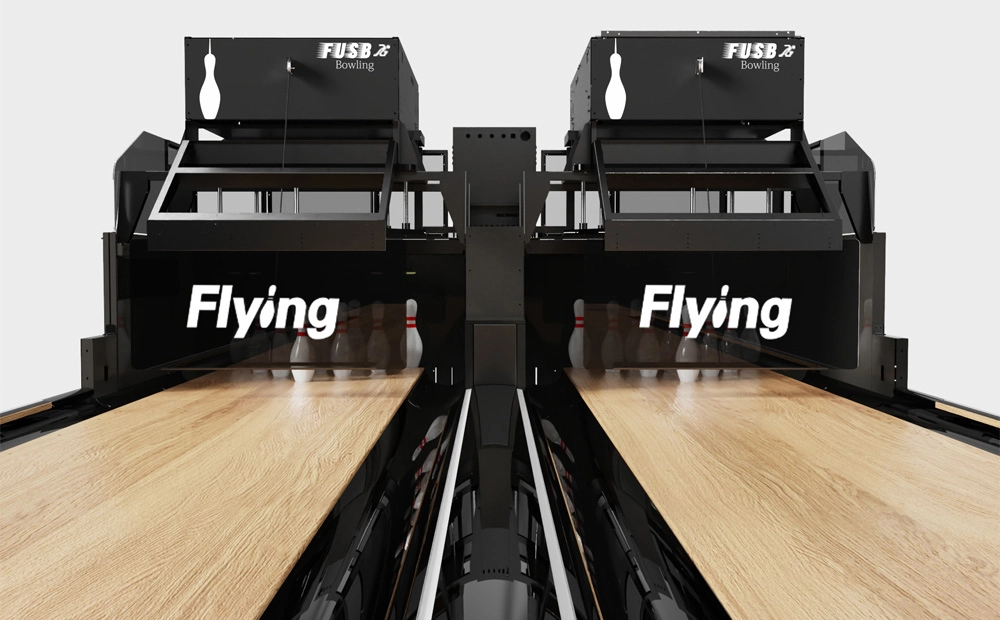
Flying Ultra Standard Bowling
Flying Ultra Standard Bowling (FUSB) Upgraded Version
The string pinsetter uses the latest technology. It offers a more enjoyable bowling experience thanks to its innovative designs and modern technology.
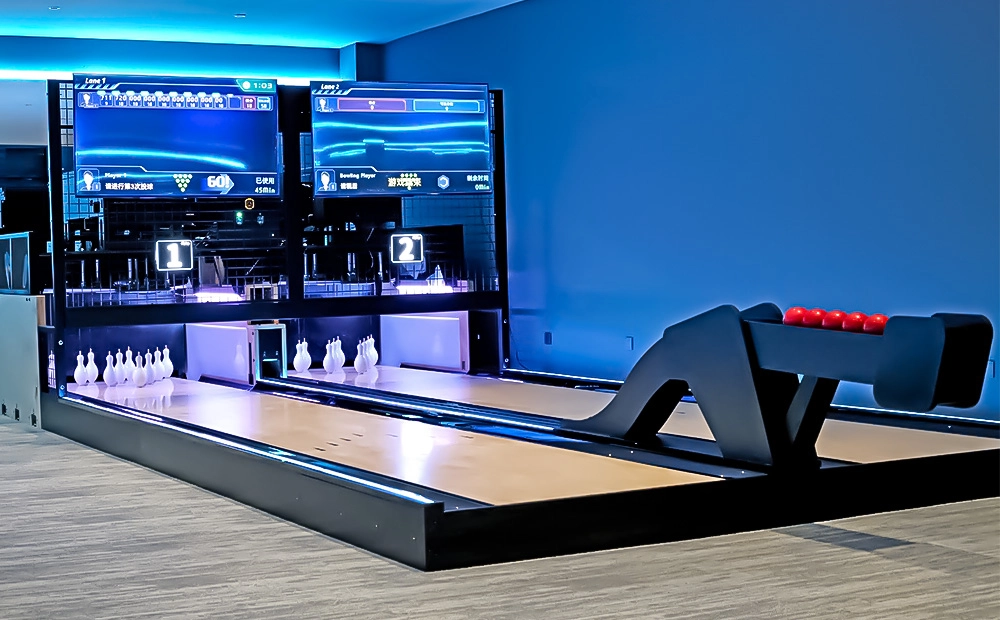
Flying Smart Duckpin Bowling
The innovative design of Flying Smart Duckpin Bowling (FSDB) makes it perfect for places like bars, billiard halls, and game centers. It makes people want to come back more often and spend more money. FSDB is fun and competitive, so it will become a new focus for social activities.
Flying Classic Standard Bowling
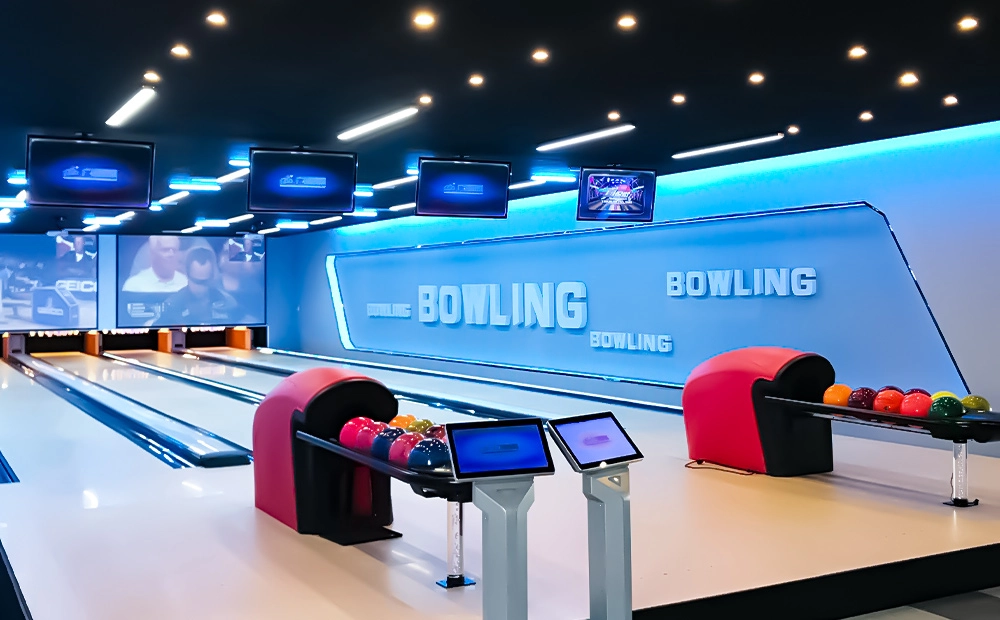
Flying Classic Standard Bowling (FCSB) employs the World Standard Competition Scoring System to deliver a more professional bowling experience, enabling bowlers to enjoy a professional-standard match at their convenience.
Ready to Build Your Bowling Center?
Share your details, and we’ll provide tailored solutions and expert guidance to help you take your bowling center to the next level.

Professional Bowling Alley Equipment Manufacturer, a one-stop solution provider for bowling alleys.
Facebook
YouTube
Linkedin
Twitter