















The Ultimate Guide to Your Dream Home Bowling Lane: Costs, Design, & Expert Installation Tips
A comprehensive guide to installing a home bowling lane, covering detailed 2025 cost breakdowns, regulation and mini-lane dimensions, essential equipment comparisons (string vs. freefall), and critical legal and structural considerations.
- Introduction: Your Private Alley Awaits
- Unpacking the Costs: A Detailed Home Bowling Lane Budget Breakdown (2025/2026)
- Overview of Average Cost Ranges
- Itemized Component Costs
- Space & Structural Considerations: Designing Your Perfect Alley
- Regulation Lane Dimensions
- Mini-Bowling: The Space-Saving Alternative
- Critical Architectural Planning
- Choosing Your Equipment: An In-Depth Buyer's Guide
- The Pinsetter Debate: String vs. Freefall
- Lane Materials
- The Planning & Permitting Maze: What You Need to Know
- Installation Process: From Foundation to First Strike
- Maintenance & Long-Term Ownership: Protecting Your Investment
- DIY Backyard Bowling Lane: A Budget-Friendly & Fun Alternative
- Is a Home Bowling Lane a Good Investment? Resale Value & Lifestyle Impact
- FAQ
- How much does a full-size home bowling lane typically cost to install?
- What's the minimum space required for a home bowling lane?
- Are there different types of pinsetters, and which is best for home use?
- Can I install a home bowling lane myself, or do I need professionals?
- What kind of ongoing maintenance does a home bowling lane require?
- Do I need special permits to build a bowling lane in my house?
- How does a home bowling lane impact my property's resale value?
- What are the main differences between regulation and mini-bowling lanes for home?
Introduction: Your Private Alley Awaits
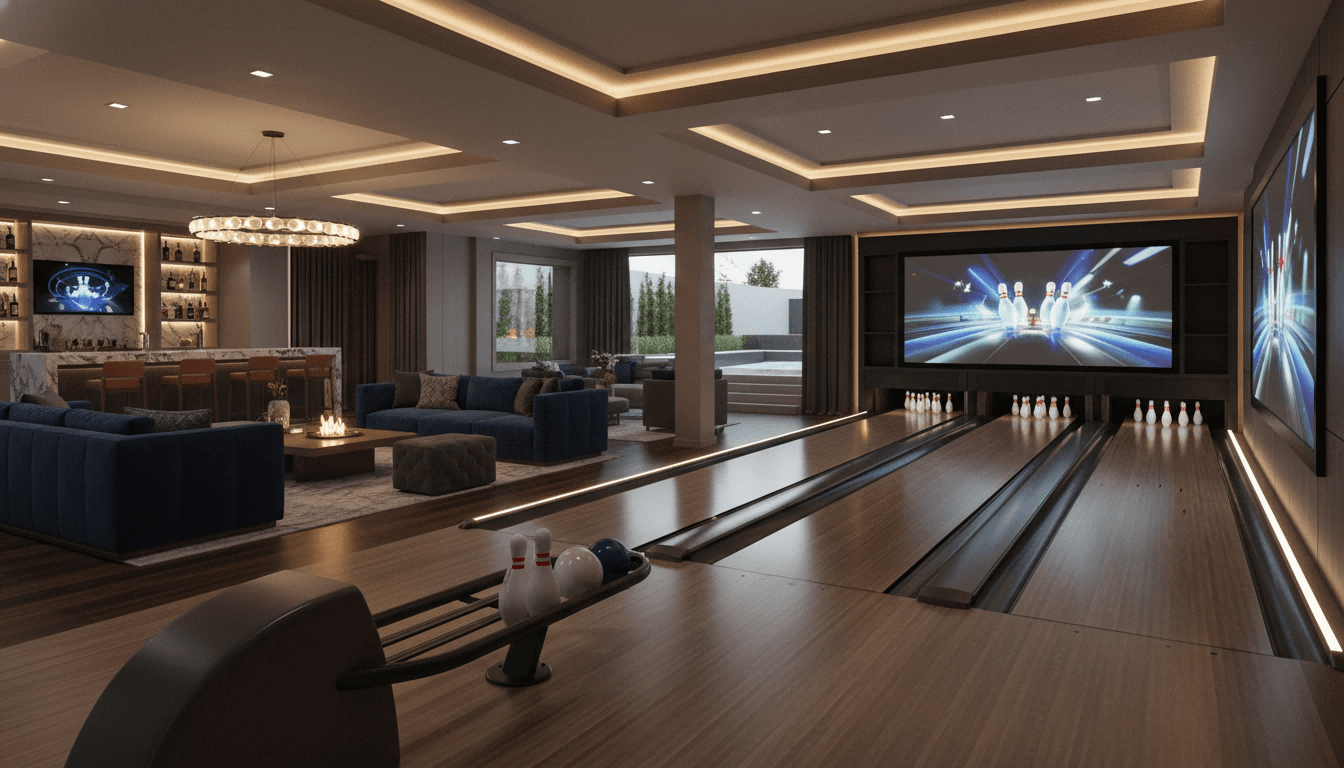
In the realm of luxury home improvements, few additions rival the "wow" factor of a private bowling alley. As the trend of "resimercial" design—blending residential comfort with commercial-grade amenities—grows, homeowners are increasingly transforming basements, garages, and custom annexes into high-end entertainment hubs. A home bowling lane is more than just a game; it is a social anchor, a family gathering spot, and a statement of sophisticated living.
However, moving from the dream of a private strike zone to the reality of construction requires navigating a complex landscape of structural engineering, specialized mechanics, and significant financial planning. This guide moves beyond surface-level advice to provide the specific numbers, technical requirements, and expert insights needed to execute this ambitious project in 2025 and 2026.
Unpacking the Costs: A Detailed Home Bowling Lane Budget Breakdown (2025/2026)
Building a bowling alley is a major capital investment. While prices vary based on finishes and location, recent industry data provides a clear baseline for budgeting.
Overview of Average Cost Ranges
· Single Regulation Lane: $75,000 – $100,000+
· Double Regulation Lane: $120,000 – $195,000+
· Mini-Bowling System: $35,000 – $90,000
· Luxury Custom Build (2 Lanes): $200,000 – $350,000+
Itemized Component Costs
To understand where your money goes, we must break down the ledger.
· Pinsetters ($8,000 – $35,000 per lane): This is often the single most expensive mechanical component.
o String Pinsetters: $8,000 – $12,000. These are the industry standard for homes due to lower parts counts and maintenance.
o Freefall Pinsetters: $15,000 – $35,000. The traditional commercial standard. Higher cost is due to complex hydraulics and sensor systems.
· Lane Surface ($10,000 – $20,000 per lane):
o Synthetic Lanes: Most common today. They mimic wood but are made of durable high-pressure laminates (HPL) that resist warping and require less oiling.
o Wood Lanes: Rare in new installations due to high maintenance (resurfacing requirements) and sensitivity to humidity.
· Scoring Systems ($5,000 – $15,000):
o Basic systems with overhead monitors start around $5,000.
o Interactive systems (like QubicaAMF’s BES X) that offer angry-birds style games and touch consoles can push costs toward $15,000 per pair of lanes.
· Ball Return Systems ($3,000 – $8,000):
o Gravity-fed returns are cheaper but require a sloped track.
o Power-lift returns (standard in commercial alleys) are essential for above-ground installations where gravity feeds aren't possible.
· Shipping & Logistics ($5,000 – $10,000): Bowling equipment is heavy. A pair of lanes weighs roughly 13,000 lbs. Shipping to a residential address often requires specialized freight handling.
· Installation Labor: Specialized technicians typically charge day rates plus travel. For a 2-lane setup, expect $15,000 – $30,000 in labor fees alone.
Space & Structural Considerations: Designing Your Perfect Alley
One of the most common pitfalls in planning is underestimating the linear footage required.
Regulation Lane Dimensions
A "standard" bowling experience is non-negotiable on length for many purists.
· Total Length: You need approximately 87 to 100 feet.
o Approach: 16 feet (for the player's run-up).
o Lane: 60 feet (foul line to headpin).
o Pin Deck & Pit: ~6-7 feet (where the pins stand and the machine sits).
o Service Aisle: 3-5 feet (behind the machine for maintenance access).
o Seating: 10-12 feet (for the "settee" area).
· Width:
o Single Lane: ~11.5 – 12 feet (includes lane + gutters + service aisle).
o Double Lane: ~22 feet.
· Ceiling Height:
o Minimum: 8 feet is structurally possible.
o Ideal: 10-12 feet. This height is necessary to accommodate overhead scoring monitors and to allow technicians to stand upright when servicing the top of pinsetter machines.
Mini-Bowling: The Space-Saving Alternative
For homes without a 100-foot span, mini-bowling (or Duckpin variants) is a viable luxury alternative.
· Length: Can be condensed to 35 – 45 feet.
· Ball: Uses a smaller hand-held ball (no finger holes).
· Pins: Scaled down to roughly 66% of standard size.
Critical Architectural Planning
· Structural Load: A pair of lanes imposes a dead load of ~30-40 lbs per square foot, but the pinsetter area has a heavy concentrated load (4,000+ lbs). If installing on a second floor, steel reinforcement is almost always required.
· Acoustics: The sound of a bowling strike registers at over 100 decibels. You must decouple the lane subfloor from the home's main foundation using sound-dampening pucks or floating slabs. Walls should be insulated with high-STC (Sound Transmission Class) materials like mass-loaded vinyl.
Choosing Your Equipment: An In-Depth Buyer's Guide
The Pinsetter Debate: String vs. Freefall
For residential use, the industry largely advocates for string pinsetters. Here is why:
· String Pinsetters: Pins are attached to durable black nylon cords. When knocked down, the machine retracts the cords to reset the pins.
o Pros: virtually jam-free, 80-90% fewer moving parts, quieter operation, consumes 75% less electricity.
o Cons: Purists argue the string can occasionally influence pin action (though recent certifications by the USBC have validated them for competitive play).
· Freefall Pinsetters: The complex mechanical arms and elevators found in commercial alleys.
o Pros: Authentic look and sound; 100% "real" physics.
o Cons: Loud, requires a trained mechanic on standby (jams are frequent), high energy draw, and significantly higher maintenance costs ($6k-$10k/year in parts/labor for commercial use).
Lane Materials
While wood (Maple/Pine) is nostalgic, Synthetic is the superior choice for homes. Wood lanes are sensitive to humidity changes—common in basements—and require professional resurfacing (sanding and recoating) every 1-2 years. Synthetics are virtually maintenance-free regarding surface integrity.
The Planning & Permitting Maze: What You Need to Know
Installing a bowling alley is a major construction event involving electrical, structural, and sometimes zoning compliance.
· Zoning & Use: Most municipalities view private alleys as recreational rooms. However, if your design includes a bar or kitchen, or if the structure is a detached accessory dwelling unit (ADU), specific zoning setbacks apply.
· Permits:
o Electrical: Pinsetters often require 208v/220v 3-phase power or dedicated high-amperage circuits.
o Structural: You will likely need a structural engineer to sign off on the slab depression. Standard lanes are often recessed 12-17 inches into the floor so the lane surface sits flush with the room's finished floor.
· Noise Ordinances: If you are in a dense residential zone (e.g., a townhouse or condo), you may face noise restrictions. High-end acoustic isolation is not just for comfort; it may be a legal requirement to avoid disturbing neighbors.
Installation Process: From Foundation to First Strike
1. Site Prep (Weeks 1-2): The subfloor is leveled to within 1/40th of an inch tolerance. Conduits for power and data (scoring) are laid.
2. Structural Framework (Week 3): A specialized I-joist or steel frame is installed to support the lane beds.
3. Equipment Rigging (Week 4): Pinsetters are moved into place. This is the most physically demanding phase, often requiring forklifts.
4. Lane Installation (Week 5): The synthetic panels are laid down. This is precision work; seams must be perfectly flush to prevent ball deflection.
5. Systems Integration (Week 6): Scoring cameras, touchscreens, and ball returns are wired and calibrated.
6. Testing & Training: The installer will run hundreds of cycles to break in the strings or elevators and teach the homeowner basic troubleshooting.
Maintenance & Long-Term Ownership: Protecting Your Investment
Unlike a home theater, a bowling alley has moving parts that wear out.
· Oiling the Lanes: Synthetic lanes must be oiled to protect the surface from friction burns caused by the ball. Homeowners should buy a "lane machine" (automated oiler) or hand-oil weekly if usage is light.
· Pinsetter Service:
o String: Visual check of cords monthly. Replacement of strings annually.
o Freefall: Quarterly professional servicing is recommended to grease bearings and adjust belts.
· Operating Costs: Expect to spend $500 - $1,500 annually on supplies (lane oil, cleaner) and minor parts for a string system. Freefall systems can cost significantly more to maintain.
DIY Backyard Bowling Lane: A Budget-Friendly & Fun Alternative
For those not ready to spend $100k, a backyard DIY setup is feasible for under $5,000.
· Surface: Poured concrete (smooth finish) or a wooden deck frame covered with marine-grade plywood and outdoor carpet.
· Pins: Manual resetting is the norm. You can build a simple "pulley" rack system to lift all 10 pins at once.
· Limitations: These are seasonal. Moisture will warp wood lanes quickly, so heavy tarping or weather-sealed construction is vital.
Is a Home Bowling Lane a Good Investment? Resale Value & Lifestyle Impact
Does a $150,000 bowling alley increase your home's value by $150,000? Generally, no.
· The Niche Reality: Real estate appraisals typically classify bowling alleys as "super-adequacies"—improvements that exceed the market standard. They rarely return dollar-for-dollar value.
· The Luxury Exception: In the ultra-luxury market ($10M+ properties), unique amenities like bowling alleys, shooting ranges, and wine cellars are expected differentiators. Here, they help the property sell faster rather than just for more.
· The Verdict: Build it for your lifestyle, family bonding, and entertainment, not as a financial investment strategy.
FAQ
How much does a full-size home bowling lane typically cost to install?
A full-size, single home bowling lane typically ranges from $80,000 to $100,000. A double-lane setup usually costs between $120,000 and $195,000, heavily dependent on equipment choices (pinsetter type) and custom design finishes.
What's the minimum space required for a home bowling lane?
For a regulation lane, you need a room length of at least 87 feet (preferably 100 feet for seating) and a width of 12 feet for a single lane. Ceiling height should ideally be 10-12 feet to accommodate pinsetter mechanics and overhead monitors.
Are there different types of pinsetters, and which is best for home use?
Yes, the two main types are String and Freefall. String pinsetters are overwhelmingly recommended for home use because they are cheaper ($8k-$12k), quieter, and require 80% less maintenance than complex freefall machines.
Can I install a home bowling lane myself, or do I need professionals?
For a regulation indoor lane, professional installation is mandatory due to the precision required for the subfloor leveling and heavy equipment rigging. DIY is only feasible for casual, outdoor "backyard" lanes.
What kind of ongoing maintenance does a home bowling lane require?
Synthetic lanes require regular cleaning and oiling (weekly or bi-weekly depending on use). String pinsetters need the cords checked and occasionally detangled or replaced. Freefall machines require a mechanic for regular lubrication and belt adjustments.
Do I need special permits to build a bowling lane in my house?
Yes. Beyond standard building and electrical permits, you may need to address specific structural load requirements and noise/zoning regulations. If the lane is part of a larger extension, standard land-use permits apply.
How does a home bowling lane impact my property's resale value?
It is considered a niche luxury amenity. While it adds a "wow" factor that appeals to specific high-end buyers, it typically does not offer a 100% return on investment and can sometimes limit the buyer pool if the space cannot be easily repurposed.
What are the main differences between regulation and mini-bowling lanes for home?
Regulation lanes are 60 feet from foul line to headpin and require large balls with finger holes. Mini-bowling lanes are much shorter (35-45 feet total), use smaller handheld balls, and smaller pins, making them ideal for tighter spaces.

Quality Bowling

Service
How long do you provide warranty service?
The whole machine is under warranty for 2 years, and the core components (motor/mainboard) are extended to 3 years, and the maintenance is at cost price for life.
Installations
How long does it take to install bowling equipment?
The installation process can take between 2-4 weeks, depending on the size of the project and the specific type of equipment being installed.
Technology
How can I get the latest technology upgrades?
Our customers can get software updates for free and hardware upgrades at cost price.
Company
What are the advantages of your brand compared with other international brands?
Compared with other international brands, our equipment has significant price advantages and lower maintenance costs. We provide customers with more cost-effective options by optimizing the design and manufacturing process while ensuring high quality and compliance with USBC international standards.
Products
How to deal with the differences in power/specification standards in different countries?
Support 110V—240V voltage adaptation, comply with international safety certifications such as CE/UL, and provide localized standard transformation services.
You May Also Like
Flying Smart Duckpin Bowling
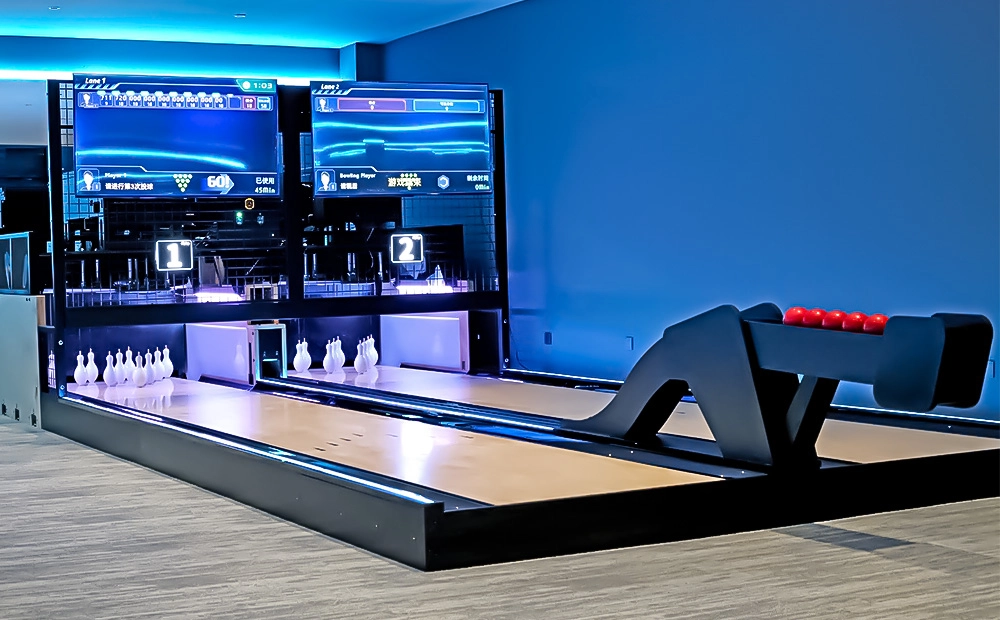
The innovative design of Flying Smart Duckpin Bowling (FSDB) makes it perfect for places like bars, billiard halls, and game centers. It makes people want to come back more often and spend more money. FSDB is fun and competitive, so it will become a new focus for social activities.
Flying Classic Standard Bowling
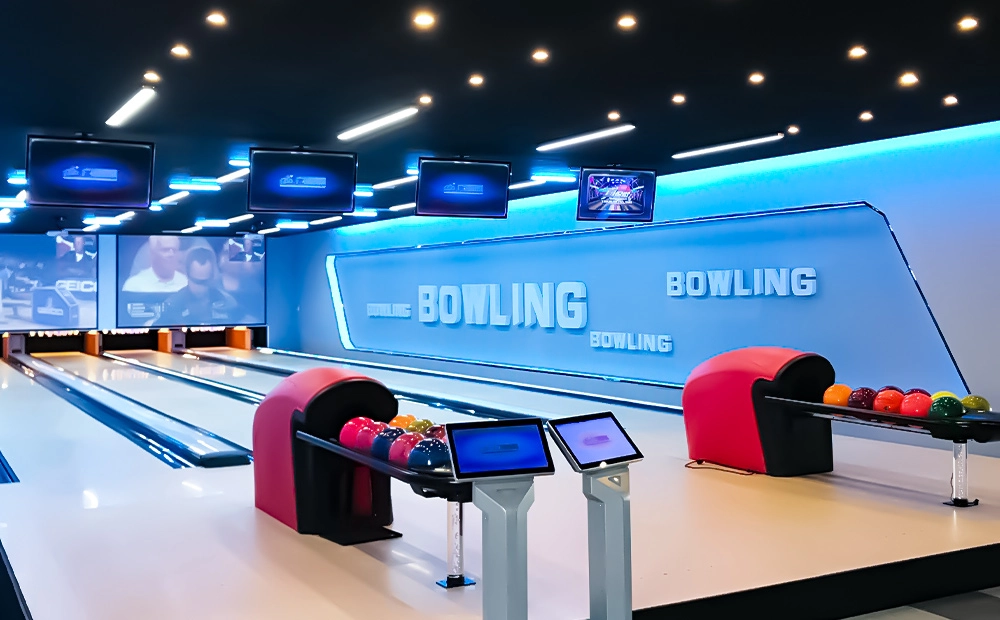
Flying Classic Standard Bowling (FCSB) employs the World Standard Competition Scoring System to deliver a more professional bowling experience, enabling bowlers to enjoy a professional-standard match at their convenience.
Flying Ultra Standard Bowling
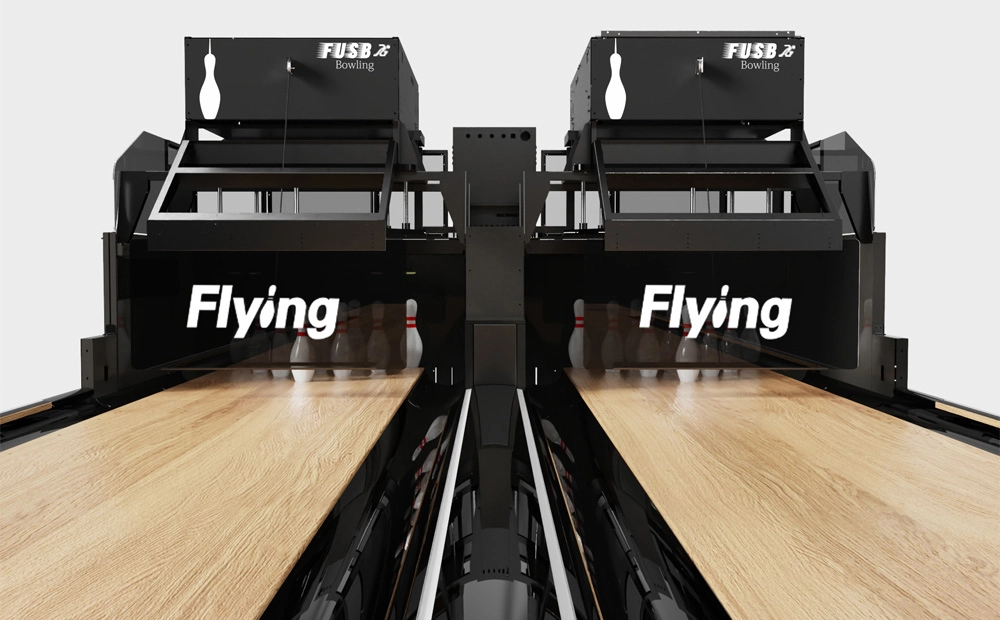
Flying Ultra Standard Bowling (FUSB) Upgraded Version
The string pinsetter uses the latest technology. It offers a more enjoyable bowling experience thanks to its innovative designs and modern technology.

Get in touch
Contact us
If you contact us now for more details, we can provide you with a custom bowling alley service.
Our service team will get back to you within 24 hours, normally!



Professional Bowling Alley Equipment Manufacturer, a one-stop solution provider for bowling alleys.
Facebook
YouTube
Linkedin
Twitter