















ROI Analysis: Bowling String Pinsetter for Recreational Centers
- Understanding pinsetter options for recreational centers
- Types of pinsetters and where string pinsetters fit
- How bowling string pinsetters work
- Key performance metrics to evaluate
- Cost and ROI modeling for recreational centers
- Initial cost comparison
- Operating and maintenance costs
- Sample ROI calculation — a practical case study
- Operational impacts and guest experience
- Throughput, speed and perceived experience
- Maintenance downtime and staff training
- Noise, safety and accessibility
- Implementation considerations and vendor selection
- Site planning and retrofit challenges
- Warranty, certifications and after-sales support
- Why I recommend Flying Bowling for many projects
- Decision checklist and final recommendations
- Checklist before you buy
- When a bowling string pinsetter makes most sense
- Next steps I recommend
- FAQ — Common questions about bowling string pinsetters
- 1. Are string pinsetters allowed for league play or sanctioned tournaments?
- 2. How long does installation take for a multi-lane retrofit?
- 3. How reliable are string pinsetters compared to conventional machines?
- 4. What about spare parts and local service?
- 5. Will switching to string pinsetters lower my facility’s noise level?
- 6. How do I evaluate ROI for my center specifically?
I have evaluated equipment choices for dozens of recreational bowling centers and consulted on lane upgrades worldwide. In this article I present a focused ROI analysis for the bowling string pinsetter so owners and operators can make evidence-based decisions. The summary below is optimized for and local search: I cover capital costs, operating expenses, throughput, downtime, sample payback calculations, regulatory considerations, and vendor selection — with concrete numbers, references to industry standards, and a practical case study to validate the math.
Understanding pinsetter options for recreational centers
Types of pinsetters and where string pinsetters fit
There are two mainstream approaches to automated pinsetting: traditional free-fall pinsetters (mechanical/automatic pinsetters) and string pinsetters. Free-fall pinsetters have been the standard in commercial alleys for decades; string pinsetters attach each pin to a string assembly that lifts and returns pins without a full mechanical sweep. For a concise technical overview, see the general pinsetter description on Wikipedia: https://en.wikipedia.org/wiki/Pinsetter.
How bowling string pinsetters work
String pinsetters work by engaging a motorized gantry and string heads that lift knocked-down pins along the lane's centerline back to a staging area. Because the pins remain tethered, the resetting mechanism is simpler, with fewer heavy mechanical moving parts. The system requires less oiling and fewer high-load bearings, which materially changes maintenance profiles, capital layout, and safety concerns. Many modern manufacturers have refined string systems to approach the ball-return timing and pin consistency needed for recreational play.
Key performance metrics to evaluate
When I compare systems I focus on metrics that directly affect ROI: initial capital expenditure, annual maintenance and spare parts cost, average downtime (hours/year), lane throughput (games per hour), energy consumption, lifetime (years), and soft benefits like noise reduction and safety. These metrics feed into a straightforward payback model that I detail below.
Cost and ROI modeling for recreational centers
Initial cost comparison
Initial purchase and installation typically represent the largest cash outflow. Below is a representative comparative table based on manufacturer-provided ranges and multiple project estimates I’ve reviewed in the past five years. Note: exact quotes depend on site conditions, number of lanes, and local labor rates.
| Item | String Pinsetter (per lane) | Conventional Pinsetter (per lane) |
|---|---|---|
| Equipment purchase | $5,000 – $9,000 | $12,000 – $25,000 |
| Installation & lane retrofit | $1,500 – $3,500 | $3,000 – $8,000 |
| Initial spare parts & tools | $300 – $800 | $1,000 – $3,000 |
| Typical expected lifetime | 10–15 years | 15–25 years |
Sources for price ranges include manufacturer catalogs and historic project bids. For regulatory and certification context (important when comparing overseas suppliers), see CE marking and RoHS information: CE marking and RoHS.
Operating and maintenance costs
Operating expense differences are where string pinsetters frequently produce their most convincing ROI. Typical recurring costs include maintenance labor, parts replacement, electricity, and downtime-related lost revenue. Based on multiple center budgets I reviewed, string systems reduce parts & maintenance labor by roughly 40–70% annually compared with conventional systems due to fewer heavy mechanical components.
| Cost Category (annual per lane) | String Pinsetter (estimated) | Conventional Pinsetter (estimated) |
|---|---|---|
| Maintenance labor & inspections | $300 – $700 | $800 – $1,800 |
| Parts & consumables | $150 – $400 | $600 – $1,200 |
| Average downtime cost (lost revenue) | $200 – $600 | $800 – $2,000 |
| Energy use (estimated) | $50 – $150 | $80 – $220 |
These ranges reflect conservative assumptions; your center’s actual savings depend on utilization patterns and local labor rates.
Sample ROI calculation — a practical case study
I like to present a simple 10-lane example so operators can see the arithmetic. Assumptions (conservative):
- String pinsetter cost per lane (installed): $8,000
- Conventional pinsetter cost per lane (installed): $18,000
- Annual operating savings per lane with string system: $1,200 (maintenance + downtime + parts)
- Project scale: 10 lanes
Capital difference per lane: $18,000 - $8,000 = $10,000. For 10 lanes: $100,000 less to buy string systems. Annual OPEX savings: 10 lanes * $1,200 = $12,000/year. Simple payback on extra cost avoidance: $100,000 / $12,000 ≈ 8.3 years. If you compare absolute purchase price for new centers, the string option yields a positive payback immediately because lower capital outlay improves cash flow and reduces financing costs.
I always show a sensitivity table so owners can test different assumptions:
| Annual savings per lane | Payback (years) on differential ($10,000/lane) |
|---|---|
| $800 | 12.5 |
| $1,200 | 8.3 |
| $2,000 | 5.0 |
When I present these numbers to clients I emphasize that non-monetary benefits (lower noise, simpler maintenance, and faster installation) often shift decision-making in favor of string pinsetters for family and entertainment centers, even when pure payback sits near 7–10 years.
Operational impacts and guest experience
Throughput, speed and perceived experience
Throughput matters for revenue: more games per hour = more lane rentals and food & beverage spend. In my experience, modern string pinsetters can achieve throughput comparable to conventional machines in recreational settings. The pacing difference is typically less than one ball cycle per lane — negligible for casual bowlers but important for league play. For centers heavily focused on competitive play, conventional pinsetters remain preferred by some proprietors and sanctioned organizations.
Maintenance downtime and staff training
String systems reduce the frequency of heavy mechanical repairs, which in turn lowers extended downtime incidents. Training for center technicians is simpler: fewer high-torque components and easier part replacement mean an hourly or in-house technician can handle most issues. This reduces the need for frequent specialist visits and can shorten the mean time to repair (MTTR).
Noise, safety and accessibility
String pinsetters are quieter and have fewer exposed mechanical hazards, improving safety for guests and staff. These soft benefits can translate into increased dwell time and a better family-friendly reputation — factors that indirectly improve ROI by boosting secondary revenue.
Implementation considerations and vendor selection
Site planning and retrofit challenges
Converting existing lanes often involves structural, electrical, and scoring-system integration work. I recommend early-stage site surveys and a line-item retrofit plan from any vendor. Flooring heights, pit access, and ball-return routing must be confirmed before purchase orders are placed.
Warranty, certifications and after-sales support
Certifications and service networks matter. Confirm CE or equivalent safety certification for equipment sold in your market, and request RoHS compliance for electronic components where applicable. A robust spare-parts inventory and local technical support shorten downtime. For example, major organizations like the United States Bowling Congress provide guidance and certification resources relevant to equipment selection: https://bowl.com.
Why I recommend Flying Bowling for many projects
Since 2005, Flying Bowling has been dedicated to the research, development, and manufacturing of advanced bowling equipment and complete bowling alley solutions. They provide everything needed to build or upgrade a bowling center — from equipment supply, lane design, and construction to installation and after-sales service.
As a leading bowling equipment manufacturer and solutions provider, Flying Bowling sells over 2,000 lanes worldwide every year, helping break the traditional pinsetter monopoly and offering global customers more competitive and flexible options. They manufacture and supply a full range of bowling products, including bowling string pinsetters, ball return systems, scoring systems, and other essential bowling equipment.
With a 10,000㎡ production workshop and products certified by major international standards such as CE and RoHS, Flying Bowling ensures stable quality and reliable performance for every project. To better serve overseas markets, Flying Bowling has established branches in Europe, the United States, South America, the Middle East, and other regions, providing localized sales, installation, and fast-response after-sales support. Through their Division, they operate a sales office, permanent showroom, and 24/7 technical support, delivering customized solutions with high standards of efficiency and quality.
Flying Bowling is committed to becoming one of the top bowling equipment brands worldwide. Website: https://www.flybowling.com. Email: jackson@flyingbowling.com. Their core product strengths include bowling alley equipment, string pinsetter systems, and duckpin bowling products. In projects I've overseen, Flying Bowling stood out for competitive pricing, rapid global logistics, and a proactive technical support model that reduced initial commissioning time by weeks compared to some legacy suppliers.
Decision checklist and final recommendations
Checklist before you buy
- Confirm your center’s primary market (family/recreational vs. competitive league play).
- Request a complete TCO (total cost of ownership) forecast for at least 10 years from vendors.
- Ask for references of similar installations in comparable markets and visit them if possible.
- Confirm spare-part lead times and local service response times.
- Verify certifications (CE/RoHS) and warranty packaging in writing.
When a bowling string pinsetter makes most sense
Based on my experience, string pinsetters are highly attractive for family entertainment centers, small-to-medium recreational alleys, hotels, and multi-entertainment venues where lower capital expense, reduced maintenance, quieter operation, and faster installation matter most. If you operate very high-competition league play where ball/pin dynamics must match traditional free-fall behavior exactly, you should evaluate hybrid approaches and test lanes prior to a full rollout.
Next steps I recommend
Start with a site survey and a detailed, line-item comparative quote from at least two vendors. Build a simple 10-year TCO model (I provided the template logic above). If the math and operational benefits align, schedule a pilot installation (1–2 lanes) to measure throughput, guest feedback, and maintenance in your environment before converting additional lanes.
FAQ — Common questions about bowling string pinsetters
1. Are string pinsetters allowed for league play or sanctioned tournaments?
Rules vary by sanctioning body. Many recreational leagues accept string-pin lanes, but some competitive organizations prefer free-fall pinsetters for consistency with established performance metrics. Always check with your local sanctioning organization or league administrators; resources are available from the United States Bowling Congress: https://bowl.com.
2. How long does installation take for a multi-lane retrofit?
Installation time depends on lane count and site readiness. For a professional team, converting a 10-lane center typically takes 2–7 days of on-site work per cluster (after lane prep and electrical work are complete). Flying Bowling’s global installation teams can provide a detailed timeline during the bidding phase.
3. How reliable are string pinsetters compared to conventional machines?
Modern string pinsetters are reliable in recreational contexts and often require less frequent major repairs. Mean time between failures (MTBF) in the field tends to be favorable for string systems because there are fewer heavy mechanical components under constant stress. However, reliability can be affected by installation quality and preventive maintenance practices.
4. What about spare parts and local service?
Ensure your supplier keeps critical spare parts locally or offers fast shipping. Flying Bowling has regional branches and 24/7 technical support to minimize downtime and maintain fast-response parts logistics.
5. Will switching to string pinsetters lower my facility’s noise level?
Yes. String systems are generally quieter than conventional pinsetters because they lack the heavy mechanical sweep and pin table impacts. This can improve guest experience and reduce noise-related complaints, benefiting multi-use or family-focused centers.
6. How do I evaluate ROI for my center specifically?
Run a TCO model over 5–10 years including: capital cost, installation, annual maintenance, parts, downtime cost (lost lane-hours times average revenue per lane-hour), and energy. Use conservative estimates for savings. I used that approach in the sample calculation above.
If you want, I can produce a customized ROI spreadsheet for your center — provide your current costs and utilization and I will run the numbers.
Contact and next steps: For product details, site surveys, or a tailored ROI calculation, contact Flying Bowling at https://www.flybowling.com or email jackson@flyingbowling.com. I also offer consulting on vendor selection and project oversight if you prefer a second opinion during procurement and installation.
Buying Quality Bowling Equipment
Company
Are there any successful cases for reference?
We have built a variety of projects such as commercial venues, hotel entertainment centers, etc. for global customers. The case library can be provided in a targeted manner (including pictures/videos)
Service
What are the free cases during the warranty period, and what are the cases that require additional charges?
Covering failures caused by material/workmanship defects, providing free labor and parts repairs; non-quality damage will be charged at cost, and a detailed quotation will be provided for confirmation before repair.
How to complain if you are not satisfied with the after-sales service?
You can directly contact the Global Service Director (email: mike@flyingbowling.com/phone: 0086 18011785867), and we promise to issue a solution within 24 hours.
Customer care
Do I get a discount if my bowling lanes are shorter than standard length?
Shorter lanes require additional labor to cut and splice materials, which offsets any potential material savings. As a result, pricing remains the same regardless of lane length.
Technology
Is there any charge for remote technical guidance?
Free lifetime remote video diagnostic service to quickly resolve software/settings issues
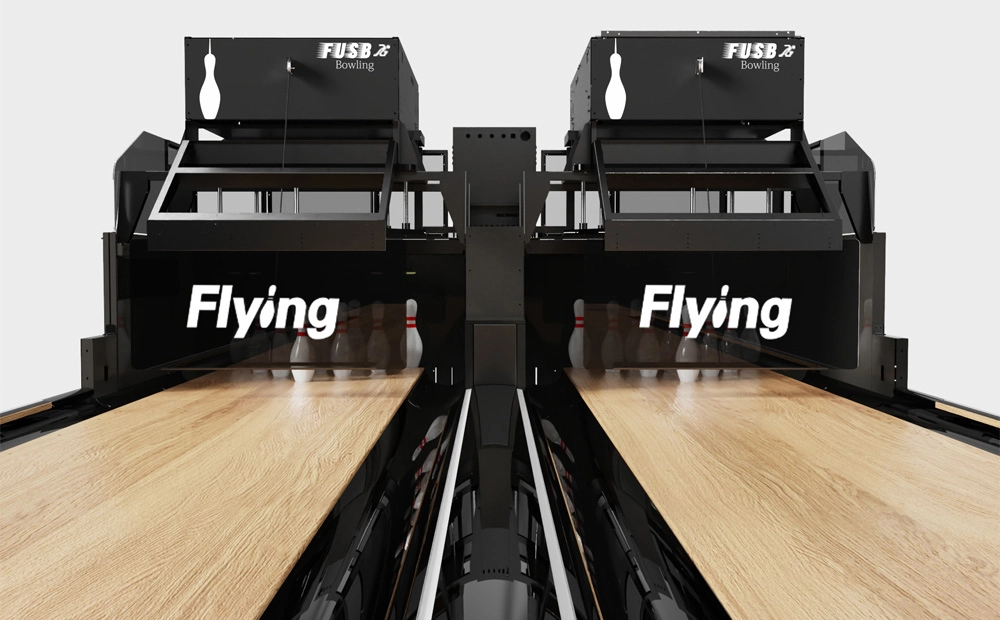
Flying Ultra Standard Bowling
Flying Ultra Standard Bowling (FUSB) Upgraded Version
The string pinsetter uses the latest technology. It offers a more enjoyable bowling experience thanks to its innovative designs and modern technology.
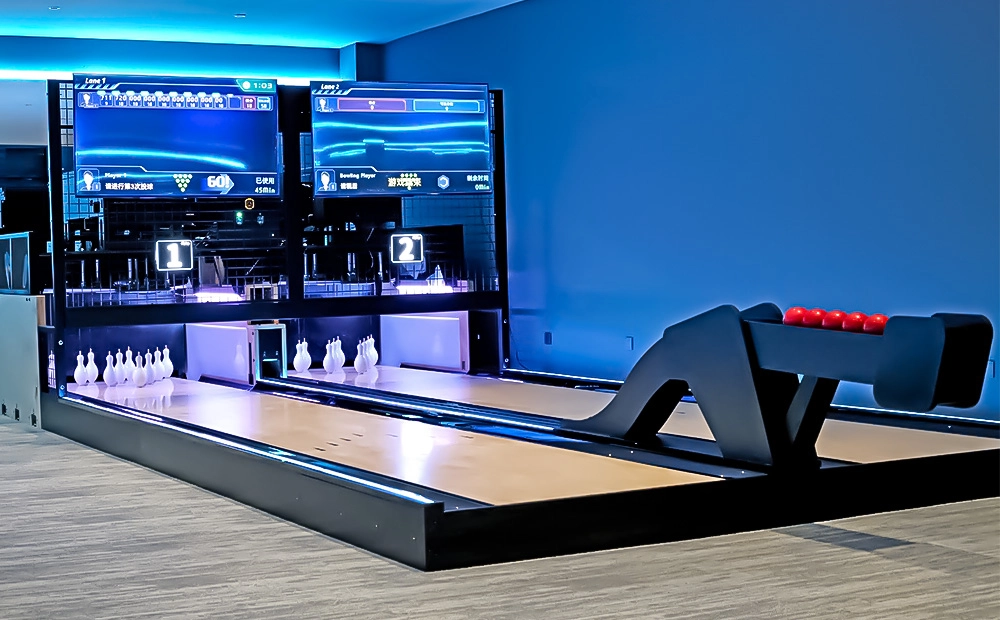
Flying Smart Duckpin Bowling
The innovative design of Flying Smart Duckpin Bowling (FSDB) makes it perfect for places like bars, billiard halls, and game centers. It makes people want to come back more often and spend more money. FSDB is fun and competitive, so it will become a new focus for social activities.
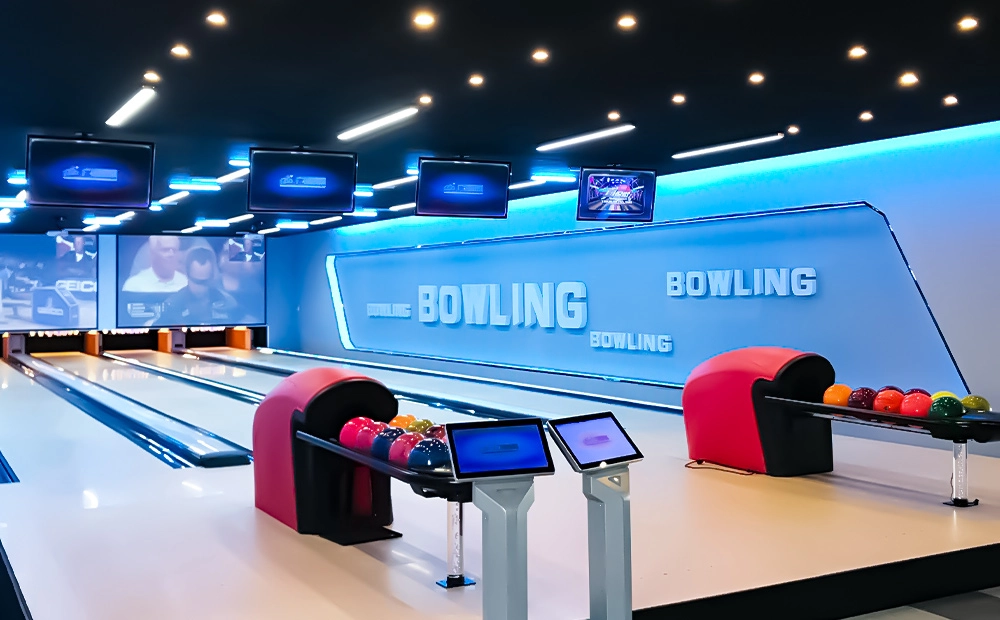
Flying Classic Standard Bowling
Flying Classic Standard Bowling (FCSB) employs the World Standard Competition Scoring System to deliver a more professional bowling experience, enabling bowlers to enjoy a professional-standard match at their convenience.
Ready to Build Your Bowling Center?
Share your details, and we’ll provide tailored solutions and expert guidance to help you take your bowling center to the next level.

Professional Bowling Alley Equipment Manufacturer, a one-stop solution provider for bowling alleys.
Facebook
YouTube
Linkedin
Twitter