














Home Bowling Alleys Guide: Cost, Size & Installation
This is a guide to home bowling alleys from Flying Bowling. It includes the price, standard sizes, and step-by-step installation instructions. Plan for the space, budget, and maintenance needed to install a home alley that meets professional standards. Get expert advice and a free consultation.
Home Bowling Alleys Guide
Building a home bowling alley is an exciting way to add a unique entertainment venue to your house. Whether you want a private rec room for your family or a luxury feature to entertain guests, a home bowling alley delivers year-round fun and long-lasting value.
Bowling is an indoor sport that can be enjoyed in any weather by people of all ages. Beyond being fun, it also provides light exercise and encourages social interaction. There’s something therapeutic about knocking down pins—it relieves stress and brings people together.
As one of the leading home bowling alley installers in China, Flying Bowling provides complete residential bowling solutions. From floor plan design and cost estimation to equipment installation and training, we help homeowners create the ultimate bowling experience at home.
How Much Does a Home Bowling Alley Cost?
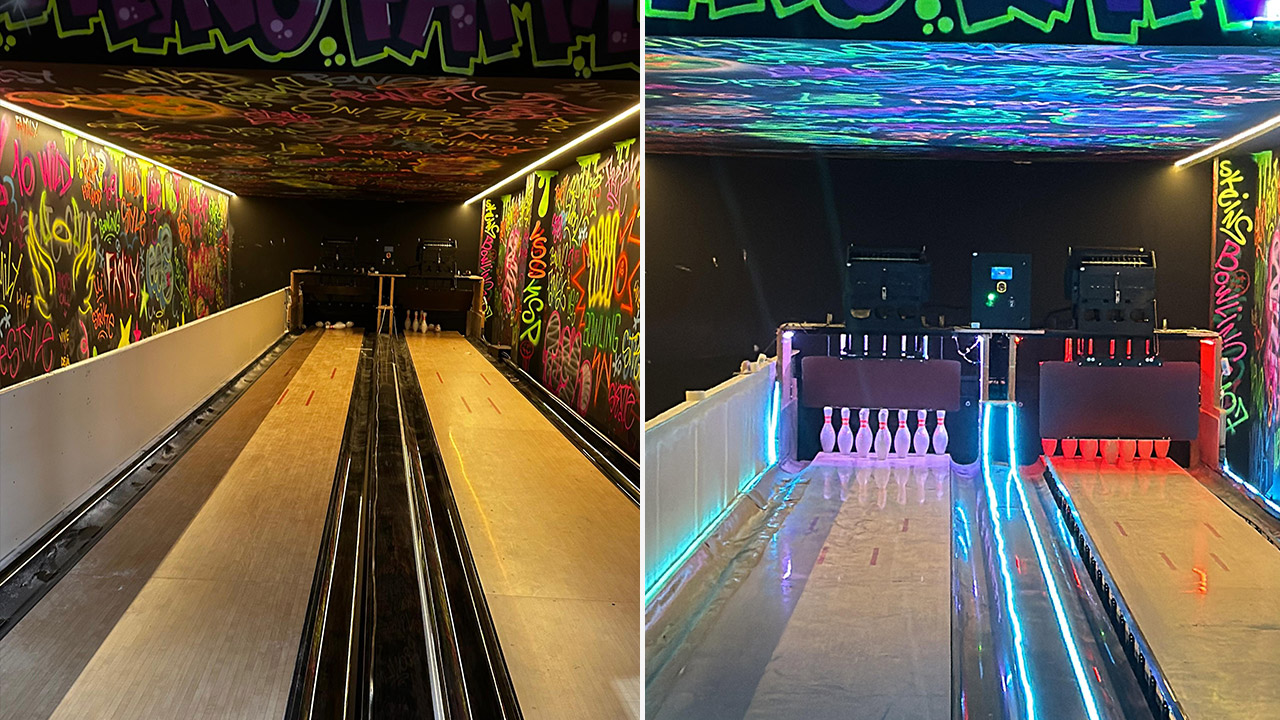
The home bowling alley cost depends on factors such as room size, equipment package, customization, and finishing details. Flying Bowling offers two primary residential bowling equipment packages, both designed to be fair, transparent, and all-inclusive.
Every package includes:
Floor plan review and consultation
Pre-installation site visit during construction
Color and finish selection
Upgrade services and customization
Commercial-grade bowling equipment
Delivery and installation labor
Post-installation training
We maintain the same pricing for all clients—whether you are a homeowner, celebrity, or athlete, you’ll receive the same fair quote.
👉 Tip: Instead of thinking only in terms of upfront cost, consider the long-term value: the joy, memories, and entertainment your family and friends will gain over years of use.
How Much Space Do You Need for a Home Bowling Alley?
About Standard Bowling Lane
A standard bowling lane is about 100 feet (30 meters) long.
The lane and equipment are 89 feet (27 meters) long.
The seating area in the front is 11 feet (3.4 meters) wide.
If your home is small, there are two solutions:
Put the seating area on the side of the lanes instead of in front.
Install a shortened lane. Lanes can be reduced by up to 6 feet.
Flying Bowling can design a bowling lane based on the space you have available.
For a detailed analysis of bowling alley dimensions, please visit our article: Bowling Alley Lane Dimensions: Standards, Design Tips, and Installation Guidance
Duckpin Bowling: A Space-Saving Alternative
If you don't have enough space for a full-size lane, try duckpin bowling.
Duckpin bowling uses a smaller ball (13 centimeters in diameter and 1.7 kilograms) and shorter pins shaped like ducks (24 centimeters tall). Players get three throws per round, which makes the game fun, challenging, and great for the whole family.
Here are some of the benefits of playing duckpin bowling at home:
It takes up less space than a standard lane.
These balls are lightweight and perfect for kids and seniors.
This is a lot of fun and great for parties.
The equipment and installation are cheaper.
Flying Bowling provides custom duckpin bowling equipment with smart systems that reduce costs by 20–30%, making it a great option for homeowners with limited space.
How to Purchase and Install a Home Bowling Alley
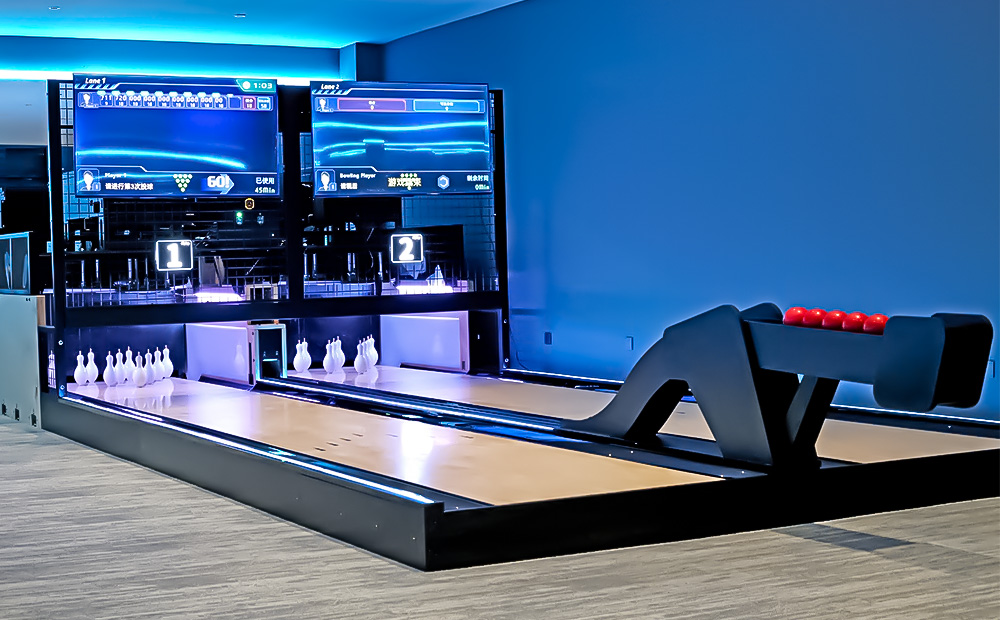
Installing a residential bowling alley is not a DIY project—it requires thousands of parts, professional tools, and specialized installation skills.
Flying Bowling offers turnkey installation services, including:
Working with architects and builders during home design
Coordinating with interior designers, electricians, and AV consultants
Supplying all necessary bowling equipment
On-site installation and setup
User training after completion
👉 If you’re building a new home, it’s best to contact us early in the design phase. This allows our team to coordinate with your architect and ensure proper planning for dimensions, power supply, flooring, and soundproofing.
📩Ready to start? Email Jackson@flyingbowling.com and our team will guide you through the process.
FAQ About Home Bowling Alleys
Q1: How much does it cost to install a home bowling alley?
The cost depends on the length of the lane, the equipment package, and customization. On average, a residential bowling alley costs between $80,000 and $120,000 for each pair of lanes, including all the equipment and installation.
Q2: How much space do I need for a bowling alley at home?
A full-size lane is about 100 feet (30 meters) long and 13 feet (4 meters) wide. If you don't have a lot of space, you can try smaller lanes and duckpin bowling.
Q3: Can I put a bowling alley in my basement?
Many homeowners choose to install them in their basements because they provide a long, rectangular space. It's also important to think about the ceiling height, ventilation, and soundproofing.
Q4: How long does a home bowling alley last?
With proper care, bowling equipment can last for more than 20 years. Flying Bowling uses durable, high-quality systems.
Q5: How much does duckpin bowling cost compared to regular bowling?
Yes. Duckpin bowling requires less space and equipment, making it a good option for homeowners on a budget.
Final Thoughts
Having a home bowling alley is more than just a luxury—it's an investment in lifestyle, family entertainment, and making long-lasting memories. Flying Bowling makes the process simple by providing design, installation, and support services.
If you want to build a full-size residential bowling alley or a compact duckpin bowling alley, we can help you design a setup that fits your budget, home, and vision.
👉 Start planning your dream home bowling alley today with Flying Bowling.

Quality Bowling
Customer care
My room isn't quite long enough. Can you install slightly shorter lanes that are non-regulation length?
Of course, we can customize bowling lanes according to your venue.
Company
Do you have independent R&D capabilities?
We have set up an independent R&D department and have launched a number of new equipment and innovative technologies such as the smart scoring system, Flying Smart Duckpin, and oil drop machine in the past three years.
Service
How to complain if you are not satisfied with the after-sales service?
You can directly contact the Global Service Director (email: mike@flyingbowling.com/phone: 0086 18011785867), and we promise to issue a solution within 24 hours.
What is the warranty on your bowling equipment?
We provide a standard 1-year warranty on all equipment, with extended warranties available upon request.
Installations
How long does it take to install bowling equipment?
The installation process can take between 2-4 weeks, depending on the size of the project and the specific type of equipment being installed.
You May Also Like
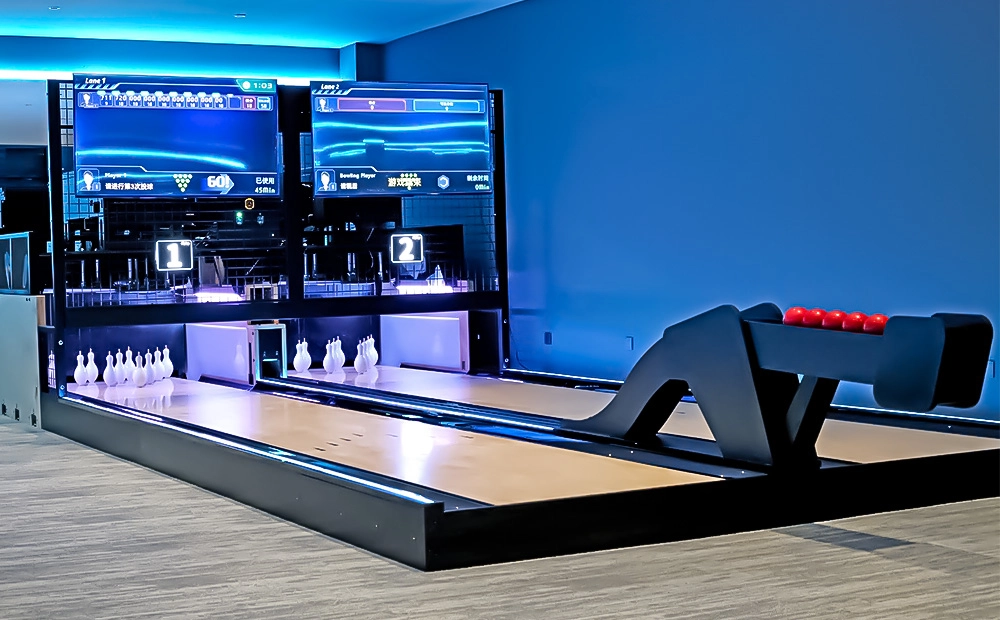
Flying Smart Duckpin Bowling
The innovative design of Flying Smart Duckpin Bowling (FSDB) makes it perfect for places like bars, billiard halls, and game centers. It makes people want to come back more often and spend more money. FSDB is fun and competitive, so it will become a new focus for social activities.
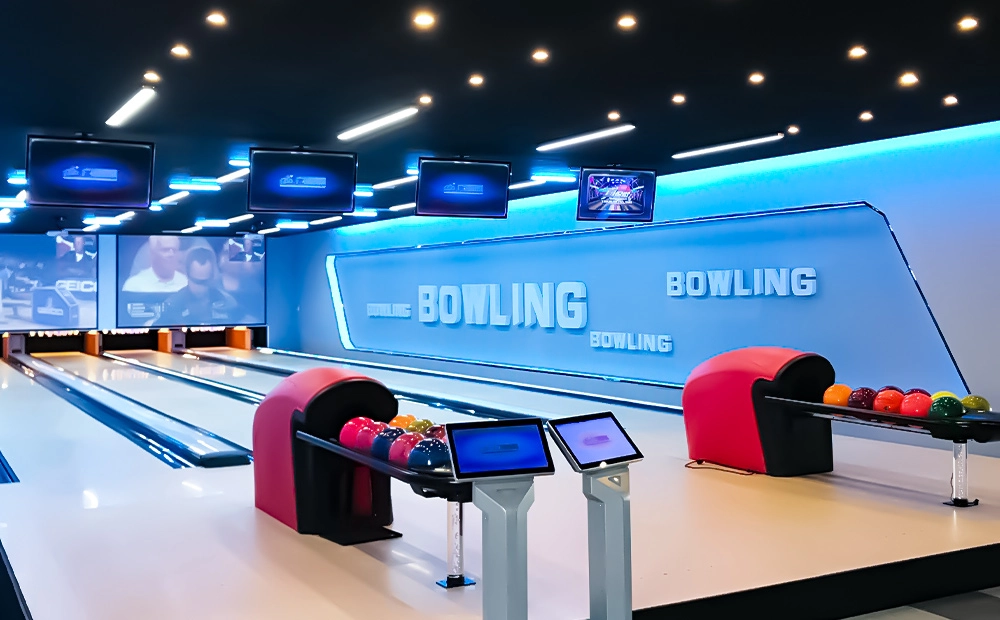
Flying Classic Standard Bowling
Flying Classic Standard Bowling (FCSB) employs the World Standard Competition Scoring System to deliver a more professional bowling experience, enabling bowlers to enjoy a professional-standard match at their convenience.
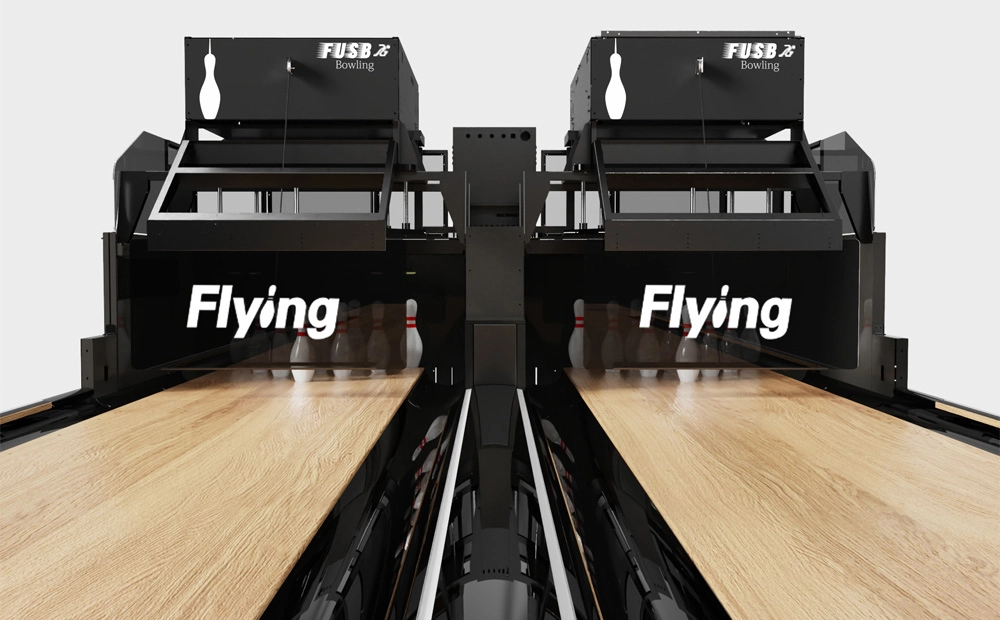
Flying Ultra Standard Bowling
Flying Ultra Standard Bowling (FUSB) Upgraded Version
The string pinsetter uses the latest technology. It offers a more enjoyable bowling experience thanks to its innovative designs and modern technology.

Get in touch
Contact us
If you contact us now for more details, we can provide you with a custom bowling alley service.
Our service team will get back to you within 24 hours, normally!



Professional Bowling Alley Equipment Manufacturer, a one-stop solution provider for bowling alleys.
Facebook
YouTube
Linkedin
Twitter