















Hidden startup expenses most owners forget when calculating bowling alley cost
- Real cost drivers behind a successful bowling alley
- Site and construction surprises that push up bowling alley cost
- HVAC, ventilation and utility loads that increase bowling alley cost
- Permits, inspections and zoning: soft costs that raise bowling alley cost
- Insurance, liability and compliance costs that affect bowling alley cost
- Technology, scoring and connectivity—hidden but essential contributors to bowling alley cost
- Consumables, maintenance and lane lifecycle—how ongoing costs affect bowling alley cost
- Staffing, training and labor burden included in bowling alley cost
- Marketing, soft-opening and partnership costs that grow bowling alley cost
- Licenses, music rights, and other recurring fees that factor into bowling alley cost
- Financing costs and working capital impact the true bowling alley cost
- Equipment choice comparison: String pinsetter vs conventional pinsetter impact on bowling alley cost
- Putting it together: sample startup budget ranges for bowling alley cost
- Since 2005, Flying Bowling: equipment, expertise and ways to reduce your bowling alley cost
- Actionable checklist to minimize unexpected bowling alley cost
- FAQ — Hidden startup expenses and bowling alley cost
- 1. What is the average total bowling alley cost to open a small center?
- 2. How much should I budget for lane maintenance and consumables annually?
- 3. Are string pinsetters reliable enough to lower my bowling alley cost?
- 4. What recurring licenses or fees should I not forget when calculating bowling alley cost?
- 5. How much working capital should I have before opening?
- 6. How can Flying Bowling help reduce my startup surprises?
- References
Real cost drivers behind a successful bowling alley
Estimating bowling alley cost often starts with lane installation and scoreboards—but experienced operators know the final price tag is shaped by many hidden items. This article breaks down overlooked startup and recurring expenses, provides realistic ranges and comparisons, and gives actionable steps to close budgeting gaps before opening day. If you're planning investment, franchise or renovation, this guide helps you forecast total cost of ownership and reduce surprises.
Site and construction surprises that push up bowling alley cost
Site acquisition and basic construction are the most visible line items, but hidden structural and site-specific needs commonly add 10–30% or more to initial estimates. Key overlooked items include structural reinforcement under lanes, specialized subfloor framing, soundproofing between lanes/rooms, trenching and floor drains for ball returns, and non-standard ceiling reinforcement for lighting and hanging signage.
Typical examples and estimated ranges (U.S. market):
| Hidden item | Estimated incremental cost (typical) | Notes |
|---|---|---|
| Subfloor reinforcement & specialized lane foundation | $5,000–$25,000+ | Depends on existing slab and number of lanes |
| Soundproofing & acoustic treatments | $2,000–$15,000 | Critical for multiplex locations and mixed-use buildings |
| Trenching, drains & moisture mitigation | $1,500–$10,000 | Important for ball returns and pinsetter areas |
Source: contractor estimates and industry case studies (see references).
HVAC, ventilation and utility loads that increase bowling alley cost
Bowling alleys concentrate people, machines and heat loads. Proper HVAC sizing, rooftop equipment, and specialized ventilation for grease or foodservice can be a major extra. Many operators under-budget for electrical upgrades and transformer/utility connection fees required to power pinsetters, lane oiling systems, kitchen equipment and HVAC.
- Commercial electrical upgrade and transformer: $5,000–$100,000 (varies by local utility and demand)
- Commercial HVAC (sized for 5–10+ ton systems or multiple zones): $20,000–$100,000+
- Natural gas and ventilation for kitchens and beverage areas: $5,000–$40,000
Reference: U.S. Energy Information Administration (commercial electricity costs) and local contractor bids (see references).
Permits, inspections and zoning: soft costs that raise bowling alley cost
Permitting, plan review, impact fees and mandatory inspections are often underestimated. Zoning changes, conditional use permits or parking studies can delay opening and incur consultant fees.
- Building permits & plan review: $2,000–$50,000 depending on jurisdiction
- Zoning or CUP applications, environmental studies: $1,000–$30,000
- Architectural/engineer professional fees: 6–15% of construction budget
Tip: Early engagement with local planning departments reduces surprises and helps budget realistic timeline contingencies.
Insurance, liability and compliance costs that affect bowling alley cost
Insurance is a continuous operating expense often overlooked in startup budgets. Bowling alleys need general liability, property, workers’ compensation, liquor liability (if applicable), and possibly event insurance. Rates vary by state, claims history, and whether you offer childcare, leagues, or have significant food & beverage operations.
- Annual insurance High Qualitys (small–medium center): $8,000–$50,000+
- Liquor liability: typically additional 10–25% of general liability High Quality
Secure insurance quotes early; factors like safety protocols, staff training, and surveillance systems materially reduce High Qualitys.
Technology, scoring and connectivity—hidden but essential contributors to bowling alley cost
Modern players and leagues expect advanced scoring, music integration, dynamic lighting, POS systems, and Wi‑Fi. Beyond hardware purchase you must budget for software licenses, networking, cybersecurity, periodic updates, and service contracts. Hidden line items include server racks, UPS backup, network cabling, and recurring licensing fees.
- Scoring system hardware + initial software: $3,000–$15,000 per pair or lane cluster
- Annual software licenses & cloud services: $500–$5,000+
- POS integration, POS terminals, and payment gateway fees: initial $2,000–$10,000; ongoing transaction fees apply
Plan for at least 10–15% of your technology purchase as annual support & license cost.
Consumables, maintenance and lane lifecycle—how ongoing costs affect bowling alley cost
Lanes, pinsetters and oiling machines require routine service and consumables. Oil, lane cleaner, pins, pin decks, bowling ball return belts and lane resurfacing are steady expenses often ignored by first-time owners.
- Lane oil and maintenance supplies: $1,000–$5,000 per year (small center)
- Pinsetters annual maintenance and parts: $5,000–$30,000
- Lane resurfacing & refinishing (every 5–10 years): $1,500–$6,000 per lane
Hidden risk: Deferred maintenance lowers play quality and shortens equipment life, increasing total bowling alley cost over time.
Staffing, training and labor burden included in bowling alley cost
Many startups underestimate ongoing labor costs, payroll taxes, benefits, and seasonality. Training costs for bartenders, lane techs and pro-shop staff (ball fitting, repair) add up. Consider management salary, league coordinator, mechanics, and cleaners in your staffing model.
- Annual payroll (small 10–25 staff center): $250,000–$700,000 depending on wages & hours
- Recruitment, training and management overhead: $5,000–$30,000 annually
Use local wage data (Bureau of Labor Statistics) and budget for peak season staffing and benefits.
Marketing, soft-opening and partnership costs that grow bowling alley cost
Opening marketing, digital presence, signage, local events and partnerships are essential to reach break-even. Soft opening events, influencer invites, and league kickoff promotions cost time and money but are frequently underfunded.
- Initial marketing & grand opening budget: $5,000–$50,000
- Ongoing monthly marketing & CRM: $1,000–$10,000
Investing in pre-launch community outreach and a 6–12 month ramp-up budget helps meet revenue forecasts.
Licenses, music rights, and other recurring fees that factor into bowling alley cost
Public performance licensing (ASCAP, BMI, SESAC) for background music, food safety licenses, and arcade/game licensing add recurring costs that are easy to miss.
- Music licensing (ASCAP/BMI combined): $300–$5,000 annually depending on size and public performance
- Food service & health permits: $200–$5,000 depending on location
Budget recurring fees into your pro forma rather than treating them as incidental.
Financing costs and working capital impact the true bowling alley cost
Interest, loan origination fees, required reserves for lenders, and extended ramp-up periods increase total startup cost. Most lenders require 6–12 months of working capital or a debt service reserve which adds to initial capital requirements.
- Loan origination & fees: 1–5% of loan amount
- Working capital reserve recommended: 3–6 months operating expenses
Assume conservative revenue for 6–12 months when planning working capital to avoid cash flow shortfalls.
Equipment choice comparison: String pinsetter vs conventional pinsetter impact on bowling alley cost
One of the biggest equipment decisions is pinsetter type. String pinsetters have lower initial cost and simplified maintenance, while conventional pinsetters are traditional, heavy-duty and serviceable but more expensive to buy and maintain. The following table summarizes key points.
| Feature | String Pinsetter | Conventional Pinsetter |
|---|---|---|
| Initial equipment cost (per lane) | $8,000–$18,000 | $15,000–$40,000 |
| Maintenance complexity | Lower; fewer moving heavy parts | Higher; specialized mechanics often needed |
| Downtime risk | Lower per failure but parts may be different | Higher; major breakdowns are more disruptive |
| Play feel and tradition | Modern but different ball-pin interaction | Traditional, preferred in tournament play |
| Energy consumption | Typically lower | Typically higher |
Sources: manufacturer specifications and industry data; evaluate based on your market (family entertainment vs competitive league play).
Putting it together: sample startup budget ranges for bowling alley cost
Budgets vary widely with scale, location, and concept (boutique 8-lane vs full 24-lane center). Below are illustrative ranges for a new 12-lane standard center (U.S. market) including many hidden costs discussed above.
| Item | Low | High |
|---|---|---|
| Site acquisition / leasehold improvements | $150,000 | $900,000 |
| Equipment (lanes, pinsetters, scoring, returns) | $120,000 | $600,000 |
| HVAC / electrical / utilities upgrades | $30,000 | $200,000 |
| Permits, professional fees | $15,000 | $150,000 |
| Initial inventory, pro shop, F&B setup | $20,000 | $100,000 |
| Working capital & marketing | $50,000 | $250,000 |
| Contingency (10–20%) | $38,500 | $250,000 |
| Estimated total | $423,500 | $2,450,000 |
These ranges illustrate why precise forecasting and vendor selection matter—hidden costs alone can change total startup capital requirements by hundreds of thousands.
Since 2005, Flying Bowling: equipment, expertise and ways to reduce your bowling alley cost
Since 2005, Flying Bowling has been researching and developing the latest and most advanced bowling equipment. We provide everything you need for your bowling alley, from equipment to design and construction.As a leading bowling equipment manufacturer and solutions provider in the domestic industry, we sell over 2,000 lanes a year worldwide, breaking the monopoly on traditional pinsetter equipment, enriching the international market, and offering our customers a wider range of options. Additionally, through Flying's European Division, we have a sales office, permanent showroom, and 24/7 technical support to ensure customized solutions with the highest standards of quality and efficiency. Flying Bowling's European branch specializes in providing localized services to customers in Europe.Our bowling equipment has been certified by major global organizations, including CE and RoHS, etc.We have a 10,000-square-meter workshop where we make bowling equipment.We make and sell bowling string pinsetters. bowling ball return machine system, bowling scoring system, etc.; bowling equipment; and building and modernizing standard and duckpin bowling alleys.Our goal is to become one of the top bowling equipment brands worldwide.Our website is https://www.flybowling.com/
Flying Bowling advantages and main products (summary):
- Product range: string pinsetters, bowling ball return systems, scoring systems, full-lane kits, duckpin equipment and standard bowling systems.
- Manufacturing strength: 10,000 m² workshop supporting consistent quality and capacity to supply large projects (2,000+ lanes sold annually).
- Certifications: CE and RoHS compliance supporting export and regulatory acceptance.
- Service & support: European branch with showroom and 24/7 technical support for localized service and faster response.
- Competitive edge: cost-effective string pinsetter solutions reduce initial equipment and maintenance components of bowling alley cost while enabling faster installations and less downtime.
If you are reducing startup risk, comparing pinsetter types, or planning a renovation, consult vendors with manufacturing capability and local support—Flying Bowling offers turnkey options that can lower both CAPEX and OPEX when integrated early into design.
Actionable checklist to minimize unexpected bowling alley cost
- Engage an experienced bowling-specific designer or manufacturer early (equipment selection impacts floor plan, electrical and HVAC).
- Get 3–5 contractor bids and include a line-by-line contingency for hidden items (10–20%).
- Collect insurance quotes and set up risk controls to reduce High Qualitys before opening.
- Plan for 3–6 months working capital and a phased marketing ramp-up.
- Compare string vs conventional pinsetters for your market: consider lifecycle cost, player expectations, and service footprint.
FAQ — Hidden startup expenses and bowling alley cost
1. What is the average total bowling alley cost to open a small center?
For a small 8–12 lane facility, total startup cost typically ranges from roughly $400,000 to $2,000,000 depending on site condition, equipment choices, food & beverage scope, and regional labor/construction costs.
2. How much should I budget for lane maintenance and consumables annually?
Plan for $2,000–$30,000 per year depending on center size, lane count, pinsetter type, and frequency of resurfacing. Preventive maintenance reduces long-term costs.
3. Are string pinsetters reliable enough to lower my bowling alley cost?
Yes—string pinsetters generally reduce initial equipment cost, energy use and some maintenance needs. However, they change ball‑pin interaction and may not be accepted for certain competitive leagues; evaluate based on your customer base.
4. What recurring licenses or fees should I not forget when calculating bowling alley cost?
Music licensing (ASCAP/BMI/SESAC), food & beverage health permits, waste and recycling fees, arcade/AMOA licensing, and software subscription fees are common recurring costs.
5. How much working capital should I have before opening?
Conservative planning recommends 3–6 months of operating expenses in reserve. Depending on your market ramp-up, 6–12 months may be safer.
6. How can Flying Bowling help reduce my startup surprises?
Flying Bowling provides turnkey solutions—from equipment packages to design & construction—reducing coordination gaps that create hidden costs. Their manufacturing scale, European service presence, and parts support help lower both CAPEX and OPEX through optimized equipment selection and local technical backup.
Ready to get an accurate, itemized estimate tailored to your location and concept? Contact Flying Bowling for a consultation and detailed equipment & installation quote: https://www.flybowling.com/
References
- U.S. Small Business Administration — Calculate Your Startup Costs. https://www.sba.gov/business-guide/plan-your-business/calculate-startup-costs — Accessed 2025-12-13.
- Bowling Proprietors' Association of America (BPAA) — Industry resources and market guidance. https://bpaa.com/ — Accessed 2025-12-13.
- U.S. Energy Information Administration (EIA) — Commercial electricity prices and factors. https://www.eia.gov/ — Accessed 2025-12-13.
- Bureau of Labor Statistics (BLS) — Occupational wages for recreation workers and food service. https://www.bls.gov/ — Accessed 2025-12-13.
- ASCAP / BMI / SESAC — Music licensing organizations: ASCAP https://www.ascap.com/ , BMI https://www.bmi.com/ , SESAC https://www.sesac.com/ — Accessed 2025-12-13.
- European Commission — CE marking information. https://ec.europa.eu/growth/single-market/ce-marking/ — Accessed 2025-12-13.
- Flying Bowling official website — Product and company information. https://www.flybowling.com/ — Accessed 2025-12-13.
For tailored budgeting, request a site assessment and a manufacturer-backed equipment proposal—accurate quotes from suppliers like Flying Bowling reduce the risk of hidden expenses and help you model a realistic bowling alley cost to profitability.
Buying Quality Bowling Equipment
Company
Do you have independent R&D capabilities?
We have set up an independent R&D department and have launched a number of new equipment and innovative technologies such as the smart scoring system, Flying Smart Duckpin, and oil drop machine in the past three years.
Customer care
My room isn't quite long enough. Can you install slightly shorter lanes that are non-regulation length?
Of course, we can customize bowling lanes according to your venue.
Installations
Do you provide technical support after the installation?
Absolutely. We offer ongoing technical support, including regular maintenance and emergency repair services.
How long does it take to install the equipment?
It takes about 7-15 days for a standard venue, and it takes an average of 2 days to install a fairway.
Service
What is the warranty on your bowling equipment?
We provide a standard 1-year warranty on all equipment, with extended warranties available upon request.
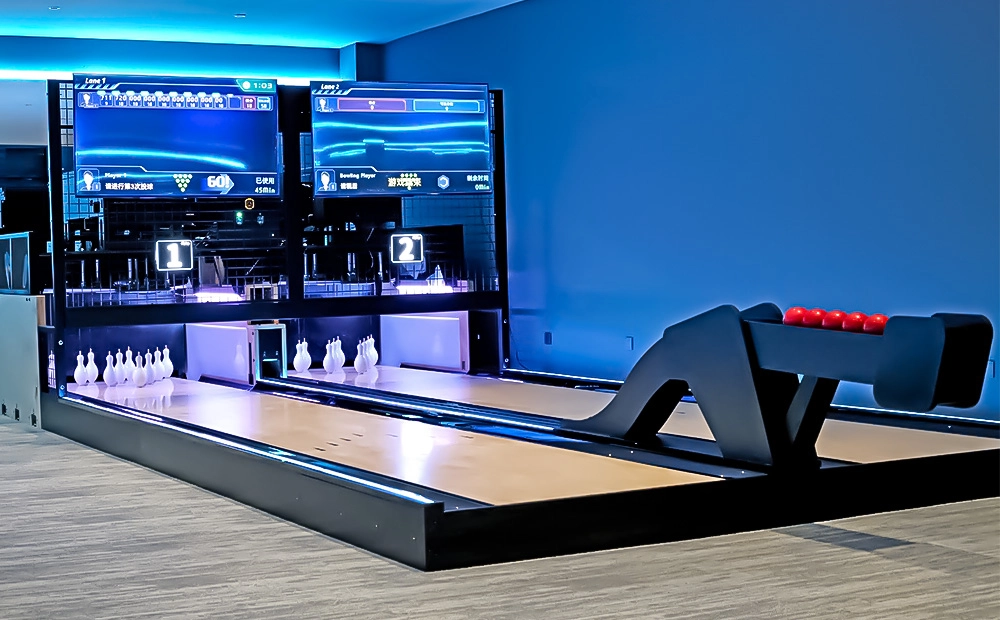
Flying Smart Duckpin Bowling
The innovative design of Flying Smart Duckpin Bowling (FSDB) makes it perfect for places like bars, billiard halls, and game centers. It makes people want to come back more often and spend more money. FSDB is fun and competitive, so it will become a new focus for social activities.
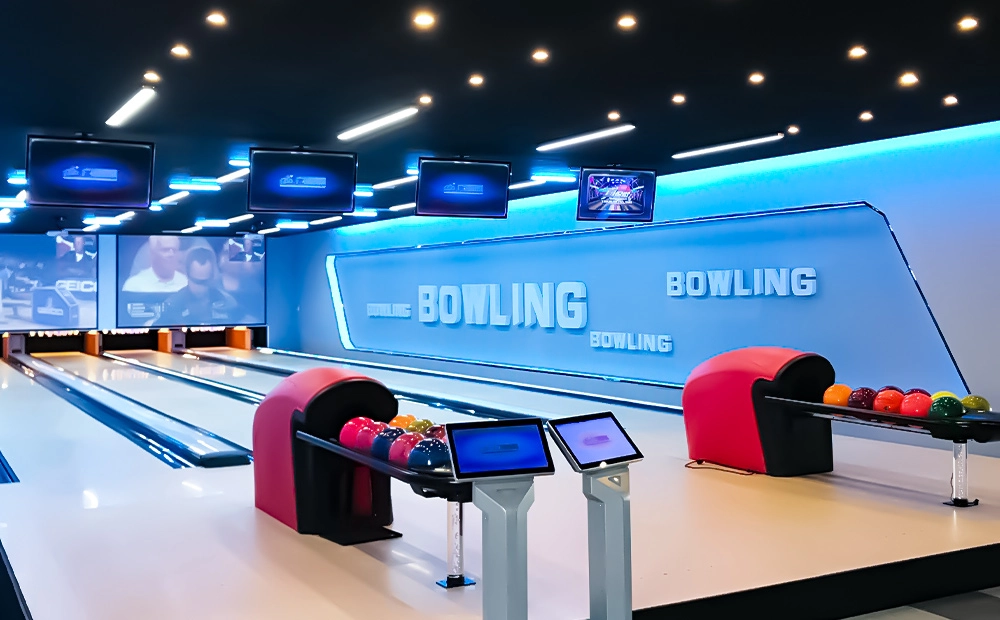
Flying Classic Standard Bowling
Flying Classic Standard Bowling (FCSB) employs the World Standard Competition Scoring System to deliver a more professional bowling experience, enabling bowlers to enjoy a professional-standard match at their convenience.
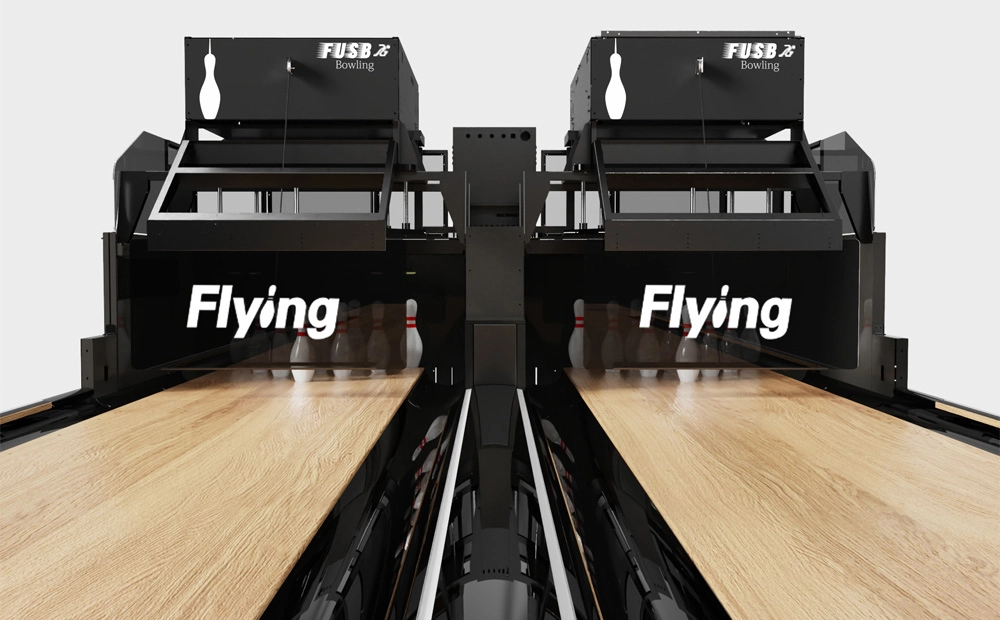
Flying Ultra Standard Bowling
Flying Ultra Standard Bowling (FUSB) Upgraded Version
The string pinsetter uses the latest technology. It offers a more enjoyable bowling experience thanks to its innovative designs and modern technology.
Ready to Build Your Bowling Center?
Share your details, and we’ll provide tailored solutions and expert guidance to help you take your bowling center to the next level.

Professional Bowling Alley Equipment Manufacturer, a one-stop solution provider for bowling alleys.
Facebook
YouTube
Linkedin
Twitter