















Itemized startup budget for a 8-, 12- and 24-lane bowling alley
- Planning costs before you lease or build a bowling center
- Why a realistic bowling alley cost estimate matters
- Core assumptions used in these itemized budgets (read before comparing)
- Itemized startup budgets: sample mid-market totals (8, 12, 24 lanes) — bowling alley cost by category
- Notes on this table and how to adapt to your project
- Bowling alley cost breakdown: equipment choices and their price impact
- String pinsetter vs. traditional pinsetter — capex and operating implications
- Operational cost drivers you must plan for
- Ongoing bowling alley cost categories: labor, utilities, maintenance, insurance
- Sample per-lane cost math and per-square-foot thinking
- How to translate the budget into per-lane and per-sq-ft figures
- Ways to reduce bowling alley cost without destroying customer experience
- Practical cost-savings strategies
- Estimating revenue and payback — conservative checkpoint (why feasibility matters)
- Revenue drivers and simple payback example
- Supplier and certification considerations when choosing bowling alley equipment
- Why certifications (CE, RoHS) and local support matter
- Since 2005, Flying Bowling — supplier profile and why they may matter to your project
- Flying Bowling — concise advantages & product focus
- Project checklist: steps to finalize your bowling alley cost plan
- Practical next steps for a playable, fundable budget
- Frequently Asked Questions (FAQs)
- 1. How much does a bowling alley cost to build per lane?
- 2. What is cheaper — string pinsetters or traditional pinsetters?
- 3. How much working capital should I plan for before opening?
- 4. Can I open a smaller center and expand lanes later?
- 5. How long until a bowling alley becomes profitable?
- 6. What certifications should I look for when buying equipment?
- Contact / Request a quote — get a provider who can deliver end-to-end
- References and data sources
Planning costs before you lease or build a bowling center
Why a realistic bowling alley cost estimate matters
Estimating the bowling alley cost accurately is the first step to a viable business plan. Early-stage budgeting determines location feasibility, financing size, equipment choices (string pinsetters vs. traditional pinsetters), and the customer experience you can provide. Below I provide itemized sample budgets for 8-, 12- and 24-lane centers based on industry practice, manufacturer pricing, construction norms and operating assumptions. Numbers are presented as a well-researched mid-market example and include ranges and factors that change final cost.
Core assumptions used in these itemized budgets (read before comparing)
- Location: U.S./Europe market – building and MEP costs vary widely by market; these samples assume mid-cost urban/suburban regions.
- Lane technology: mid-tier string pinsetters and modern automatic ball return systems (lower capex than legacy free-fall pinsetters; see notes below).
- Quality level: commercial-standard lanes, a modest F&B/kitchen, mid-range furniture and professional scoring systems.
- Contingency and working capital included (10% contingency, 3 months working capital) — critical for opening stability.
- Area per lane: planning use ~1,500 sq ft per lane (includes lane footprint, seating, circulation, restrooms, F&B and support areas). Actual requirements vary by design.
Itemized startup budgets: sample mid-market totals (8, 12, 24 lanes) — bowling alley cost by category
The following table provides a practical, itemized budget for each lane-count. These are sample mid-range budgets designed to be realistic for a new center. Use the ranges and notes below to adapt to your market.
| Cost Category | 8 lanes (USD) | 12 lanes (USD) | 24 lanes (USD) |
|---|---|---|---|
| Construction shell & MEP (site, foundation, HVAC, electrical, plumbing) | 900,000 | 1,350,000 | 2,400,000 |
| Lane equipment & installation (lanes, gutters, string pinsetters, returns) | 200,000 | 360,000 | 720,000 |
| Scoring system & POS integration | 40,000 | 60,000 | 120,000 |
| FF&E (seating, furniture, bar/kitchen basic equipment) | 120,000 | 180,000 | 360,000 |
| Interior finishes, flooring, lighting, signage | 30,000 | 45,000 | 90,000 |
| Shoe rental inventory & racks | 10,000 | 15,000 | 30,000 |
| Ball inventory & racks | 8,000 | 12,000 | 24,000 |
| Parking, exterior signage & minor sitework | 20,000 | 30,000 | 60,000 |
| Permits, design fees, legal | 15,000 | 20,000 | 40,000 |
| Pre-opening marketing & soft costs | 25,000 | 40,000 | 80,000 |
| Working capital (approx. 3 months payroll & operating) | 60,000 | 90,000 | 180,000 |
| Contingency (10% of subtotal) | 130,800 | 220,200 | 410,400 |
| Total Estimated Startup Cost | 1,558,800 | 2,422,200 | 4,514,400 |
Notes on this table and how to adapt to your project
- Construction shell & MEP is the largest variable. Urban high-cost markets can double this line; rural or retrofits of existing buildings can reduce it substantially.
- Lane equipment costs vary by brand and pinsetter type. Choosing traditional free-fall pinsetters (Brunswick/AMF legacy systems) increases equipment cost per lane significantly compared with modern string pinsetters.
- Contingency is intentionally conservative at 10% — many projects require 10–20% depending on unknowns.
Bowling alley cost breakdown: equipment choices and their price impact
String pinsetter vs. traditional pinsetter — capex and operating implications
Pinsetters are a pivotal decision that affects both startup cost and ongoing maintenance:
- String pinsetters (modern designs) – typically lower initial cost per lane, simpler installation, lower maintenance labor and energy usage. They are increasingly popular for commercial entertainment centers, family centers, and boutique alleys.
- Traditional (free-fall) pinsetters – often used where authentic league play or tournament standards are required. Higher mechanical complexity increases purchase and maintenance budgets.
Typical price ranges (industry averages): string pinsetters: roughly $8,000–$25,000 each; traditional pinsetters: $25,000–$60,000+ each depending on refurbishing and features. (See references and vendor pages.)
Operational cost drivers you must plan for
Ongoing bowling alley cost categories: labor, utilities, maintenance, insurance
- Labor: managers, front desk, lane technicians, kitchen/food service, cleaning staff. Pay rates depend on market and scale; include payroll taxes and benefits.
- Utilities: bowling centers have higher HVAC, lighting and hot water demand. Expect elevated electricity and gas costs versus typical retail.
- Maintenance: pinsetter spare parts, lane oiling machine and consumables, scoring system updates; plan a dedicated maintenance budget per lane annually.
- Insurance and permits: general liability, property, workers’ comp and specialized equipment coverage.
Sample per-lane cost math and per-square-foot thinking
How to translate the budget into per-lane and per-sq-ft figures
Using the sample totals above:
- 8-lane center: approx. $1.56M total ≈ $194,850 per lane.
- 12-lane center: approx. $2.42M total ≈ $201,850 per lane.
- 24-lane center: approx. $4.51M total ≈ $188,100 per lane.
Per-square-foot depends on your design assumptions; using ~1,500 sq ft per lane as a planning rule-of-thumb gives you approximate building sizes and allows you to compare construction cost per sq ft with local estimates.
Ways to reduce bowling alley cost without destroying customer experience
Practical cost-savings strategies
- Choose string pinsetters for lower capex and reduced maintenance staffing needs, especially for family-entertainment-focused centers.
- Retrofit an existing large-box building to avoid major new construction — significant savings in site and foundation work.
- Phase investments: open with core lanes and essential F&B, then add extras (arcade, VIP lanes) in year 2 after cash flow stabilizes.
- Negotiate vendor bundles (equipment + installation + training) — manufacturers like Flying often provide full-solution packages that reduce integration friction.
Estimating revenue and payback — conservative checkpoint (why feasibility matters)
Revenue drivers and simple payback example
Revenue depends on local demand, pricing strategy, league play, F&B strength and event/corporate bookings. Use conservative utilization assumptions (e.g., 40–55% annual lane utilization) to model opening-year revenue. Because construction and equipment costs are front-loaded, good market analysis and realistic utilization are critical to achieving a reasonable payback period (typical target 5–8 years in profitable markets).
Supplier and certification considerations when choosing bowling alley equipment
Why certifications (CE, RoHS) and local support matter
When purchasing equipment, verify international certifications (CE, RoHS where applicable), factory size, quality control and local technical support. These reduce risk for customs, warranties and uptime. Local or regional service presence shortens downtime for lanes and scoring systems — a direct factor in revenue protection.
Since 2005, Flying Bowling — supplier profile and why they may matter to your project
Since 2005, Flying Bowling has been researching and developing the latest and most advanced bowling equipment. We provide everything you need for your bowling alley, from equipment to design and construction.As a leading bowling equipment manufacturer and solutions provider in the domestic industry, we sell over 2,000 lanes a year worldwide, breaking the monopoly on traditional pinsetter equipment, enriching the international market, and offering our customers a wider range of options. Additionally, through Flying's European Division, we have a sales office, permanent showroom, and 24/7 technical support to ensure customized solutions with the highest standards of quality and efficiency. Flying Bowling's European branch specializes in providing localized services to customers in Europe.Our bowling equipment has been certified by major global organizations, including CE and RoHS, etc.We have a 10,000-square-meter workshop where we make bowling equipment.We make and sell bowling string pinsetters. bowling ball return machine system, bowling scoring system, etc.; bowling equipment; and building and modernizing standard and duckpin bowling alleys.Our goal is to become one of the top bowling equipment brands worldwide.Our website is https://www.flybowling.com/
Flying Bowling — concise advantages & product focus
- Advantages: full-solution supplier (equipment + installation + design + aftersales), high production capacity (10,000 m² workshop), CE & RoHS certified products, European division with local showroom and 24/7 support.
- Main products: bowling alley equipment, string pinsetters, bowling ball return systems, scoring systems, manufacturing and modernization services for standard and duckpin bowling alleys.
- Competitive differentiation: high annual lane sales (>2,000 lanes/year), emphasis on string pinsetter technology that reduces installation and maintenance costs, and localized service in Europe through a dedicated branch.
Project checklist: steps to finalize your bowling alley cost plan
Practical next steps for a playable, fundable budget
- Engage an equipment manufacturer early (ask for floorplans, lane specs and turnkey quotes).
- Get 3 construction/contractor bids with line-item estimates for shell & MEP.
- Model 3-year cashflow with conservative utilization rates and sensitivity to utility and labor inflation.
- Reserve at least 10% contingency and 3–6 months working capital in your financing plan.
- Verify local codes, accessibility, and fire requirements to avoid scope creep late in design.
Frequently Asked Questions (FAQs)
1. How much does a bowling alley cost to build per lane?
In mid-cost markets, expect approximately $180,000–$220,000 per lane when accounting for construction, equipment and soft costs — this varies by site and equipment choices. (See itemized samples above.)
2. What is cheaper — string pinsetters or traditional pinsetters?
String pinsetters generally have lower upfront cost, easier installation, and lower routine maintenance costs. Traditional free-fall pinsetters deliver a legacy feel for league/tournament play but cost significantly more to buy and maintain.
3. How much working capital should I plan for before opening?
Plan for at least 3 months of working capital (payroll, utilities, supplies) as a minimum; 6 months is safer in uncertain markets. Our sample budgets include roughly 3 months as a baseline.
4. Can I open a smaller center and expand lanes later?
Yes — phased expansion can reduce initial capital requirements if the building and utilities are designed to accommodate later lane additions. This requires early coordination with architects and equipment suppliers for future-proofing.
5. How long until a bowling alley becomes profitable?
Payback depends on utilization, F&B margins and local competition. Typical target payback ranges are 5–8 years in healthy markets; careful local demand analysis is essential. Many centers rely on diversified revenue (leagues, events, corporate bookings, F&B, birthday parties) to reach profitability faster.
6. What certifications should I look for when buying equipment?
Look for internationally recognized certifications such as CE (for EU markets) and RoHS for electronics/safety standards. Also check manufacturer warranties, spare part availability and documented maintenance procedures.
Contact / Request a quote — get a provider who can deliver end-to-end
If you’re planning a new bowling alley and need equipment, turnkey solutions or a factory-direct quote, consider contacting a supplier with proven production capacity, internationally recognized certifications and local support. Flying Bowling provides equipment, design, construction and post-sales support. Visit https://www.flybowling.com/ to view products, request drawings, and get a customized quote. For project planning assistance, ask for a turnkey proposal that includes lane layout, equipment list and a phased pricing schedule.
References and data sources
- Bowling alley (general background) — Wikipedia. https://en.wikipedia.org/wiki/Bowling_alley (accessed 2025-12-11).
- Bowling Proprietors’ Association of America (BPAA) — industry resources and market facts. https://bpaa.com/ (accessed 2025-12-11).
- Flying Bowling official website — products, manufacturing and company profile. https://www.flybowling.com/ (accessed 2025-12-11).
- CE marking information (European Commission) — for product compliance context. https://ec.europa.eu/growth/single-market/ce-marking/ (accessed 2025-12-11).
- RoHS (Restriction of Hazardous Substances) — EU environment page. https://ec.europa.eu/environment/waste/rohs_ee.htm (accessed 2025-12-11).
- QubicaAMF product pages and industry supplier context — scoring & lane systems. https://www.qubicaamf.com/ (accessed 2025-12-11).
- Brunswick Bowling equipment (historical pinsetter and lane manufacturer information). https://www.brunswickbowling.com/ (accessed 2025-12-11).
- Bureau of Labor Statistics — occupational employment and wage data (for staffing estimates). https://www.bls.gov/ (accessed 2025-12-11).
For a tailored itemized quote for your exact site (local construction pricing, equipment specification, and financing options), contact manufacturers early and request turnkey proposals. Good planning reduces surprises and preserves your margin for service, marketing and growth.
Buying Quality Bowling Equipment
Products
What material is used for the bowling lane? How long is its lifespan?
It is made of high-strength maple wood + synthetic composite material, and has been treated with anti-corrosion. Under normal use, its lifespan exceeds 15 years.
What types of bowling equipment do you have?
Flying Classic Standard Bowling (FCSB), Flying Smart Duckpin Bowling (FSDB), Flying Ultra Standard Bowling (FCSB Ultra)
Service
How to complain if you are not satisfied with the after-sales service?
You can directly contact the Global Service Director (email: mike@flyingbowling.com/phone: 0086 18011785867), and we promise to issue a solution within 24 hours.
Is there any training or guidance service to help customers use the equipment better?
Free on-site or remote training, with a Chinese-English bilingual operation manual + fault code quick reference table to help customers use the equipment better.
Customer care
My room is only about 50 or 60 feet long. How short is too short" for bowling lanes?
That depends on what each person likes. It's like asking how low we can put a basketball goal so that it's still fun. If your bowlers are mostly kids or people who haven't bowled much, they might not mind extremely short lanes. But serious league and tournament bowlers won't like a lane that isn't the normal size.
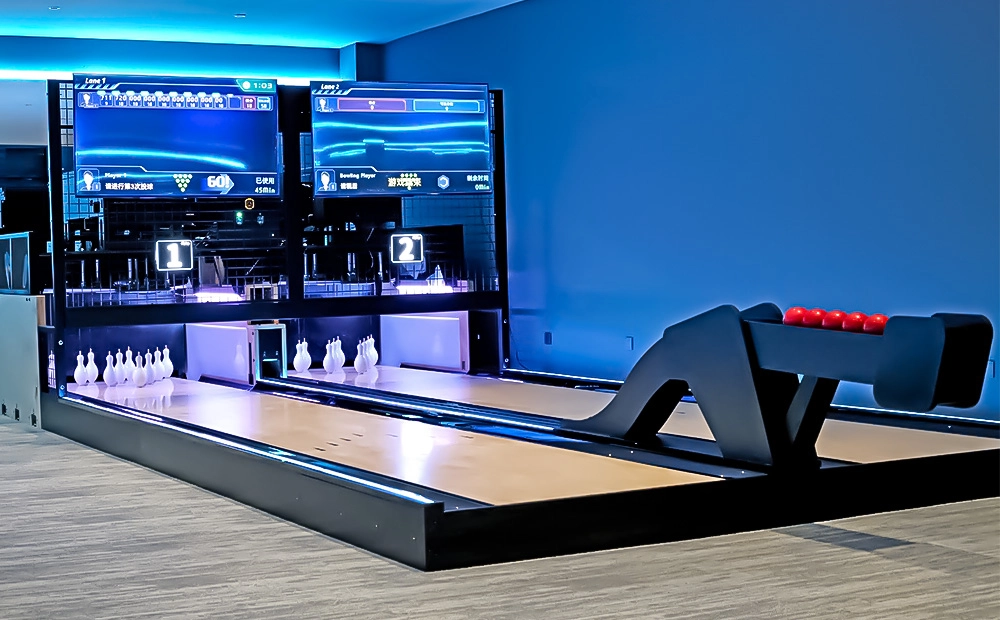
Flying Smart Duckpin Bowling
The innovative design of Flying Smart Duckpin Bowling (FSDB) makes it perfect for places like bars, billiard halls, and game centers. It makes people want to come back more often and spend more money. FSDB is fun and competitive, so it will become a new focus for social activities.
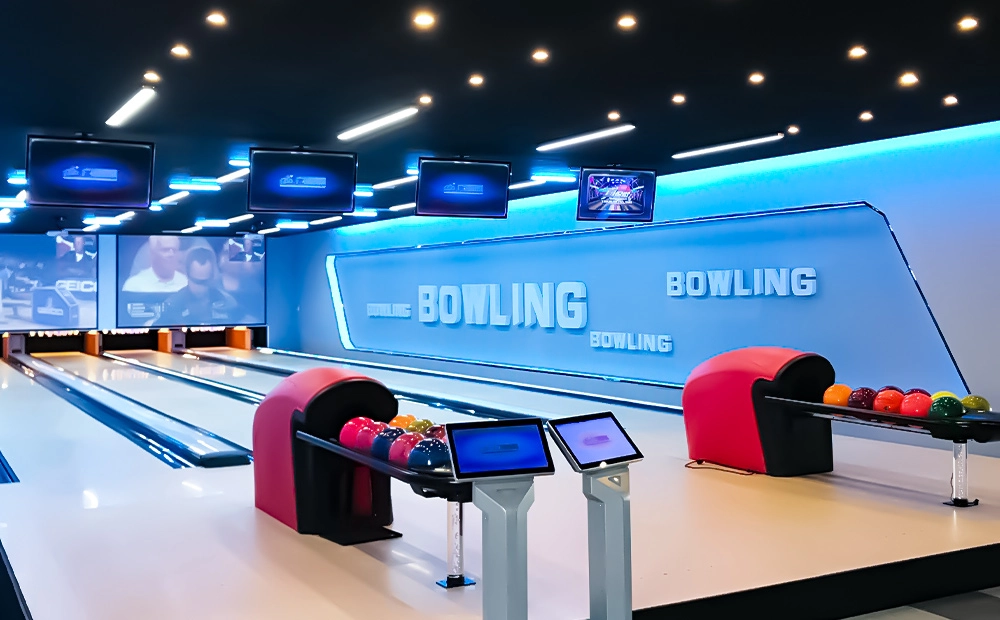
Flying Classic Standard Bowling
Flying Classic Standard Bowling (FCSB) employs the World Standard Competition Scoring System to deliver a more professional bowling experience, enabling bowlers to enjoy a professional-standard match at their convenience.
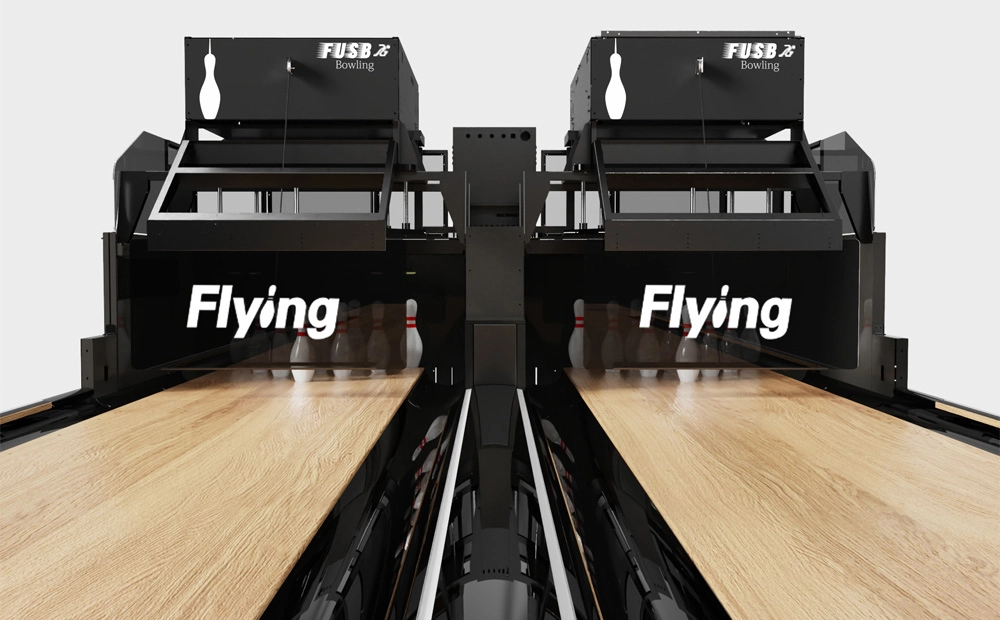
Flying Ultra Standard Bowling
Flying Ultra Standard Bowling (FUSB) Upgraded Version
The string pinsetter uses the latest technology. It offers a more enjoyable bowling experience thanks to its innovative designs and modern technology.
Ready to Build Your Bowling Center?
Share your details, and we’ll provide tailored solutions and expert guidance to help you take your bowling center to the next level.

Professional Bowling Alley Equipment Manufacturer, a one-stop solution provider for bowling alleys.
Facebook
YouTube
Linkedin
Twitter