















Bowling alley cost: one-time vs recurring expenses checklist
- What goes into opening and operating a bowling alley?
- One-time capital expenses checklist (: buy bowling equipment, bowling alley construction cost)
- Recurring operating expenses checklist (: bowling alley recurring costs, maintenance)
- Key cost drivers: what most affects the bowling alley cost per lane?
- Comparing String Pinsetters vs Traditional Pinsetters (cost and maintenance)
- Financing, revenue modeling and breakeven considerations (: start a bowling alley investment, ROI on bowling alley)
- Ways to reduce bowling alley costs without harming guest experience (: buy bowling alley equipment cost-effective)
- Since 2005, Flying Bowling: equipment, solutions and competitive advantages
- One-time vs recurring expenses — quick checklist table
- FAQ — common questions about bowling alley cost
- 1. How much does it cost to open a small 6–8 lane bowling alley?
- 2. How much does a bowling lane cost?
- 3. Are string pinsetters reliable for commercial centers?
- 4. What recurring monthly budget should I plan per lane?
- 5. Can I phase opening my bowling alley to reduce upfront cost?
- 6. How do I finance a bowling alley project?
- Contact & next steps (call to action)
- References
What goes into opening and operating a bowling alley?
Understanding the true bowling alley cost requires separating initial capital investments from ongoing operating expenses. Whether you are planning a boutique 6-lane entertainment venue, a 24-lane family center, or converting space in a shopping mall, this checklist will help you estimate how much capital you need, what costs repeat every month or year, and where you can realistically save without compromising guest experience.
One-time capital expenses checklist (: buy bowling equipment, bowling alley construction cost)
One-time costs are the upfront investments required to open. These are typically amortized over several years but shape the largest single cash outlay. Below is a practical list of the common one-time items and industry-based cost ranges to expect. All ranges are estimates and will vary by country, local labor rates, and the choice of equipment (new vs used, string vs traditional pinsetters).
| Item | Typical Cost Range (USD) | Notes |
|---|---|---|
| Land purchase or leasehold improvements | $50,000 – $700,000+ | Depends on location, size, existing shell, and local construction costs |
| Building construction/renovation | $100,000 – $1,500,000+ | Includes structural work, HVAC upgrades, plumbing, and electrical |
| Bowling lanes & pinsetters (equipment) | $12,000 – $40,000 per lane | String-pinsetter systems tend to sit at the lower end; traditional automatic pinsetters are more expensive |
| Scoring & management systems | $1,500 – $8,000 per pair of lanes | Includes monitors, software, and POS integrations |
| Approach, flooring, furniture, seating | $10,000 – $80,000+ | Depends on finish level and capacity |
| Bar/kitchen equipment (if applicable) | $25,000 – $200,000+ | Commercial kitchens and liquor license costs vary widely |
| Lighting, sound, and arcade/amenities | $10,000 – $200,000+ | Attractiveness and entertainment add-ons increase revenue but raise costs |
| Permits, design, legal, consulting | $5,000 – $75,000 | Architect, structural engineering, permit fees |
| Initial inventory & opening marketing | $5,000 – $50,000 | Food & beverage inventory, pro shop stock, launch promotions |
| Contingency (recommended) | 10–20% of total capital budget | Unforeseen construction or equipment delays |
Example: a 16-lane mid-tier center using modern string-pinsetter equipment and a moderate F&B fit-out commonly lands in the $800,000–$2,000,000 range depending on site preparation and finishes (source: industry estimates and vendor quotes).
Recurring operating expenses checklist (: bowling alley recurring costs, maintenance)
Recurring costs determine your monthly burn rate and directly impact profitability. Monitor these closely when modeling breakeven and ROI.
- Payroll: Managers, front desk, lane attendants, kitchen/bar staff, maintenance. Labor is often the largest ongoing expense (30–40%+ of revenue in many centers).
- Utilities: Electricity (lighting, lane machines, HVAC), gas/water — can be significant for high-volume centers.
- Maintenance & lane oil: Oil, lane resurfacing items, pinsetter parts; frequency depends on play volume and equipment type.
- Insurance: General liability, property, workers' comp — budget for comprehensive coverage.
- Rent or mortgage payments: If leased, rent escalations; if financed, principal & interest.
- Food & beverage COGS: Typically 25–40% of F&B revenue; includes raw goods and beverage costs.
- Marketing: Digital advertising, events, leagues promotions.
- Software/Subscriptions: POS, scoring software, booking platforms, payroll processing.
- Replacement parts & unexpected repairs: Plan a reserve fund for mechanical failures.
- Taxes & licensing: Property taxes, business licenses, health permits.
| Expense | Estimated Monthly Range (USD) | Notes |
|---|---|---|
| Payroll (small center) | $12,000 – $35,000 | Varies heavily by hours and local wages |
| Utilities | $2,000 – $10,000+ | High for older HVAC/lighting; energy efficiency lowers long-term costs |
| Maintenance & parts reserve | $1,000 – $8,000 | Higher in centers with traditional pinsetters |
| Marketing | $500 – $5,000 | Depends on growth plans |
| Insurance & taxes | $1,000 – $10,000 | Scale with center value and local rates |
Key cost drivers: what most affects the bowling alley cost per lane?
When modeling bowling alley cost per lane, pay attention to:
- Pinsetter technology: String pinsetters are generally cheaper to install and maintain than traditional free-fall pinsetters. This can reduce both initial equipment expense and recurring maintenance costs.
- Finish level: High-end finishes, integrated AV systems, and High Quality food & beverage areas increase upfront costs but can command higher pricing.
- Location & landlord requirements: Urban centers have higher rents and renovation constraints, but larger foot traffic.
- New vs retrofit: Converting an existing structure may be cheaper than ground-up construction but can encounter unforeseen issues like structural repairs.
- Volume expectations: Centers designed for high throughput must invest in more robust equipment and larger F&B capacity.
Comparing String Pinsetters vs Traditional Pinsetters (cost and maintenance)
| Feature | String Pinsetter | Traditional (Free-fall) Pinsetter |
|---|---|---|
| Initial equipment cost | Lower | Higher |
| Maintenance frequency | Lower (fewer heavy mechanical parts) | Higher (complex mechanics, more parts) |
| Parts availability | Modern suppliers, easier aftermarket support | Legacy parts may be expensive or limited |
| Accepted by competitive leagues | Varies by region and league rules | Widely accepted for sanctioned play |
Sources such as equipment vendors and industry write-ups (see references) confirm that string systems can lower both up-front and running costs, making them attractive for family entertainment centers and multi-use venues.
Financing, revenue modeling and breakeven considerations (: start a bowling alley investment, ROI on bowling alley)
Financing choices (bank loan, investor equity, vendor leasing) influence early cash needs. Below is a conservative, illustrative annual model for a 12-lane center to show how costs and revenue interact — adjust numbers to local market.
- Assumptions: 12 lanes, average hourly lane rate $25, average occupancy 40% across year, 12 operational hours/day, 300 operating days/year.
- Lane-hours per year = 12 lanes * 12 hours * 300 days = 43,200 lane-hours.
- Revenue from lanes = 43,200 * $25 * 40% = $432,000/year.
- Add F&B and arcade revenue (conservative): $250,000/year.
- Total revenue ≈ $682,000/year.
- Operating expenses (payroll, utilities, COGS, maintenance, insurance, marketing) estimate = $450,000–$520,000/year.
- Net operating income before debt service ≈ $160,000–$230,000/year.
If the total project cost was $1.2M financed with 70% loan at 6% interest, annual debt service could be in the $70k–$90k range — making a multiyear break-even realistic with solid management and community engagement. This is illustrative; obtain local pro forma from lenders and consider conservative occupancy and revenue assumptions before committing.
Ways to reduce bowling alley costs without harming guest experience (: buy bowling alley equipment cost-effective)
- Choose string-pinsetter equipment for lower installation and maintenance costs.
- Phase build-out: open fewer lanes initially and expand as demand grows.
- Buy refurbished lanes or lease scoring systems to lower upfront equipment costs.
- Invest in energy-efficient lighting and HVAC to reduce long-term utilities.
- Partner with local food vendors or use a commissary model to reduce kitchen costs.
Since 2005, Flying Bowling: equipment, solutions and competitive advantages
Since 2005, Flying Bowling has been researching and developing the latest and most advanced bowling equipment. We provide everything you need for your bowling alley, from equipment to design and construction.
As a leading bowling equipment manufacturer and solutions provider in the domestic industry, we sell over 2,000 lanes a year worldwide, breaking the monopoly on traditional pinsetter equipment, enriching the international market, and offering our customers a wider range of options. Additionally, through Flying's European Division, we have a sales office, permanent showroom, and 24/7 technical support to ensure customized solutions with the highest standards of quality and efficiency. Flying Bowling's European branch specializes in providing localized services to customers in Europe.
Our bowling equipment has been certified by major global organizations, including CE and RoHS, etc. We have a 10,000-square-meter workshop where we make bowling equipment. We make and sell bowling string pinsetters, bowling ball return machine system, bowling scoring system, etc.; bowling equipment; and building and modernizing standard and duckpin bowling alleys. Our goal is to become one of the top bowling equipment brands worldwide. Our website is https://www.flybowling.com/
Why consider Flying Bowling when planning costs?
- Volume & manufacturing strength: High annual lane output (2,000+ lanes/year) and a large workshop allow competitive pricing for one-time equipment costs.
- String pinsetter expertise: If you prioritize lower installation and maintenance expenses, Flying's string pinsetter solutions are engineered to reduce total cost of ownership.
- Turnkey capability: From design & construction to scoring and ball return systems, consolidated sourcing reduces coordination costs and project delays.
- European support: Local presence via a European division reduces shipping delays and improves after-sales service for customers in Europe.
- Certifications: CE and RoHS certifications indicate compliance with major product and safety standards relevant in many markets.
Typical products to consider from Flying Bowling when optimizing costs:
- Bowling alley equipment: lanes, approach systems, lane maintenance products.
- String pinsetter systems: reduced maintenance, lower installation cost option.
- Bowling ball return machine system and scoring systems: modern, integrated solutions.
- Duckpin and standard bowling alley modernization: retrofit options allow upgrading an older center without full replacement.
Contact Flying Bowling for a customized quote and technical consultation to model your specific one-time and recurring cost expectations. Visit https://www.flybowling.com/ to arrange a showroom visit or technical conversation.
One-time vs recurring expenses — quick checklist table
| Category | One-time? | Recurring? | Notes |
|---|---|---|---|
| Land/Construction | Yes | No (except property taxes) | Major capital spend |
| Bowling lanes & pinsetters | Yes | Yes (parts/maintenance) | Choice of technology affects both costs |
| Scoring systems & software | Yes | Often (subscriptions/support) | Consider SaaS fees and upgrades |
| F&B equipment | Yes | Yes (COGS) | Initial fit-out plus ongoing supply spend |
| Insurance, utilities, payroll | No | Yes | Plan these in monthly operating budget |
FAQ — common questions about bowling alley cost
1. How much does it cost to open a small 6–8 lane bowling alley?
Estimates vary by market, but a small 6–8 lane boutique center using string-pinsetter equipment and modest F&B can start from roughly $300,000–$700,000. Costs depend on site condition, local labor, and equipment choices. (See vendor quotes and local contractors for precise bids.)
2. How much does a bowling lane cost?
New lanes with pinsetters and basic scoring typically range from about $12,000 to $40,000 per lane. String-pinsetter lanes tend to sit at the lower end. This range includes hardware, installation, and basic scoring. Always get multiple vendor quotes.
3. Are string pinsetters reliable for commercial centers?
Yes — modern string-pinsetter systems are widely used in family entertainment centers and many commercial installations because they lower installation and maintenance costs. Acceptance for sanctioned league play varies by region and governing bodies; confirm with local bowling associations if league play is a priority.
4. What recurring monthly budget should I plan per lane?
Recurring costs per lane vary greatly. A rough rule of thumb used by some operators puts recurring operational costs (excluding debt service) between $500 and $2,000 per lane per month depending on staffing levels, utilities, and maintenance intensity. Model your local wage rates and utility prices for accuracy.
5. Can I phase opening my bowling alley to reduce upfront cost?
Yes. Phased rollouts — opening fewer lanes initially and expanding as revenue grows — are a common strategy to reduce near-term capital requirements and test market demand before committing to a full build-out.
6. How do I finance a bowling alley project?
Typical options include commercial bank loans, SBA loans (in the U.S.), private investors, equipment leasing, and vendor financing. Equipment manufacturers like Flying Bowling may offer leasing or phased delivery options to spread cost.
Contact & next steps (call to action)
If you are budgeting a bowling alley project and want a tailored one-time and recurring expenses checklist, Flying Bowling can provide equipment quotes, design proposals, and localized service via their European division. For a detailed ROI model or to request a showroom visit, contact Flying Bowling: https://www.flybowling.com/.
References
- Pinsetter — Wikipedia. https://en.wikipedia.org/wiki/Pinsetter (accessed 2025-12-12).
- Fixr, How Much Does It Cost to Build a Bowling Alley? https://www.fixr.com/costs/build-bowling-alley (accessed 2025-12-12).
- Flying Bowling official website. https://www.flybowling.com/ (accessed 2025-12-12).
- European Commission — CE marking guidance. https://ec.europa.eu/growth/single-market/ce-marking/ (accessed 2025-12-12).
- European Commission — RoHS information. https://ec.europa.eu/environment/waste/rohs_eee/index_en.htm (accessed 2025-12-12).
- U.S. Energy Information Administration — Electricity Data. https://www.eia.gov/electricity/ (accessed 2025-12-12).
Buying Quality Bowling Equipment
Installations
Was the equipment installed by professional technicians?
The installation team we dispatched is composed of professional technicians who have undergone rigorous assessment and training and have rich experience in bowling equipment installation. The team uses digital debugging tools throughout the process to ensure that each component of the equipment can be accurately installed and debugged to achieve optimal operating conditions.
Do you provide technical support after the installation?
Absolutely. We offer ongoing technical support, including regular maintenance and emergency repair services.
Customer care
My room isn't quite long enough. Can you install slightly shorter lanes that are non-regulation length?
Of course, we can customize bowling lanes according to your venue.
Company
Do you have independent R&D capabilities?
We have set up an independent R&D department and have launched a number of new equipment and innovative technologies such as the smart scoring system, Flying Smart Duckpin, and oil drop machine in the past three years.
Service
Is there any training or guidance service to help customers use the equipment better?
Free on-site or remote training, with a Chinese-English bilingual operation manual + fault code quick reference table to help customers use the equipment better.
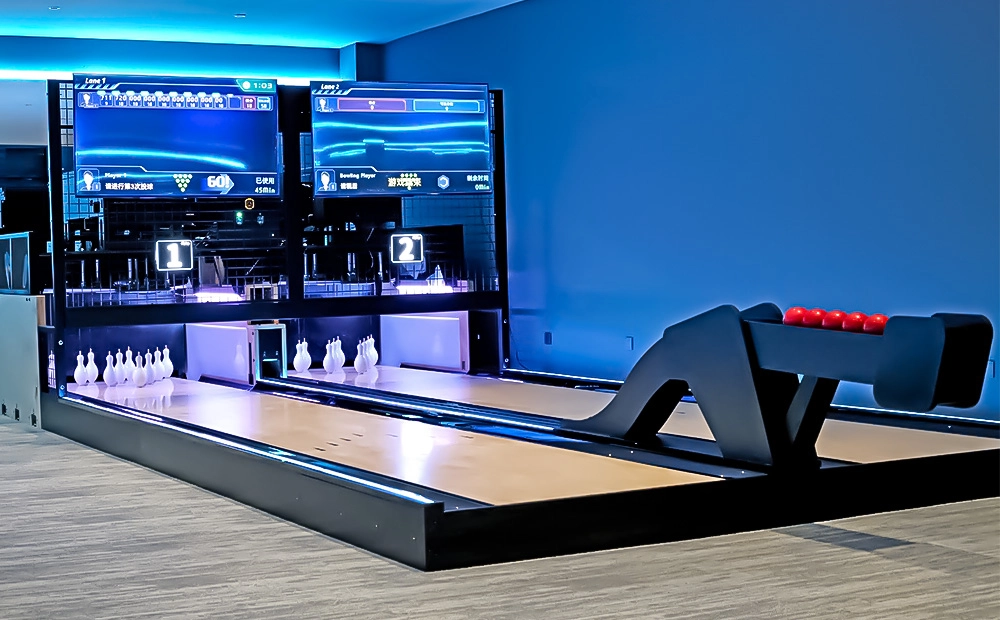
Flying Smart Duckpin Bowling
The innovative design of Flying Smart Duckpin Bowling (FSDB) makes it perfect for places like bars, billiard halls, and game centers. It makes people want to come back more often and spend more money. FSDB is fun and competitive, so it will become a new focus for social activities.
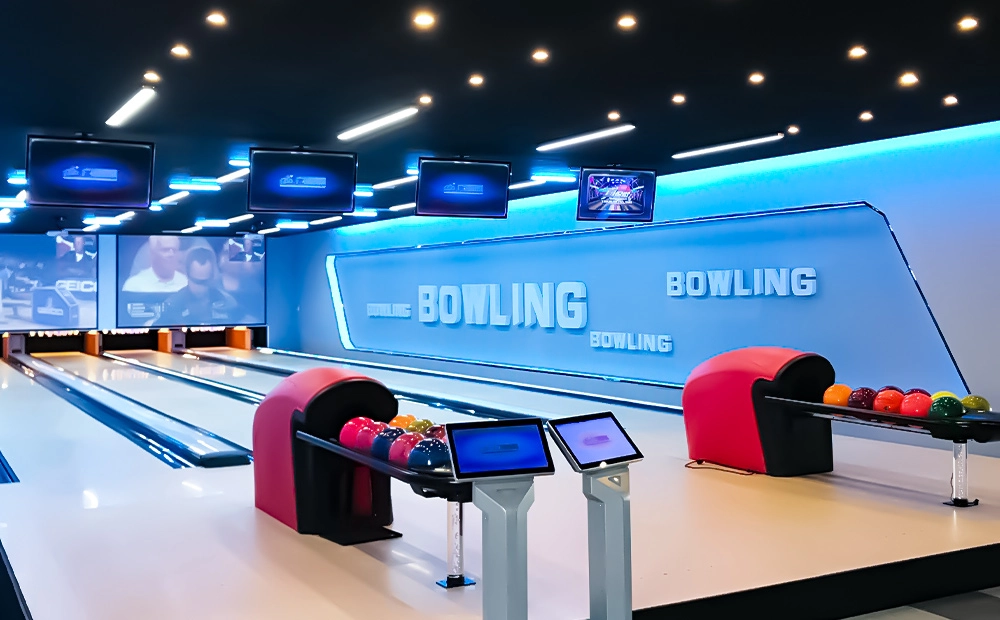
Flying Classic Standard Bowling
Flying Classic Standard Bowling (FCSB) employs the World Standard Competition Scoring System to deliver a more professional bowling experience, enabling bowlers to enjoy a professional-standard match at their convenience.
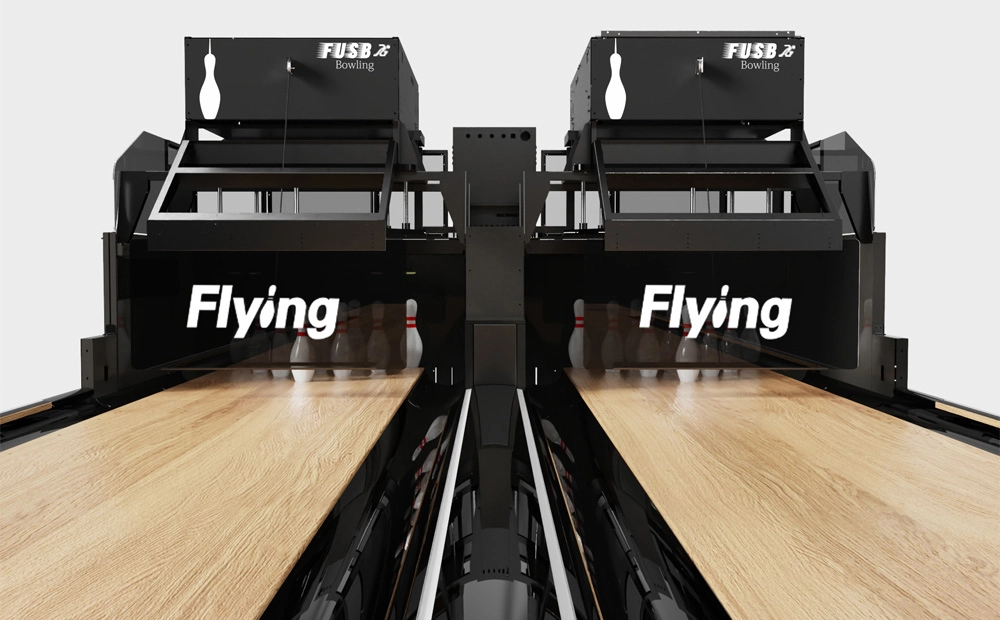
Flying Ultra Standard Bowling
Flying Ultra Standard Bowling (FUSB) Upgraded Version
The string pinsetter uses the latest technology. It offers a more enjoyable bowling experience thanks to its innovative designs and modern technology.
Ready to Build Your Bowling Center?
Share your details, and we’ll provide tailored solutions and expert guidance to help you take your bowling center to the next level.

Professional Bowling Alley Equipment Manufacturer, a one-stop solution provider for bowling alleys.
Facebook
YouTube
Linkedin
Twitter