















Detailed pro forma: first-year costs and cashflow for a bowling alley
- How to Budget Your First-Year Bowling Alley Startup — bowling alley cost
- 1. Quick overview of typical bowling alley cost categories — bowling alley cost
- Why CAPEX dominates early bowling alley cost
- 2. Sample detailed pro forma for year 1 (12 lanes) — bowling alley cost
- 3. First-year operating assumptions and revenue drivers — bowling alley cost
- 4. First-year operating expenses breakdown — bowling alley cost
- 5. Cashflow & break-even analysis — bowling alley cost
- 6. Sensitivity analysis — key levers for reducing bowling alley cost and improving cashflow
- 7. Equipment and supplier comparison impacting bowling alley cost — bowling alley cost
- 8. Practical steps to reduce bowling alley cost without degrading experience — bowling alley cost
- 9. Flying Bowling: supplier strengths that affect your bowling alley cost and ROI — bowling alley cost
- How Flying Bowling reduces your first-year bowling alley cost
- 10. Implementation checklist and timeline to control bowling alley cost — bowling alley cost
- FAQ — bowling alley cost
- Q1: How much does it cost to open a small 6-lane bowling alley?
- Q2: What is the difference in operating cost between string and mechanical pinsetters?
- Q3: How long does it take to reach break-even?
- Q4: What financing options are commonly used for bowling alley cost?
- Q5: How much should I budget for maintenance and spare parts in year 1?
- Q6: Are there certification or compliance costs I should budget for?
- Contact & next steps — bowling alley cost
- References and authoritative sources
How to Budget Your First-Year Bowling Alley Startup — bowling alley cost
Opening a bowling alley requires a clear, data-driven pro forma that captures both large capital expenses (lanes, pinsetters, kitchen buildout) and the recurring operating costs that determine early cashflow. This article provides a detailed first-year cost and cashflow model for a medium-sized 12-lane bowling alley, explains assumptions, shows levers that materially affect profitability, and offers supplier and product guidance — including turnkey options from industry vendors such as Flying Bowling. Use this as a planning template and adapt numbers to your market, lease terms and business model (recreation-focused, family entertainment center, or league-centric).
1. Quick overview of typical bowling alley cost categories — bowling alley cost
When forecasting first-year expenses, group costs into: startup capital expenditures (CAPEX), one-time pre-opening costs, and recurring operating expenses (OPEX). Each group contains items that vary widely by geography and specification. The major categories typically are:
- CAPEX: lanes & pinsetters, scoring systems, approach & lane installation, ball returns, seating/furniture, bar/kitchen equipment, HVAC upgrades.
- Pre-opening: permits, design & engineering, legal fees, initial inventory (balls, shoes, parts), recruiting, marketing launch.
- OPEX: rent/lease, utilities (lanes and pinsetters consume power), payroll, maintenance & supplies, insurance, marketing, credit card fees, royalties (if franchised).
Why CAPEX dominates early bowling alley cost
For a standard 12-lane facility, CAPEX typically represents 50%–70% of first-year total spend. Lane machinery (pinsetters) and lane surface installation are the most capital-intensive. This makes supplier choice and installation method (traditional pinsetter vs. string pinsetter) one of the single largest decisions affecting first-year cash needs.
2. Sample detailed pro forma for year 1 (12 lanes) — bowling alley cost
Below is a modeled pro forma for a 12-lane center in a mid-size U.S. market. Adjust price points and utilization for your location. Numbers are conservative and include a working capital buffer.
| Line Item | Assumption / Notes | Estimated Cost (USD) |
|---|---|---|
| Leasehold improvements / construction | 4,500–6,500 sq ft buildout, lanes, approach, flooring, lighting | $250,000 |
| Lanes & installation (12 lanes) | Includes lane surfaces, approach, oiling machine | $180,000 |
| Pinsetters (string pinsetter option) | Lower CAPEX and maintenance vs. traditional pinsetters | $120,000 |
| Scoring system & displays | Per-lane scoring, touchscreen consoles, back-of-house software | $36,000 |
| Ball return / rack & shoes inventory | Initial consumables and rental shoes | $30,000 |
| Bar & kitchen equipment | Small commercial kitchen, fryer, cooler, bar setup | $65,000 |
| Furnishings, arcade/party room | Seating, tables, party-room setup | $40,000 |
| HVAC / electrical upgrades | Power for pinsetters, HVAC for public space | $50,000 |
| Permits, design & consultancy | Architect, engineer, permits, fire safety | $25,000 |
| Pre-opening & marketing | Recruiting, soft opening, local marketing | $30,000 |
| Contingency & working capital | 3–6 months operating buffer | $120,000 |
| Total estimated first-year cash required (CAPEX + pre-open + 6 months OPEX buffer) | $946,000 | |
Notes: This model assumes string pinsetters and mid-range finishes. Traditional mechanical pinsetters can add $150k–300k to CAPEX for 12 lanes and typically have higher ongoing maintenance and spare-parts costs.
3. First-year operating assumptions and revenue drivers — bowling alley cost
Revenue is usually split across lane fees (open play), league fees, parties & events, and food & beverage. Below are conservative annual revenue assumptions used in the sample pro forma.
| Revenue Stream | Assumption | Annual Revenue |
|---|---|---|
| Lane fees (open play) | Average $30 per lane-hour, 12 lanes, 10 operational hrs/day, 300 days/yr, 50% average occupancy | $648,000 |
| League play & events | Monday–Thursday evening league blocks; average $12k/mo | $144,000 |
| Parties & corporate events | Party packages, 4 parties/week avg | $120,000 |
| Food & beverage (including bar) | Average $12 spend per guest, cross-sell on lane users | $360,000 |
| Pro shop & retail | Balls, shoes, accessories | $36,000 |
| Total Annual Revenue | $1,308,000 |
These revenue numbers assume a mixed entertainment model. Purely league-focused centers will have different seasonality and margins.
4. First-year operating expenses breakdown — bowling alley cost
Estimated OPEX for year 1 using conservative assumptions:
| Expense | Assumption | Annual Cost |
|---|---|---|
| Rent / property lease | $12/ft²/year on 6,000 ft² | $72,000 |
| Payroll | Manager(s), lane attendants, cooks, bartenders — 8–12 FTE equiv | $360,000 |
| Utilities (electric, water, gas) | Higher due to machinery and HVAC | $72,000 |
| COGS (F&B) | 35% of F&B revenue | $126,000 |
| Maintenance & spare parts | Pinsetter, lane maintenance, oil, parts | $36,000 |
| Insurance & licenses | Liability, property, alcohol license | $24,000 |
| Marketing & promotions | Local advertising, digital, promotions | $36,000 |
| Other (card fees, janitorial, waste) | $24,000 | |
| Total Annual OPEX | $850,000 |
Net operating income (NOI) before debt service and taxes in this scenario: $1,308,000 revenue − $850,000 OPEX = $458,000.
5. Cashflow & break-even analysis — bowling alley cost
Assuming an initial cash requirement of $946,000 and year-1 NOI of $458,000, the payback timeline depends on financing. Example scenarios:
- All-cash purchase: simple payback ~2.1 years (946k / 458k), ignoring taxes and capex replacement.
- Debt-financed: 60% loan at 6.5% interest over 10 years (annual debt service ≈ $79k) decreases free cash flow and extends payback to ~2.8–3.5 years depending on growth.
Seasonality, local competition, and ramp-up of marketing materially affect year-1 occupancy. Conservative planning assumes 50–60% average utilization in year 1 with targeted growth to 65–75% by year 3 via leagues, corporate bookings, and events.
6. Sensitivity analysis — key levers for reducing bowling alley cost and improving cashflow
Small changes in certain line items move the profit needle significantly:
- Pinsetter choice: string pinsetters reduce CAPEX and maintenance (often 20–40% lower total lifecycle cost) — see supplier data below.
- Space efficiency: reducing unused square footage cuts lease and HVAC costs.
- F&B margin improvement: increasing average spend or menu engineering can add high-margin revenue.
- Operational hours & dynamic pricing: peak pricing and off-peak promotions improve lane utilization.
7. Equipment and supplier comparison impacting bowling alley cost — bowling alley cost
Choosing the right equipment affects first-year spending and long-term total cost of ownership. High-level comparison:
| Feature | Traditional mechanical pinsetter | String pinsetter (e.g., Flying Bowling) |
|---|---|---|
| Initial CAPEX (12 lanes) | Higher (+$150–300k) | Lower (baseline in model) |
| Maintenance & parts | Higher, specialized parts | Lower, fewer moving parts |
| Uptime / reliability | High when maintained; older units risk downtime | High; modern designs simplify service |
| Perceived customer experience | Traditional feel for purists | Almost identical for casual bowlers; improving tech and scoring |
Supplier selection should include warranty terms, local service & spare parts availability, and on-site installation support. Flying Bowling provides localized European support and a 24/7 technical service model that reduces downtime risk — see the brand section below for details.
8. Practical steps to reduce bowling alley cost without degrading experience — bowling alley cost
1) Choose string pinsetters if initial capital is limited — they significantly lower CAPEX while delivering acceptable player experience for family and entertainment markets. 2) Phase-in amenities: open with core lanes, bar and parties; add an expanded arcade or private rooms after cashflow stabilizes. 3) Negotiate lease escalations and tenant improvement (TI) allowances. 4) Prioritize energy-efficient lighting and HVAC to reduce ongoing utility costs. 5) Invest in a well-designed F&B menu with strong margins and streamline inventory control.
9. Flying Bowling: supplier strengths that affect your bowling alley cost and ROI — bowling alley cost
Since 2005, Flying Bowling has been researching and developing the latest and most advanced bowling equipment. We provide everything you need for your bowling alley, from equipment to design and construction.
As a leading bowling equipment manufacturer and solutions provider in the domestic industry, we sell over 2,000 lanes a year worldwide, breaking the monopoly on traditional pinsetter equipment, enriching the international market, and offering our customers a wider range of options. Additionally, through Flying's European Division, we have a sales office, permanent showroom, and 24/7 technical support to ensure customized solutions with the highest standards of quality and efficiency. Flying Bowling's European branch specializes in providing localized services to customers in Europe.
Our bowling equipment has been certified by major global organizations, including CE and RoHS, etc.
We have a 10,000-square-meter workshop where we make bowling equipment.
We make and sell bowling string pinsetters, bowling ball return machine systems, bowling scoring system, etc.; bowling equipment; and building and modernizing standard and duckpin bowling alleys.
Our goal is to become one of the top bowling equipment brands worldwide.
How Flying Bowling reduces your first-year bowling alley cost
- Lower CAPEX string pinsetters reduce upfront cash required for equipment and installation.
- Integrated scoring and ball-return systems bundled with lane packages simplify procurement and cut integration costs.
- European division and 24/7 support shorten downtime and reduce maintenance-related revenue loss.
- Factory capacity (10,000 m² workshop) ensures scalable deliveries and consistent build quality versus small-volume suppliers.
Flying Bowling primary products and advantages: bowling alley equipment, string pinsetter, duckpin bowling, and standard bowling lanes. Their differentiated benefits include cost-effective string pinsetter technology, local EU service via Flying's European branch, CE/RoHS certifications, and full-turnkey solutions (design + build + equipment + after-sales).
10. Implementation checklist and timeline to control bowling alley cost — bowling alley cost
Realistic timeline (6–10 months):
- Weeks 1–6: Market study, securing location, initial design, preliminary budget.
- Weeks 7–12: Finalize lease/contractor, order long-lead items (lanes, pinsetters, scoring).
- Weeks 13–28: Construction, electrical/HVAC upgrades, install lanes & machinery.
- Weeks 24–32: Staff hiring & training, soft opening, marketing ramp-up.
Control points: place equipment orders early (8–12 weeks lead time typical), negotiate staged payments with suppliers, and maintain a 10–20% contingency in CAPEX for unforeseen conditions (e.g., structural repairs in older buildings).
FAQ — bowling alley cost
Q1: How much does it cost to open a small 6-lane bowling alley?
A: A small 6-lane facility can be built for significantly less than a 12-lane center. Expect total first-year cash needs in the $450k–700k range depending on equipment choice (string vs. mechanical), local construction costs, and whether you include a kitchen/bar. Using string pinsetters and modest finishes can keep CAPEX on the lower end.
Q2: What is the difference in operating cost between string and mechanical pinsetters?
A: String pinsetters generally have lower maintenance cost, fewer spare parts, and simplified service procedures, reducing annual maintenance costs by an estimated 20–40% versus older mechanical pinsetters. Exact savings depend on usage intensity and local service availability.
Q3: How long does it take to reach break-even?
A: Typical payback for a well-managed 12-lane center with the modeled assumptions is ~2–4 years. This depends on initial utilization ramp, financing cost, and successful F&B and events sales. Plan conservatively for 3 years to reach stable positive cashflow.
Q4: What financing options are commonly used for bowling alley cost?
A: Owners use a mix of SBA loans (U.S.), bank term loans, equipment financing (for lanes & pinsetters), and private equity partners. Equipment vendors like Flying Bowling may offer staged payment terms or leasing options; always compare effective interest rates and covenants.
Q5: How much should I budget for maintenance and spare parts in year 1?
A: Budget about 3–5% of total equipment CAPEX for spare parts and routine maintenance in year 1 (higher for mechanical systems). In the sample pro forma we used $36,000 annually for a 12-lane center; string systems can be lower.
Q6: Are there certification or compliance costs I should budget for?
A: Yes. Budget for building permits, fire-safety inspections, food & beverage licensing, and any local amusement permits. These vary widely by jurisdiction but plan $10k–30k for permits and inspections in your first-year budget.
Contact & next steps — bowling alley cost
If you are planning a new bowling center or modernizing an existing alley and want a customized pro forma, equipment quote, or turnkey build plan, contact Flying Bowling for a consultation. Flying Bowling can provide lane packages, string pinsetters, scoring systems and full design/build services tailored to your market. Visit https://www.flybowling.com/ to request a quote or schedule a showroom visit. For immediate project planning, prepare your expected location size, target customer mix (leagues vs. family entertainment), and preliminary budget so the vendor can give accurate options.
References and authoritative sources
- U.S. Small Business Administration — Calculate your startup costs. https://www.sba.gov/business-guide/plan-your-business/calculate-your-startup-costs. Accessed 2025-12-13.
- Statista — Bowling: market & industry data. https://www.statista.com/topics/1031/bowling/. Accessed 2025-12-13.
- Bizfluent — How Much Does It Cost to Open a Bowling Alley? https://bizfluent.com/info-7952922-cost-open-bowling-alley.. Accessed 2025-12-13.
- Brunswick Bowling — Official product information. https://www.brunswickbowling.com. Accessed 2025-12-13.
- QubicaAMF — Lane & pinsetter product pages. https://www.qubicaamf.com. Accessed 2025-12-13.
- Flying Bowling official website — product, showroom & contact. https://www.flybowling.com/. Accessed 2025-12-13.
- International Bowling Campus / National Bowling Council — industry references and trends. https://internationalbowlingcampus.org. Accessed 2025-12-13.
Data and cost estimates in this article are illustrative and should be validated with local contractors, utility providers and equipment vendors. For a tailored financial model, request a line-item quote based on your planned square footage, lane count, and target market. Flying Bowling and other major vendors can provide itemized quotes and expected lead times to refine the pro forma.
Buying Quality Bowling Equipment
Products
How to deal with the differences in power/specification standards in different countries?
Support 110V—240V voltage adaptation, comply with international safety certifications such as CE/UL, and provide localized standard transformation services.
Can you provide customized bowling alley design solutions?
Yes, we provide full customization services from space planning, equipment selection to theme design.
Company
Are there any successful cases for reference?
We have built a variety of projects such as commercial venues, hotel entertainment centers, etc. for global customers. The case library can be provided in a targeted manner (including pictures/videos)
Service
If there is a problem with the equipment, how long will it take you to respond?
We promise to provide a solution within 12 hours (24 hours for overseas customers), and serious failures will be handled first.
Technology
Can old equipment be upgraded?
We provide personalized transformation solutions for different venues, such as replacing old pinsetter machines with the latest string pinserrer machines , LED interactive lanes, etc.
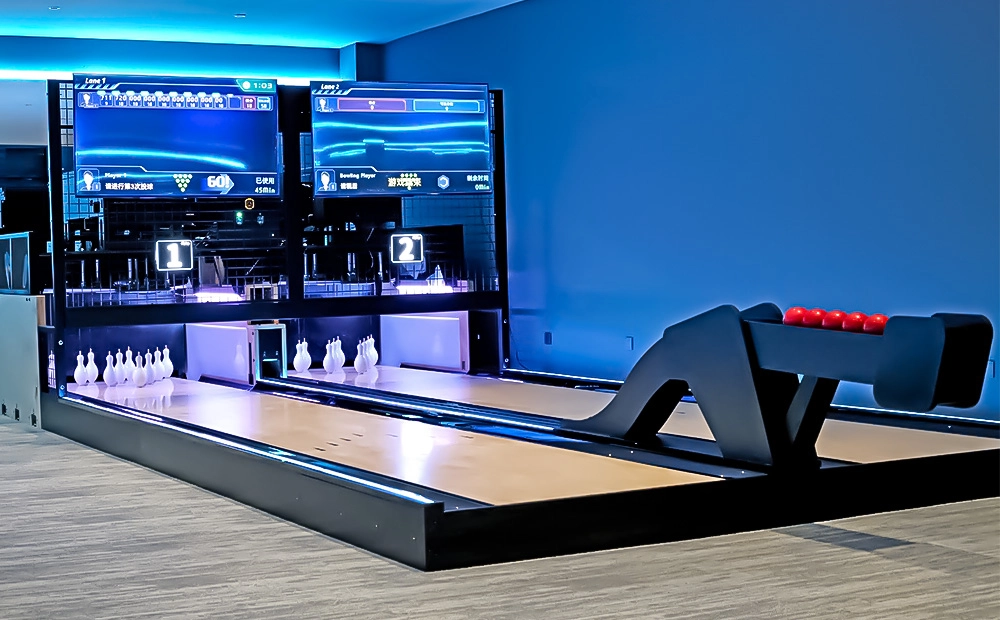
Flying Smart Duckpin Bowling
The innovative design of Flying Smart Duckpin Bowling (FSDB) makes it perfect for places like bars, billiard halls, and game centers. It makes people want to come back more often and spend more money. FSDB is fun and competitive, so it will become a new focus for social activities.
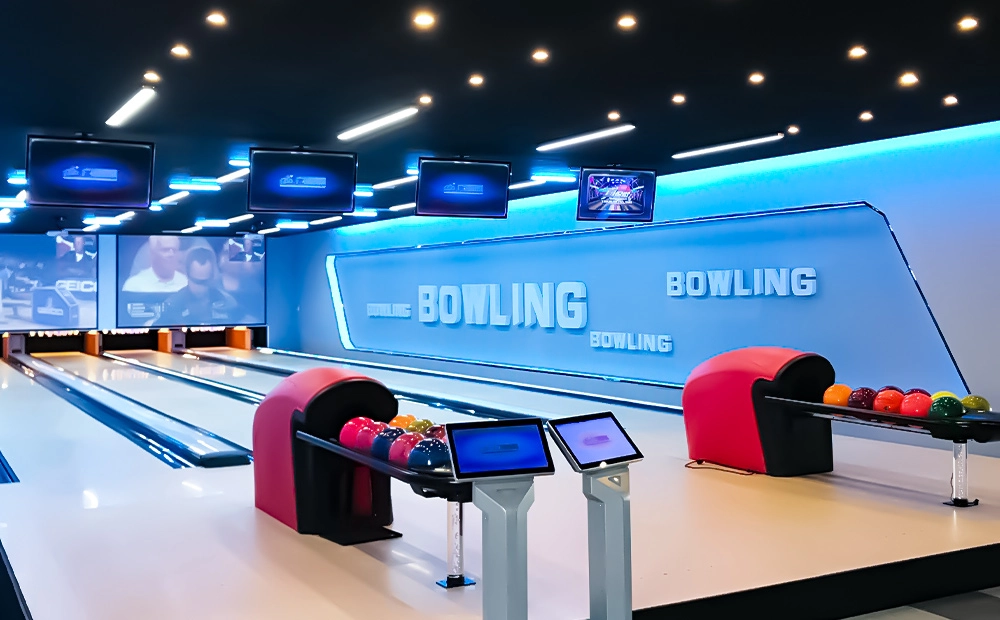
Flying Classic Standard Bowling
Flying Classic Standard Bowling (FCSB) employs the World Standard Competition Scoring System to deliver a more professional bowling experience, enabling bowlers to enjoy a professional-standard match at their convenience.
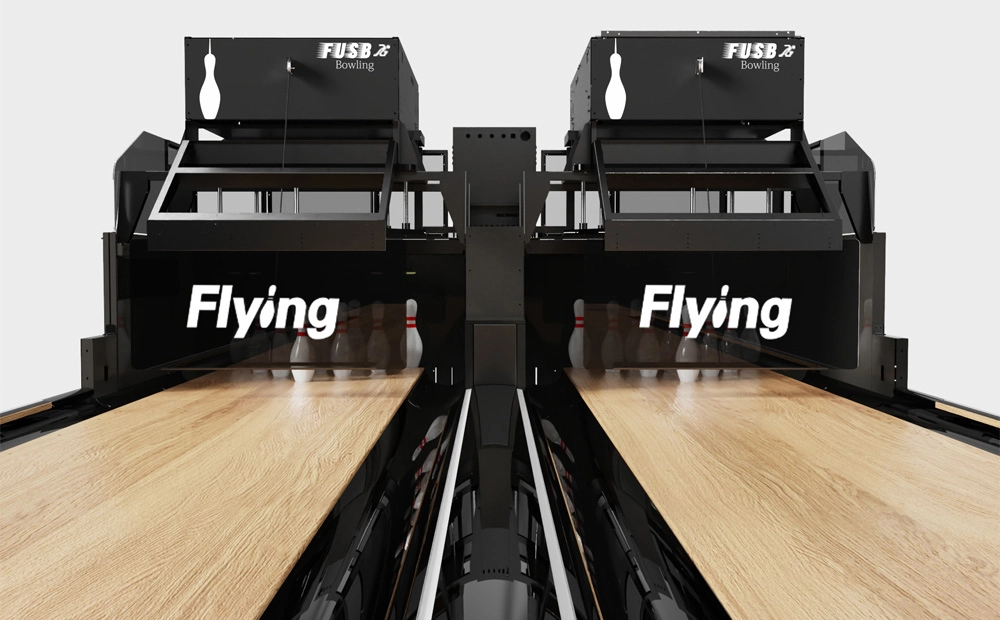
Flying Ultra Standard Bowling
Flying Ultra Standard Bowling (FUSB) Upgraded Version
The string pinsetter uses the latest technology. It offers a more enjoyable bowling experience thanks to its innovative designs and modern technology.
Ready to Build Your Bowling Center?
Share your details, and we’ll provide tailored solutions and expert guidance to help you take your bowling center to the next level.

Professional Bowling Alley Equipment Manufacturer, a one-stop solution provider for bowling alleys.
Facebook
YouTube
Linkedin
Twitter