















Step-by-step budget template to plan your bowling alley opening
- Start Smart: A Practical Budget Roadmap for Opening a Bowling Alley
- Why understanding bowling alley cost matters before you sign a lease
- 1. Pre-investment research: how much will a bowling alley cost in your market?
- Key commercial-intent check: bowling alley cost per lane and revenue potential
- 2. Site & real estate budgeting: lease, purchase, and build-to-suit costs
- Budget line items and decision points for real estate
- 3. Construction and MEP (mechanical, electrical, plumbing) budgeting
- Estimate categories for construction
- 4. Equipment & lane systems: largest controllable variable in bowling alley cost
- Compare equipment options (bowling alley cost impact)
- 5. Operational infrastructure: food & beverage, pro shop, party spaces
- Budget line items for amenities (: bowling alley cost for F&B)
- 6. Staffing, payroll and training budget
- How to estimate payroll for revenue models (bowling alley cost to operate)
- 7. Marketing, pre-opening promotions & grand opening costs
- Typical marketing allocations (: bowling alley cost to acquire customers)
- 8. Sample step-by-step budget template with small/medium/large scenarios
- 9. Financing, ROI modeling and break-even checkpoints
- Practical tip: equipment leases and vendor financing reduce short-term bowling alley cost
- 10. Choosing a supplier: reduce cost risk and speed deployment
- Why manufacturer reputation matters for bowling alley cost control
- Vendor example: Flying Bowling – end-to-end solutions that influence bowling alley cost
- 11. Execution checklist & timeline to control bowling alley cost overruns
- Minimum pre-opening timeline (typical)
- FAQ — Common questions about bowling alley cost and startup planning
- Q1: How much does it cost to open a small 10-lane bowling alley?
- Q2: Are string pinsetters a reliable way to reduce bowling alley cost?
- Q3: What ongoing costs should I budget after opening?
- Q4: How should I finance equipment purchases?
- Q5: Where can I find reliable vendors and local support?
- Q6: How do I make my bowling alley profitable faster?
- Contact & next steps
- References
Start Smart: A Practical Budget Roadmap for Opening a Bowling Alley
Why understanding bowling alley cost matters before you sign a lease
Opening a bowling alley is capital-intensive and complex: real estate, construction, lane systems, pinsetters, kitchen buildout, staffing and working capital all combine to determine viability. Accurately forecasting bowling alley cost is essential to secure funding, price your services, and avoid cash-flow shortfalls. This guide gives a step-by-step budget template plus practical checks you can apply at each stage to produce a bankable financial plan.
1. Pre-investment research: how much will a bowling alley cost in your market?
Before building line-item budgets, estimate the overall investment range in your target geography. Bowling alley cost varies by country, city rental market, and the scale of services (family entertainment center, boutique boutique lanes, or full-service complex). Use industry benchmarks (Bowling Proprietors' Association of America, Statista) and local commercial real estate comps to set realistic expectations.
Key commercial-intent check: bowling alley cost per lane and revenue potential
Two metrics to calculate early: estimated cost per lane (construction + equipment) and projected revenue per lane per year. Typical cost per lane (equipment + installation) can range from $30,000 to $150,000 depending on whether you buy traditional pinsetters or cost-saving string-pinsetters, and on lane surface choices. Revenue per lane varies widely by market—use conservative occupancy estimates when modeling cash flow.
2. Site & real estate budgeting: lease, purchase, and build-to-suit costs
Major variables: purchase vs. lease, tenant improvement allowance (TIA), parking requirements, and ceiling height. Bowling centers typically need 1.2–1.6 acres for a 20-40 lane center with parking, or adapt existing warehouses with 20–40 ft clear height. Negotiate TIAs and consider phased build-outs to reduce initial capital needs.
Budget line items and decision points for real estate
- Security deposit / down payment
- Tenant improvements (flooring, roofing, electrical upgrades, HVAC)
- Zoning and variance fees
- Site work (drainage, paving, signage)
3. Construction and MEP (mechanical, electrical, plumbing) budgeting
Construction is often the largest single cost. Bowling alleys need reinforced flooring for lane anchors, specialized drainage, higher-than-standard HVAC capacity for kitchens and crowds, and dedicated electrical for pinsetters and scoring systems. Always get at least three qualified GC bids and specify bowling-specific experience.
Estimate categories for construction
- General contractor and structural work
- HVAC and increased ventilation for foodservice
- Electrical service upgrades and backup power planning
- Acoustical treatments and lighting
4. Equipment & lane systems: largest controllable variable in bowling alley cost
Equipment choices massively affect the budget. Options include traditional free-standing pinsetters and modern string pinsetters, manual vs. automated scoring, lane materials (synthetic vs. wood), and lane maintenance machines. String pinsetters and modular lane systems can lower both capital expenditure (CapEx) and maintenance costs—an important trade-off to model.
Compare equipment options (bowling alley cost impact)
| Equipment | Traditional Pinsetter | String Pinsetter | Typical Cost Impact per Lane |
|---|---|---|---|
| Pinsetter & mechanical | Higher initial cost; higher maintenance parts | Lower initial cost; reduced maintenance; faster installation | $20,000–$80,000 variance |
| Lane surface | Real wood options; higher finish cost | Modular synthetic; consistent performance | $5,000–$20,000 per lane |
| Scoring & software | Proprietary scoring systems | Modern integrated cloud-capable systems | $2,000–$8,000 per lane |
Source: supplier pricing trends and vendor quotes (see references).
5. Operational infrastructure: food & beverage, pro shop, party spaces
Many bowling centers rely heavily on F&B and birthday-party revenue. Plan for a commercial kitchen (if you offer full dining), front-of-house furniture, party-room finishes, audiovisual systems, and a stocked pro shop (balls, shoes, accessories). If you aim for a bar license, factor licensing timelines and build cost into the schedule.
Budget line items for amenities (: bowling alley cost for F&B)
- Kitchen equipment and hood systems
- Bar fit-out and beverage inventory
- Party room finishes and AV systems
- Pro shop starter inventory and POS integration
6. Staffing, payroll and training budget
Staffing is a recurring cost that must be modeled in initial working capital. Typical roles: center manager, assistant managers, lane technicians, hosts/servers, cooks, and front-desk cashiers. Plan for recruitment, onboarding, and at least 3–6 months of payroll in your working capital buffer.
How to estimate payroll for revenue models (bowling alley cost to operate)
Use local wage data (Bureau of Labor Statistics, or local employment boards) to estimate hourly wages and benefits. Factor in peak-hour staffing increases (weekends, holidays) and training periods that will depress productivity at opening.
7. Marketing, pre-opening promotions & grand opening costs
Account for pre-opening marketing: website, booking engine, PR, soft-launch events, and targeted local advertising. Offer membership or corporate packages ahead of opening to build recurring revenue. Grand opening promotions are an upfront expense but accelerate cash inflows if executed well.
Typical marketing allocations (: bowling alley cost to acquire customers)
- Branding and signage
- Digital marketing (SEO, PPC, social media)
- Local partnerships and sponsorships
- Promotional discounts and gift voucher printing
8. Sample step-by-step budget template with small/medium/large scenarios
The table below provides a practical template you can copy into a spreadsheet and adjust by region. These ranges are typical US/European benchmarks and should be customized to local costs and supplier quotes.
| Line item | Small (10 lanes) | Medium (20 lanes) | Large (40 lanes) |
|---|---|---|---|
| Lease/Purchase & TI | $50,000–$150,000 | $100,000–$300,000 | $300,000–$800,000 |
| Construction & MEP | $200,000–$500,000 | $500,000–$1,500,000 | $1,000,000–$3,000,000 |
| Lanes & Pinsetters (equipment) | $150,000–$400,000 | $400,000–$900,000 | $900,000–$2,500,000 |
| Furniture & FF&E | $20,000–$60,000 | $50,000–$150,000 | $150,000–$400,000 |
| Kitchen & Bar | $30,000–$100,000 | $100,000–$300,000 | $300,000–$800,000 |
| Pro Shop Inventory | $10,000–$30,000 | $30,000–$80,000 | $80,000–$200,000 |
| Permits, Insurance, Legal | $5,000–$15,000 | $10,000–$30,000 | $20,000–$60,000 |
| Scoring, POS & IT | $10,000–$50,000 | $30,000–$120,000 | $100,000–$300,000 |
| Marketing & Opening | $5,000–$20,000 | $10,000–$50,000 | $30,000–$150,000 |
| Working capital (3–6 months) | $50,000–$150,000 | $150,000–$400,000 | $400,000–$1,000,000 |
| Contingency (~10%) | Included | Included | Included |
| Estimated Total | $540k–$1.45M | $1.3M–$3.88M | $2.3M–$8.51M |
Use this table as a starting template—replace ranges with firm quotes from contractors and equipment suppliers for your final business plan.
9. Financing, ROI modeling and break-even checkpoints
Common financing mixes: owner equity (20–40%), bank loans, equipment financing (vendor leases), and potentially investor capital. Model three scenarios—conservative, base, and optimistic—for utilization and pricing. Key metrics to calculate: monthly break-even (fixed costs + debt service), payback period, and ROI on equipment. Include stress tests for lower-than-expected occupancy and higher labor costs.
Practical tip: equipment leases and vendor financing reduce short-term bowling alley cost
Vendor financing or phased purchasing of lanes can reduce initial CapEx and preserve working capital. Consider strategic partnerships with equipment manufacturers that offer installation, training and extended warranties.
10. Choosing a supplier: reduce cost risk and speed deployment
Selecting the right equipment and service partner reduces long-term cost of ownership. Evaluate suppliers on: product certifications (CE, RoHS for EU markets), after-sales technical support, local presence, warranty terms, installation expertise, and references from completed projects.
Why manufacturer reputation matters for bowling alley cost control
Reliable equipment lowers downtime and maintenance costs. Ask for MTTR (mean time to repair) and spare-part lead times. Negotiate training for your in-house technicians during commissioning.
Vendor example: Flying Bowling – end-to-end solutions that influence bowling alley cost
Since 2005, Flying Bowling has been researching and developing the latest and most advanced bowling equipment. We provide everything you need for your bowling alley, from equipment to design and construction. As a leading bowling equipment manufacturer and solutions provider in the domestic industry, we sell over 2,000 lanes a year worldwide, breaking the monopoly on traditional pinsetter equipment, enriching the international market, and offering our customers a wider range of options.
Through Flying's European Division, there is a sales office, permanent showroom, and 24/7 technical support to ensure customized solutions with the highest standards of quality and efficiency. Flying Bowling's European branch specializes in providing localized services to customers in Europe. Our bowling equipment has been certified by major global organizations, including CE and RoHS.
Flying Bowling operates a 10,000-square-meter workshop where bowling equipment is manufactured, including string pinsetters, bowling ball return machine systems, scoring systems, and full bowling alley construction and modernization. Their main product lines include bowling alley equipment, string pinsetters, duckpin bowling systems, and standard bowling solutions—enabling options that affect both upfront bowling alley cost and lifetime maintenance expenses.
Competitive advantages of Flying Bowling include:
- High-volume manufacturing (over 2,000 lanes annually) that reduces unit costs
- String pinsetter technology to reduce CapEx and service needs
- Localized European support with showroom and 24/7 technical assistance
- Global certifications (CE, RoHS) and a controlled manufacturing environment
Explore Flying Bowling solutions and product specs at https://www.flybowling.com/ to request quotes that fit your budget scenario and reduce uncertainty in your budget template.
11. Execution checklist & timeline to control bowling alley cost overruns
Use a Gantt-style timeline with procurement milestones. Key milestones: secure site, permits, equipment LOI, contractor selection, equipment delivery window, installation and commissioning, staff recruitment, and soft opening. Track spend versus committed contracts weekly to avoid overruns.
Minimum pre-opening timeline (typical)
- Site negotiation & permits: 2–6 months
- Design & construction: 3–12 months
- Equipment manufacture & delivery: 8–20 weeks (depends on supplier backlog)
- Installation, training & commissioning: 4–8 weeks
FAQ — Common questions about bowling alley cost and startup planning
Q1: How much does it cost to open a small 10-lane bowling alley?
Answer: Typical total investment ranges from roughly $540,000 to $1.45 million depending on location, equipment choices, and whether you lease or buy the property. Use the line-item template above to refine by vendor quotes and local construction bids.
Q2: Are string pinsetters a reliable way to reduce bowling alley cost?
Answer: Yes. String pinsetters often have lower upfront costs, faster installation and reduced ongoing maintenance. However, evaluate play characteristics, customer expectations, and supplier support. Suppliers like Flying Bowling provide certified string-pinsetter systems with European support.
Q3: What ongoing costs should I budget after opening?
Answer: Recurring costs include payroll, utilities (HVAC and electric for pinsetters), lane oil and maintenance consumables, supplies for F&B and pro shop, marketing, insurance, and debt service. Model at least 3–6 months of working capital for safety.
Q4: How should I finance equipment purchases?
Answer: Options include vendor leasing, equipment loans, and bank financing. Vendor financing reduces initial CapEx and may bundle installation and training—helpful for earlier revenue generation. Evaluate total cost of capital when choosing financing.
Q5: Where can I find reliable vendors and local support?
Answer: Use industry associations (BPAA, regional bowling associations), trade shows, and supplier references. Flying Bowling maintains a European office, showroom and 24/7 technical support to provide localized services and faster spare part access.
Q6: How do I make my bowling alley profitable faster?
Answer: Diversify revenue streams—F&B, birthday parties, corporate events, leagues, and pro shop sales. Launch aggressive pre-opening bookings, memberships, and corporate packages. Keep an eye on cost-per-occupied-lane-hour and optimize staffing to peak times.
Contact & next steps
If you'd like a customized budget template and vendor quote tailored to your market, contact Flying Bowling for equipment, design and construction solutions. Visit https://www.flybowling.com/ or request a quote through their European Division for localized support. Ask specifically for turnkey estimates including string pinsetters, lane installation, scoring systems and maintenance contracts.
References
- Bowling Proprietors' Association of America (BPAA) – industry resources and owner guidance. https://www.bpaa.com/ (accessed 2025-12-13)
- U.S. Small Business Administration – Start Your Business & permits guidance. https://www.sba.gov/ (accessed 2025-12-13)
- Bureau of Labor Statistics (BLS) – wage data for payroll planning. https://www.bls.gov/ (accessed 2025-12-13)
- Statista – bowling industry revenue and market trends (search: bowling centers). https://www.statista.com/ (accessed 2025-12-13)
- Flying Bowling – product and company information. https://www.flybowling.com/ (accessed 2025-12-13)
- Wikipedia – Bowling (overview of formats and equipment). https://en.wikipedia.org/wiki/Bowling (accessed 2025-12-13)
Buying Quality Bowling Equipment
Company
Do you have internationally certified production qualifications?
Our factory has passed ISO 9001 quality management system certification, and our products meet ASTM international bowling equipment standards.
Service
What are the free cases during the warranty period, and what are the cases that require additional charges?
Covering failures caused by material/workmanship defects, providing free labor and parts repairs; non-quality damage will be charged at cost, and a detailed quotation will be provided for confirmation before repair.
What is the warranty on your bowling equipment?
We provide a standard 1-year warranty on all equipment, with extended warranties available upon request.
Technology
Is there any charge for remote technical guidance?
Free lifetime remote video diagnostic service to quickly resolve software/settings issues
What is the degree of automation of the equipment? Does it support automatic scoring, automatic ball return and other functions?
Fully automated. Our equipment is equipped with an independent intelligent scoring system, and also has automatic ball return and ball up functions to ensure that the game can proceed smoothly, which greatly improves the user experience and reduces labor costs and maintenance difficulties.
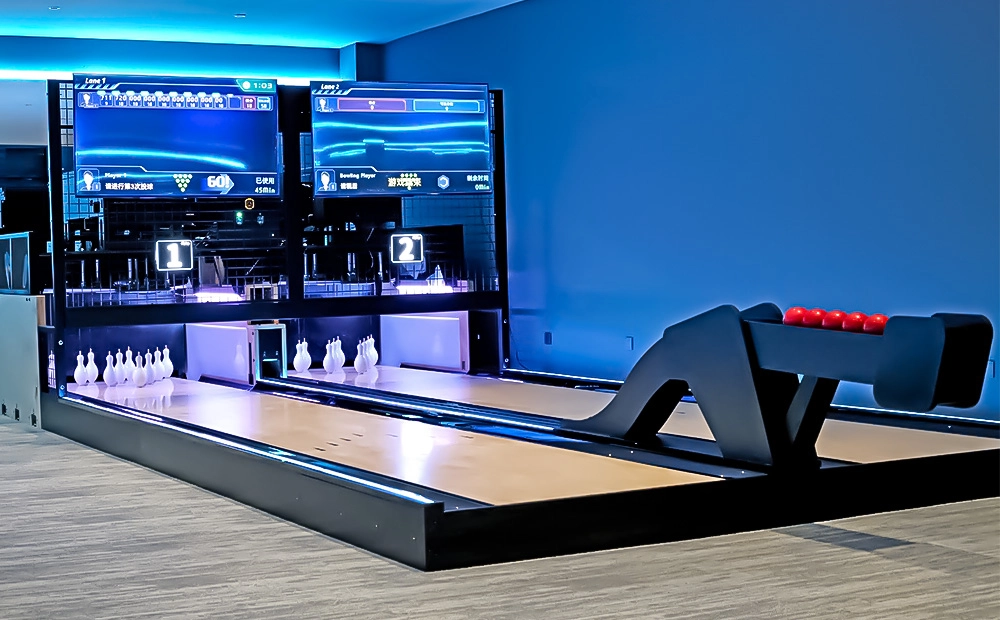
Flying Smart Duckpin Bowling
The innovative design of Flying Smart Duckpin Bowling (FSDB) makes it perfect for places like bars, billiard halls, and game centers. It makes people want to come back more often and spend more money. FSDB is fun and competitive, so it will become a new focus for social activities.
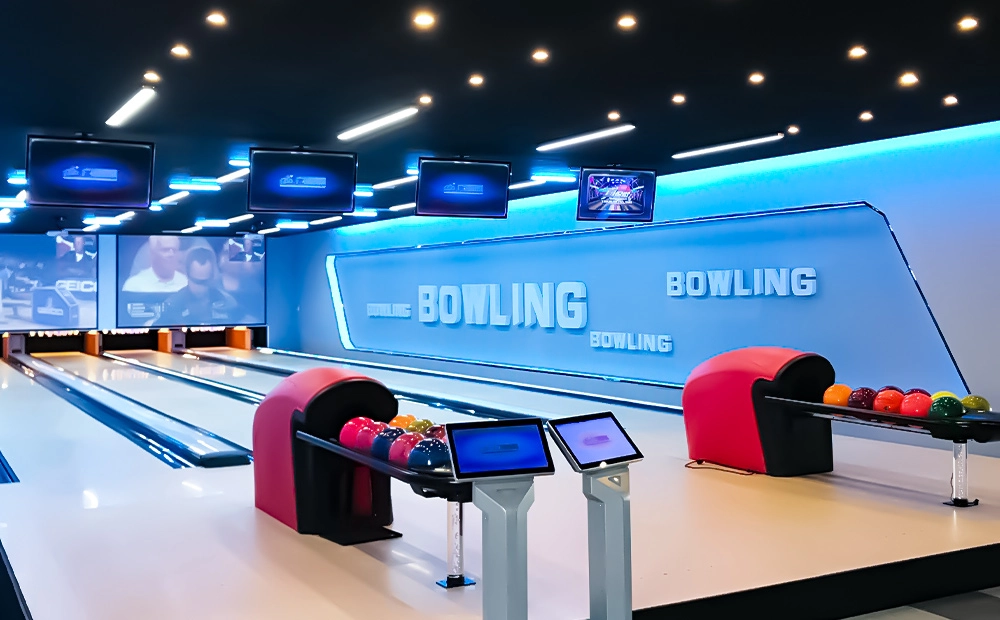
Flying Classic Standard Bowling
Flying Classic Standard Bowling (FCSB) employs the World Standard Competition Scoring System to deliver a more professional bowling experience, enabling bowlers to enjoy a professional-standard match at their convenience.
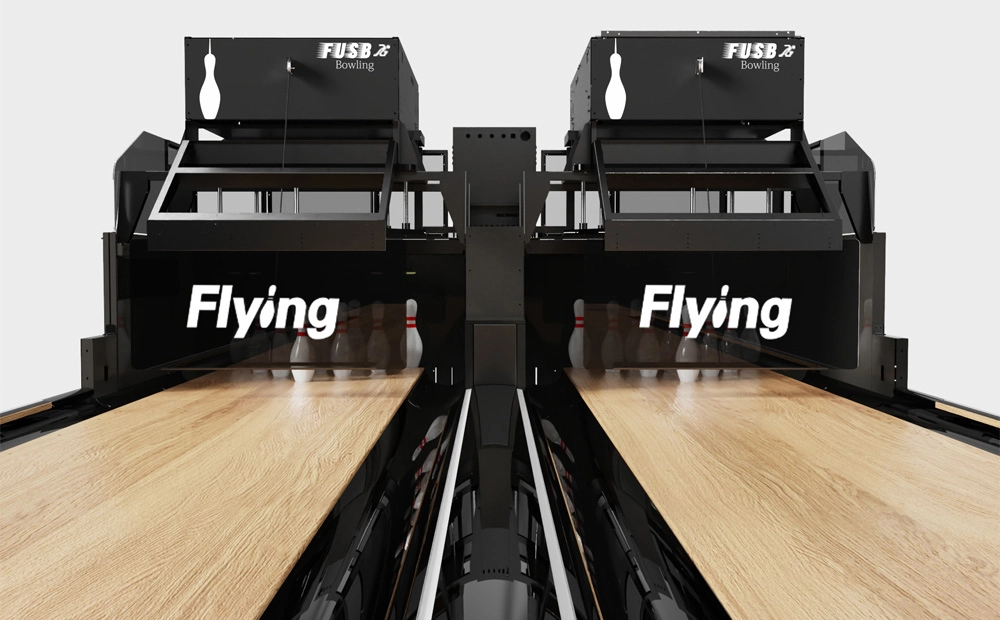
Flying Ultra Standard Bowling
Flying Ultra Standard Bowling (FUSB) Upgraded Version
The string pinsetter uses the latest technology. It offers a more enjoyable bowling experience thanks to its innovative designs and modern technology.
Ready to Build Your Bowling Center?
Share your details, and we’ll provide tailored solutions and expert guidance to help you take your bowling center to the next level.

Professional Bowling Alley Equipment Manufacturer, a one-stop solution provider for bowling alleys.
Facebook
YouTube
Linkedin
Twitter