













Bowling Alley Construction Cost in the Finland | Insights by Fly Bowling
- 1. What makes building a bowling alley in Finland different from other markets?
- 2. What does land and building construction cost in Finland?
- 3. What does bowling equipment cost, and where do you source it in Finland?
- 4. What are the specific permit and regulatory requirements in Finland?
- 5. What are the ongoing operational costs in Finland?
- 6. What does a realistic total project budget look like in Finland?
- 7. What should I know about the Finnish bowling market before investing?
1. What makes building a bowling alley in Finland different from other markets?
Finland has a small but established bowling culture. The country's largest venue, <b>Tali Bowl in Helsinki, has 36 lanes</b>; <b>Ruusula, the oldest active venue (open since 1941), has 24 lanes</b>. The dominant equipment supplier in the Finnish and Baltic markets is <b>Oy Bowling Ab</b>, which acts as the exclusive Brunswick distributor for the region and handles parts, lane oil, and technical support from its warehouse co-located at Tali Bowling (Huopalahdentie 28, Helsinki).
Several factors make the Finnish market distinct from the US or Western European average:
Higher construction labor costs. Finnish construction labor rates are among the highest in the EU. A commercial fit-out that costs €1,200/m² in Poland or the Czech Republic typically costs €1,800–€2,800/m² in Finland. The building cost index published by Statistics Finland (stat.fi/til/rki) tracks these costs monthly and is the most reliable current reference.
Extreme weather requirements. Finnish winters demand heating infrastructure that is oversized compared to most European markets. A bowling facility operating year-round in Helsinki or Tampere needs HVAC capable of functioning reliably at –20°C. Insulation standards under Finland's National Building Code (Suomen rakentamismääräyskokoelma) are stringent, which adds both material and labor costs versus Southern European projects.
VAT structure. Finland's VAT (arvonlisävero, ALV) applies differently across revenue streams in a bowling venue (Finnish Tax Administration, vero.fi):
- Bowling lane rental: 13.5% VAT (sports/fitness service category)
- Food (restaurant service): 14% VAT
- Alcoholic beverages: 24% VAT (standard rate)
- Construction services: 24% VAT
These rates affect both your construction budget (VAT on contractor invoices is reclaimable for VAT-registered businesses) and your revenue model projections.
Alcohol licensing is straightforward but regulated. Unlike the US where liquor license costs vary from $5,000 to $300,000+ by state, Finland's alcohol serving license (anniskelulupa) has a fixed national fee of approximately €1,230–€1,365 depending on whether the application is submitted online or in paper form (Regional State Administrative Agency / from 2026: Finnish Supervisory Agency). The license itself is low-cost; the relevant constraint is compliance with serving hours, staff certification (Järjestyksenvalvoja), and physical layout requirements for a licensed premises. Note that as of June 2024, Finnish law permits supermarkets to sell beverages up to 8% ABV, which has modestly reduced the competitive premium of restaurant alcohol sales.
Finland has the highest beer excise duty in the EU (approximately €0.597 per standard 330ml bottle). Combined with 24% VAT on alcohol, the tax burden on alcoholic beverages is significant — this is worth modeling carefully in your F&B revenue projections, as pricing sensitivity among Finnish consumers is higher than in lower-tax markets.
2. What does land and building construction cost in Finland?
Commercial construction costs in Finland vary significantly by region and project type. The following ranges are based on industry benchmarks current as of 2025:
New construction (ground-up build):
- Standard commercial building: €1,800–€2,500/m²
- Entertainment-grade fit-out with acoustic requirements: €2,200–€3,200/m²
- Helsinki metropolitan area premium: add 15–25% to the above ranges
- Secondary cities (Tampere, Turku, Oulu): broadly in line with the mid-range
- Rural/smaller municipalities: potentially 10–15% lower, offset by contractor availability constraints
For a 1,500 m² facility (suitable for approximately 8–10 lanes plus F&B area), expect €2.7M–€4.8M in construction cost before equipment.
Renovation of existing space:
- Warehouse or retail conversion: €1,200–€1,800/m²
- This is the more common path for new bowling projects in Finland, and typically saves 25–35% versus new construction while opening 6–12 months faster
Land costs:
- Helsinki city center: €2,000–€6,000/m² land value (most bowling projects lease rather than buy)
- Suburban Helsinki (Espoo, Vantaa): €800–€2,000/m²
- Regional cities: €200–€800/m²
Most bowling operators in Finland lease rather than own their premises. Commercial lease rates in suburban Helsinki (where most bowling venues are located) run approximately €15–€30/m²/month for entertainment-suitable spaces. On a 1,500 m² facility, annual rent of €270,000–€540,000 is a significant fixed cost to model before committing to a site.
3. What does bowling equipment cost, and where do you source it in Finland?
Equipment pricing for the Finnish market is quoted in euros and broadly comparable to Western European rates. The dominant local supplier is Oy Bowling Ab (Brunswick distributor), though operators can also source directly from QubicaAMF (European headquarters in Italy) or from Asian manufacturers including Flying Bowling, which supplies to venues in Finland and the broader Nordic/Baltic region.
Per-lane equipment costs (mid-range commercial specification, installed):
- Synthetic lane surface: €9,000–€14,000 per lane
- String pinsetter (new): €7,500–€11,000 per lane (QubicaAMF Frameworx, Flying Bowling AEROPIN)
- Free-fall pinsetter (new): €14,000–€23,000+ per lane (Brunswick GS Series)
- Ball return system: €2,800–€5,500 per lane
- Scoring system: €3,700–€7,500 per lane
- Furniture and seating: €1,800–€4,500 per lane
- Total installed per lane (string pinsetter): approximately €27,000–€50,000
Shipping and installation: Equipment shipped from Asia (China-based manufacturers) to Finland typically takes 6–10 weeks by sea freight and incurs shipping costs of €4,000–€9,000 per project depending on volume. European-sourced equipment (QubicaAMF from Italy, Brunswick from Germany) typically arrives within 3–5 weeks. Budget €2,000–€4,500 per lane for on-site installation labor in Finland, reflecting Finnish labor rates.
New vs. used equipment: Oy Bowling Ab maintains a stock of refurbished Brunswick equipment for the Finnish and Baltic markets. Refurbished free-fall pinsetters cost approximately 40–60% less than new but carry higher maintenance risk. For a primary-revenue bowling operation, new equipment with a manufacturer warranty is strongly recommended. For a secondary-attraction installation (hotel, restaurant), refurbished equipment may be viable if inspection and warranty terms are confirmed in writing.
4. What are the specific permit and regulatory requirements in Finland?
Building permits (rakennuslupa): Required for new construction and for significant renovation of existing spaces. Application is made to the local municipality (kunta). Processing time is typically 1–3 months for straightforward commercial projects; more complex projects or those requiring zoning variances (kaavamuutos) can take 6–18 months. Permit fees vary by municipality but typically run €3,000–€15,000 for a commercial entertainment project.
Environmental and noise permits: Bowling venues generate significant impact noise. Finnish environmental protection law (Ympäristönsuojelulaki) may require a noise assessment (meluselvitys) if the venue is located in a mixed-use or residential area. The assessment itself costs €2,000–€8,000; mitigation measures (acoustic treatment, building modifications) are additional.
Alcohol serving license (anniskelulupa): Fixed fee of approximately €1,230–€1,365 (online vs. paper application). From January 2026, applications are processed by the new Finnish Supervisory Agency (replacing the Regional State Administrative Agencies). Key requirements include: licensed premises meeting physical layout standards, at least one responsible manager (vastaava hoitaja) with a certificate of competence, and compliance with serving hours (typically until 01:30 or 02:00 depending on municipality and license type).
Business registration: Standard Finnish company registration through the Patent and Registration Office (PRH) takes 1–2 weeks and costs approximately €380 for an Oy (limited liability company).
Fire safety and accessibility: Commercial entertainment venues must comply with Finland's Building Information Card (E1 for fire safety) and accessibility regulations. Budget €15,000–€40,000 for fire suppression, emergency lighting, and accessibility modifications depending on the building's existing condition.
5. What are the ongoing operational costs in Finland?
Staffing is the largest ongoing expense and is substantially higher than in most non-Nordic markets. Finnish minimum wages are set by collective agreements (TES) by sector; entertainment and hospitality workers typically earn €13–€17/hour including mandatory employer social contributions (työnantajamaksut, approximately 20–25% on top of gross wages). A 10-lane venue open 12 hours/day needs a minimum of 3–4 staff per shift. Expect annual staffing costs of €300,000–€600,000 for a mid-size facility.
Utilities in Finland are moderate by Nordic standards but higher than Southern Europe. Electricity prices have been volatile since 2021–2022; budget €3,000–€10,000/month for a bowling facility depending on size, HVAC load, and local tariff. District heating (kaukolämpö) is available in most Finnish cities and typically more cost-effective than oil or electric heating for large commercial spaces.
Equipment maintenance:
- String pinsetter: €200–€600/lane/year (comparable to global rates)
- Free-fall pinsetter: €1,500–€3,500/lane/year; Brunswick-trained technicians are available through Oy Bowling Ab
- Lane conditioning (oil and cleaner): €500–€1,200/lane/year
Insurance: Commercial liability and property insurance for a bowling venue in Finland runs approximately €15,000–€40,000/year depending on coverage, venue size, and whether alcohol is served.
Annual lane pricing context: BowlCircus (Finland's largest bowling chain, operating in Helsinki metro and Levi) charges approximately €40/lane/hour during peak periods. Tali Bowl and Ruusula use similar hourly pricing models. This per-hour (rather than per-game) pricing model is standard in Finland and produces higher revenue per lane than per-game pricing in markets where games are shorter.
6. What does a realistic total project budget look like in Finland?
The following are illustrative all-in budgets for typical Finnish projects. They include construction or renovation, equipment, permits, and working capital reserve. They exclude land purchase (assuming lease).
Small boutique installation (4–6 lanes, Helsinki suburb, retail conversion):
- Renovation: €500,000–€900,000
- Equipment: €160,000–€300,000
- Permits, professional fees, fit-out: €80,000–€150,000
- Working capital reserve (6 months): €100,000–€200,000
- Total: €840,000–€1.55M
Mid-size entertainment center (8–12 lanes, new build or major renovation):
- Construction/renovation: €2M–€5M
- Equipment: €320,000–€600,000
- Permits, professional fees: €200,000–€500,000
- Working capital reserve: €200,000–€400,000
- Total: €2.72M–€6.5M
Add 10–15% contingency to all estimates. Finnish construction projects regularly encounter cost increases from subcontractor scheduling, material lead times, and weather-related delays.
7. What should I know about the Finnish bowling market before investing?
Finland has a population of approximately 5.6 million. The bowling market is relatively mature — most major population centers already have at least one established venue. The key question for a new entrant is not "is there demand for bowling?" but "is there demand for another bowling venue in this specific catchment area, and what differentiation will attract customers away from existing options?"
The most successful recent openings in Finland and the broader Nordic market have been entertainment-center concepts that combine bowling with other activities (darts, billiards, VR, private event spaces, food and beverage) rather than pure bowling operations. The trend toward per-hour pricing with lounge seating and food integration is well-established in Finnish venues.
For investors new to the Finnish market, engaging a local commercial real estate advisor and a Finnish-speaking legal counsel familiar with entertainment licensing is strongly recommended before signing any lease or construction contracts.
For equipment specifications, layout design assistance, or project consultation for Finland and Nordic market projects, contact Flying Bowling at flybowling.com. Flying Bowling supplies USBC-certified string pinsetters, synthetic lane surfaces, and ball return systems with installation support across 40+ countries including Finland.
- 1. What makes building a bowling alley in Finland different from other markets?
- 2. What does land and building construction cost in Finland?
- 3. What does bowling equipment cost, and where do you source it in Finland?
- 4. What are the specific permit and regulatory requirements in Finland?
- 5. What are the ongoing operational costs in Finland?
- 6. What does a realistic total project budget look like in Finland?
- 7. What should I know about the Finnish bowling market before investing?
Quality Bowling
You May Also Like
AEROPIN: USBC-Certified Commercial Bowling String Pinsetter for High-Traffic Venues
The AEROPIN is Flying Bowling's highest-specification string pinsetter, purpose-built for bowling center investors and operators who cannot afford downtime. Fully USBC-certified (Permit SP-11), it meets the strictest international competition standards while delivering the operational economics that protect your bottom line — a 10,000+ hour MTBF, sub-8-second pin cycle, and 15% lower energy consumption versus traditional systems.
Whether you are breaking ground on a new facility or modernizing an existing center, the AEROPIN integrates into your project as a complete, turnkey solution. Flying Bowling handles equipment supply, lane installation, commissioning, and after-sales support across 40+ countries — so your venue opens on schedule and runs without interruption from day one.
Flying Smart Duckpin Bowling
The innovative design of Flying Smart Duckpin Bowling (FSDB) makes it perfect for places like bars, billiard halls, and game centers. It makes people want to come back more often and spend more money. FSDB is fun and competitive, so it will become a new focus for social activities.
Flying Classic Standard Bowling
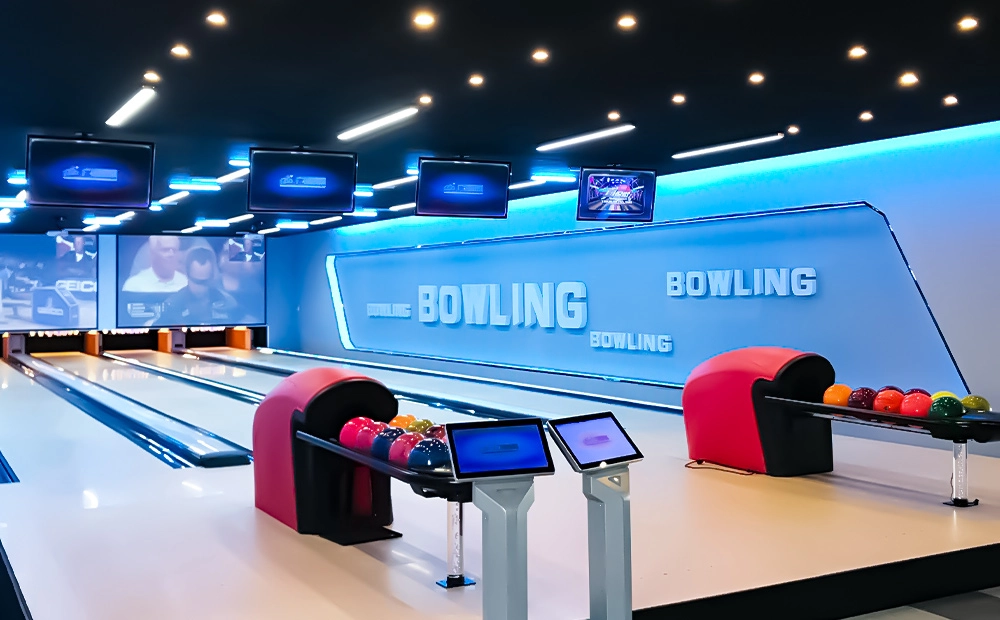
Flying Classic Standard Bowling (FCSB) employs the World Standard Competition Scoring System to deliver a more professional bowling experience, enabling bowlers to enjoy a professional-standard match at their convenience.
Get in touch
Contact us
If you contact us now for more details, we can provide you with a custom bowling alley service.
Our service team will get back to you within 24 hours, normally!

Facebook
YouTube
Linkedin
Twitter