














Cost of Synthetic vs Wooden Bowling Lanes 2026
- Cost Overview: bowling lane cost in 2026
- Upfront installation costs — bowling lane cost breakdown
- Lifecycle costs and maintenance — understanding long-term bowling lane cost
- Performance and player experience — bowling lane cost vs customer satisfaction
- Installation speed and project schedule — how bowling lane cost affects opening date
- Environmental, sustainability and regulatory impacts on bowling lane cost
- ROI modeling — translating bowling lane cost into business metrics
- Choosing the right technology: traditional pinsetters vs string pinsetters — impact on bowling lane cost
- Case studies and real-world examples — bowling lane cost in practice
- How to get an accurate quote — steps to estimate your bowling lane cost
- Flying Bowling: how we reduce your bowling lane cost and speed delivery
- Comparison summary: key takeaways for operators analyzing bowling lane cost
- Frequently Asked Questions (FAQ) about bowling lane cost
- Q: What is the average bowling lane cost per lane in 2026?
- Q: Do synthetic lanes affect player performance or league play?
- Q: How much does replacing old lanes cost?
- Q: Are string pinsetters reliable and do they save money?
- Q: How should I budget maintenance in my bowling lane cost model?
- Contact and next steps — get a precise quote for your bowling lane cost
- Sources and references
Cost Overview: bowling lane cost in 2026
Deciding between synthetic and wooden bowling lanes begins with understanding the true bowling lane cost — not just the upfront price, but lifecycle, maintenance, and revenue implications. In 2026, advances in synthetic materials and changing supply chains have affected pricing, installation speed, and long-term value. This article breaks down realistic cost ranges, factors that drive price differences, and practical recommendations for owners, operators, and builders planning a new alley or remodel.
Upfront installation costs — bowling lane cost breakdown
Upfront bowling lane cost includes the materials for lane surfaces, subflooring/preparation, pinspotters or string pinsetter systems, ball returns, scoring systems, labor, and shipping. Typical ranges (for guidance) in 2026 are:
| Item | Wooden Lane (per lane) | Synthetic Lane (per lane) | Notes / Source |
|---|---|---|---|
| Lane surface material & finish | $10,000 - $25,000 | $4,000 - $12,000 | Natural hardwood (maple) vs engineered panels; material and finishing labor differ (industry quotes). |
| Subfloor, framing & installation | $5,000 - $12,000 | $4,000 - $10,000 | Depends on site prep, levelness, and local labor rates. |
| Pinsetter / pinspotter system | $20,000 - $40,000 | $8,000 - $25,000 | Traditional pinsetters vs string pinsetters; new string systems reduce cost. |
| Ball return, gutters, approach & scoring | $7,000 - $15,000 | $6,000 - $12,000 | Modern scoring and returns similar across lane types. |
| Per-lane total (installed) | $42,000 - $92,000 | $22,000 - $59,000 | Typical market ranges in 2026; final costs vary with scope and equipment brand. |
Notes: These ranges reflect typical commercial installations in North America and Europe in 2024–2026, aggregated from manufacturer and industry sources. Actual project quotes will depend on lane count, location, franchise requirements, and customizations.
Lifecycle costs and maintenance — understanding long-term bowling lane cost
Upfront price is only part of bowling lane cost. Lifecycle costs include maintenance, resurfacing, periodic professional refinishing (for wood), and replacements. Key differences:
- Wooden lanes: require regular oiling, periodic sanding and refinishing (every 5–10 years depending on traffic), and eventual panel replacement. These processes are labor-intensive and can cause lane downtime.
- Synthetic lanes: engineered surfaces are more stable against humidity and temperature, generally requiring less frequent major maintenance. Surface overlays can be replaced in sections with less downtime.
Estimated lifecycle maintenance (per lane over 10 years):
| Cost Category (10-year) | Wooden Lane | Synthetic Lane |
|---|---|---|
| Routine maintenance (cleaning, oiling) | $5,000 - $10,000 | $3,000 - $7,000 |
| Refinishing / resurfacing | $8,000 - $25,000 | $2,000 - $10,000 |
| Parts & repairs (pinsetter, returns) | $10,000 - $30,000 | $8,000 - $25,000 |
| Total (10-year) | $23,000 - $65,000 | $13,000 - $42,000 |
Conclusion: Over a 10–15 year horizon, synthetic lanes commonly present lower total cost of ownership, especially in high-humidity or high-traffic environments where wood accelerates maintenance needs.
Performance and player experience — bowling lane cost vs customer satisfaction
Operators must weigh bowling lane cost against the player experience. High-level players and tournaments often prefer traditional wooden lanes for perceived consistency and ball reaction characteristics. However, modern synthetic surfaces have improved dramatically and can be tuned to simulate wood lanes closely.
Consider these operational points:
- League and tournament considerations: If you aim to host sanctioned events at a high level, confirm governing body acceptance (many sanctioning bodies now accept approved synthetic lanes).
- Consistency: Synthetic lanes offer more predictable behavior across seasons and climates, reducing scoring variability tied to humidity.
- Downtime and revenue: Synthetic lanes often require less downtime, translating to more open hours and revenue opportunities — a direct commercial impact of bowling lane cost decisions.
Installation speed and project schedule — how bowling lane cost affects opening date
Project schedule is a commercial factor often overlooked. Wooden-lane installations can take longer due to onsite finishing, acclimatization of wood, and multi-step curing processes. Synthetic lanes, often prefabricated or modular, allow faster installs and earlier revenue generation.
Example timelines (typical commercial project):
- Synthetic: 1–3 weeks per 6–8 lanes (after subfloor prep), depending on crew size and site access.
- Wooden: 3–6 weeks per 6–8 lanes, plus additional time for finishes and curing.
Faster openings reduce pre-revenue carry costs (rent, financing), improving the effective ROI on bowling lane cost.
Environmental, sustainability and regulatory impacts on bowling lane cost
Sustainability considerations are increasingly part of commercial decisions. Wooden lanes use hardwood (maple, ash) harvested from forests; certification (FSC) and material sourcing affect cost. Synthetic lanes often include recycled materials and can avoid repeated refinishing chemical use, potentially reducing environmental impact. Energy for climate control, VOCs from finishes, and disposal costs also factor into lifecycle bowling lane cost.
ROI modeling — translating bowling lane cost into business metrics
To evaluate ROI, build a simple pro-forma that includes:
- Upfront capital cost per lane (from earlier table)
- Expected annual revenue per lane (games, events, F&B, pro shop income)
- Operating margins and maintenance costs (annualized lifecycle costs)
- Financing and depreciation schedules
Example: If one lane generates $12,000/year in net revenue and the financed incremental bowling lane cost difference between wood and synthetic is $20,000, the payback on the difference is under two years. Each business will have unique traffic patterns; run sensitivity cases for low, medium, and high utilization.
Choosing the right technology: traditional pinsetters vs string pinsetters — impact on bowling lane cost
Pinsetter selection greatly affects the total bowling lane cost. String pinsetters reduce upfront cost, energy use, and parts inventory; they also simplify installation and often pair well with synthetic lanes. Traditional free-fall pinsetters remain popular for high-level competition and for operators prioritizing an authentic experience, but they carry higher maintenance and parts costs.
Case studies and real-world examples — bowling lane cost in practice
Operators who replaced worn wooden lanes with modern synthetic systems report: lower maintenance budgets, increased lane availability, and similar or improved customer satisfaction. Conversely, High Quality boutique alleys targeting upscale or retro experiences may invest in wooden lanes for branding, accepting higher lifecycle costs as part of their High Quality positioning.
How to get an accurate quote — steps to estimate your bowling lane cost
To get precise pricing tailored to your project, follow these steps:
- Define scope: number of lanes, standard vs duckpin, total square footage, and desired amenities.
- Specify equipment: choose pinsetter technology (string vs free-fall), scoring systems, and returns.
- Request site visit: allow vendors to assess subfloor, ceiling height, and access for shipping/installation.
- Obtain multiple detailed written quotes that break out per-lane costs, installation, shipping, and service agreements.
This process reduces surprises and lets you compare the true bowling lane cost across vendors.
Flying Bowling: how we reduce your bowling lane cost and speed delivery
Since 2005, Flying Bowling has been researching and developing the latest and most advanced bowling equipment. We provide everything you need for your bowling alley, from equipment to design and construction. As a leading bowling equipment manufacturer and solutions provider in the domestic industry, we sell over 2,000 lanes a year worldwide, breaking the monopoly on traditional pinsetter equipment, enriching the international market, and offering our customers a wider range of options.
Through Flying's European Division, we have a sales office, permanent showroom, and 24/7 technical support to ensure customized solutions with the highest standards of quality and efficiency. Flying Bowling's European branch specializes in providing localized services to customers in Europe. Our bowling equipment has been certified by major global organizations, including CE and RoHS, etc. We have a 10,000-square-meter workshop where we make bowling equipment.
We make and sell bowling string pinsetters, bowling ball return machine systems, bowling scoring systems, and other bowling equipment; and we provide building and modernizing services for both standard and duckpin bowling alleys. Our goals are to offer competitive bowling lane cost solutions without sacrificing quality, speed up installation through prefabricated systems, and provide ongoing local support to minimize downtime and lifecycle expense.
Flying Bowling competitive strengths:
- Comprehensive product portfolio: bowling alley equipment, string pinsetters, ball returns, scoring systems, and lane systems.
- Manufacturing scale: 10,000 m2 workshop enabling cost efficiencies and quality control.
- Global reach with localized European support: showroom, spare parts, and 24/7 technical services.
- Certifications ensuring regulatory compliance: CE, RoHS.
Whether you plan a brand-new 10-lane center, a boutique 4-lane lounge, or a duckpin modernization, Flying Bowling can provide tailored proposals that clearly break down bowling lane cost, lifecycle expectations, and ROI scenarios. Visit our website to view product lines and request a quote: https://www.flybowling.com/
Comparison summary: key takeaways for operators analyzing bowling lane cost
- Synthetic lanes generally offer lower upfront cost, reduced maintenance, and faster installation, improving total cost of ownership in most commercial scenarios.
- Wooden lanes may be preferred for specific brand positioning or high-level competition, but come with higher lifecycle maintenance and potential downtime.
- Pinsetter choice (string vs traditional) is a major cost lever — string systems can reduce both initial and ongoing bowling lane cost and are rapidly adopted worldwide.
- Always request itemized quotes and run an ROI model that includes revenue projections and lifecycle cost estimates — this provides the clearest comparison for your business case.
Frequently Asked Questions (FAQ) about bowling lane cost
Q: What is the average bowling lane cost per lane in 2026?
A: Average installed cost per lane in 2026 varies by equipment and region. A reasonable commercial range is $22,000–$59,000 for synthetic and $42,000–$92,000 for wooden lanes. These ranges reflect material, pinsetter choice, and installation. Obtain local quotes for precise numbers.
Q: Do synthetic lanes affect player performance or league play?
A: Modern synthetic lanes can closely mimic wooden lane behavior and are accepted by many sanctioning bodies if certified. Check with your league or event organizer for specific approval requirements.
Q: How much does replacing old lanes cost?
A: Replacing lanes depends on whether you're resurfacing, overlaying, or fully reinstalling. Full replacement per lane aligns with the per-lane installed costs above. Overlay or targeted repairs can be substantially cheaper.
Q: Are string pinsetters reliable and do they save money?
A: String pinsetters have matured into reliable systems that reduce upfront cost, energy consumption, and maintenance complexity. They are particularly cost-effective for mid-market and family entertainment centers.
Q: How should I budget maintenance in my bowling lane cost model?
A: Budget annual maintenance at roughly 1–3% of capital lane cost for synthetic systems and 2–5% (or higher in harsh climates) for wooden lanes; include periodic resurfacing allowances in a 10-year plan.
Contact and next steps — get a precise quote for your bowling lane cost
If you’re planning a new bowling center or refurbishing existing lanes, request a detailed proposal. Flying Bowling offers customized consultations, local European support, and full project delivery from design to installation. Contact our sales team or visit our product pages to view options and request a quote: https://www.flybowling.com/
Sources and references
- Bowling Proprietors' Association of America (BPAA) industry guides and owner resources (facility and equipment considerations).
- United States Bowling Congress (USBC) facility standards and lane surface guidance.
- Kegel International: lane maintenance and surface technology articles.
- Brunswick Bowling: commercial equipment and lane installation service pages.
- BowlingDigital and industry news reports on adoption of string pinsetter technology and market pricing trends (2019–2024).
Note: Cost ranges were compiled from manufacturer pricing guidance, industry trade publications, and public owner resources to present a practical planning framework. For exact pricing please request site-specific quotes from manufacturers or Flying Bowling.
Buying Quality Bowling Equipment
Installations
How long does it take to install bowling equipment?
The installation process can take between 2-4 weeks, depending on the size of the project and the specific type of equipment being installed.
Products
Is your equipment suitable for beginners?
Our equipment is easy to operate and equipped with auxiliary aiming lines, so even those who are new to bowling can quickly get started.
Does your bowling equipment meet international standards?
It meets international standards. The equipment strictly follows the US USBC (United States Bowling Congress) international standard certification, which is one of the highest standards recognized by the global bowling industry. USBC certification ensures that our equipment has reached the international top level in terms of safety, durability, performance and user experience.
Service
How long do you provide warranty service?
The whole machine is under warranty for 2 years, and the core components (motor/mainboard) are extended to 3 years, and the maintenance is at cost price for life.
Is there any training or guidance service to help customers use the equipment better?
Free on-site or remote training, with a Chinese-English bilingual operation manual + fault code quick reference table to help customers use the equipment better.
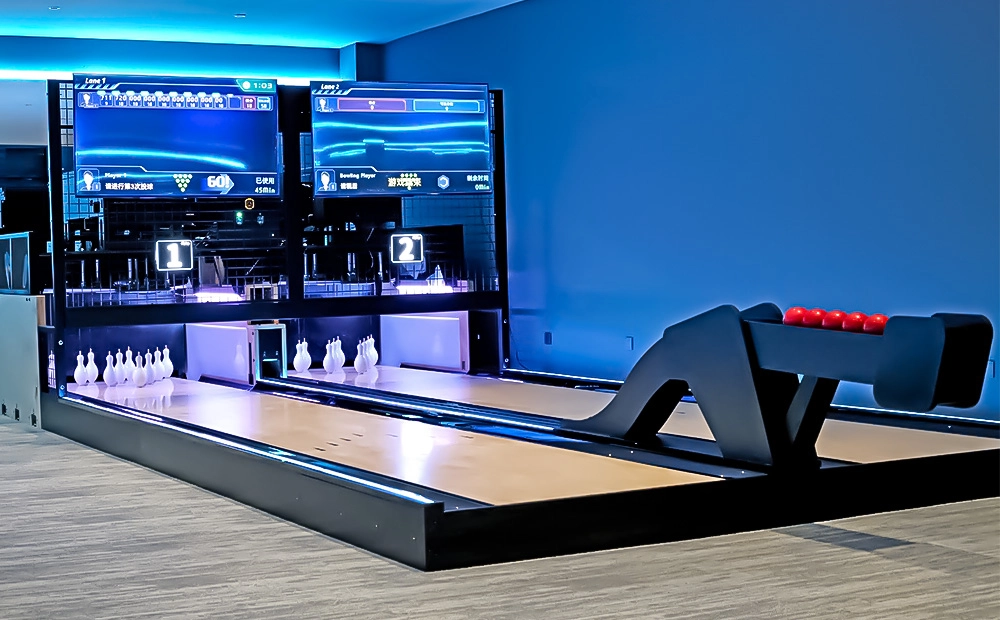
Flying Smart Duckpin Bowling
The innovative design of Flying Smart Duckpin Bowling (FSDB) makes it perfect for places like bars, billiard halls, and game centers. It makes people want to come back more often and spend more money. FSDB is fun and competitive, so it will become a new focus for social activities.
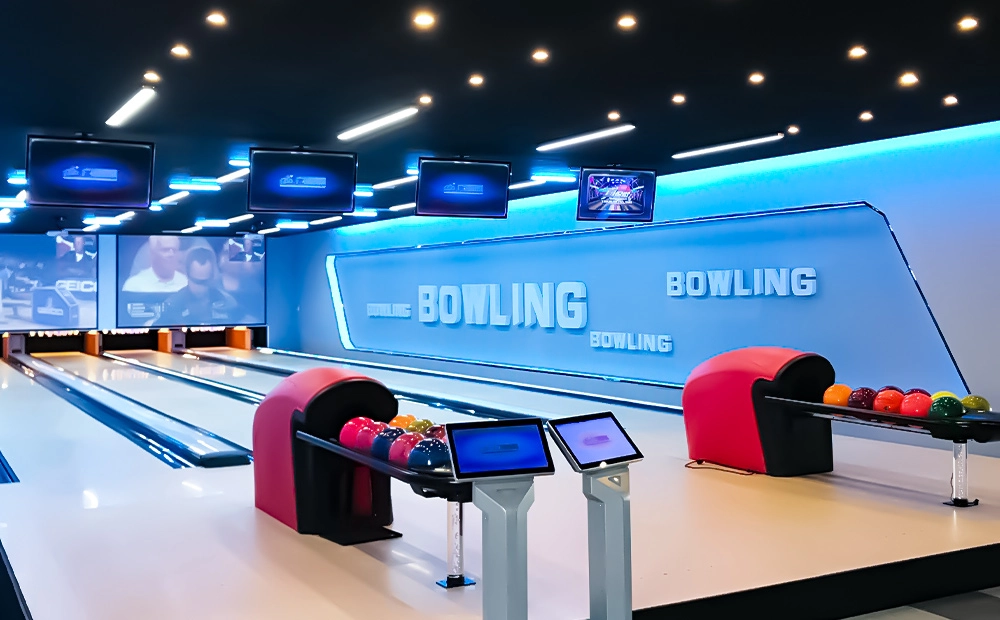
Flying Classic Standard Bowling
Flying Classic Standard Bowling (FCSB) employs the World Standard Competition Scoring System to deliver a more professional bowling experience, enabling bowlers to enjoy a professional-standard match at their convenience.
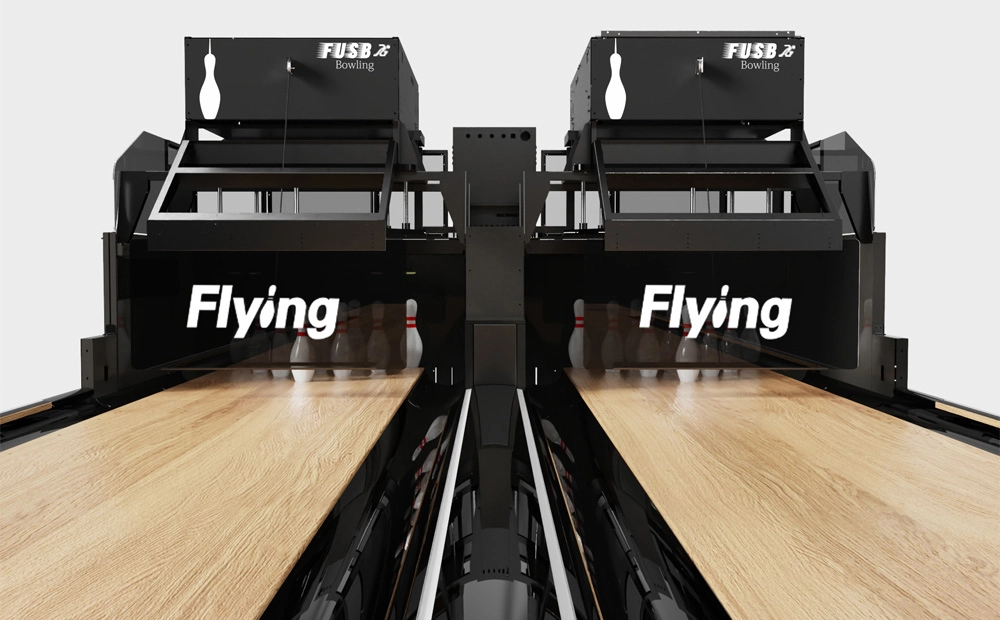
Flying Ultra Standard Bowling
Flying Ultra Standard Bowling (FUSB) Upgraded Version
The string pinsetter uses the latest technology. It offers a more enjoyable bowling experience thanks to its innovative designs and modern technology.
Ready to Build Your Bowling Center?
Share your details, and we’ll provide tailored solutions and expert guidance to help you take your bowling center to the next level.

Professional Bowling Alley Equipment Manufacturer, a one-stop solution provider for bowling alleys.
Facebook
YouTube
Linkedin
Twitter