














How to Score Bowling: Complete Guide to Rules, Tips, and Modern Scoring Systems
- Introduction: Why Knowing How to Score Bowling Matters
- Basic Structure: The 10 Frames of Bowling
- Strike Scoring: What a Strike Means and How It's Calculated
- Spare Scoring: How Spares Add Value to Your Score
- Open Frame: When No Bonus Is Awarded
- Final Frame Rules: Bonuses and Maximum Balls
- The Perfect Game: Understanding the 300 Score
- Scoring Terminology: Marks, Turkey, and More
- Manual vs. Automatic: How Bowling Scoring Systems Work
- String Pinsetters: What They Are and Why They Matter for Scoring
- Choosing a Scoring System for Your Venue: Key Considerations
- Common Scoring Examples: Walkthroughs for Clarity
- Integrating Scoring with Other Bowling Equipment
- Data & Compliance: Why Certifications Like CE and RoHS Are Important
- Maintenance and Troubleshooting: Keeping Scores Accurate
- Training Staff: Fast, Accurate Scoring and Better Customer Service
- Why Accurate Scoring Improves Revenue
- Flying Bowling Advantage: Equipment, Experience, and Global Support
- Installing a New Scoring System: Checklist for Alley Owners
- Conclusion: Mastering How to Score Bowling and Choosing the Right Systems
- Get the Right Bowling Scoring System Today
- Frequently Asked Questions
Introduction: Why Knowing How to Score Bowling Matters
Understanding how to score bowling isn't just for league players — it's essential for alley owners, operators, and anyone buying a bowling scoring system. Accurate scoring improves customer experience, supports competitions, and integrates with modern lane equipment like string pinsetters and ball return machines. In this guide, we'll explain scoring rules, give practical examples, and cover how automatic scoring systems handle the math so you can choose the right bowling equipment for your facility.
Basic Structure: The 10 Frames of Bowling
Bowling matches are made up of 10 frames per player. Each frame gives a bowler up to two regular delivery attempts to knock down a maximum of 10 pins, except the 10th frame which can include bonus balls. Knowing the frame structure is the first step to learning how to score bowling correctly and evaluating bowling scoring systems for your alley.
Strike Scoring: What a Strike Means and How It's Calculated
A strike happens when a bowler knocks down all 10 pins on the first ball of a frame. Scoring a strike is 10 plus the total pins knocked down by the next two balls. For example, if you roll a strike in frame 1, then knock down 7 and 2 in frame 2, frame 1 is scored as 19 (10 + 7 + 2). Strikes are key to higher scores and are factored automatically by modern bowling scoring systems.
Spare Scoring: How Spares Add Value to Your Score
A spare is when a bowler knocks down all remaining pins with the second ball of the frame (total of 10 pins in that frame). The score for a spare is 10 plus the pins knocked down with the next single ball. For example, spare in frame 3 followed by a 6 on the first ball of frame 4 gives frame 3 a score of 16. Properly configured bowling scoring systems will credit spares instantly and correctly.
Open Frame: When No Bonus Is Awarded
An open frame occurs when a bowler fails to knock down all 10 pins in the two attempts for that frame. The score is simply the number of pins knocked down in that frame with no additional bonus. Open frames lower averages, which is why consistent marks—spares and strikes—matter for both recreational play and league scoring.
Final Frame Rules: Bonuses and Maximum Balls
The 10th frame has special rules. If a bowler rolls a strike in the 10th, they receive two bonus balls to calculate the full bonus for that strike. If they roll a spare, they receive one bonus ball. If neither, the frame ends normally. These rules allow the theoretical maximum score of 300 to be achieved by bowling 12 consecutive strikes (one strike in frames 1–9 and three strikes in frame 10).
The Perfect Game: Understanding the 300 Score
A perfect game in ten-pin bowling is a 300, achieved by getting 12 consecutive strikes (one per frames 1–9 and three in the 10th). This is the highest possible score in a single game. The perfect game is a key metric for players and an important selling point when advertising league play and contests at your bowling center.
Scoring Terminology: Marks, Turkey, and More
Common terms you will encounter include a “mark” (a strike or spare), “turkey” (three consecutive strikes), and “split” (when remaining pins after the first ball leave nonadjacent groups that are hard to convert). Familiarity with this terminology helps when setting up signage, tutorials, and coaching materials for your alley customers.
Manual vs. Automatic: How Bowling Scoring Systems Work
Manual scoring uses paper score sheets or dry-erase boards; automatic scoring relies on sensors, lane computers, and display monitors. Modern systems detect pinfall using optical sensors, cameras, or mechanical switches and instantly compute strikes/spares and running totals. When choosing a bowling scoring system for your alley, consider compatibility with your pinsetter (mechanical or string) and ball return machine.
String Pinsetters: What They Are and Why They Matter for Scoring
String pinsetters attach a string to each pin to reset them automatically and are increasingly used in family entertainment centers and smaller alleys. They are more energy-efficient, simpler to maintain, and often cost less upfront than full free-fall pinsetters. From a scoring perspective, string pinsetters integrate with digital scoring systems and provide reliable pin-detection signals when combined with the correct sensors and software.
Choosing a Scoring System for Your Venue: Key Considerations
Selecting a scoring system depends on traffic, budget, and desired features. Consider automated scoring with touchscreen or tablet input for faster game setup, networked systems for league management, and cloud reporting for performance data. Also verify CE and RoHS certifications if you are selling or installing equipment in jurisdictions requiring compliance with EU safety and hazardous substance standards.
Common Scoring Examples: Walkthroughs for Clarity
Example 1 — Strike then 7 and 2: Frame 1 strike = 10 + 7 + 2 = 19. Frame 2 = 7 + 2 = 9. Cumulative after frame 2 = 28.Example 2 — Spare then 6: Frame 4 spare = 10 + 6 = 16. Frame 5’s first ball 6 counts as the spare bonus.These predictable calculations are why automatic scoring systems reduce human error and speed up game flow.
Integrating Scoring with Other Bowling Equipment
A modern bowling alley is an ecosystem: scoring systems connect to pinsetters (mechanical or string), ball return machines, and lane consoles. Integration enables features like automatic league scoring, customer profiles, and tie-in arcade or F&B billing. When buying equipment, ensure software and hardware compatibility and support for firmware updates to maintain accuracy over years of operation.
Data & Compliance: Why Certifications Like CE and RoHS Are Important
CE certification indicates conformity with EU health, safety, and environmental protection standards; RoHS limits hazardous substances in electrical and electronic equipment. For alley owners and equipment buyers in Europe and many international markets, these certifications mean safer, legally compliant products. Flying Bowling’s products meet these standards, providing peace of mind for global operators.
Maintenance and Troubleshooting: Keeping Scores Accurate
Regular maintenance of sensors, cameras, and pinsetters reduces false pin readings and downtime. Simple tasks include cleaning sensor lenses, verifying cable connections, calibrating sensors, and updating scoring software. For string pinsetters, check string tension and alignment. Proactive maintenance keeps league schedules on time and preserves customer satisfaction.
Training Staff: Fast, Accurate Scoring and Better Customer Service
Train your staff to understand bowling scoring basics and the interface of your scoring system. When staff can explain strikes, spares, and frame totals clearly, customers have a better experience. Also train technicians on routine checks and where to contact vendor support to minimize interruptions to play.
Why Accurate Scoring Improves Revenue
Accurate, fast scoring reduces game interruptions, shortens session times, and improves throughput — more games per lane per day. Integrated scoring systems also enable upsells (pro shop, food and beverage, arcade credits) and league management services that increase recurring revenue. Offering league play and tournaments with reliable scoring attracts committed bowlers and stable income streams.
Flying Bowling Advantage: Equipment, Experience, and Global Support
Since 2005, Flying Bowling has developed advanced bowling equipment and full-service solutions for alleys worldwide. With a 10,000-square-meter workshop and CE and RoHS-certified products, Flying Bowling provides string pinsetters, ball return systems, and bowling scoring systems that integrate seamlessly. We support alley design, construction, modernization, and global dealer partnerships across Asia, Europe, and the Middle East. Choosing a supplier experienced in both hardware and software simplifies installation and long-term operation.
Installing a New Scoring System: Checklist for Alley Owners
Before installation: assess lane compatibility, confirm pinsetter type (free-fall vs string), plan for network/wireless requirements, review certifications, and request a demo. During installation: document configurations, train staff, and schedule initial maintenance checks. After installation: gather customer feedback and monitor for any scoring anomalies to address quickly.
Conclusion: Mastering How to Score Bowling and Choosing the Right Systems
Knowing how to score bowling empowers players and helps alley operators select and maintain the right equipment. Strikes, spares, open frames, and the 10th-frame rules are the backbone of scoring, while modern scoring systems automate calculations and integrate with pinsetters and other lane equipment. Flying Bowling offers certified, integrated solutions—string pinsetters, ball return machines, and scoring systems—backed by global service and a decade-plus of industry experience. Contact Flying Bowling to modernize your alley and offer flawless, engaging play for your customers.
Get the Right Bowling Scoring System Today
If you're planning a new alley build, modernization, or need a reliable bowling scoring system that integrates with string pinsetters and ball return machines, visit https://www.flybowling.com/ or contact our sales team to request a demo, technical specifications, and dealer information.
Frequently Asked Questions
What is the difference between a strike and a spare?A strike is knocking down all 10 pins on the first ball of a frame; a spare is knocking down the remaining pins with the second ball. Strikes get two-ball bonuses, spares get a one-ball bonus.
How is a perfect 300 game scored?A perfect game is 12 consecutive strikes (one in frames 1–9 and three in frame 10) resulting in the maximum score of 300.
Do string pinsetters affect scoring accuracy?String pinsetters can be as accurate as free-fall systems when paired with proper sensors and correctly configured scoring software. Choose certified equipment and regular maintenance for best results.
Can I retrofit my alley with a modern automatic scoring system?Yes. Most modern scoring solutions can integrate with existing lanes and pinsetters, though compatibility checks are required. Flying Bowling offers retrofitting services and full-system installations.
What certifications should bowling equipment have for international markets?CE and RoHS are commonly required for European and many international markets. Equipment with these certifications meets safety and hazardous-substance standards expected by many buyers.
How often should I maintain scoring sensors and pinsetters?Perform basic checks weekly (cleaning sensors and visual inspections) and schedule technician servicing quarterly or biannually depending on usage intensity to ensure reliable performance.
Buying Quality Bowling Equipment
Products
What material is used for the bowling lane? How long is its lifespan?
It is made of high-strength maple wood + synthetic composite material, and has been treated with anti-corrosion. Under normal use, its lifespan exceeds 15 years.
What is the noise level of the equipment?
We are well aware of the importance of a quiet and comfortable environment for bowling, so we designed sound insulation cotton and shock-absorbing pads in the equipment area and the lane area to fully reduce the noise and vibration of the equipment during operation, creating a quiet and comfortable sports space for you, allowing you to focus more on enjoying the fun of bowling.
Can I choose the color and brand logo of the equipment?
Personalized customization is supported, including lane color, LOGO, theme lighting system, etc.
How to deal with the differences in power/specification standards in different countries?
Support 110V—240V voltage adaptation, comply with international safety certifications such as CE/UL, and provide localized standard transformation services.
Technology
What is the degree of automation of the equipment? Does it support automatic scoring, automatic ball return and other functions?
Fully automated. Our equipment is equipped with an independent intelligent scoring system, and also has automatic ball return and ball up functions to ensure that the game can proceed smoothly, which greatly improves the user experience and reduces labor costs and maintenance difficulties.
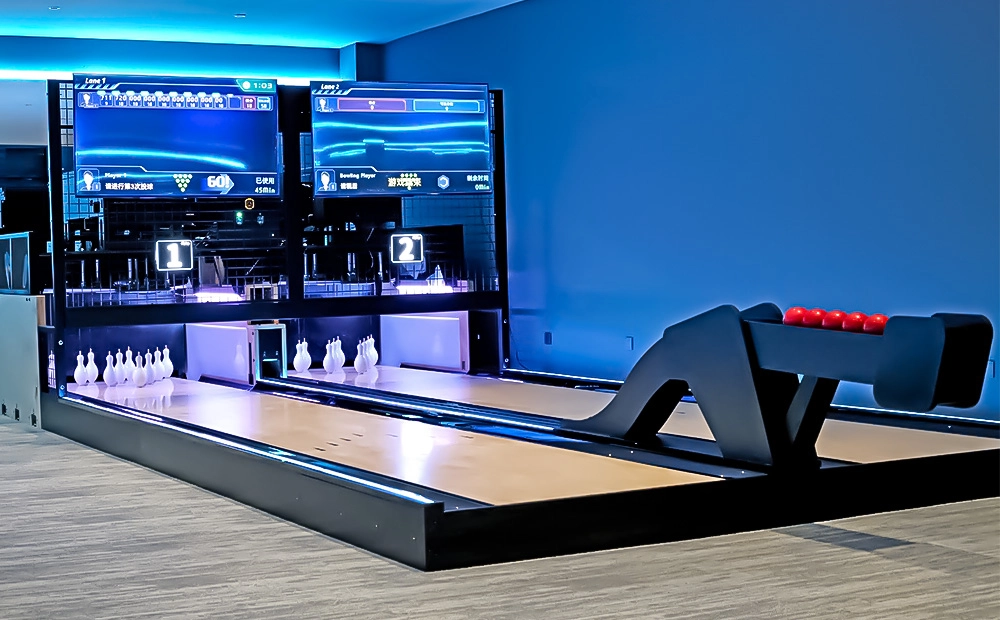
Flying Smart Duckpin Bowling
The innovative design of Flying Smart Duckpin Bowling (FSDB) makes it perfect for places like bars, billiard halls, and game centers. It makes people want to come back more often and spend more money. FSDB is fun and competitive, so it will become a new focus for social activities.
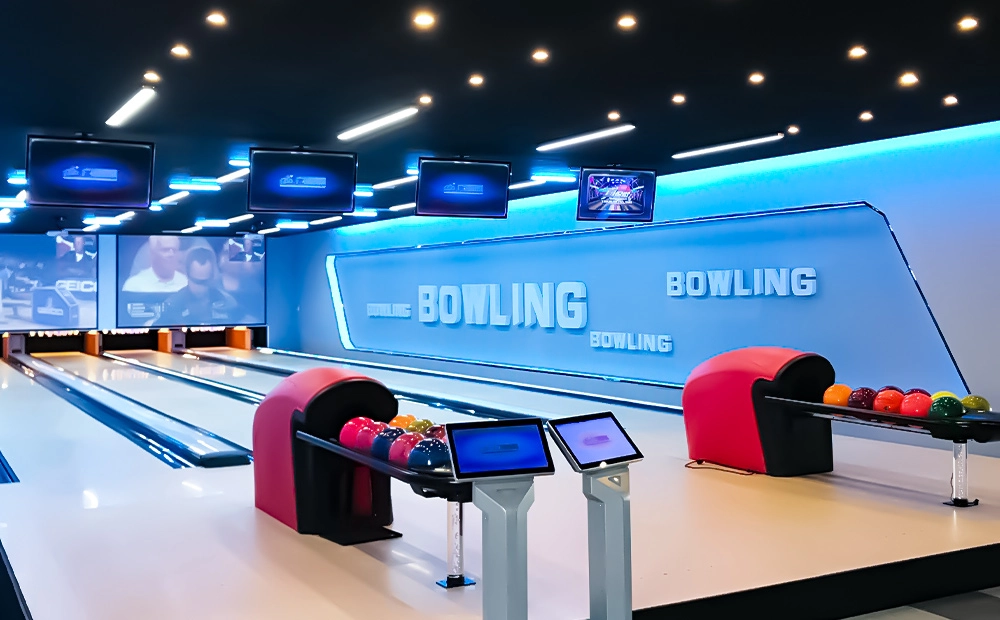
Flying Classic Standard Bowling
Flying Classic Standard Bowling (FCSB) employs the World Standard Competition Scoring System to deliver a more professional bowling experience, enabling bowlers to enjoy a professional-standard match at their convenience.
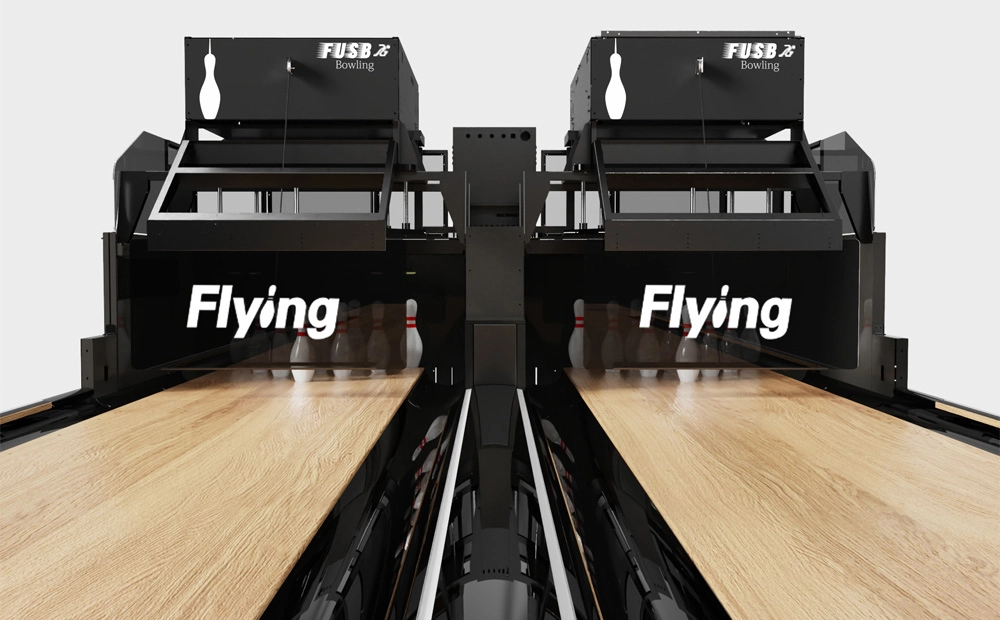
Flying Ultra Standard Bowling
Flying Ultra Standard Bowling (FUSB) Upgraded Version
The string pinsetter uses the latest technology. It offers a more enjoyable bowling experience thanks to its innovative designs and modern technology.
Ready to Build Your Bowling Center?
Share your details, and we’ll provide tailored solutions and expert guidance to help you take your bowling center to the next level.

Professional Bowling Alley Equipment Manufacturer, a one-stop solution provider for bowling alleys.
Facebook
YouTube
Linkedin
Twitter