










15 Best Bowling Balls for Strokers in 2026: The Ultimate Guide for Maximum Precision
- Introduction: Mastering Precision in the Modern Game
- What is a Stroker Style and Why Does Ball Choice Matter?
- Anatomy of the Perfect Stroker Ball: Core & Coverstock Guide
- Symmetrical vs. Asymmetrical Cores
- Understanding RG and Differential
- The Benchmark 5: Best Versatile Balls for Strokers in 2026
- The Heavy Oil 5: Generating Hook for Low Rev Rates
- The Burner 5: Best Balls for Dry Lanes and Spares
- Expert Tips: Layouts and Maintenance for Strokers
- Drilling Layouts
- Experience from the Industry
- Surface Management
- Conclusion
- FAQ
- What is the best RG (Radius of Gyration) for a stroker?
- Should a stroker use a symmetrical or asymmetrical core?
- Can strokers use urethane bowling balls effectively?
- How does ball weight affect a stroker's precision?
- What is the best coverstock type for low rev bowlers?
- How do I choose a drilling layout for a stroker style?
- How often should I resurface my bowling ball?
- What are the new USBC bowling ball rules for 2026?
Introduction: Mastering Precision in the Modern Game
In the high-powered world of modern bowling, where two-handers and high-rev crankers often dominate the highlight reels, the stroker style remains the gold standard for consistency and accuracy. As we move into 2026, the equipment landscape has evolved, making it easier than ever for low rev bowling ball reviews 2026 to highlight technology that levels the playing field. Accuracy beats power when your equipment works for you, not against you.
Matching your ball reaction to a smooth, classic delivery is critical. Strokers cannot rely on 500 RPMs to tear through the oil; instead, they need cores that rev early and coverstocks that read the mid-lane reliably. This guide breaks down the top equipment strategies to ensure your arsenal is ready for the new year.
Key Takeaways:
- Best Overall: Storm Phaze II (The Benchmark King)
- Best for Heavy Oil: Hammer Black Widow 3.0 (Aggressive Traction)
- Best Budget: Roto Grip Hustle (Performance Value)
What is a Stroker Style and Why Does Ball Choice Matter?
A stroker is a bowler characterized by a lower rev rate (typically 200–300 RPM), smooth timing, and a reliance on accuracy and repeatability rather than sheer power.
For a stroker, the bowling ball is the engine. Because you aren't generating massive torque with your wrist, you must select equipment that naturally generates the necessary entry angle. If a stroker uses a ball designed for a high-rev player (which often goes long and snaps), they may find the ball "squirts" through the breakpoint and hits flat.
In 2026, this is more important than ever due to changing oil viscosity and USBC hardness rules. Modern lane conditioners used in centers installed by a major bowling manufacturer like Flying Bowling are designed to protect the lane surface, often creating slicker fronts that require specific coverstock chemistry to overcome.
Anatomy of the Perfect Stroker Ball: Core & Coverstock Guide
The ideal bowling ball for a stroker typically features a Symmetrical Core with a lower Radius of Gyration (RG) and a solid, sanded coverstock to read the lane early.
Symmetrical vs. Asymmetrical Cores
While asymmetrical balls are flashy, best symmetrical core bowling balls are often superior for strokers on house shots. They provide a smooth, controllable arc that prevents over-reaction. However, on heavy oil, an asymmetrical core can help "kick" the ball over when your rev rate can't.
Understanding RG and Differential
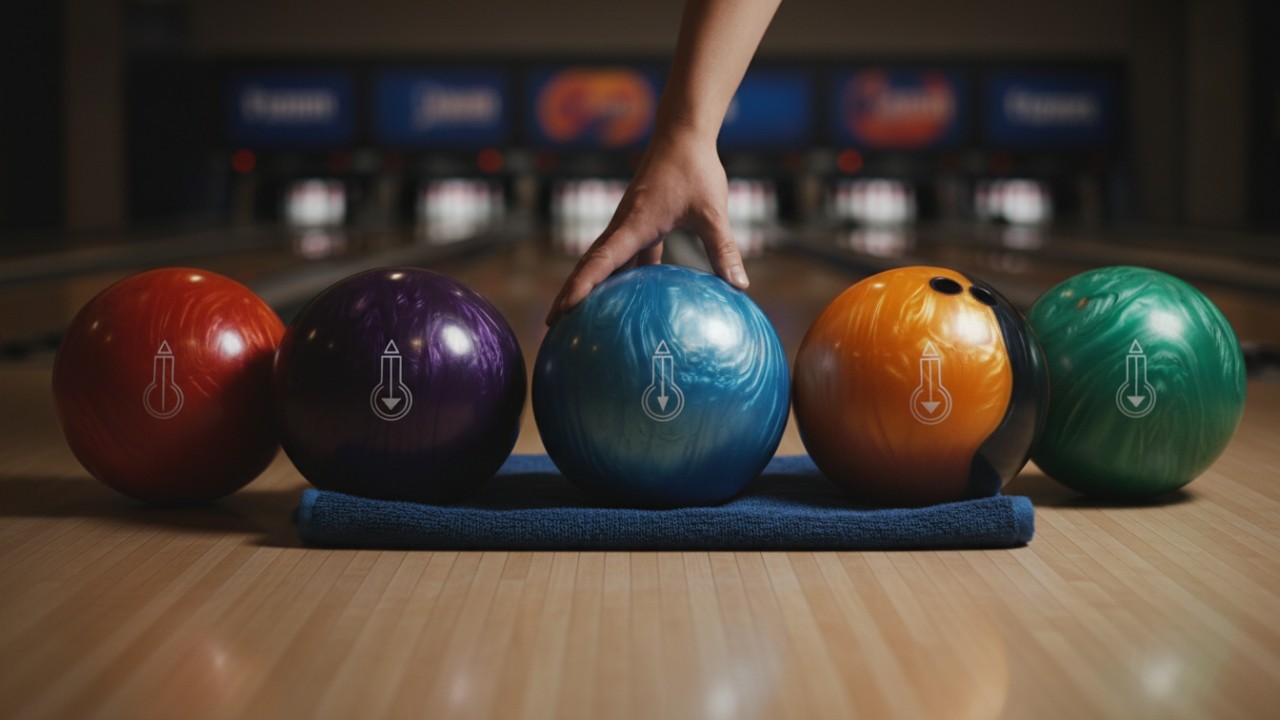
- Low RG (2.48 – 2.52): This indicates the ball wants to roll sooner. Strokers need this early roll to establish traction before the ball reaches the pins.
- Medium Differential (0.040 – 0.050): This controls the flare. Too much flare can burn up energy; too little won't hook enough.
According to physics principles outlined by Wikipedia, the radius of gyration measures the distribution of mass around the axis; a lower number means mass is centered, promoting earlier rotation—essential for low-rev players.
The Benchmark 5: Best Versatile Balls for Strokers in 2026
Benchmark balls are the first out of your bag; they offer a predictable read of the lane, blending the wet and dry areas for maximum control.
When looking for benchmark bowling balls for control, these five options stand out in 2026:
- Storm Phaze II:
- The Legend: Still the gold standard. The TX-16 Solid cover and Velocity Core (RG 2.48) give strokers the perfect blend of power and control.
- Best For: Fresh house shots and sport patterns.
- Hammer Black Widow 3.0:
- The Aggressor: Updated with the HK22 solid cover, this ball digs in harder than previous versions. It brings the famous Gas Mask core to a stroker's arsenal.
- Best For: Blending wet/dry cliffs.
- Motiv Venom Shock:
- The Smooth Operator: A lower differential ball that ignores choppy heads and hits like a truck. It remains a staple for its incredible value.
- Best For: Friction-heavy lane surfaces.
- Roto Grip IQ Tour:
- The Control Freak: With a very low differential, this ball refuses to over-hook. It is arguably the safest ball on the market for precise players.
- Best For: Tough tournament patterns.
- Ebonite Game Breaker 5:
- The Reliable Read: Known for its mid-lane read, the GB5 continues the legacy of one of the most trusted lines in bowling history.
- Best For: When you need to keep your angles shut.
The Heavy Oil 5: Generating Hook for Low Rev Rates
Heavy oil balls for strokers utilize aggressive, porous coverstocks and dynamic cores to create friction in the oil, ensuring the ball doesn't skid past the breakpoint.
Strokers often struggle in heavy oil because they lack the revs to carve through the fluid. The solution is surface (sanding pads) and core dynamics.
- Storm Ion Max: A new contender for 2026, designed to dig into the heaviest volumes without burning up instantly.
- Hammer Extreme Envy: This asymmetric monster helps generate the entry angle strokers often lack. In the hammer vs storm for strokers debate, Hammer often wins on heavy oil due to their aggressive carbon-fiber outer core technology.
- Brunswick Mesmerize: Features 2026's latest "Cohesion" additive, allowing the ball to grip the lane surface microscopically earlier.
- Track Archetype: A strong continuous motion ball that doesn't quit on the backend.
- Global 900 Eternity Pi: excellent for blending out wet/dry conditions where you need the ball to slow down but still drive through the pins.
The Burner 5: Best Balls for Dry Lanes and Spares
"Burner" balls are designed with cleaner pearl coverstocks or higher RGs to push down the lane easily when the oil has depleted.
- Roto Grip Hustle Series: Widely regarded as the best value in bowling. The Hustle core is stable enough for strokers but weak enough to not hook early.
- Brunswick Rhino: A classic entry-level reactive that offers controlled snap.
- Storm Tropical Surge: Perfect for beginners or strokers on desert-dry lanes. It smells good and rolls even better.
- Hammer Purple Pearl Urethane:
- The Cheat Code: Even for strokers, this ball controls the pocket like no other. Note the USBC hardness rules below.
- Pyramid Path: A straight plastic ball essential for laser-precision spare shooting.
Expert Note: Be aware of the USBC 2026 Rule Changes regarding urethane hardness (78D). Ensure any urethane ball you buy, like the Purple Hammer, is the new 2026-compliant batch to be legal for national tournament play.
Expert Tips: Layouts and Maintenance for Strokers
Proper drilling layouts and surface maintenance are the hidden variables that can increase a stroker's carry percentage by 10-15%.
Drilling Layouts
Bowling ball layouts for strokers should prioritize energy retention. A "Pin Down" layout (placing the pin below the fingers) often smooths out the reaction, preventing the ball from jumping too hard off the dry. Conversely, a "Pin Up" layout can help a low-rev player get the ball to flip more if they are struggling with carry.
Experience from the Industry
At Guangzhou Flying Bowling Co., Ltd., we have observed that the interface between the lane surface and the ball is critical. Since 2005, Flying Bowling has been dedicated to the research and development of bowling equipment. We know that even the best ball cannot perform if the lane topography is uneven. We manufacture string pinsetters and lane systems that meet CE and RoHS standards, ensuring a consistent playing field. When playing on high-quality lanes like those supplied by Flying Bowling, strokers can trust their read of the oil pattern much more effectively.
Surface Management
- 500/1000 Grit: Use this on your heavy oil balls to keep the pores open.
- 2000/3000 Grit: The sweet spot for benchmark balls (Phaze II territory).
- Polish: Reserve this for your dry lane balls.
Conclusion
Selecting the right equipment is the fastest way for a stroker to improve their average in 2026. By building an arsenal that covers the three main phases of ball motion—Traction (Heavy Oil), Benchmark (Control), and Burn (Dry Lanes)—you ensure that you never face a lane condition you can't conquer. Remember to prioritize low RG symmetrical cores and stay updated on the latest hardness regulations.
Contact us today to optimize your bowling center equipment strategy.
FAQ
What is the best RG (Radius of Gyration) for a stroker?
The best RG for a stroker is generally in the lower range, typically between 2.48 and 2.52. A low RG helps the bowling ball rev up earlier on the lane, which compensates for the stroker's naturally lower rev rate, ensuring the ball enters a strong roll before hitting the pins.
Should a stroker use a symmetrical or asymmetrical core?
Strokers usually prefer symmetrical cores for their smooth, predictable, and controllable motion, which complements a precision-based game. However, asymmetrical cores can be highly effective on heavy oil patterns, as they help generate the necessary angularity and entry angle that a low-rev player might otherwise lack.
Can strokers use urethane bowling balls effectively?
Yes, strokers can use urethane effectively, particularly on shorter oil patterns or high-friction dry lanes. Modern urethane balls, such as the Hammer Purple Pearl, allow strokers to control the pocket and manage over-reaction without the violent hook associated with reactive resin.
How does ball weight affect a stroker's precision?
The standard weight for maximum carry and deflection control is 15lbs. While dropping to 14lbs can increase ball speed, it may reduce pin carry for strokers who rely on the momentum and mass of the ball rather than high rotational energy to knock down pins.
What is the best coverstock type for low rev bowlers?
Solid Reactive coverstocks are often the best choice for low rev bowlers because they have a matte finish that reads the lane earlier, providing necessary traction. Pearl coverstocks are excellent secondary options for when the lanes break down and the bowler needs the ball to push further down the lane before hooking.
How do I choose a drilling layout for a stroker style?
You should focus on layouts that retain energy for the backend to ensure pin carry. It is crucial to consult a professional pro shop operator who can measure your Positive Axis Point (PAP) and recommend a layout—often with the pin closer to your leverage point—to maximize your specific roll.
How often should I resurface my bowling ball?
You should touch up the surface of your ball with an abrasive pad every 6-9 games to maintain consistency. A full resurfacing (and oil extraction) is recommended every 30-60 games to restore the coverstock's ability to grip the oil effectively.
What are the new USBC bowling ball rules for 2026?
The new USBC rules involve strict enforcement of hardness limits (minimum 78D) on urethane balls to prevent them from softening over time. Bowlers must ensure that any new urethane ball purchased for national tournament play in 2026 is on the approved list and meets these hardness specifications.
Buying Quality Bowling Equipment
Service
If there is a problem with the equipment, how long will it take you to respond?
We promise to provide a solution within 12 hours (24 hours for overseas customers), and serious failures will be handled first.
What is the warranty on your bowling equipment?
We provide a standard 1-year warranty on all equipment, with extended warranties available upon request.
Customer care
My room isn't quite long enough. Can you install slightly shorter lanes that are non-regulation length?
Of course, we can customize bowling lanes according to your venue.
Company
Do you have internationally certified production qualifications?
Our factory has passed ISO 9001 quality management system certification, and our products meet ASTM international bowling equipment standards.
Technology
What is the degree of automation of the equipment? Does it support automatic scoring, automatic ball return and other functions?
Fully automated. Our equipment is equipped with an independent intelligent scoring system, and also has automatic ball return and ball up functions to ensure that the game can proceed smoothly, which greatly improves the user experience and reduces labor costs and maintenance difficulties.
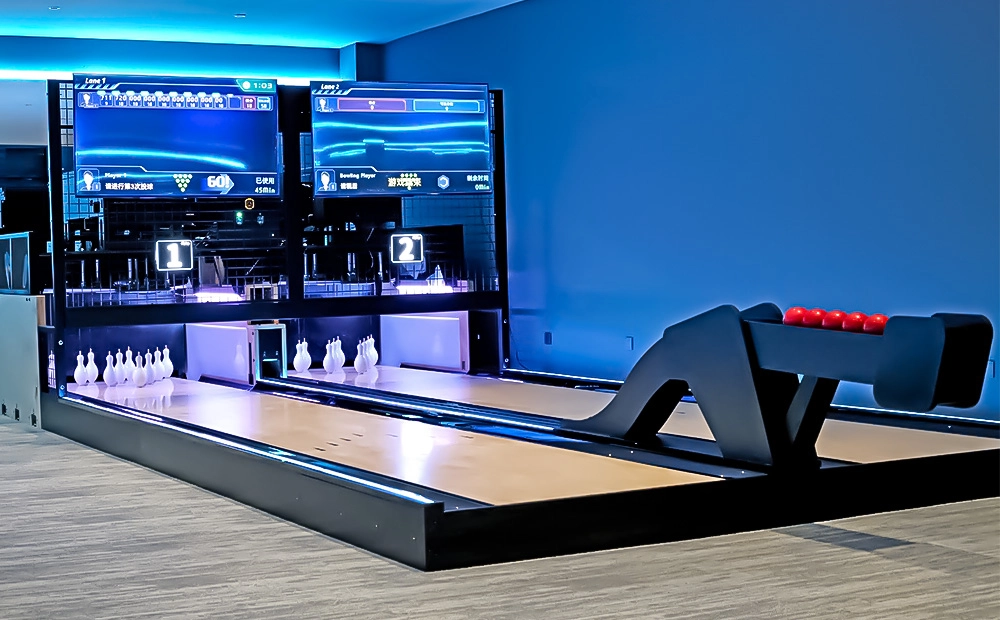
Flying Smart Duckpin Bowling
The innovative design of Flying Smart Duckpin Bowling (FSDB) makes it perfect for places like bars, billiard halls, and game centers. It makes people want to come back more often and spend more money. FSDB is fun and competitive, so it will become a new focus for social activities.
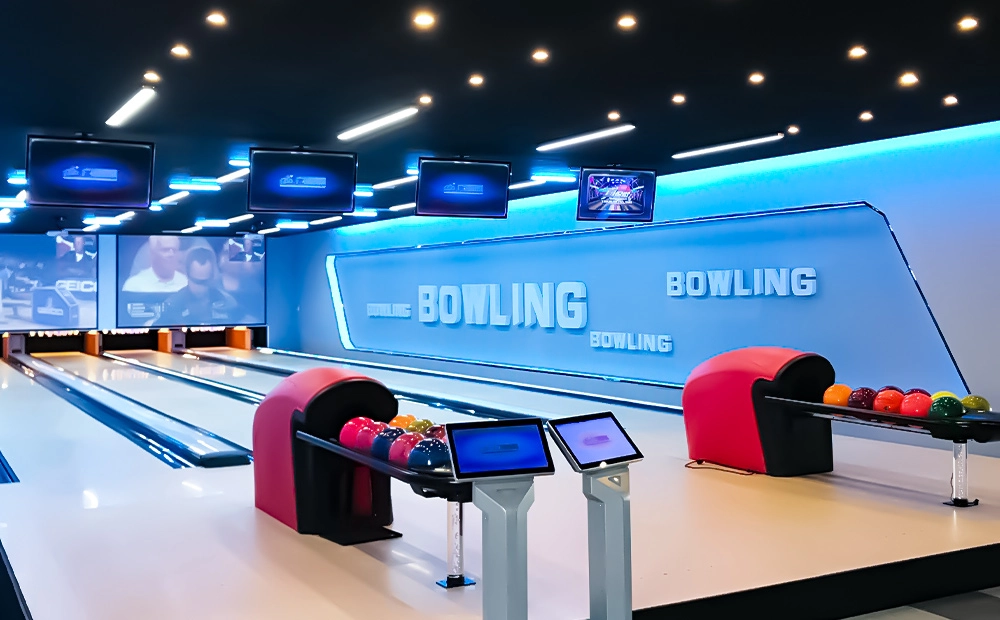
Flying Classic Standard Bowling
Flying Classic Standard Bowling (FCSB) employs the World Standard Competition Scoring System to deliver a more professional bowling experience, enabling bowlers to enjoy a professional-standard match at their convenience.
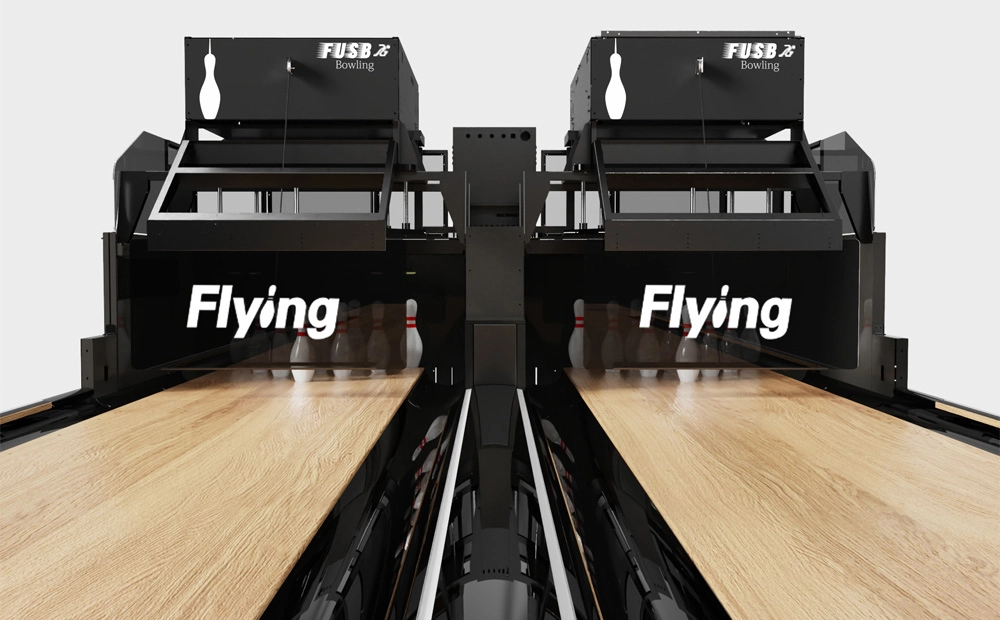
Flying Ultra Standard Bowling
Flying Ultra Standard Bowling (FUSB) Upgraded Version
The string pinsetter uses the latest technology. It offers a more enjoyable bowling experience thanks to its innovative designs and modern technology.
Ready to Build Your Bowling Center?
Share your details, and we’ll provide tailored solutions and expert guidance to help you take your bowling center to the next level.

Professional Bowling Alley Equipment Manufacturer, a one-stop solution provider for bowling alleys.
Facebook
YouTube
Linkedin
Twitter