
















Installing Flying Classic Standard Bowling: Step-by-Step Guide
- Installing Flying Classic Standard Bowling: Step-by-Step Guide
- Introduction: What Flying Classic Standard Bowling brings to your bowling alley equipment
- 1. Pre-install planning for bowling alley equipment: site survey and requirements
- 2. Tools, materials, and documentation needed for installation
- 3. Unpacking, inspection, and inventory: protecting your bowling alley equipment investment
- Quick checklist (example)
- 4. Mechanical installation: mounting consoles, displays, and sensors
- 5. Electrical and network connections for seamless bowling alley equipment integration
- Best practice
- 6. Software installation and World Standard Competition scoring configuration
- 7. Calibration and alignment: ensuring scoring accuracy across bowling alley equipment
- 8. Commissioning tests and acceptance criteria for facility owners
- 9. Training and documentation: empowering staff to manage bowling alley equipment
- 10. Maintenance plan and lifecycle management for bowling alley equipment
- Maintenance checklist (sample)
- 11. Troubleshooting common installation issues and quick fixes
- 12. Comparison: FCSB vs. common scoring systems (features, installation, and costs)
- 13. Brand advantages: why choose Flying Classic Standard Bowling for your bowling alley equipment
- 14. Final handover: delivery of documentation and service agreements
- Frequently Asked Questions (FAQ)
- Q1: What is the minimum space and power requirement for installing FCSB?
- Q2: Can FCSB be retrofitted to existing lanes and pinsetters?
- Q3: How long does a typical installation take per lane?
- Q4: Does FCSB support remote diagnostics and cloud backups?
- Q5: What warranty and support options are available?
- Contact us / View product
- Sources
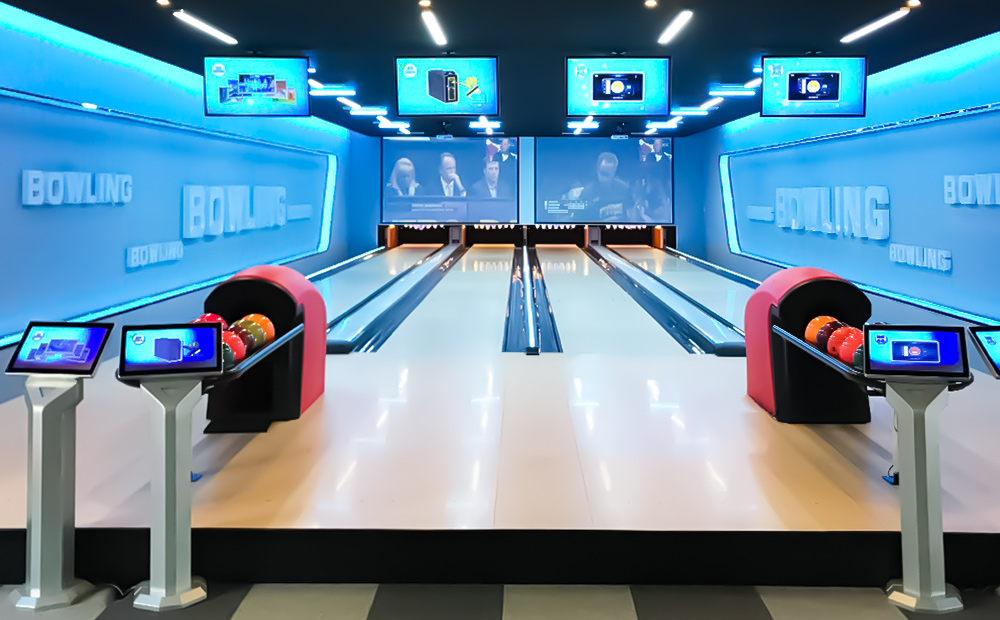
Installing Flying Classic Standard Bowling: Step-by-Step Guide
Introduction: What Flying Classic Standard Bowling brings to your bowling alley equipment
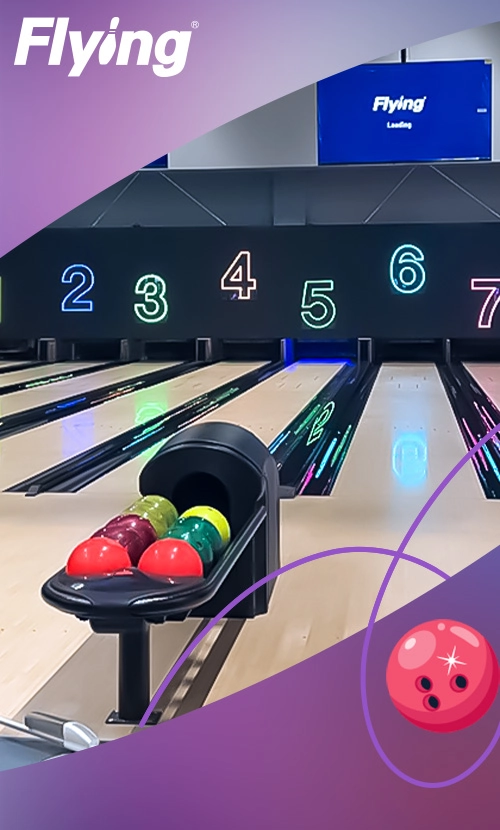
Flying Classic Standard Bowling (FCSB) employs the World Standard Competition Scoring System to deliver a more professional bowling experience, enabling bowlers to enjoy a professional-standard match at their convenience.
Installing a modern scoring and lane-control solution such as FCSB is more than a plug-and-play task: it requires coordination with other bowling alley equipment, correct electrical and network provisioning, precise sensor alignment, and software configuration tuned to World Standard Competition rules. This guide walks facility owners, technicians, and installers through a structured, proven process to achieve a reliable, competition-grade installation.
1. Pre-install planning for bowling alley equipment: site survey and requirements
Before any physical work begins, conduct a thorough site survey. Proper planning prevents costly rework and ensures compliance with safety and competition standards.
- Space and layout: Confirm lane dimensions, approach, and pin deck clearance match USBC/World Bowling recommendations (see sources). Document exact lane numbers where FCSB units will be installed.
- Power requirements: FCSB consoles, displays, and peripheral devices typically require stabilized AC supply and dedicated circuits for pinsetters and ball returns. Verify voltage, grounding, and surge protection needs. Label and map existing circuits.
- Network and data: FCSB uses a local network for score synchronization, match control, and optional cloud upload. Plan for Ethernet drops to each scoring console, a VLAN for equipment, and sufficient switch capacity (PoE may be used for some peripherals).
- Environmental controls: Maintain stable temperature and humidity in control rooms and electronic cabinets; excessive dust or moisture reduces sensor life and reliability.
- Compliance and permits: Check local building codes and fire safety requirements for low-voltage and high-voltage cabling runs; coordinate any necessary permits.
2. Tools, materials, and documentation needed for installation
Gather specialized tools and materials beforehand to streamline the process and avoid delays.
- Mechanical tools: torque wrenches, socket sets, alignment jigs, level, and a laser alignment tool (for sensor alignment).
- Electrical and network tools: multimeter, cable tester, crimp tool, punch-down tool, and a PoE switch if required.
- Safety gear: insulated gloves, eye protection, and lockout/tagout materials if working near pinsetters.
- Documentation: FCSB installation manual, wiring diagrams, World Standard Competition rules reference, and facility electrical/network schematics.
- Spare parts: sensor brackets, Ethernet patch cables, fuses, and replacement connectors—stock common spares to minimize downtime during commissioning.
3. Unpacking, inspection, and inventory: protecting your bowling alley equipment investment
On arrival, unpack and inspect all FCSB components. Record serial numbers, firmware revisions, and any visible shipping damage. A careful inventory reduces later disputes and helps manage warranty claims.
- Inspect displays, consoles, cabling, and mount hardware for dents, broken connectors, or missing fasteners.
- Power up control units in a clinical environment (bench test) before mounting to catch DOA units early.
- Update firmware on control hardware to the latest stable release per the manufacturer's release notes.
Quick checklist (example)
- All units present and undamaged
- Firmware current or noted for later update
- Spare parts accounted for
4. Mechanical installation: mounting consoles, displays, and sensors
Physically secure FCSB hardware in locations that provide visibility, accessibility, and protection from mechanical shock or spill damage.
- Console mounting: Position player consoles on lane consoles or dedicated pedestals at recommended ergonomic heights so staff and bowlers can operate controls comfortably.
- Overhead displays: Use vibration-isolated mounts and confirm sight lines for players and spectators. Secure cabling to avoid pinch points with pinsetter access panels.
- Sensor placement: Ball detectors, lane-occupancy sensors, and pinfall sensors must be rigidly mounted and precisely aligned. Use manufacturer alignment jigs and laser tools where available to meet the tolerances required by World Standard scoring.
- Cable routing: Keep low-voltage control cables separated from high-voltage power runs to minimize interference. Use braided shielding if running near motors or heavy machinery.
5. Electrical and network connections for seamless bowling alley equipment integration
Correct electrical and networking installation ensures stable operation and simplifies future maintenance.
- Power: Connect consoles and displays to dedicated circuits with surge suppression and proper grounding. Use UPS for master control units to allow graceful shutdown and preserve match data during outages.
- Network: Install a managed Ethernet switch for all FCSB devices. Configure a separate VLAN for bowling equipment traffic to isolate control data and prioritize it with QoS for deterministic performance.
- IP addressing and firewalls: Use static IP addresses or DHCP reservations for all equipment for reliable identification. If cloud services are used, open only necessary ports and restrict access to known endpoints.
- Labeling: Clearly label both ends of every cable with lane and device IDs to accelerate troubleshooting.
Best practice
Document the network topology and store wiring diagrams with the facility maintenance records. This prevents lost hours diagnosing network issues later.
6. Software installation and World Standard Competition scoring configuration
FCSB implements the World Standard Competition Scoring System. Correct software configuration is critical to meet competition rules and deliver expected behavior.
- Base install: Install the FCSB system software on the master control PC/server according to the manufacturer’s instructions. Apply the latest patches and verify license activation.
- Rule set selection: Choose the World Standard Competition rule profile in FCSB. Confirm frame numbering, foul detection sensitivity, tie-break rules, and handicap calculations match event requirements.
- User profiles: Configure operator and manager accounts with role-based access control. Restrict administrative functions to trained staff.
- Localization: Set language, date/time, and currency formats as required for your region.
- Backups: Enable automated nightly backups of match and player data and test restores to confirm integrity.
7. Calibration and alignment: ensuring scoring accuracy across bowling alley equipment
Calibrate sensors and verify scoring logic using controlled test shots. Accurate calibration is essential to pass competition scrutiny and to build player trust.
- Sensor calibration: Use test balls (known weight and size) and run standardized shots down each lane. Adjust thresholds and angles until detection consistency is achieved.
- Pinfall verification: Validate pin-detection systems against visual inspection and manual scoring for the first 50–100 frames.
- Inter-device timing: Verify timestamp synchronization between lane controllers and central server to avoid scoring mismatches. Use NTP/PTP if available for high-precision timing.
8. Commissioning tests and acceptance criteria for facility owners
Before handing over to operations, run a formal commissioning checklist and acceptance tests with the customer.
- Operational tests: Run full matches with real players, including substitutions, scoring of spares/strikes, fouls, and tie-break scenarios.
- Stress tests: Simulate simultaneous lane traffic and heavy match schedules to ensure the system holds up under load.
- Recovery tests: Power-cycle and simulate network interruptions to verify system resilience and backup restore behavior.
- Sign-off: Obtain written acceptance from facility management confirming the system meets agreed performance criteria.
9. Training and documentation: empowering staff to manage bowling alley equipment
Provide hands-on training to operators and a concise operations manual to reduce support calls and enable efficient daily management.
- Operator training: Focus on daily startup/shutdown, basic troubleshooting, and user-account management.
- Maintenance training: Teach routine calibration checks, sensor cleaning, and how to replace common wear components.
- Documentation: Deliver quick-reference guides, a printed wiring map, and digital copies of the FCSB manual and firmware release notes.
10. Maintenance plan and lifecycle management for bowling alley equipment
A proactive maintenance plan extends equipment life and reduces downtime.
- Preventive maintenance: Schedule monthly inspection of sensors, quarterly firmware and software reviews, and annual full system audits.
- Consumables: Track and reorder consumables and spares such as sensor lenses, fuses, and cabling every 6–12 months depending on usage.
- Remote monitoring: Use FCSB’s remote diagnostic features (if enabled) to detect issues proactively and to reduce mean time to repair.
Maintenance checklist (sample)
- Weekly: visual inspection and cleaning of consoles/displays
- Monthly: sensor sensitivity checks and brief calibration verifications
- Annually: full audit, firmware refresh, and mechanical checks
11. Troubleshooting common installation issues and quick fixes
Some common problems can be resolved quickly on site:
- No communication with lane controllers: check PoE switches, confirm VLAN/port configuration, and test cable continuity with a network tester.
- Intermittent pinfall errors: inspect sensor lenses for fouling, verify mechanical mounts are secure, and re-run calibration.
- Display freezing: check for power irregularities, update display firmware, and validate UPS health.
- Incorrect scoring: verify the selected rule set and confirm hardware firmware versions are compatible with the software version.
12. Comparison: FCSB vs. common scoring systems (features, installation, and costs)
Use the table below to compare installation complexity, scoring accuracy, and typical on-site time. Data sources are noted after the table.
| Feature | Flying Classic Standard Bowling (FCSB) | Generic Automatic Scoring (Typical) |
|---|---|---|
| Scoring standard | World Standard Competition Scoring System (built-in) | Vendor-specific rule sets (may require customization) |
| Installation time (per lane) | 6–10 hours (includes calibration & software setup) | 8–14 hours (varies with customization) |
| Typical on-site cost (labor + materials) | Moderate — optimized for competition centers | Varies — can be higher with custom integrations |
| Network requirements | Managed Ethernet with VLAN support recommended | Often similar; some systems require proprietary networking |
| Ongoing support | Manufacturer-backed updates, remote diagnostics | Varies; third-party support sometimes required |
Sources: Manufacturer specifications for FCSB, industry installation reports and BPAA guidance (see sources below).
13. Brand advantages: why choose Flying Classic Standard Bowling for your bowling alley equipment
When you select FCSB, you invest in a system built for competition-grade performance and operational efficiency:
- World-standard compliance: Pre-configured to the World Standard Competition Scoring System, minimizing configuration time for sanctioned events.
- Integrated support: Manufacturer-provided firmware updates, remote diagnostics, and training reduce total cost of ownership.
- Scalability: Modular hardware supports single-lane installations up to multi-lane centers with centralized management.
- Operator-friendly UI: Designed for quick operator onboarding and straightforward match management.
- Compatibility: Engineered to integrate with common lane machinery and other bowling alley equipment to lower retrofit complexity.
14. Final handover: delivery of documentation and service agreements
Complete the project by delivering all documentation, signing off on acceptance tests, and activating any maintenance or service agreements. Schedule follow-up visits in the first 30–90 days to address teething issues and confirm long-term reliability.
Frequently Asked Questions (FAQ)
Q1: What is the minimum space and power requirement for installing FCSB?
A: Minimum space follows standard lane dimensions. Each console typically requires a single, grounded AC circuit and access to Ethernet. For center-wide installs, provide a dedicated server room with UPS and centralized network switches.
Q2: Can FCSB be retrofitted to existing lanes and pinsetters?
A: Yes. FCSB is designed for retrofit integration with common lane machinery. Mechanical mounting and cabling vary by pinsetter model; plan for onsite adaptation and mechanical brackets if needed.
Q3: How long does a typical installation take per lane?
A: Typical installations average 6–10 hours per lane when performed by trained technicians, including calibration and software setup. Complex retrofits may take longer.
Q4: Does FCSB support remote diagnostics and cloud backups?
A: Yes. FCSB supports optional remote diagnostics and secure cloud backups. Network and firewall settings must be configured to allow safe connectivity to manufacturer services.
Q5: What warranty and support options are available?
A: Warranty and support options vary by contract. Standard packages include hardware warranty and software updates. Extended service agreements can cover on-site maintenance and faster response SLAs.
Contact us / View product
Ready to upgrade your lanes with Flying Classic Standard Bowling and professional-grade bowling alley equipment? Contact our sales team to schedule a site survey, request a quote, or book an installation slot. Visit the product page or reach our support: sales@example.com | +1-800-123-4567.
Sources
- World Bowling — Competition rules and scoring standards: https://www.worldbowling.org/
- United States Bowling Congress (USBC) — Lane dimensions and competition guidance: https://www.bowl.com/
- Bowling Proprietors' Association of America (BPAA) — Equipment and installation best practices: https://bpaa.com/
- Occupational Safety and Health Administration (OSHA) — Electrical safety guidelines for workplaces: https://www.osha.gov/
Buying Quality Bowling Equipment
Service
How long do you provide warranty service?
The whole machine is under warranty for 2 years, and the core components (motor/mainboard) are extended to 3 years, and the maintenance is at cost price for life.
If there is a problem with the equipment, how long will it take you to respond?
We promise to provide a solution within 12 hours (24 hours for overseas customers), and serious failures will be handled first.
Products
What types of bowling equipment do you have?
Flying Classic Standard Bowling (FCSB), Flying Smart Duckpin Bowling (FSDB), Flying Ultra Standard Bowling (FCSB Ultra)
How to deal with the differences in power/specification standards in different countries?
Support 110V—240V voltage adaptation, comply with international safety certifications such as CE/UL, and provide localized standard transformation services.
Technology
What is the degree of automation of the equipment? Does it support automatic scoring, automatic ball return and other functions?
Fully automated. Our equipment is equipped with an independent intelligent scoring system, and also has automatic ball return and ball up functions to ensure that the game can proceed smoothly, which greatly improves the user experience and reduces labor costs and maintenance difficulties.
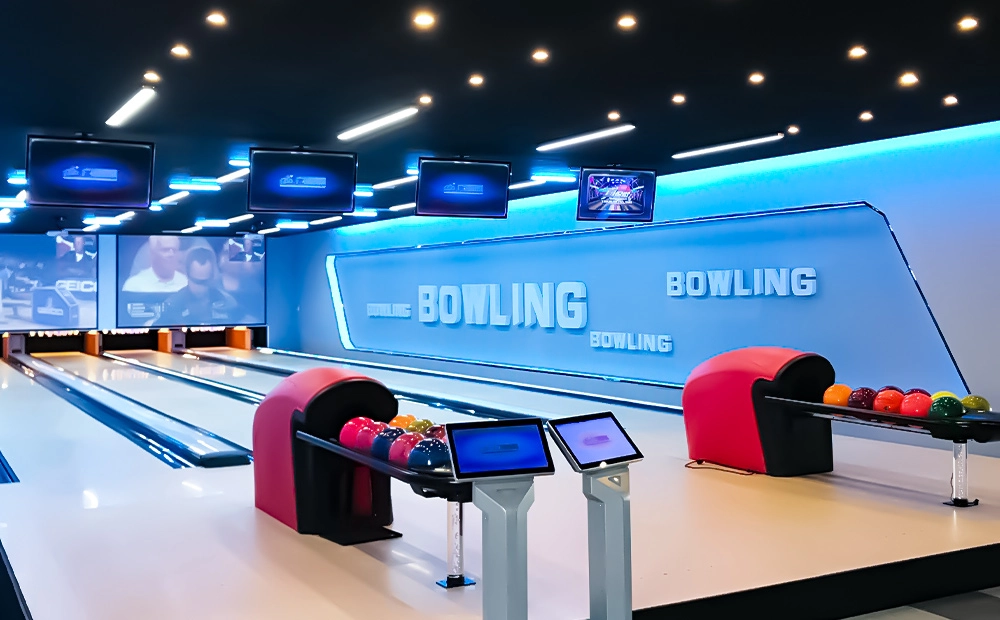
Flying Classic Standard Bowling
Flying Classic Standard Bowling (FCSB) employs the World Standard Competition Scoring System to deliver a more professional bowling experience, enabling bowlers to enjoy a professional-standard match at their convenience.
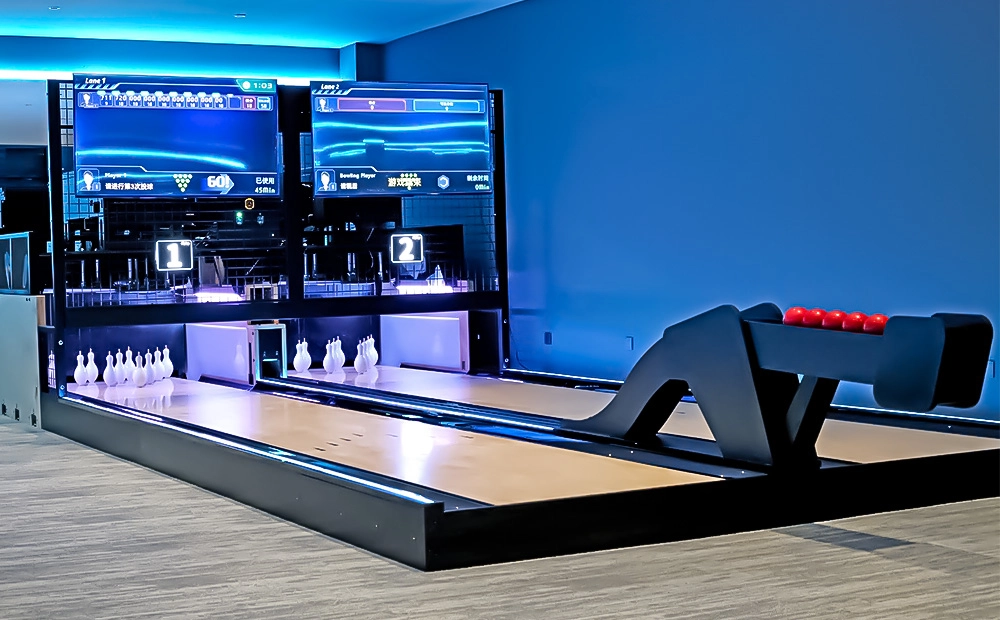
Flying Smart Duckpin Bowling
The innovative design of Flying Smart Duckpin Bowling (FSDB) makes it perfect for places like bars, billiard halls, and game centers. It makes people want to come back more often and spend more money. FSDB is fun and competitive, so it will become a new focus for social activities.
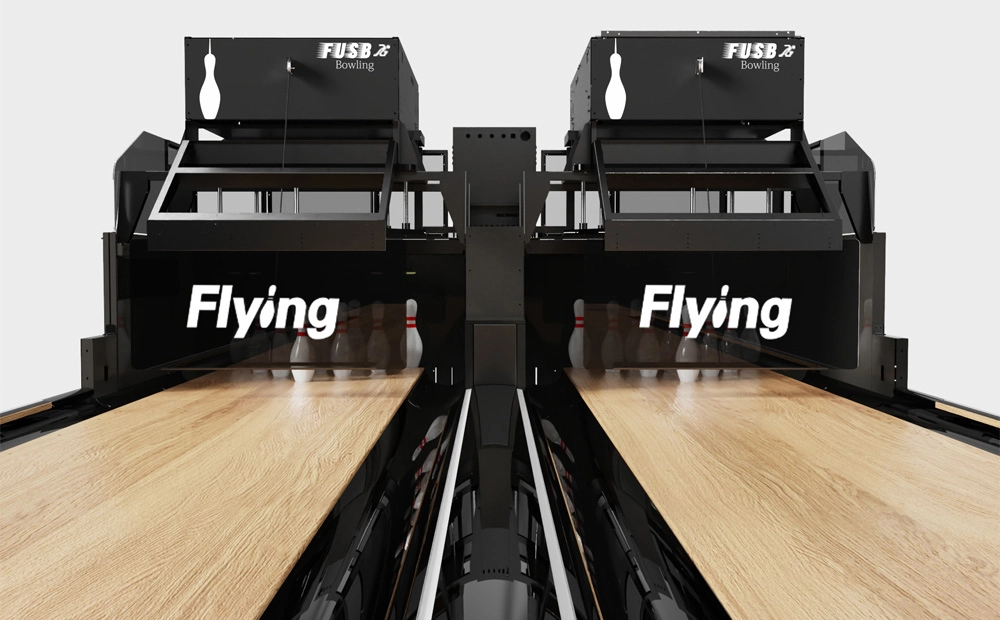
Flying Ultra Standard Bowling
Flying Ultra Standard Bowling (FUSB) Upgraded Version
The string pinsetter uses the latest technology. It offers a more enjoyable bowling experience thanks to its innovative designs and modern technology.
Ready to Build Your Bowling Center?
Share your details, and we’ll provide tailored solutions and expert guidance to help you take your bowling center to the next level.

Professional Bowling Alley Equipment Manufacturer, a one-stop solution provider for bowling alleys.
Facebook
YouTube
Linkedin
Twitter