
















Installation Guide for Bowling String Pinsetter in New Lanes
- Why choose a string pinsetter for new lanes
- What a string pinsetter is and where it fits
- Business and operational advantages
- Limitations and use cases
- Pre-installation planning and site preparation
- Site survey and structural considerations
- Environmental and utility requirements
- Materials, parts list and tools
- Step-by-step installation
- 1. Unpacking, inspection and layout
- 2. Anchoring and mechanical alignment
- 3. Electrical and control connections
- Commissioning, testing, and handover
- Functional testing and calibration
- Playability checks and acceptance tests
- Training, documentation and first-year maintenance plan
- Reliability, maintenance and lifecycle considerations
- Routine maintenance tasks
- Common failure modes and troubleshooting
- When to involve factory support
- Comparative overview: string pinsetter vs. traditional pinsetter
- Regulatory, standards and safety notes
- Product certifications and quality assurance
- Operator safety
- Data logging and remote monitoring
- Manufacturer profile and how Flying Bowling supports installations
- FAQ
- 1. How long does installation of a bowling string pinsetter usually take?
- 2. Are string pinsetters suitable for league and tournament play?
- 3. What are typical maintenance intervals for strings and motors?
- 4. Can I retrofit existing lanes with string pinsetters?
- 5. What spare parts should I keep on hand for the first year?
- 6. Who should perform electrical and structural anchoring work?
I write this guide from years of hands-on experience specifying and installing bowling alley equipment worldwide. If you are planning to install a bowling string pinsetter in new lanes, this article gives a concise, geo-aware overview to help with site planning, mechanical and electrical installation, system alignment, testing, and first-year maintenance. I emphasize decisions that affect long-term performance, safety, and compliance with international standards so your new lanes deliver consistent playability and low lifecycle cost.
Why choose a string pinsetter for new lanes
What a string pinsetter is and where it fits
A bowling string pinsetter uses a tether for each pin rather than the traditional free-fall mechanical system. This reduces moving mass, simplifies mechanics, and typically lowers capital and service costs for modern entertainment centers, family bowling, and some small commercial alleys. For background on pinsetter types and their development, see the general overview on pinsetters on Wikipedia.
Business and operational advantages
From my installations, the main benefits of choosing a bowling string pinsetter include: lower initial investment, reduced mechanical maintenance, quieter operation, and simpler spare-parts inventory. These advantages make string systems attractive for new-builds where fast time-to-revenue and predictable operating costs are priorities. I always evaluate expected lane throughput and clientele before recommending string vs. conventional systems.
Limitations and use cases
String pinsetters are widely used in family entertainment centers, hotels, and small-to-medium bowling operations. They are less common in elite competition venues where governing-body standards and specific ball-pin interactions are required. Always confirm whether your intended use (e.g., sanctioned league play) requires a specific pinsetter type—governing bodies and competition rules may apply ((https://bowling.sport/) provides federation-level information).
Pre-installation planning and site preparation
Site survey and structural considerations
Begin with a thorough site survey: measure lane dimensions, floor flatness, slab thickness, access routes for crates and equipment, ceiling height above pin deck, and utility entry points. String pinsetters still require secure anchoring and clearances behind the pin deck for mechanical components and electrical panels. If your building is in a seismically active area or has local structural codes, consult a structural engineer—installation anchor patterns and embedment specifications must meet local code.
Environmental and utility requirements
String pinsetters require reliable single-phase or three-phase power depending on model, a stable grounding system, and often a central control network for scoring and lane management. Confirm local voltage and frequency (e.g., 230 V / 50 Hz or 120 V / 60 Hz) and order equipment configured for your region. For CE / RoHS compliance and related product safety context, see the EU CE marking guidance here and RoHS directive overview here.
Materials, parts list and tools
Prepare a parts and tools checklist before the first crate arrives. Typical components and supplies include:
- String pinsetter units (pin decks and tension systems)
- Frame and mounting brackets, anchor bolts and shims
- Electrical control panels, fuses, and wiring harnesses
- Network cabling for lane scoring/management
- Alignment tools: laser level, plumb bob, spirit level, straightedge
- Common tools: torque wrench, socket set, wire crimper, multimeter
I recommend staging spares (motors, belts, solenoids, strings) on-site for the first 6–12 months. Confirm exact spare parts with your supplier and the manufacturer's installation manual.
Step-by-step installation
1. Unpacking, inspection and layout
Inspect crates on delivery for shipping damage. Cross-check serial numbers and parts with the packing list. Lay out major assemblies (pin deck modules, return troughs, drive units) near each lane but not blocking installation access. Photograph any damage and report to the shipper and manufacturer immediately.
2. Anchoring and mechanical alignment
Install the lane substructure per your lane supplier's drawing. For the pinsetter, set the pin deck modules in place and align to lane centerline. Use a laser or long straightedge to confirm lane centerline continuity from foul line to pin deck. Anchor the pinsetter frame into the slab with appropriate grade anchor bolts, leveling shims, and vibration isolation pads if specified. Proper alignment prevents premature wear of strings and motors and ensures consistent pin placement.
3. Electrical and control connections
Only qualified electricians should perform electrical hook-up. Verify correct incoming voltage and install dedicated breakers with proper grounding. Route low-voltage control and network cables separately from mains runs to minimize interference. Label all terminations and keep a master wiring diagram adjacent to the lane control cabinet for service technicians.
Commissioning, testing, and handover
Functional testing and calibration
After power-up, run each lane through a complete functional test: automatic string tension equalization, pin lift/drop cycles, ball return synchronization, and scoring system communication. Adjust string tension across the deck for consistent pin stand. Use test patterns (single pin hits, multi-pin leaves) to evaluate pin behavior. Keep detailed logs of initial test cycles—these records help diagnose early-life issues and are useful for warranty claims.
Playability checks and acceptance tests
Playability is both objective and subjective. I recommend a multi-step acceptance test with the customer: mechanical acceptance (no leaks, stable operation), electrical safety checks, and on-lane play tests by staff and invited players to evaluate pin reaction and ball path. Document all acceptance findings in a sign-off sheet that both parties sign.
Training, documentation and first-year maintenance plan
Conduct on-site training for local maintenance staff covering daily checks, string replacement, basic mechanical adjustments, and emergency shutdown procedures. Provide an original equipment manufacturer (OEM) manual, a recommended spare parts list, and a 12-month preventive maintenance schedule. Regular inspections at 30, 90, and 180 days are highly effective in catching early issues.
Reliability, maintenance and lifecycle considerations
Routine maintenance tasks
String pinsetters reduce heavy mechanical complexity, but they require routine tension inspections, string integrity checks, and periodic lubrication of selected bearings. Daily checks typically include verifying string alignment and looking for frayed strings. Monthly checks include firmware/software patches for control electronics and testing of fail-safe systems.
Common failure modes and troubleshooting
Common problems I encounter are uneven string tension, misaligned pin positioning, sensor misreads, and communication interruptions between lane controllers and scoring systems. A methodical troubleshooting flow—mechanical inspection, electrical verification, then software diagnostics—usually isolates the issue efficiently. Keep a handheld multimeter and manufacturer diagnostic tools available.
When to involve factory support
Escalate to manufacturer technical support when you see repeated electrical faults, drive-motor anomalies, or software errors beyond documented procedures. Many manufacturers, including established suppliers, offer remote diagnostics and on-site service packages that speed resolution—use these when uptime is critical.
Comparative overview: string pinsetter vs. traditional pinsetter
Below is a concise comparison emphasizing what operators commonly search and compare when choosing equipment.
| Metric | String Pinsetter | Conventional (Free-Fall) Pinsetter |
|---|---|---|
| Initial cost | Generally lower | Higher |
| Maintenance complexity | Lower mechanical complexity; strings require replacement | Higher mechanical complexity; more moving parts |
| Noise | Quieter operation | Louder due to heavy mechanisms |
| Suitability for competition | Common in entertainment centers; verify sanctioning rules | Standard in sanctioned competition facilities |
| Spare parts availability | Simpler spares; widely available from specialized manufacturers | Complex parts; OEM parts sometimes have longer lead times |
These qualitative points follow industry consensus and practical experience. For a general discussion of pinsetter technology, see the pinsetter overview on Wikipedia.
Regulatory, standards and safety notes
Product certifications and quality assurance
When specifying equipment, check for applicable certifications (CE, RoHS for electronic components, and local electrical approvals). Manufacturers that certify to major standards offer easier market entry and fewer compliance risks—see the EU CE guidance: CE marking.
Operator safety
Install guard panels and emergency stops per the manufacturer's instructions and local code. Provide staff with lockout/tagout (LOTO) procedures for servicing the pinsetter. Safety interlocks on maintenance access points are standard; test them during commissioning.
Data logging and remote monitoring
Modern pinsetters can feed operational data to a central monitoring system—alerts for motor current spikes, frequent string breaks, or communication loss can be routed to maintenance staff or remote factory support. I recommend enabling remote monitoring where bandwidth and data privacy policies permit.
Manufacturer profile and how Flying Bowling supports installations
Since 2005, Flying Bowling has been dedicated to the research, development, and manufacturing of advanced bowling equipment and complete bowling alley solutions. We provide everything needed to build or upgrade a bowling center—from equipment supply, lane design, and construction to installation and after-sales service.
As a leading bowling equipment manufacturer and solutions provider, Flying Bowling sells over 2,000 lanes worldwide every year, helping break the traditional pinsetter monopoly and offering global customers more competitive and flexible options. We manufacture and supply a full range of bowling products, including bowling string pinsetters, ball return systems, scoring systems, and other essential bowling equipment.
With a 10,000㎡ production workshop and products certified by major international standards such as CE and RoHS, we ensure stable quality and reliable performance for every project. To better serve overseas markets, Flying Bowling has established branches in Europe, the United States, South America, the Middle East, and other regions, providing localized sales, installation, and fast-response after-sales support. Through our Division, we operate a sales office, permanent showroom, and 24/7 technical support, delivering customized solutions with high standards of efficiency and quality.
Flying Bowling is committed to becoming one of the top bowling equipment brands worldwide. For detailed product specifications, installation services, and localized support, visit https://www.flybowling.com or contact jackson@flyingbowling.com.
FAQ
1. How long does installation of a bowling string pinsetter usually take?
Timeline depends on site readiness and crew. For a fully prepared lane (substructure, wiring and finishes ready), mechanical installation and commissioning for one lane typically takes 1–2 days; a full 6- or 10-lane installation runs in parallel and may take 1–2 weeks with a skilled crew. Allow additional time for electrical, network integration, and acceptance testing.
2. Are string pinsetters suitable for league and tournament play?
String pinsetters are common in entertainment and recreational centers. For sanctioned league or tournament play, confirm with the relevant governing body (e.g., national federations or the International Bowling Federation) whether your chosen equipment meets competition requirements.
3. What are typical maintenance intervals for strings and motors?
String replacement intervals depend on throughput and use intensity. In high-use lanes, inspect strings weekly and expect periodic replacement at intervals determined by wear; motors and major components typically require scheduled inspections every 3–6 months. Follow the OEM preventive maintenance schedule to maximize uptime.
4. Can I retrofit existing lanes with string pinsetters?
Yes—many operators retrofit existing lanes, but you must evaluate substructure compatibility, space behind the pin deck, and electrical requirements. A site survey by the manufacturer or an experienced contractor will determine retrofit feasibility and scope.
5. What spare parts should I keep on hand for the first year?
I recommend core spares: a set of strings or string kits, replacement motors/drives (per lane), belts, common sensors, fuses, and a basic toolkit. Your supplier can provide a recommended first-year spare parts list tailored to model and expected lane usage.
6. Who should perform electrical and structural anchoring work?
Licensed electricians and certified structural contractors should perform power hook-ups and structural anchors. Manufacturer technicians should perform final mechanical alignments and commissioning to maintain warranty validity.
For a personalized installation quote, site survey, or to view product specifications and case studies, contact Flying Bowling: https://www.flybowling.com or email jackson@flyingbowling.com. Our team can provide turnkey solutions—including lane design, equipment supply, installation, and 24/7 technical support—tailored to your local regulations and business needs.
Buying Quality Bowling Equipment
Service
How to complain if you are not satisfied with the after-sales service?
You can directly contact the Global Service Director (email: mike@flyingbowling.com/phone: 0086 18011785867), and we promise to issue a solution within 24 hours.
Is there any training or guidance service to help customers use the equipment better?
Free on-site or remote training, with a Chinese-English bilingual operation manual + fault code quick reference table to help customers use the equipment better.
Company
What are the advantages of your brand compared with other international brands?
Compared with other international brands, our equipment has significant price advantages and lower maintenance costs. We provide customers with more cost-effective options by optimizing the design and manufacturing process while ensuring high quality and compliance with USBC international standards.
Products
What is the noise level of the equipment?
We are well aware of the importance of a quiet and comfortable environment for bowling, so we designed sound insulation cotton and shock-absorbing pads in the equipment area and the lane area to fully reduce the noise and vibration of the equipment during operation, creating a quiet and comfortable sports space for you, allowing you to focus more on enjoying the fun of bowling.
Can I customize the bowling equipment to fit my venue's theme?
Yes, we offer fully customized solutions, including lane colors, scoring systems, and pinsetter designs to match your venue’s theme.
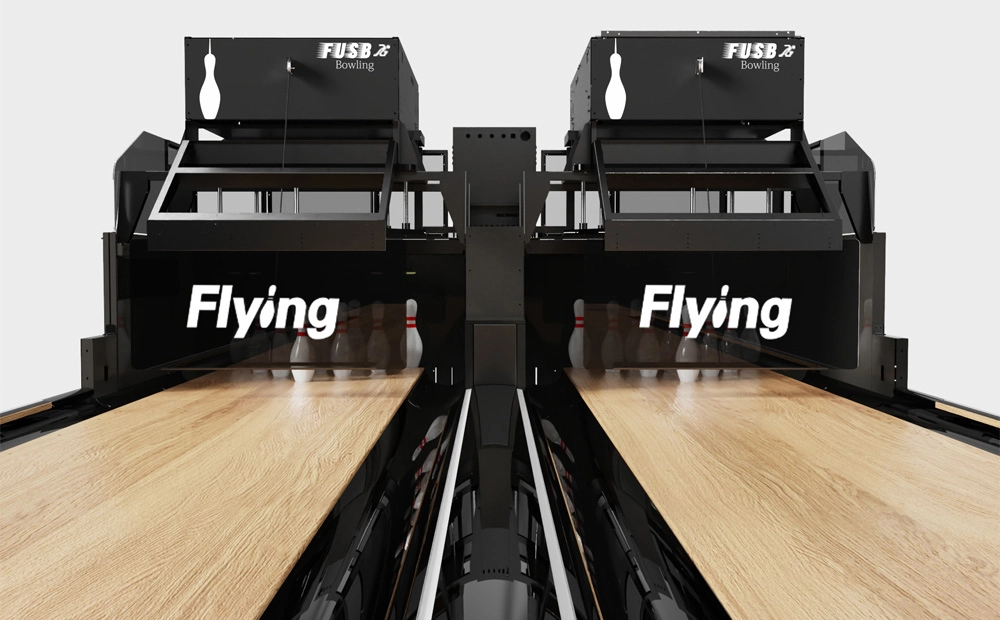
Flying Ultra Standard Bowling
Flying Ultra Standard Bowling (FUSB) Upgraded Version
The string pinsetter uses the latest technology. It offers a more enjoyable bowling experience thanks to its innovative designs and modern technology.
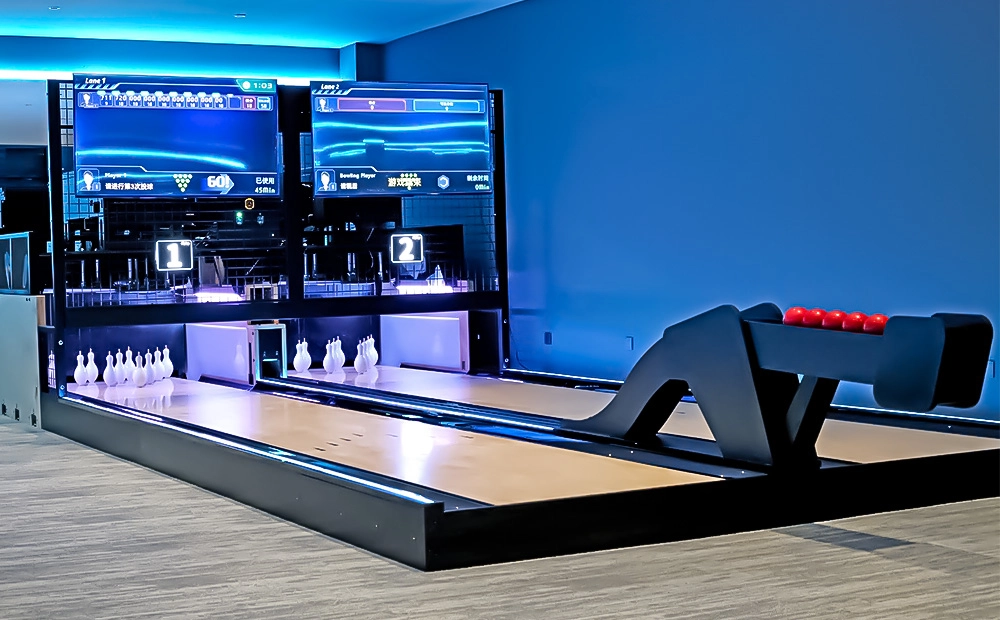
Flying Smart Duckpin Bowling
The innovative design of Flying Smart Duckpin Bowling (FSDB) makes it perfect for places like bars, billiard halls, and game centers. It makes people want to come back more often and spend more money. FSDB is fun and competitive, so it will become a new focus for social activities.
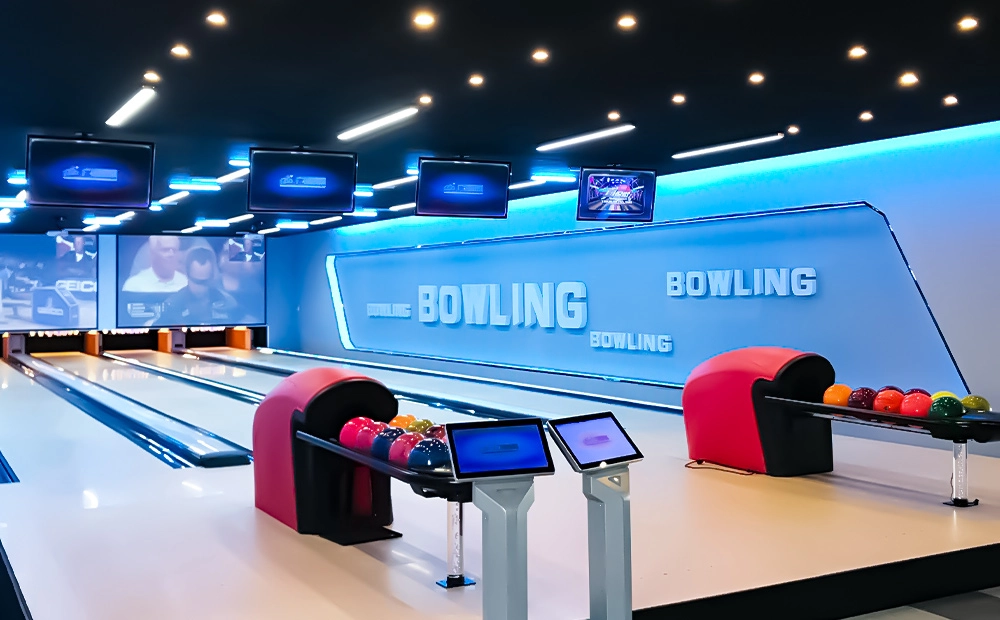
Flying Classic Standard Bowling
Flying Classic Standard Bowling (FCSB) employs the World Standard Competition Scoring System to deliver a more professional bowling experience, enabling bowlers to enjoy a professional-standard match at their convenience.
Ready to Build Your Bowling Center?
Share your details, and we’ll provide tailored solutions and expert guidance to help you take your bowling center to the next level.

Professional Bowling Alley Equipment Manufacturer, a one-stop solution provider for bowling alleys.
Facebook
YouTube
Linkedin
Twitter