
















Flying Classic Standard Bowling Features, Specs, and Setup Tips
- Flying Classic Standard Bowling Features, Specs, and Setup Tips
- Overview: Why choose Flying Classic Standard Bowling for bowling alley equipment for sale
- Core features: Professional scoring and player experience
- Technical specifications: Hardware, capacity, and physical requirements
- Compatibility with lane equipment and pinsetters
- Setup tips: Site planning and pre-installation checks
- Installation process: Step-by-step practical guidance
- Maintenance best practices for long-term reliability
- Troubleshooting common issues operators face
- Comparing FCSB vs. Typical Recreational Consoles (at-a-glance)
- Buying considerations when searching for bowling alley equipment for sale
- Brand advantages: Why Flying stands out for operators
- FAQ — Frequently Asked Questions about Flying Classic Standard Bowling and bowling alley equipment for sale
- Q: Is FCSB compatible with existing pinsetters?
- Q: Can FCSB host official tournaments?
- Q: What is the typical installation timeline?
- Q: How do I maintain accurate scoring with lane oil and wear?
- Q: Where can I purchase Flying Classic Standard Bowling equipment?
- Contact sales / View product
- Sources and references
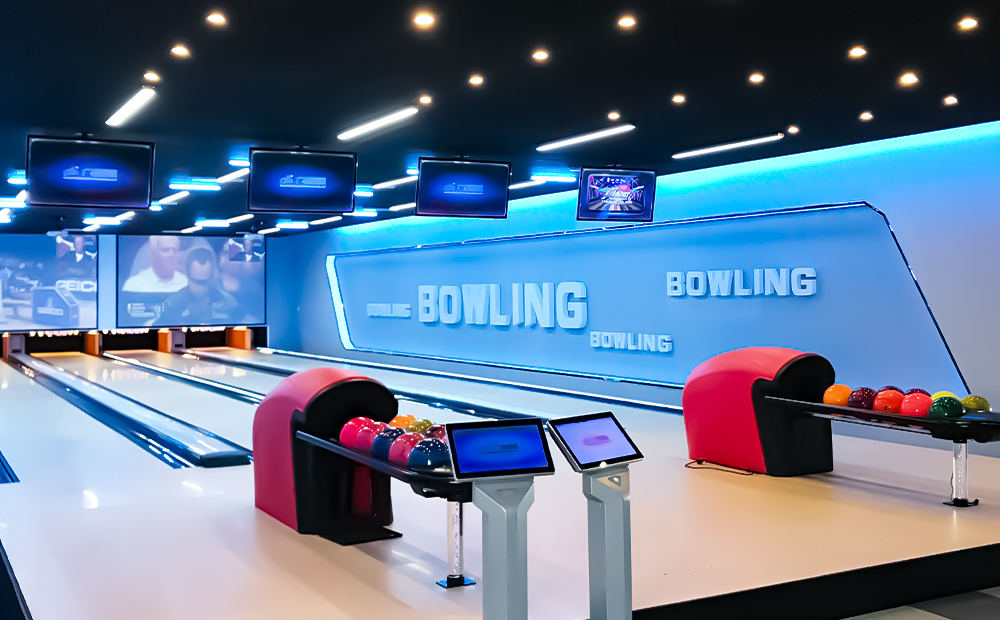
Flying Classic Standard Bowling Features, Specs, and Setup Tips
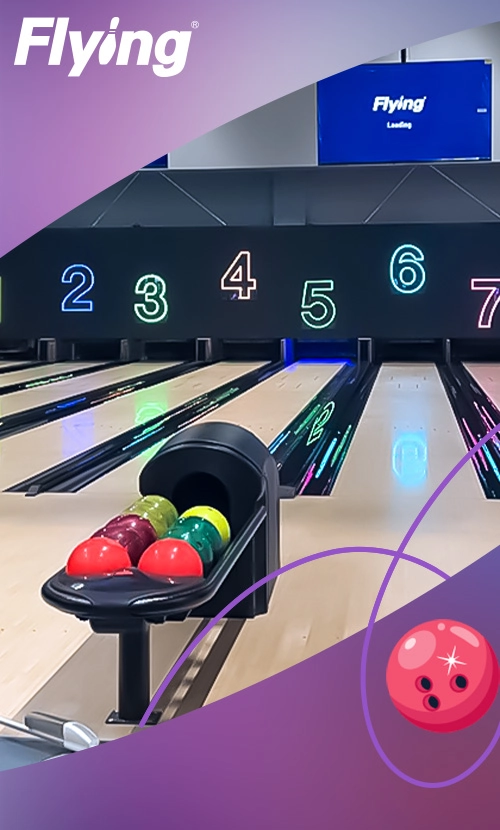
Flying Classic Standard Bowling (FCSB) employs the World Standard Competition Scoring System to deliver a more professional bowling experience, enabling bowlers to enjoy a professional-standard match at their convenience.
Overview: Why choose Flying Classic Standard Bowling for bowling alley equipment for sale
The Flying Classic Standard Bowling unit is designed for venues that want a competition-grade scoring and gameplay experience without the complexity or cost of a full professional installation. If you’re evaluating bowling alley equipment for sale, FCSB offers a blend of standards-compliant scoring, robust mechanical components, and modular installation options. Its primary appeal is providing a familiar, standardized playing experience — governed by the World Standard Competition Scoring System — so leagues, schools, and serious recreational players get consistent, fair scoring and match formats.
Core features: Professional scoring and player experience
FCSB focuses on player-facing features that matter most to bowlers and operators: accurate scoring aligned to World Bowling formats, flexible game modes (singles, doubles, team), easy-to-read displays, and configurable competition setups. The scoring engine supports tournament formats, frame-by-frame statistics, handicap calculations, and custom rulesets for club play. These features position FCSB as a solution for venues promoting leagues or hosting regional events without investing in bespoke scoring systems.
Technical specifications: Hardware, capacity, and physical requirements
Knowing the physical and electrical specifications helps you plan installation and ongoing service. Typical Flying Classic Standard Bowling specifications include:
| Specification | FCSB Typical Value |
|---|---|
| Scoring System | World Standard Competition Scoring System compliant |
| Number of Players Supported | Up to 8 players per lane (configurable) |
| Display | High-contrast VGA/LED display for lanes and operator console |
| Lane Compatibility | Works with standard 60-ft lanes and common pinsetters |
| Electrical Requirements | 110–240 VAC, 50/60 Hz typical (specify by region) |
| Network | Ethernet-enabled for league management and remote updates |
| Control Console Dimensions | Desktop console ~600mm x 300mm x 120mm (varies by model) |
| Weight | Console ~6–10 kg; sensor kits and cabling vary |
Note: Exact dimensions, weight, and electrical specs depend on the configuration you order. Confirm final spec sheets with your supplier before purchase.
Compatibility with lane equipment and pinsetters
FCSB is built to integrate with common lane and pinsetter hardware used in commercial centers. The system interfaces with lane sensors and pin detectors and can accept inputs from established pinsetter protocols. When assessing bowling alley equipment for sale, ensure compatibility tests include your existing pinsetters (or planned new machines). Integrations often require a short on-site calibration and potential firmware bridge for legacy pinsetters.
Setup tips: Site planning and pre-installation checks
Proper planning dramatically reduces install time and initial downtime. Use this checklist when preparing for an FCSB installation:
- Confirm lane geometry: standard 60-foot lane from foul line to head pin and 41.5-inch lane width (per national standards). Accurate lane dimensions are critical for sensor alignment. (See sources below.)
- Electrical provisioning: dedicate a protected circuit for the console and ensure surge protection; note local voltage variations (110–240 VAC options available).
- Network access: provide Ethernet drops near operator stations for remote updates, league management, and diagnostics.
- Pinsetter compatibility: identify pinsetter make and model and provide documentation to the vendor for pre-configured profiles.
- Accessibility: allow physical space for console access, maintenance, and cable routing; maintain recommended clearances.
Installation process: Step-by-step practical guidance
Installations usually follow these phases. For first-time installations, schedule an engineer visit from the vendor during the initial lane calibration and training session.
- Mount the operator console on the scorer desk or wall bracket and secure it per manual.
- Install lane sensor kits: mount infrared/optical sensors per lane, ensuring alignment against the lane surface; route cabling to the control harness.
- Connect to the pinsetter: link the console to the pinsetter interface using the vendor-provided harness or protocol converter.
- Power up sequence: apply power to the console and connected devices; verify LED indicators and boot diagnostics.
- Calibration: run lane and pinsetter calibration routines—this step assures accurate pin detection and scoring consistency.
- Test matches: run multiple test games with staff to validate scoring logic (especially if using tournament modes or handicaps).
- Staff training: provide operator training on match setup, player entry, troubleshooting, and basic maintenance procedures.
Maintenance best practices for long-term reliability
Maintaining FCSB ensures consistent performance and prolongs the life of your investment. Key maintenance tasks include:
- Weekly checks: verify sensor cleanliness and free of lane oil build-up; confirm connectors remain secure.
- Monthly software updates: apply vendor updates to take advantage of scoring patches and feature improvements.
- Quarterly hardware inspection: check cabling for wear, inspect console fans/filters, and test power protection devices.
- Annual calibration: perform a full calibration including pinsetter interaction and lane-surface checks.
Troubleshooting common issues operators face
Common problems are usually related to sensor alignment, network connectivity, or pinsetter communication. Quick troubleshooting steps:
- Sensor misses: clean optical surfaces, re-align sensors to factory tolerances, and re-run calibration.
- Scoring discrepancies: verify firmware versions on console and pinsetter interface; re-check the scoring rules settings (World Competition vs. recreational modes).
- Network failures: switch to a direct Ethernet cable to diagnose; check DHCP vs. static IP misconfigurations.
Comparing FCSB vs. Typical Recreational Consoles (at-a-glance)
Below is a concise comparison highlighting where FCSB stands relative to a generic recreational console often found in smaller venues:
| Aspect | Flying Classic Standard Bowling (FCSB) | Typical Recreational Console |
|---|---|---|
| Scoring Standard | World Standard Competition Scoring System | Recreational scoring with limited tournament features |
| Competition Support | Full tournament modes and league management | Basic game modes only |
| Integration | Designed to interface with commercial pinsetters and lane sensors | Often limited to specific hardware |
| Serviceability | Modular parts and vendor support for on-site calibration | Lower-cost parts, may require replacement rather than repair |
Sources for general lane dimensions and competition scoring standards are listed at the end of this article.
Buying considerations when searching for bowling alley equipment for sale
When purchasing FCSB or any bowling equipment, evaluate these factors:
- Total cost of ownership (equipment price + installation + training + maintenance).
- Compatibility with existing infrastructure (pinsetters, lane surface, network).
- Vendor support and spare parts availability in your region.
- Upgrade path: can the system be expanded for additional lanes or integrated into a center management system?
- Local compliance: ensure electrical and safety compliance for your market.
Brand advantages: Why Flying stands out for operators
In the latter stages of your purchase decision, consider these strengths typical of the Flying brand and its FCSB offering:
- Standards-first approach: implementation of the World Standard Competition Scoring System ensures the scoring logic matches tournament expectations.
- Modularity and serviceability: designed so operators can replace or upgrade parts without lengthy downtime.
- Operator-focused design: consoles and UIs emphasize quick match setup, clarity for players, and easy league management.
- Local support networks: Flying partners with regional service providers to speed up maintenance and spare parts delivery.
FAQ — Frequently Asked Questions about Flying Classic Standard Bowling and bowling alley equipment for sale
Q: Is FCSB compatible with existing pinsetters?
A: FCSB is designed to integrate with most commercial pinsetters, but compatibility depends on the pinsetter model and firmware. Provide your pinsetter make/model to the supplier prior to purchase for a pre-installation check and, if necessary, a protocol adapter or configuration.
Q: Can FCSB host official tournaments?
A: Yes. Because FCSB employs the World Standard Competition Scoring System, it supports standard tournament formats and scoring rules. For sanctioned events, confirm that organizers accept the specific hardware and software version used.
Q: What is the typical installation timeline?
A: A typical single-lane installation can take 4–8 hours including calibration and testing; multi-lane installations are staged and are usually completed lane-by-lane over 1–3 days depending on site preparedness and compatibility checks.
Q: How do I maintain accurate scoring with lane oil and wear?
A: Routine sensor cleaning, quarterly calibration, and annual full-system checks reduce scoring drift caused by lane oil and wear. Keep a maintenance log and apply software updates that may include sensor compensation algorithms.
Q: Where can I purchase Flying Classic Standard Bowling equipment?
A: Contact authorized Flying distributors or the manufacturer’s sales team. If you are searching for bowling alley equipment for sale, request a site survey, formal quote, and a list of included services (installation, training, warranty).
Contact sales / View product
Interested in purchasing or seeing FCSB in action? Contact our sales team for a quotation, demo, or to schedule a site survey. For immediate assistance, email sales@flyingprobowling.example or call +1-800-555-XXXX. Ask for the Flying Classic Standard Bowling product brochure and local installation partner list.
Sources and references
- United States Bowling Congress (USBC) — lane dimensions and competition rules: https://www.bowl.com
- World Bowling — competition rules and scoring standards: https://www.worldbowling.org
- Industry manufacturer pages and installation best practices (general): manufacturer technical manuals and commercial bowling equipment supplier documentation
For region-specific quotes, spare parts availability, or specification sheets, please contact our sales team.
Buying Quality Bowling Equipment
Service
How to complain if you are not satisfied with the after-sales service?
You can directly contact the Global Service Director (email: mike@flyingbowling.com/phone: 0086 18011785867), and we promise to issue a solution within 24 hours.
What is the warranty on your bowling equipment?
We provide a standard 1-year warranty on all equipment, with extended warranties available upon request.
Installations
How long does it take to install bowling equipment?
The installation process can take between 2-4 weeks, depending on the size of the project and the specific type of equipment being installed.
How long does it take to install the equipment?
It takes about 7-15 days for a standard venue, and it takes an average of 2 days to install a fairway.
Company
Do you have independent R&D capabilities?
We have set up an independent R&D department and have launched a number of new equipment and innovative technologies such as the smart scoring system, Flying Smart Duckpin, and oil drop machine in the past three years.
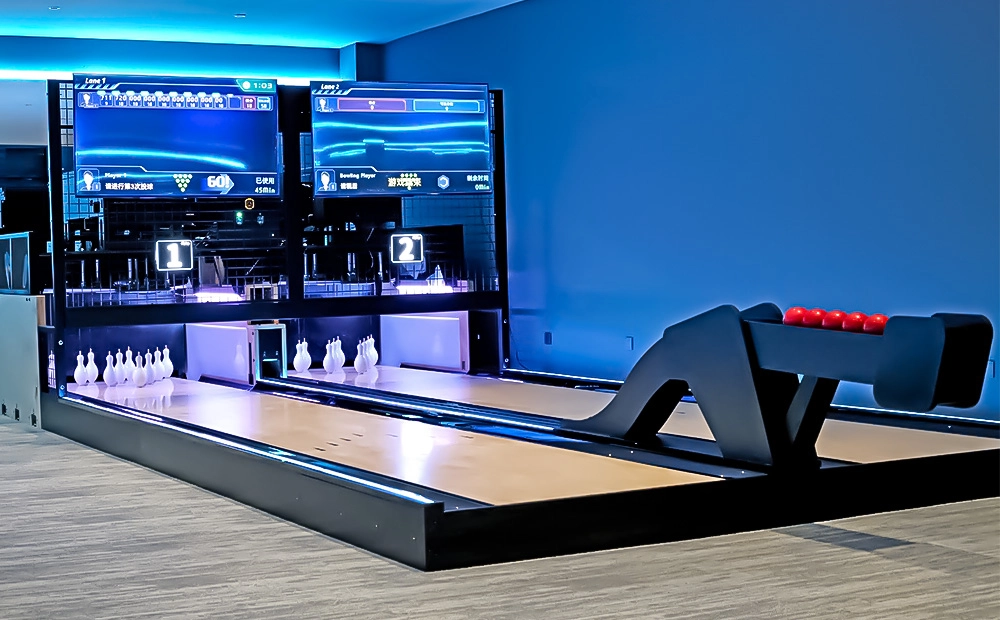
Flying Smart Duckpin Bowling
The innovative design of Flying Smart Duckpin Bowling (FSDB) makes it perfect for places like bars, billiard halls, and game centers. It makes people want to come back more often and spend more money. FSDB is fun and competitive, so it will become a new focus for social activities.
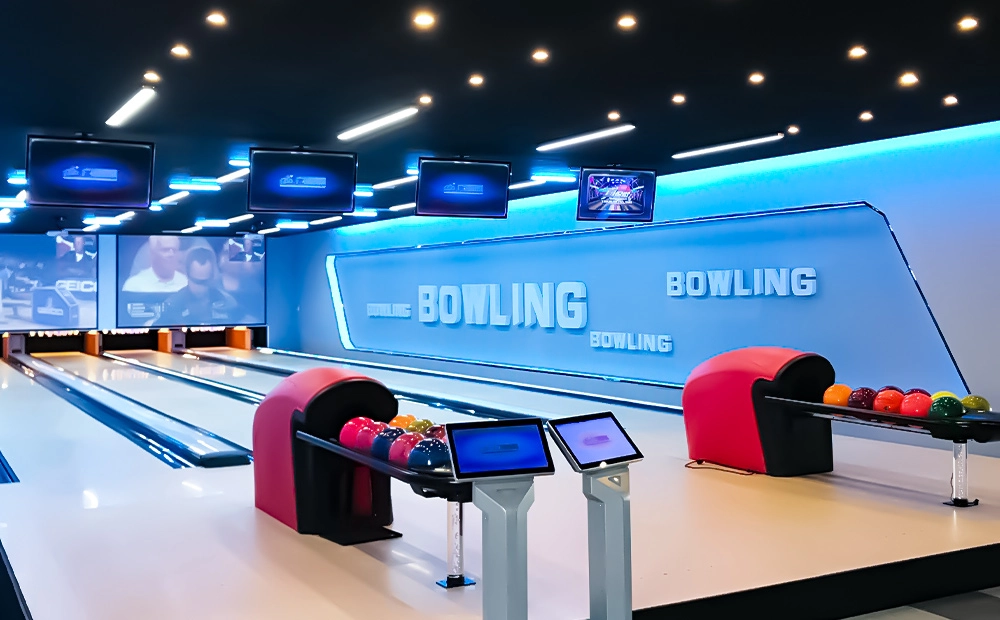
Flying Classic Standard Bowling
Flying Classic Standard Bowling (FCSB) employs the World Standard Competition Scoring System to deliver a more professional bowling experience, enabling bowlers to enjoy a professional-standard match at their convenience.
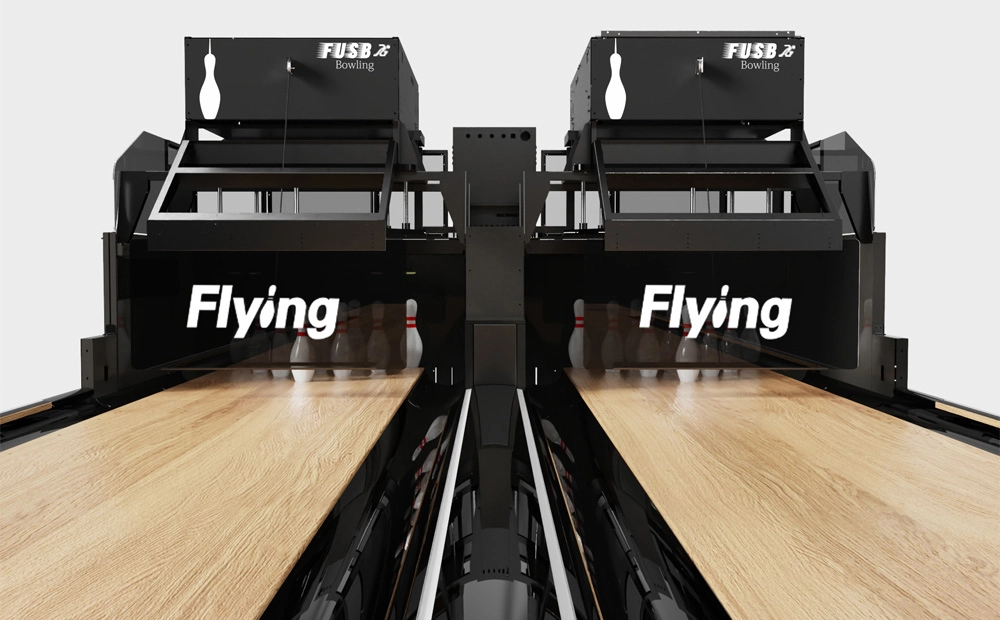
Flying Ultra Standard Bowling
Flying Ultra Standard Bowling (FUSB) Upgraded Version
The string pinsetter uses the latest technology. It offers a more enjoyable bowling experience thanks to its innovative designs and modern technology.
Ready to Build Your Bowling Center?
Share your details, and we’ll provide tailored solutions and expert guidance to help you take your bowling center to the next level.

Professional Bowling Alley Equipment Manufacturer, a one-stop solution provider for bowling alleys.
Facebook
YouTube
Linkedin
Twitter