















How Flying Classic Standard Bowling Cuts Alley Operating Costs
- How Flying Classic Standard Bowling Cuts Alley Operating Costs
- What Flying Classic Standard Bowling is and why bowling alley equipment matters
- How automated bowling alley equipment lowers labor costs
- How energy-efficient bowling alley equipment reduces utilities
- How standardized competition-grade equipment cuts maintenance and downtime
- Using bowling alley equipment to increase revenue per lane and throughput
- Estimated cost-impact comparison: Typical alley vs. with Flying Classic Standard Bowling (illustrative)
- Step-by-step implementation to realize operating cost reductions with bowling alley equipment
- ROI example: Illustrative 12-lane center
- Why choosing a World Standard Competition Scoring System like FCSB matters for operators
- Brand advantages: Why Flying Classic Standard Bowling is an excellent bowling alley equipment investment
- Frequently asked questions (FAQ)
- Next steps — contact sales or view the product
- Citations and references
How Flying Classic Standard Bowling Cuts Alley Operating Costs
What Flying Classic Standard Bowling is and why bowling alley equipment matters
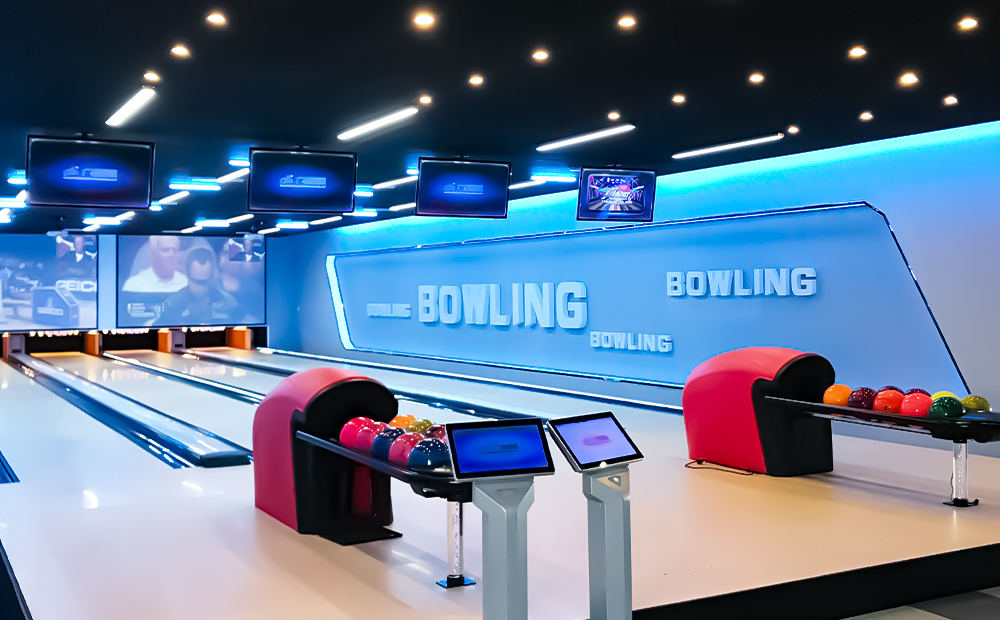
Flying Classic Standard Bowling (FCSB) employs the World Standard Competition Scoring System to deliver a more professional bowling experience, enabling bowlers to enjoy a professional-standard match at their convenience.
High-quality bowling alley equipment like FCSB is more than a customer-facing upgrade: it directly affects labor needs, energy use, maintenance schedules, and revenue opportunities. Operators who choose competition-grade, standardized systems can reduce recurring costs while improving guest satisfaction and lane utilization.
How automated bowling alley equipment lowers labor costs
Labor is often the single largest controllable operating expense for bowling centers. Modern bowling alley equipment—automated scoring, lane-control integration, self-service kiosks, and integrated POS—reduces transaction times and staffing requirements in front-of-house and lane supervision.
- Automated scoring and lane control: Minimizes time staff spend resolving scoring disputes, resetting lanes, or guiding casual players through game setup.
- Self-service kiosks and online booking integration: Reduce cashier workload and no-show rates by enabling prepayment and automatic lane assignment.
- Integrated payment and membership systems: Lower reconciliation time and reduce errors that require manual correction.
Industry analyses of automation effects across service sectors show labor efficiencies of 10–30% in front-line tasks; bowling centers typically see measurable staffing-hour reductions from automation investments when systems are fully integrated and staff roles are refocused toward guest experience rather than routine transactions (source: McKinsey Global Institute on automation and industry reports).
How energy-efficient bowling alley equipment reduces utilities
Utilities—especially lighting, HVAC, and equipment motor loads such as pinsetters—are a major ongoing cost. Upgrading to energy-efficient bowling alley equipment and facility controls delivers predictable savings:
- LED lane and house lighting: LEDs use 50–75% less electricity than legacy halogen or fluorescent systems and require less frequent replacement (U.S. Department of Energy / ENERGY STAR).
- Efficient pinsetter motors and controls: Newer motors and variable frequency drives (VFDs) reduce peak power draw and smooth startup loads.
- Smart HVAC scheduling and zone control tied to lane occupancy: Cuts HVAC runtime during slow periods without degrading guest comfort.
Combining LED retrofits with equipment-driven energy management typically reduces facility energy bills substantially and often pays back through energy savings within 2–5 years depending on local energy prices and operating hours.
How standardized competition-grade equipment cuts maintenance and downtime
Maintenance and repair costs are influenced by equipment complexity, parts availability, and supplier support. The advantages of FCSB and similar competition-standard bowling alley equipment include:
- Modular design and standardized parts: Easier, faster repairs with lower parts inventory needs.
- Proven reliability from systems built to competition standards: Less frequent unscheduled downtime.
- Predictive maintenance capabilities: Telemetry and diagnostics let operators plan service before breakdowns occur.
- Manufacturer support and training: Reduces the time and cost required for corrective maintenance.
When downtime is minimized, lanes are available for revenue-generating play and events, improving profitability per lane.
Using bowling alley equipment to increase revenue per lane and throughput
Lower operating costs are only one side of the profit equation. FCSB helps operators increase gross margin by raising lane utilization and enabling new revenue streams:
- Faster game setup and clearer scoring: Reduces idle time between games, allowing more games per day per lane.
- Professional-standard match experiences: Attracts leagues, corporate events, and tournaments willing to pay High Quality rates.
- Advanced booking and dynamic pricing: Maximizes revenue during peak demand and encourages weekday traffic with targeted packages.
Combined, these effects can increase revenue per lane and improve overall facility economics—especially when marketing and event sales capitalize on the professional experience delivered by competition-grade systems.
Estimated cost-impact comparison: Typical alley vs. with Flying Classic Standard Bowling (illustrative)
The table below shows a conservative, illustrative estimate of operating cost shifts after implementing a modern, competition-grade solution such as FCSB. These figures are estimates designed to help operators model potential impacts; results vary by market, local labor and energy costs, and the scope of equipment upgrades.
| Cost / Metric | Typical Bowling Alley (baseline) | With FCSB & Related Upgrades (estimated) | Estimated Change |
|---|---|---|---|
| Labor (front-of-house & lane ops) | 35% of controllable operating expenses | 25–30% of controllable expenses | Reduction ~10–20% of labor expense |
| Energy & utilities | 10–15% of operating expenses | 6–10% (LED lighting + efficient motors + controls) | Reduction ~20–40% of energy spend |
| Maintenance & parts | 8–12% of operating expenses | 6–9% (standardized parts, predictive maintenance) | Reduction ~10–25% of maintenance cost |
| Revenue per lane | Baseline index = 100 | 105–120 (better throughput, High Quality bookings) | Increase ~5–20% |
Sources and reasoning for these ranges: industry performance reports and energy-efficiency guidance (BPAA, IBISWorld, Statista, U.S. DOE / ENERGY STAR, McKinsey on automation). Individual facility results will depend on local wages, energy prices, and the scope of technology adoption.
Step-by-step implementation to realize operating cost reductions with bowling alley equipment
A structured rollout reduces risk and speeds ROI. Recommended steps:
- Audit current operations: Document labor hours (by task), energy usage (lighting, HVAC, pinsetters), maintenance spend, and revenue per lane.
- Set measurable targets: Define target labor hours saved, energy savings %, and revenue uplift.
- Prioritize upgrades: Start with low-friction, high-impact items—LED lighting, scoring system replacement (FCSB), and POS integration.
- Train staff and refocus roles: Reassign staff from transactional tasks to guest experience and sales to capitalize on freed-up hours.
- Monitor and iterate: Use telemetry and reports to track savings and adjust pricing, staffing, and marketing tactics accordingly.
Documented checkpoints at 3, 6, and 12 months help validate assumptions and communicate wins to stakeholders.
ROI example: Illustrative 12-lane center
Below is an example calculation to illustrate payback timing. Numbers are illustrative; use your center's actual figures for planning.
- Assumptions:
- 12-lane installation of FCSB + integration + training = $48,000 (approx. $4,000 per lane). This is an example capital cost—actual price varies.
- Current annual controllable operating expenses = $360,000.
- Expected annual savings: Labor 12% ($43,200), Energy 30% of energy spend (if energy is 12% of operating = $43,200 * 30% = $3,888), Maintenance 15% ($6,480). Total annual savings ≈ $53,568.
- Simple payback = $48,000 / $53,568 ≈ 0.9 years (about 11 months).
Notes: This example is illustrative to show how capital investments in modern bowling alley equipment can pay back quickly. Operators should run the model with their exact costs, local energy prices, and realistic labor-savings estimates.
Why choosing a World Standard Competition Scoring System like FCSB matters for operators
FCSB follows the World Standard Competition Scoring System, giving leagues and tournament organizers confidence in scoring integrity and consistency. Tangible benefits for operators include:
- Access to league and tournament business: Organizers prefer venues that meet competition scoring standards.
- Marketing differentiation: Professional-standard matches are easier to promote and command higher rates.
- Long-term value: Standardized systems maintain resale value and simplify integration with third‑party tournament software and services.
Brand advantages: Why Flying Classic Standard Bowling is an excellent bowling alley equipment investment
When evaluating solutions, operators should weigh not only direct cost impacts but also vendor support, upgrade pathways, and long-term sustainability. FCSB stands out for several reasons:
- Built to competition standards (World Bowling), attracting leagues and events.
- Integrated approach—scoring, lane control, and data reporting—in one system, reducing customization costs and integration time.
- Supplier training and documentation that reduce operational friction and speed staff onboarding.
- Designed for modular maintenance with widely available replacement parts, lowering inventory and downtime risk.
These brand-level advantages translate into real cost-control benefits over the equipment lifecycle.
Frequently asked questions (FAQ)
Q: How quickly can I expect to see operating cost reductions after installing FCSB?
A: Many centers see measurable labor and energy reductions within 3–6 months as staff adapt to automated workflows and energy controls take effect. Full ROI often appears within 1–3 years depending on the scale of upgrades and local cost structure.
Q: Will FCSB work with my existing pinsetters and lane machinery?
A: FCSB is designed to integrate with a wide range of lane machinery. A pre-install audit determines necessary interfaces or adapters. Integration minimizes the need for wholesale lane replacements in most cases.
Q: How does adopting competition-grade equipment affect league and tournament business?
A: Meeting competition scoring standards makes your venue eligible for more leagues and sanctioned tournaments, often bringing higher booking fees, greater off-peak utilization, and repeat business.
Q: Are the energy and labor savings guaranteed?
A: No vendor can guarantee exact savings because results depend on local wages, energy prices, operating hours, and how thoroughly the facility adopts recommended processes. FCSB suppliers typically provide case studies, benchmarks, and implementation guidance to help project realistic savings.
Q: What training and support are provided?
A: FCSB deployments include operator training, system documentation, and technical support. Ongoing support plans and remote diagnostics are typically available to minimize downtime and speed problem resolution.
Next steps — contact sales or view the product
If you're ready to reduce operating costs while delivering a professional bowling experience, contact our sales team to request a facility audit, product demo, and tailored ROI model. View product specifications, integration options, and case studies to see FCSB in action.
Contact us: Request a demo, schedule an on-site audit, or get a customized proposal to see how Flying Classic Standard Bowling can reduce your bowling alley equipment operating costs.
Citations and references
- World Bowling — Official website and competition standards: https://www.worldbowling.org
- Bowling Proprietors' Association of America (BPAA) — industry resources and operator guidance: https://bpaa.com
- IBISWorld — Bowling Centers Industry Report (U.S.): https://www.ibisworld.com/united-states/market-research-reports/bowling-centers-industry/
- Statista — Bowling industry overview and revenue statistics: https://www.statista.com/topics/1707/bowling/
- U.S. Department of Energy / ENERGY STAR — LED lighting and energy-efficiency guidance: https://www.energy.gov/energysaver/led-lighting and https://www.energystar.gov
- McKinsey Global Institute — Research on automation and productivity: https://www.mckinsey.com/featured-insights
Buying Quality Bowling Equipment
Products
What material is used for the bowling lane? How long is its lifespan?
It is made of high-strength maple wood + synthetic composite material, and has been treated with anti-corrosion. Under normal use, its lifespan exceeds 15 years.
Service
What is the warranty on your bowling equipment?
We provide a standard 1-year warranty on all equipment, with extended warranties available upon request.
Installations
How long does it take to install bowling equipment?
The installation process can take between 2-4 weeks, depending on the size of the project and the specific type of equipment being installed.
Company
Do you have independent R&D capabilities?
We have set up an independent R&D department and have launched a number of new equipment and innovative technologies such as the smart scoring system, Flying Smart Duckpin, and oil drop machine in the past three years.
What are the advantages of your brand compared with other international brands?
Compared with other international brands, our equipment has significant price advantages and lower maintenance costs. We provide customers with more cost-effective options by optimizing the design and manufacturing process while ensuring high quality and compliance with USBC international standards.
Flying Classic Standard Bowling
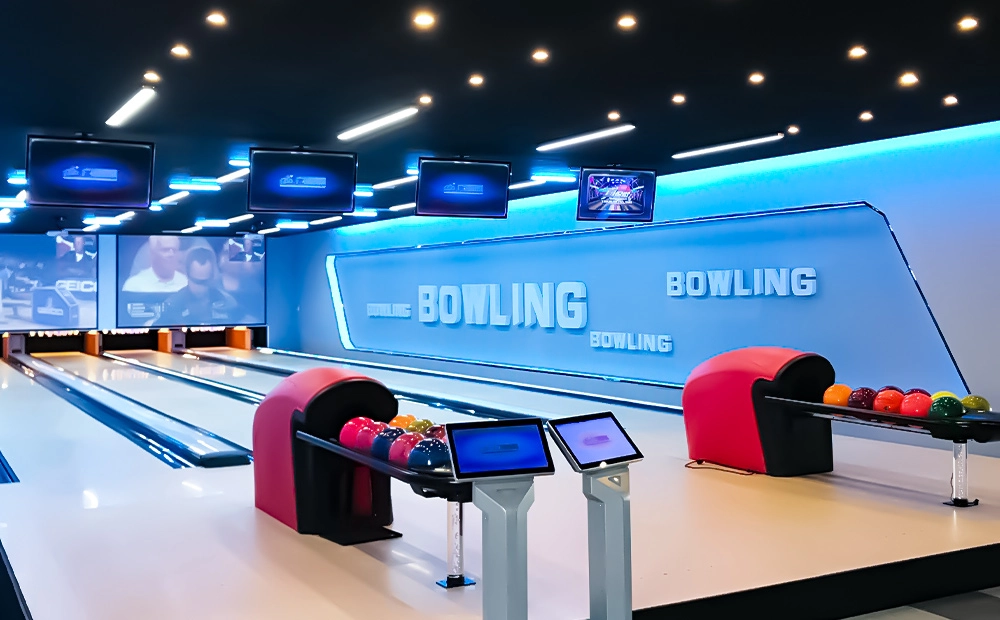
Flying Classic Standard Bowling (FCSB) employs the World Standard Competition Scoring System to deliver a more professional bowling experience, enabling bowlers to enjoy a professional-standard match at their convenience.
Flying Smart Duckpin Bowling
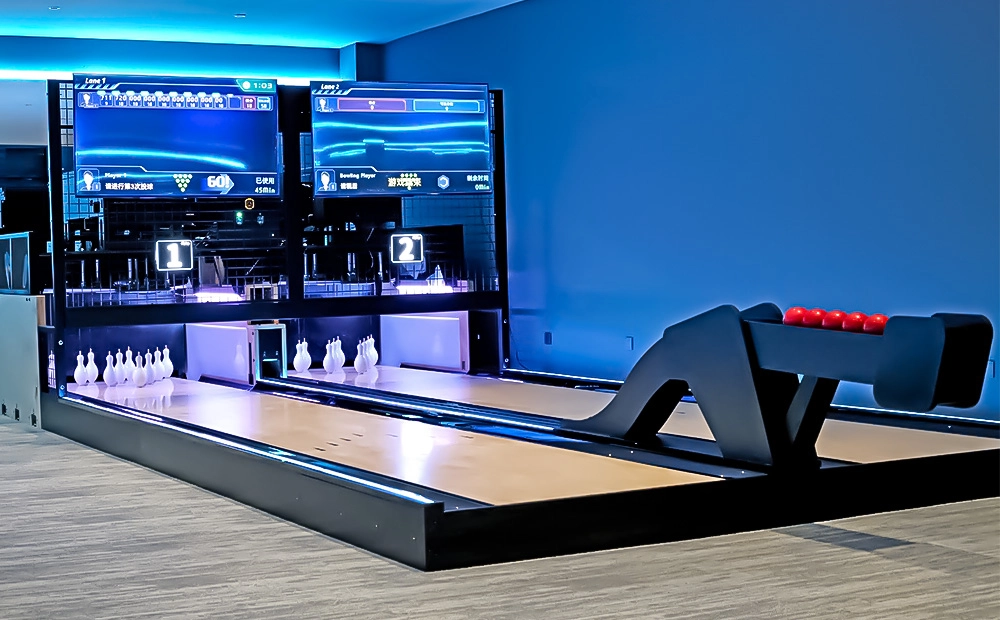
The innovative design of Flying Smart Duckpin Bowling (FSDB) makes it perfect for places like bars, billiard halls, and game centers. It makes people want to come back more often and spend more money. FSDB is fun and competitive, so it will become a new focus for social activities.
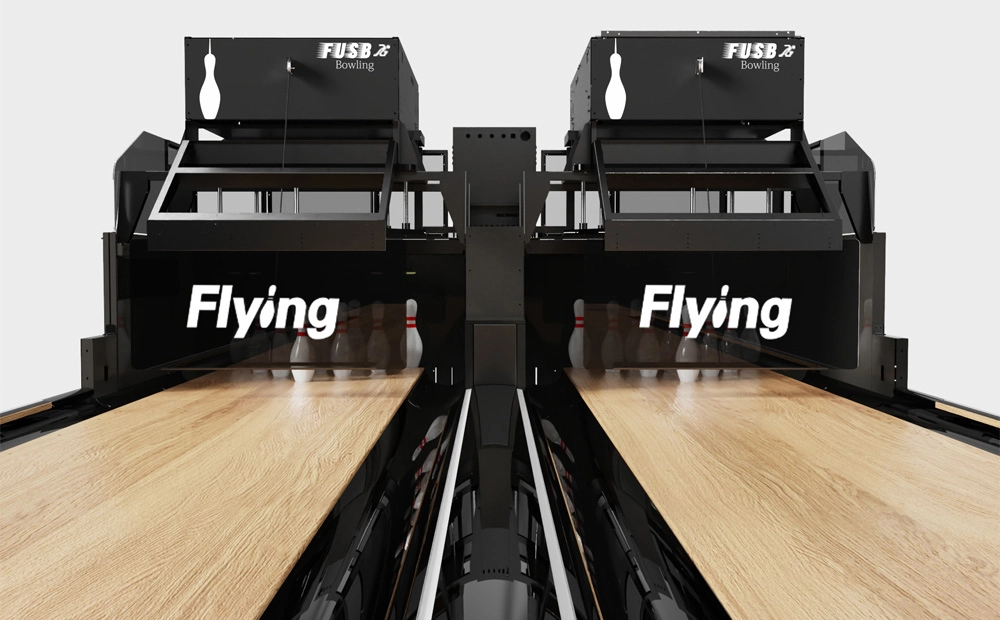
Flying Ultra Standard Bowling
Flying Ultra Standard Bowling (FUSB) Upgraded Version
The string pinsetter uses the latest technology. It offers a more enjoyable bowling experience thanks to its innovative designs and modern technology.
Ready to Build Your Bowling Center?
Share your details, and we’ll provide tailored solutions and expert guidance to help you take your bowling center to the next level.

Professional Bowling Alley Equipment Manufacturer, a one-stop solution provider for bowling alleys.
Facebook
YouTube
Linkedin
Twitter