















how long is a duckpin bowling alley | Flying Bowling Expert Guide
- Understanding Duckpin Bowling Alley Dimensions and Equipment
- 1. What are the standard dimensions of a duckpin bowling lane?
- 2. How do duckpin bowling lane dimensions compare to traditional ten-pin lanes?
- 3. What are the specifications for duckpin bowling balls and pins?
- 4. What space is required for installing duckpin bowling lanes?
- 5. How does Flying Bowling's equipment enhance the duckpin bowling experience?
Understanding Duckpin Bowling Alley Dimensions and Equipment
Duckpin bowling offers a compact and engaging alternative to traditional ten-pin bowling, making it an excellent choice for venues with limited space. In this article, we'll address common questions regarding duckpin bowling alley dimensions and equipment specifications, providing valuable insights for industry professionals considering new installations.
1. What are the standard dimensions of a duckpin bowling lane?
Duckpin bowling lanes are designed to fit into smaller spaces while maintaining the essence of the game. The standard lane length is approximately 32 feet 9 inches (10 meters), including the approach area. The width for a two-lane setup starts at 10 feet 6 inches (3.2 meters) and can expand to 30 feet 10 inches (9.4 meters) for a six-lane setup. The minimum height requirement is 6 feet 9 inches (2.1 meters). These compact dimensions make duckpin bowling suitable for bars, entertainment centers, and other venues with space constraints.
2. How do duckpin bowling lane dimensions compare to traditional ten-pin lanes?
Traditional ten-pin bowling lanes are 60 feet long and 41.5 inches wide. In contrast, duckpin bowling lanes are shorter and narrower, with lengths around 32 feet 9 inches and widths starting at 10 feet 6 inches for a two-lane setup. This compact design allows duckpin bowling to be integrated into venues where space is at a premium.
3. What are the specifications for duckpin bowling balls and pins?
Duckpin bowling utilizes smaller and lighter equipment compared to traditional bowling. Balls are 4.5 to 5 inches (11.4 to 12.7 cm) in diameter and weigh between 3 pounds 6 ounces (1.5 kg) and 3 pounds 12 ounces (1.7 kg). Pins are shorter, standing at 15 inches (38.1 cm) tall, and weigh approximately 1.5 pounds (0.68 kg) each. These specifications contribute to the unique challenge and appeal of duckpin bowling.
4. What space is required for installing duckpin bowling lanes?
The space required for duckpin bowling installations varies based on the number of lanes and the specific equipment used. For example, a two-lane setup with standard-length lanes requires a space measuring 32 feet 3 inches (9.8 meters) in length and 11 feet 4 inches (3.5 meters) in width. This compact footprint allows for efficient use of space in venues with limited room.
5. How does Flying Bowling's equipment enhance the duckpin bowling experience?
Flying Bowling offers premium duckpin bowling equipment designed for both enthusiasts and newcomers. Their equipment features finely-tuned, durable pins and perfectly weighted balls, ensuring a thrilling experience accessible to all ages. The innovative design of Flying Smart Duckpin Bowling (FSDB) makes it ideal for venues like bars, billiard halls, and game centers, enhancing interactivity and increasing customer engagement.
In conclusion, understanding the unique dimensions and equipment specifications of duckpin bowling is essential for venues considering its installation. Flying Bowling's premium equipment offers a compact yet engaging solution, enhancing the appeal and efficiency of your establishment.
Quality Bowling
Technology
How can I get the latest technology upgrades?
Our customers can get software updates for free and hardware upgrades at cost price.
Products
Does your bowling equipment meet international standards?
It meets international standards. The equipment strictly follows the US USBC (United States Bowling Congress) international standard certification, which is one of the highest standards recognized by the global bowling industry. USBC certification ensures that our equipment has reached the international top level in terms of safety, durability, performance and user experience.
Is your equipment suitable for beginners?
Our equipment is easy to operate and equipped with auxiliary aiming lines, so even those who are new to bowling can quickly get started.
Can you provide customized bowling alley design solutions?
Yes, we provide full customization services from space planning, equipment selection to theme design.
Company
Do you have internationally certified production qualifications?
Our factory has passed ISO 9001 quality management system certification, and our products meet ASTM international bowling equipment standards.
You May Also Like
Flying Smart Duckpin Bowling
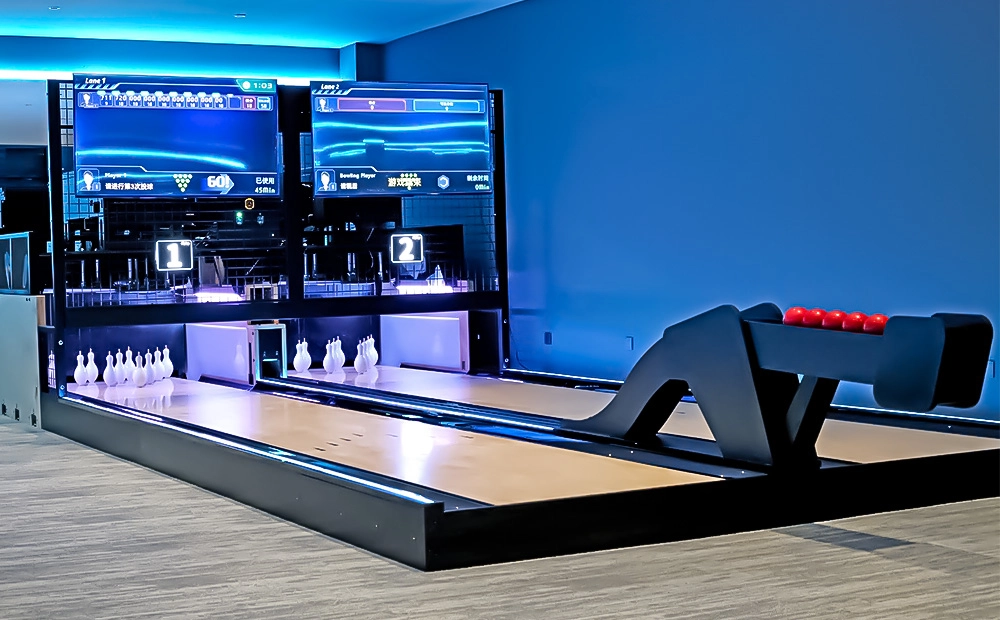
The innovative design of Flying Smart Duckpin Bowling (FSDB) makes it perfect for places like bars, billiard halls, and game centers. It makes people want to come back more often and spend more money. FSDB is fun and competitive, so it will become a new focus for social activities.
Flying Classic Standard Bowling
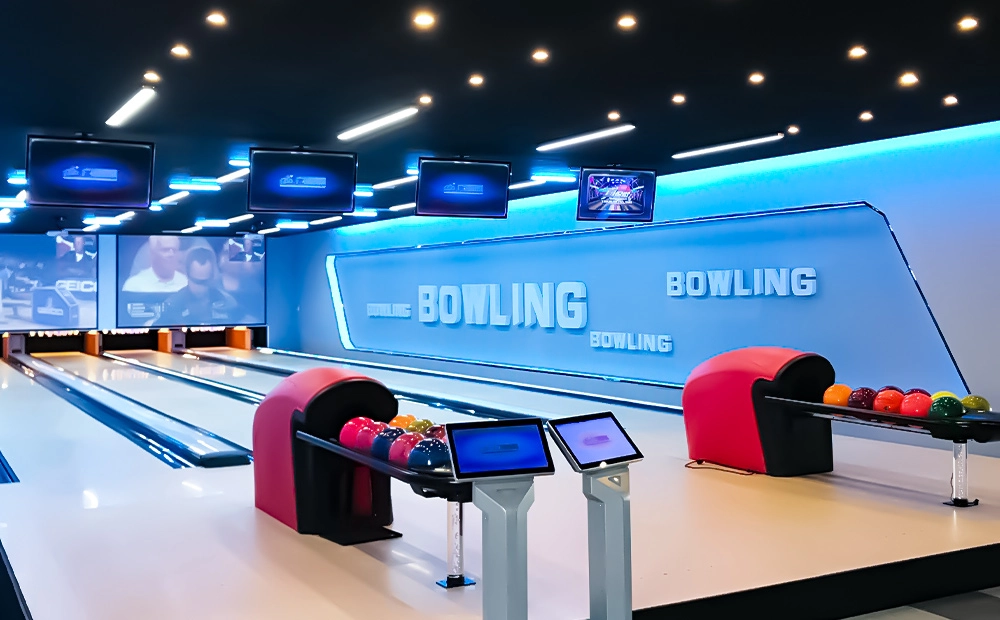
Flying Classic Standard Bowling (FCSB) employs the World Standard Competition Scoring System to deliver a more professional bowling experience, enabling bowlers to enjoy a professional-standard match at their convenience.
Flying Ultra Standard Bowling
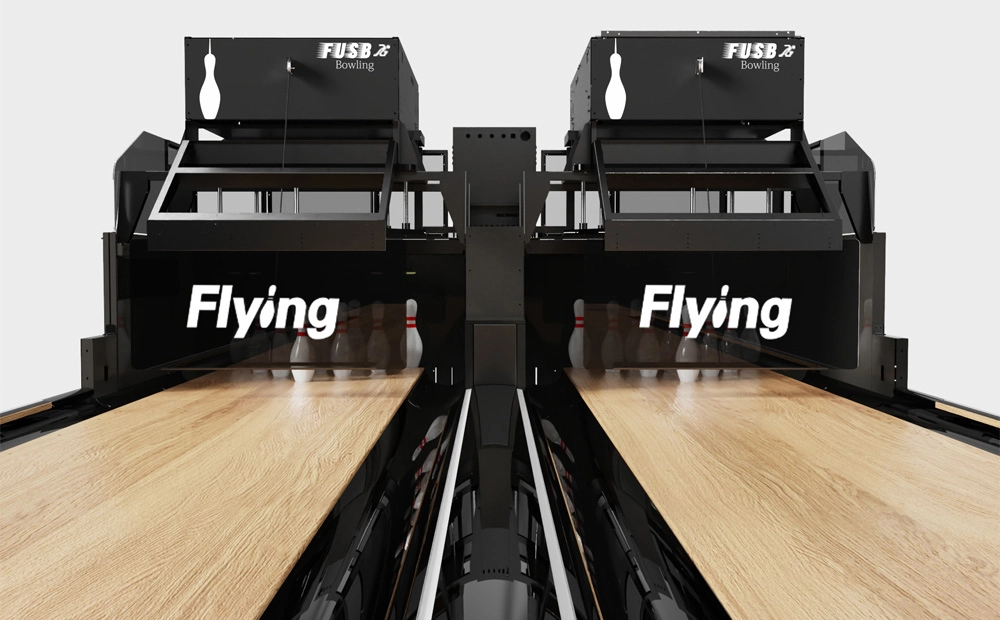
Flying Ultra Standard Bowling (FUSB) Upgraded Version
The string pinsetter uses the latest technology. It offers a more enjoyable bowling experience thanks to its innovative designs and modern technology.

Get in touch
Contact us
If you contact us now for more details, we can provide you with a custom bowling alley service.
Our service team will get back to you within 24 hours, normally!



Professional Bowling Alley Equipment Manufacturer, a one-stop solution provider for bowling alleys.
Facebook
YouTube
Linkedin
Twitter