















Energy Efficiency and Safety of a Bowling String Pinsetter
- Why modern bowling centers choose efficient equipment
- The business case for lower energy and higher safety
- Standards and verification: how to judge claims
- Energy efficiency of bowling string pinsetters
- How string pinsetters reduce energy use
- Typical energy and power comparisons
- Real-world impacts: operating cost and carbon footprint
- Safety and reliability considerations
- Design differences that improve safety
- Standards, compliance, and certification
- Operational reliability and maintenance
- Operational impact: throughput, sound, and guest experience
- Throughput and gameplay considerations
- Acoustics and environment
- Case study-style comparison (qualitative)
- Procurement, installation, and lifecycle planning
- Specifying for energy and safety
- Training and preventive maintenance
- Vendor selection: what I look for
- Flying Bowling: solutions, capability, and why it matters
- FAQ — Frequently Asked Questions
- 1. Are bowling string pinsetters energy efficient compared with traditional pinsetters?
- 2. Are string pinsetters safe for public use?
- 3. Do string pinsetters affect lane play or scoring?
- 4. What maintenance is required for string pinsetters?
- 5. How should I evaluate manufacturers for a retrofit or new installation?
- 6. How can I estimate ROI when switching to string pinsetters?
I write from years of hands-on work advising bowling centers, equipment manufacturers, and operators on selecting and operating modern bowling systems. In this article I analyze the energy efficiency and safety attributes of the bowling string pinsetter, explain how those benefits translate into reduced operating cost and risk, and provide practical guidance for procurement, installation, and maintenance. I reference authoritative standards and industry resources to make claims verifiable and actionable.
Why modern bowling centers choose efficient equipment
The business case for lower energy and higher safety
As an advisor, I’ve seen two consistent drivers for equipment upgrades: operating cost and liability management. Energy costs are a visible, recurring expense for bowling centers, and equipment that reduces electrical draw or mechanical wear directly improves margins. Simultaneously, centers face increasing expectations for patron safety and predictable downtime. Bowling string pinsetters address both concerns by reducing moving mass, lowering power needs, and simplifying pin handling compared with many mechanical (free-fall) pinsetters.
Standards and verification: how to judge claims
When evaluating any equipment claim (energy savings, quieter operation, or reduced maintenance hours), I recommend comparing vendor data against independent standards and accepted frameworks. For energy management I refer to ISO 50001 on energy management systems (iso.org), and for basic machine descriptions the historical and technical background in the Pinsetter entry on Wikipedia (en.wikipedia.org/wiki/Pinsetter) is a good starting point. Such references help ground manufacturer claims into verifiable metrics.
Energy efficiency of bowling string pinsetters
How string pinsetters reduce energy use
String pinsetters replace much of the heavy, continuous mechanical motion found in traditional free-fall pinsetters with lighter string-lift and low-inertia electric actuation. This reduces peak motor sizes and eliminates large pneumatic or high-torque drive systems used in many older mechanical pinsetters. The result is lower installed power per lane and, importantly, lower average energy consumption during operation and idle periods.
Typical energy and power comparisons
Exact figures depend on model, controls, and automation level. Based on product specifications from contemporary manufacturers and operational experience, typical installed power and energy behavior can be summarized qualitatively as follows:
| Characteristic | Bowling string pinsetter (typical) | Traditional free-fall pinsetter (typical) |
|---|---|---|
| Installed peak motor power per lane | Lower — small electric motors and gear reductions (generally under a few kW per lane) | Higher — multiple motors and heavier drives (often several kW per lane) |
| Average operational energy | Lower due to lower inertia and on-demand actuation | Higher due to continuous mechanical cycles and greater mass |
| Idle/standby draw | Low — modern controllers and smaller motors | Moderate — older systems may draw more even when idle |
| Noise & vibration (energy lost as noise) | Lower — quieter operation | Higher — significant mechanical noise |
For decision-making I recommend asking vendors for measured power curves (kW vs. duty cycle) and verifying with in-situ measurements after installation. Utilizing an energy-management approach such as ISO 50001 will help track realized savings (ISO 50001).
Real-world impacts: operating cost and carbon footprint
Lower energy consumption translates to lower electric bills and reduced emissions. If your facility reports electricity use by lane or by equipment bank, installing string pinsetters typically reduces the per-lane contribution to the utility bill. While regional electricity mixes determine CO2 reductions precisely, reducing kWh demand is universally beneficial and aligns with corporate sustainability goals. I often quantify ROI for clients by comparing measured kWh usage before and after retrofit over a 12–24 month period.
Safety and reliability considerations
Design differences that improve safety
String pinsetters inherently constrain pin movement through attachment to strings. This reduces the chance of loose pins ricocheting or falling into machinery and simplifies pin handling. From a safety standpoint, the reduced mass and contained movement means lower risk both to technicians performing maintenance and to patrons in case of rare malfunctions.
Standards, compliance, and certification
Equipment sold internationally should meet relevant machine-safety and electrical directives. For example, compliance with CE marking and adherence to RoHS electrical safety/environmental restrictions are standard expectations in many regions (European Commission CE information: ec.europa.eu; RoHS: ec.europa.eu - RoHS). Additionally, local authorities or governing bodies such as the United States Bowling Congress (USBC) provide equipment guidance and specifications for lanes and pinsetters (bowl.com).
Operational reliability and maintenance
Maintenance is a key part of safety. In my experience, string pinsetters have simplified maintenance tasks because there are fewer large, inaccessible moving parts and no complex pneumatic circuits to adjust. This lowers mean time to repair (MTTR) and reduces the need for specialized, factory-only service visits. That said, strings and string attachments must be inspected and replaced periodically — a predictable preventive-maintenance item that most centers can handle in-house with basic training.
Operational impact: throughput, sound, and guest experience
Throughput and gameplay considerations
One frequent operator question is whether string pinsetters change play characteristics. Modern string pinsetters are engineered to reproduce pin action closely enough for casual play and commercial bowling centers. Competitive play historically favors free-fall pinsetters, and some sanctioned competitions may specify equipment; always confirm with your sport's governing body (e.g., USBC) before hosting sanctioned events (bowl.com).
Acoustics and environment
String pinsetters are typically quieter and produce less vibration. This improves the guest experience, allows for mixed-use facilities (e.g., family entertainment centers), and reduces noise-related complaints. For centers prioritizing ambient comfort, quieter equipment is a tangible benefit.
Case study-style comparison (qualitative)
Below is a practical, side-by-side qualitative comparison operators can use during procurement conversations. For numbers and warranty specifics, request manufacturer datasheets and test reports.
| Factor | String Pinsetter | Traditional Free-Fall Pinsetter |
|---|---|---|
| Energy use | Lower (on-demand motors, less mass) | Higher (multiple large motors, pneumatic systems) |
| Maintenance complexity | Lower complexity; routine string replacement | Higher complexity; specialized mechanical adjustments |
| Initial cost | Competitive; often lower total installed cost | Can be higher due to heavier machinery and installation |
| Acceptance for competitive play | Growing, but verify with sanctioning bodies | Widely accepted in sanctioned competitions |
Procurement, installation, and lifecycle planning
Specifying for energy and safety
When I work with clients I recommend these steps: request measured power draw curves (kW vs. duty cycle); require CE/RoHS and other relevant certifications; request a lifecycle-cost analysis (including typical string replacement schedules, motor lifetimes, and spare-parts pricing); and confirm local service and parts availability. Documented data and an on-site demo or factory visit are valuable for verification.
Training and preventive maintenance
Even with simpler machines, training is essential. I advise operators to set a preventive-maintenance schedule for: visual string inspections, tension checks, replacement intervals, lubrication of accessible components, and controller/firmware updates. Keep a logbook of maintenance and incidents; this helps validate warranty claims and optimizes long-term cost-of-ownership.
Vendor selection: what I look for
Choose vendors that provide: clear energy and performance data, local or regional service, accessible spare parts, and transparent warranty terms. I also value vendors that publish test reports or reference installations where operators have measured performance. For international projects, confirm compliance with local electrical and safety regulations.
Flying Bowling: solutions, capability, and why it matters
Since 2005, Flying Bowling has been dedicated to the research, development, and manufacturing of advanced bowling equipment and complete bowling alley solutions. I have observed that vendors with deep R&D capabilities and vertical manufacturing control tend to deliver more consistent product performance and dependable after-sales service. Flying Bowling provides everything needed to build or upgrade a bowling center—from equipment supply, lane design, and construction to installation and after-sales service.
As a leading bowling equipment manufacturer and solutions provider, Flying Bowling sells over 2,000 lanes worldwide every year, helping break the traditional pinsetter monopoly and offering global customers more competitive and flexible options. They manufacture and supply a full range of bowling products, including bowling string pinsetters, ball return systems, scoring systems, and other essential bowling equipment.
With a 10,000㎡ production workshop and products certified by major international standards such as CE and RoHS, Flying Bowling ensures stable quality and reliable performance for every project. To better serve overseas markets, Flying Bowling has established branches in Europe, the United States, South America, the Middle East, and other regions, providing localized sales, installation, and fast-response after-sales support. Through its Division, Flying Bowling operates a sales office, permanent showroom, and 24/7 technical support, delivering customized solutions with high standards of efficiency and quality.
Flying Bowling is committed to becoming one of the top bowling equipment brands worldwide. For more information, visit their site at https://www.flybowling.com or contact Jackson at jackson@flyingbowling.com. Their core advantages include vertical manufacturing control, a wide global service network, and a full product portfolio covering bowling alley equipment, string pinsetters, and duckpin bowling solutions.
FAQ — Frequently Asked Questions
1. Are bowling string pinsetters energy efficient compared with traditional pinsetters?
Yes. String pinsetters typically use smaller motors and simpler actuation which reduces installed power and operational energy. I recommend asking vendors for measured kW curves and comparing actual in-use data.
2. Are string pinsetters safe for public use?
Yes. Their design reduces loose pin movement and involves less heavy mechanical mass, which lowers risk. Ensure equipment meets CE (or your local equivalent) and follow vendor maintenance guidance for continued safety.
3. Do string pinsetters affect lane play or scoring?
Modern string pinsetters are designed to replicate pin action closely for recreational play. If you host sanctioned events, verify with your governing body (for example, USBC) whether string pinsetters meet competition requirements (bowl.com).
4. What maintenance is required for string pinsetters?
Routine tasks include inspecting and replacing strings at scheduled intervals, checking tension and attachments, lubrication of accessible parts, and periodic controller checks. Most preventive work can be performed in-house with vendor training.
5. How should I evaluate manufacturers for a retrofit or new installation?
Ask for energy and safety certification, reference installations, spare-parts availability, on-site commissioning, and local service capability. Request lifecycle cost estimates and measured performance data wherever possible.
6. How can I estimate ROI when switching to string pinsetters?
Calculate the difference in measured or vendor-provided kWh per lane, multiply by your electricity rate and expected operating hours, and include changes in maintenance labor and parts cost. I typically model ROI over a 3–5 year horizon.
For technical questions, tailored quotes, or to see a demo, contact Flying Bowling: https://www.flybowling.com or email jackson@flyingbowling.com. I’m available to help you evaluate energy, safety, and lifecycle costs for your specific facility.
Buying Quality Bowling Equipment
Products
Are environmentally friendly materials used?
All wood products are USBC certified, the paint complies with EU REACH standards, and environmental testing reports are provided
Service
Is there any training or guidance service to help customers use the equipment better?
Free on-site or remote training, with a Chinese-English bilingual operation manual + fault code quick reference table to help customers use the equipment better.
Company
What are the advantages of your brand compared with other international brands?
Compared with other international brands, our equipment has significant price advantages and lower maintenance costs. We provide customers with more cost-effective options by optimizing the design and manufacturing process while ensuring high quality and compliance with USBC international standards.
Installations
How long does it take to install the equipment?
It takes about 7-15 days for a standard venue, and it takes an average of 2 days to install a fairway.
Technology
Is there any charge for remote technical guidance?
Free lifetime remote video diagnostic service to quickly resolve software/settings issues
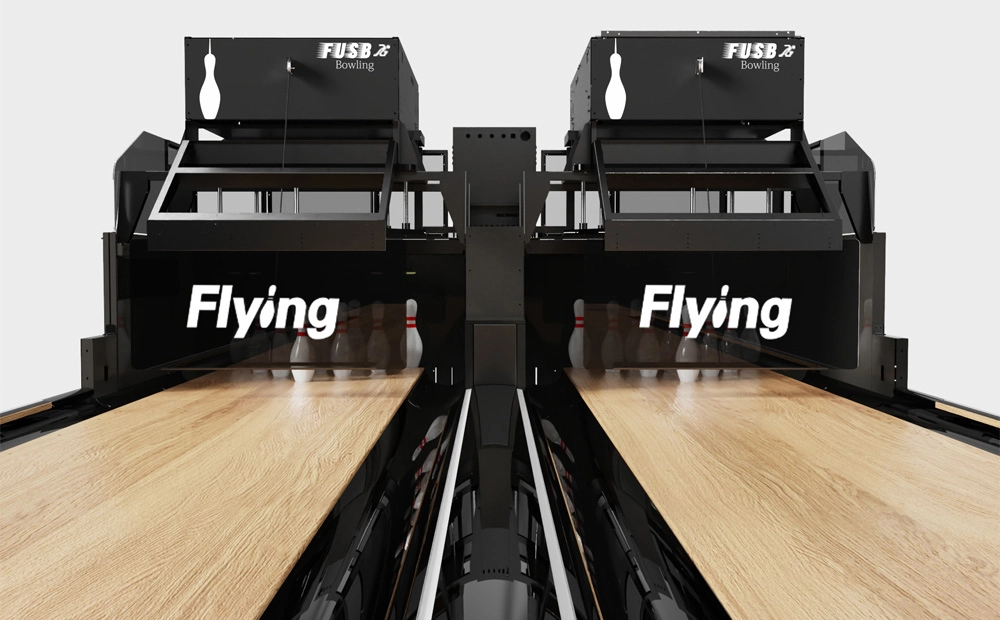
Flying Ultra Standard Bowling
Flying Ultra Standard Bowling (FUSB) Upgraded Version
The string pinsetter uses the latest technology. It offers a more enjoyable bowling experience thanks to its innovative designs and modern technology.
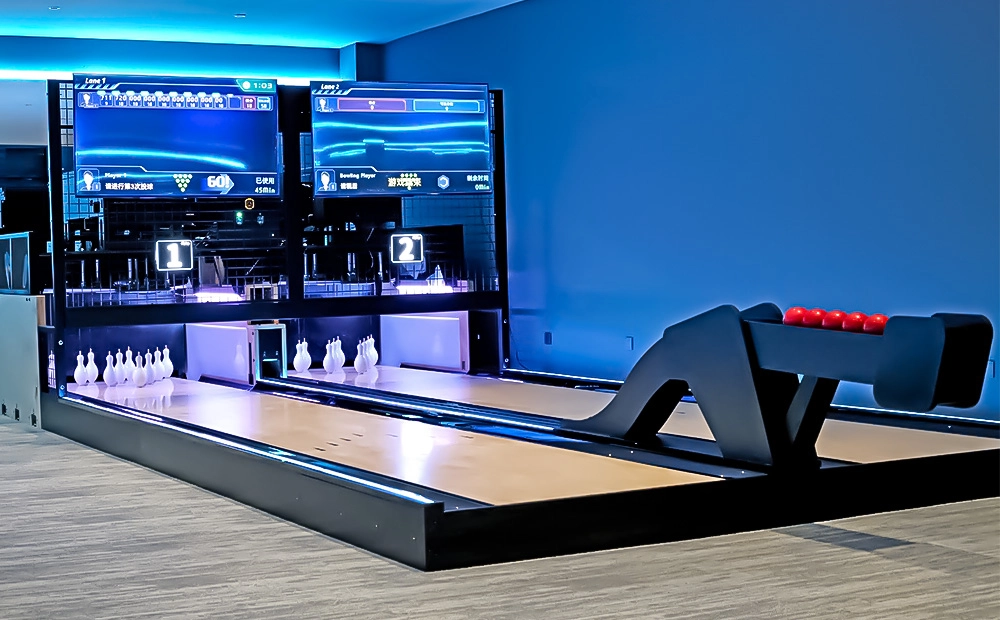
Flying Smart Duckpin Bowling
The innovative design of Flying Smart Duckpin Bowling (FSDB) makes it perfect for places like bars, billiard halls, and game centers. It makes people want to come back more often and spend more money. FSDB is fun and competitive, so it will become a new focus for social activities.
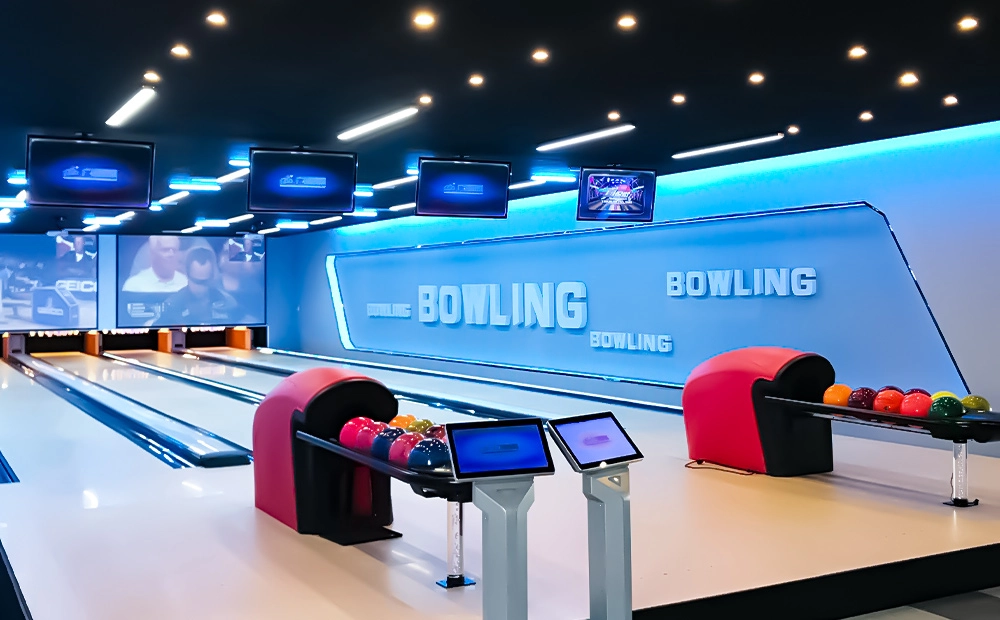
Flying Classic Standard Bowling
Flying Classic Standard Bowling (FCSB) employs the World Standard Competition Scoring System to deliver a more professional bowling experience, enabling bowlers to enjoy a professional-standard match at their convenience.
Ready to Build Your Bowling Center?
Share your details, and we’ll provide tailored solutions and expert guidance to help you take your bowling center to the next level.

Professional Bowling Alley Equipment Manufacturer, a one-stop solution provider for bowling alleys.
Facebook
YouTube
Linkedin
Twitter