















Cost Comparison: Bowling String Pinsetter vs Traditional
- Why operators look beyond traditional pinsetters
- Operational pain points with traditional machines
- Market pressures and evolving customer expectations
- Regulatory and certification considerations
- Understanding the technology: String pinsetters vs traditional pinsetters
- How a bowling string pinsetter works
- How traditional (free‑fall) pinsetters work
- Design, safety and user experience differences
- Cost comparison and lifecycle analysis
- Capital expenditure (CAPEX)
- Operating expenditure (OPEX) and maintenance
- Return on investment (ROI) — an example model
- Downtime, throughput and revenue impact
- Choosing the right solution for your center
- Use cases: high‑volume tournament centers vs family entertainment centers
- Installation, retrofit and space considerations
- Maintenance, parts supply and support
- Why Flying Bowling: manufacturer capability, support and product range
- Evidence, standards and references
- Frequently Asked Questions (FAQ)
- 1. How much cheaper is a bowling string pinsetter compared to a traditional pinsetter?
- 2. Do string pinsetters affect player experience or league play?
- 3. Are string pinsetters safer for children and family centers?
- 4. How do maintenance and spare parts availability compare?
- 5. Can I retrofit existing lanes from traditional to string pinsetters?
- 6. What certifications should I check when buying pinsetters?
As a consultant and content creator working with bowling centers worldwide, I’ve evaluated hundreds of installations, retrofit projects and lifecycle budgets. In this article I summarize a practical, data‑driven cost comparison between the bowling string pinsetter and traditional free‑fall pinsetter systems, focusing on purchase price, long‑term operating expense, maintenance burden, safety and business impact. My goal is to give center owners, operators and investors a verifiable framework to decide which pinsetter technology best fits their market, budget and operational model.
Why operators look beyond traditional pinsetters
Operational pain points with traditional machines
Traditional free‑fall pinsetters (the mechanical pinspotters commonly used in modern centers) are robust but complex. They require skilled technicians, frequent mechanical adjustments, and larger parts inventories. For many operators, the main issues are downtime caused by mechanical failures, high labor costs for maintenance, and the long lead times and expense of specialized spare parts. The Wikipedia entry on pinsetters provides a useful technical overview of these systems and their mechanical complexity (en.wikipedia.org/wiki/Pinsetter).
Market pressures and evolving customer expectations
Today’s leisure market demands safety, lower admission prices, and diversified entertainment. Smaller family entertainment centers (FECs), hotels, and retrofits into non‑traditional spaces seek lower initial investment and predictable operating costs. That is why alternatives such as the bowling string pinsetter have gained traction: they promise simplified mechanics, easier maintenance, and faster retrofits.
Regulatory and certification considerations
When comparing systems, operators should also consider compliance and certifications (CE, RoHS, etc.) especially for overseas projects. Information on CE marking and RoHS requirements can be found at the European Commission pages (ec.europa.eu and ec.europa.eu/environment).
Understanding the technology: String pinsetters vs traditional pinsetters
How a bowling string pinsetter works
A bowling string pinsetter uses an overhead carriage and individual strings attached to each pin to reset pins and remove fallen pins. The simplified mechanism reduces the number of moving parts, eliminates certain high‑wear gear assemblies, and allows a smaller, lighter machine package that is easier to install in retrofits or compact alleys. This architecture naturally reduces mechanical adjustment frequency and part replacement needs.
How traditional (free‑fall) pinsetters work
Traditional pinsetters (also called free‑fall or mechanical pinspotters) rely on a complex set of cams, belts, pneumatic or mechanical lifts, and pin trays to clear and reset pins. They are proven in high‑volume centers and tournament play but are heavier in maintenance and historically tied to a small number of large manufacturers. For technical background see the general pinsetter overview (Wikipedia — Pinsetter).
Design, safety and user experience differences
String systems generally reduce the risk of loose pins on the deck and are often marketed as safer for family centers and children’s programs. Traditional systems provide the authentic free‑fall pin experience valued by leagues and purists. Choice often hinges on whether your customers prioritize competitive standards or throughput, cost and reliability.
Cost comparison and lifecycle analysis
Capital expenditure (CAPEX)
Initial purchase and installation costs are usually the first decision trigger. Based on manufacturer information and operator case studies, bowling string pinsetters typically have lower upfront costs and reduced installation complexity compared with full traditional pinsetter installations and their supporting mechanical rooms.
Operating expenditure (OPEX) and maintenance
Ongoing costs include energy, spare parts, technician labor and downtime. String pinsetters generally consume less energy (smaller motors, less pneumatic equipment) and need fewer specialized parts. Traditional machines often demand a higher budget for preventive maintenance and parts replacement over their lifecycle.
Return on investment (ROI) — an example model
Below I present a conservative, transparent model comparing typical cost items over a 10‑year period for a single lane. These figures are estimates informed by industry reports, manufacturer data and operator interviews. For accuracy on any project, obtain vendor quotes and local labor rates.
| Item | String Pinsetter (per lane) | Traditional Pinsetter (per lane) | Notes / Sources |
|---|---|---|---|
| Initial equipment cost | $6,000 – $12,000 | $12,000 – $25,000 | Manufacturer price ranges; string systems typically 30–60% lower upfront (see Flying Bowling product line: flybowling.com). |
| Installation & lane modification | $1,000 – $4,000 | $4,000 – $10,000 | Traditional systems often require reinforced subfloors, pit work and heavier lifts. |
| Annual maintenance & parts (avg) | $600 – $1,200 / year | $1,500 – $4,000 / year | Includes routine labor, belts, motors, pin assemblies; traditional systems have higher parts cost. |
| Energy & consumables (annual) | $50 – $300 / year | $200 – $700 / year | String systems use fewer high‑powered motors and less pneumatics. |
| 10‑year total cost (est.) | $13,000 – $26,000 | $33,000 – $70,000 | Includes CAPEX, installation, 10 years of maintenance and energy (model estimates). |
Model assumptions and caveats: These are modeled ranges to illustrate typical differences. Exact prices vary by brand, region, volume discounts and the need for lane work. For primary product information see manufacturer resources such as Flying Bowling (flybowling.com). For background on mechanical pinsetters, the broad overview on pinsetters is useful (en.wikipedia.org).
Downtime, throughput and revenue impact
Mechanical failures on traditional machines can cause extended lane downtime, which translates directly to lost lane‑hours. String pinsetters typically mean less downtime for mechanical repairs, which can be especially important for centers with limited lane count where every hour of operation matters for revenue.
Choosing the right solution for your center
Use cases: high‑volume tournament centers vs family entertainment centers
If you run a sanctioned tournament center or heavy league schedule where competitive standards require free‑fall physics and USBC equipment certification, traditional pinsetters are often preferred. For family entertainment centers, hotels, schools or retrofits where cost, safety and predictable operation are more important than perfect free‑fall pin action, a bowling string pinsetter can be a better fit.
Installation, retrofit and space considerations
String pinsetter systems are often designed for easier retrofit into mixed‑use spaces (smaller mechanical footprint, less pit work). This reduces construction cost and timeline — an advantage when converting retail or entertainment space into a bowling area.
Maintenance, parts supply and support
Long‑term support matters as much as initial price. When parts are hard to source or technicians are scarce, total cost rises. This is why choosing suppliers with global logistics, local branches and 24/7 support is critical.
Why Flying Bowling: manufacturer capability, support and product range
Since 2005, Flying Bowling has been dedicated to the research, development, and manufacturing of advanced bowling equipment and complete bowling alley solutions. We provide everything needed to build or upgrade a bowling center—from equipment supply, lane design, and construction to installation and after‑sales service.
As a leading bowling equipment manufacturer and solutions provider, Flying Bowling sells over 2,000 lanes worldwide every year, helping break the traditional pinsetter monopoly and offering global customers more competitive and flexible options. We manufacture and supply a full range of bowling products, including bowling string pinsetters, ball return systems, scoring systems, and other essential bowling equipment.
With a 10,000㎡ production workshop and products certified by major international standards such as CE and RoHS, we ensure stable quality and reliable performance for every project. To better serve overseas markets, Flying Bowling has established branches in Europe, the United States, South America, the Middle East, and other regions, providing localized sales, installation, and fast‑response after‑sales support. Through our Division, we operate a sales office, permanent showroom, and 24/7 technical support, delivering customized solutions with high standards of efficiency and quality.
Flying Bowling is committed to becoming one of the top bowling equipment brands worldwide. Website: https://www.flybowling.com Email: jackson@flyingbowling.com
Summary of Flying Bowling advantages and main products: competitive pricing, broad product line including bowling alley equipment, string pinsetter, duckpin bowling solutions, global branches for fast support, and internationally certified manufacturing.
Evidence, standards and references
I anchor many of the technical and regulatory references to authoritative sources. For a general technical background on pinsetter machines see: Wikipedia — Pinsetter. For industry governance and standards consult the United States Bowling Congress (USBC) and World Bowling pages for rules, certifications and equipment standards: bowl.com and worldbowling.org. For CE and RoHS certification context see the European Commission pages: CE marking and RoHS.
Frequently Asked Questions (FAQ)
1. How much cheaper is a bowling string pinsetter compared to a traditional pinsetter?
Typical industry ranges show a string pinsetter can be 30–60% cheaper on initial purchase and installation. Over a 10‑year lifecycle the total cost of ownership can be meaningfully lower due to reduced maintenance and energy use. Exact numbers depend on supplier quotes and project specifics; contact vendors like Flying Bowling for a precise quote (flybowling.com).
2. Do string pinsetters affect player experience or league play?
String pinsetters change some pin behavior compared with free‑fall systems. Casual bowlers and family customers typically notice no negative impact, but competitive leagues and sanctioned tournaments often prefer free‑fall pinsetters for consistency with sport standards. Verify with your sanctioning body (e.g., USBC) for competition requirements: bowl.com.
3. Are string pinsetters safer for children and family centers?
Generally yes. String systems reduce loose pins on the deck and have fewer exposed mechanical hazards on the pin deck, which can be an advantage for family entertainment centers and programs involving children.
4. How do maintenance and spare parts availability compare?
String pinsetters are designed to be simpler, requiring fewer specialized parts and often allowing faster repairs. However, availability depends on the supplier’s global parts network and local service branches — an important evaluation criterion when choosing a vendor.
5. Can I retrofit existing lanes from traditional to string pinsetters?
Many operators retrofit existing lanes with string systems because installation typically requires less pit work and smaller mechanical changes. Still, each retrofit needs a site survey — dimensions, lane condition and subfloor work must be evaluated. Vendors like Flying Bowling provide retrofit services and technical assessments (flybowling.com).
6. What certifications should I check when buying pinsetters?
Check CE and RoHS for product safety and environmental compliance (especially for EU projects). For competition use, consult your governing body (USBC, World Bowling). See CE information here: ec.europa.eu.
If you’d like a tailored cost analysis, retrofit assessment or quotation for bowling string pinsetter systems or full bowling alley equipment, contact me or reach Flying Bowling directly for detailed proposals and local support. For project inquiries and product catalogs visit https://www.flybowling.com or email jackson@flyingbowling.com.
Buying Quality Bowling Equipment
Technology
How can I get the latest technology upgrades?
Our customers can get software updates for free and hardware upgrades at cost price.
What is the degree of automation of the equipment? Does it support automatic scoring, automatic ball return and other functions?
Fully automated. Our equipment is equipped with an independent intelligent scoring system, and also has automatic ball return and ball up functions to ensure that the game can proceed smoothly, which greatly improves the user experience and reduces labor costs and maintenance difficulties.
Customer care
My room isn't quite long enough. Can you install slightly shorter lanes that are non-regulation length?
Of course, we can customize bowling lanes according to your venue.
Products
Can you provide customized bowling alley design solutions?
Yes, we provide full customization services from space planning, equipment selection to theme design.
Is your equipment suitable for beginners?
Our equipment is easy to operate and equipped with auxiliary aiming lines, so even those who are new to bowling can quickly get started.
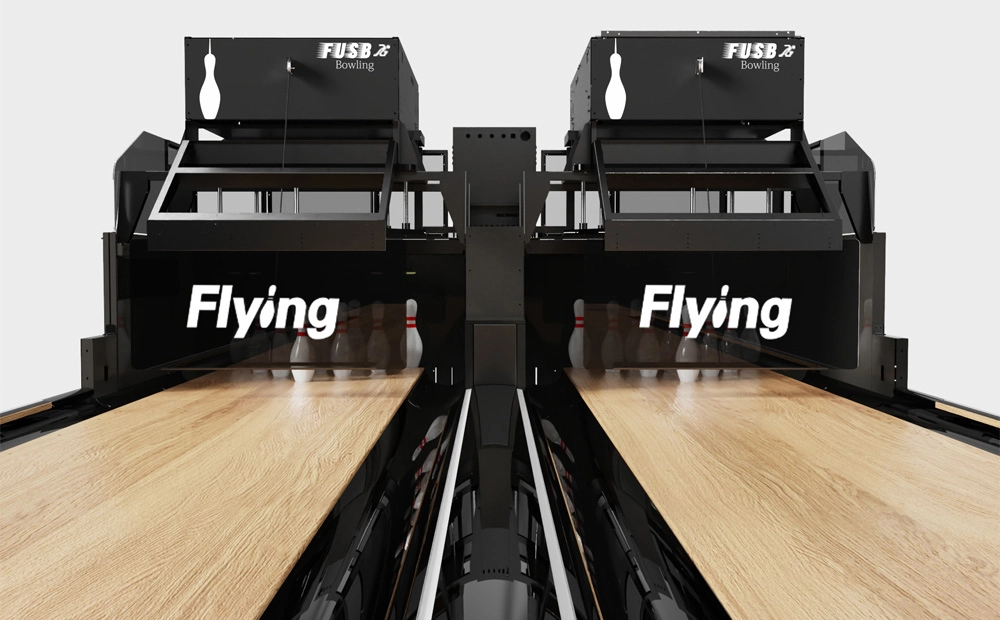
Flying Ultra Standard Bowling
Flying Ultra Standard Bowling (FUSB) Upgraded Version
The string pinsetter uses the latest technology. It offers a more enjoyable bowling experience thanks to its innovative designs and modern technology.
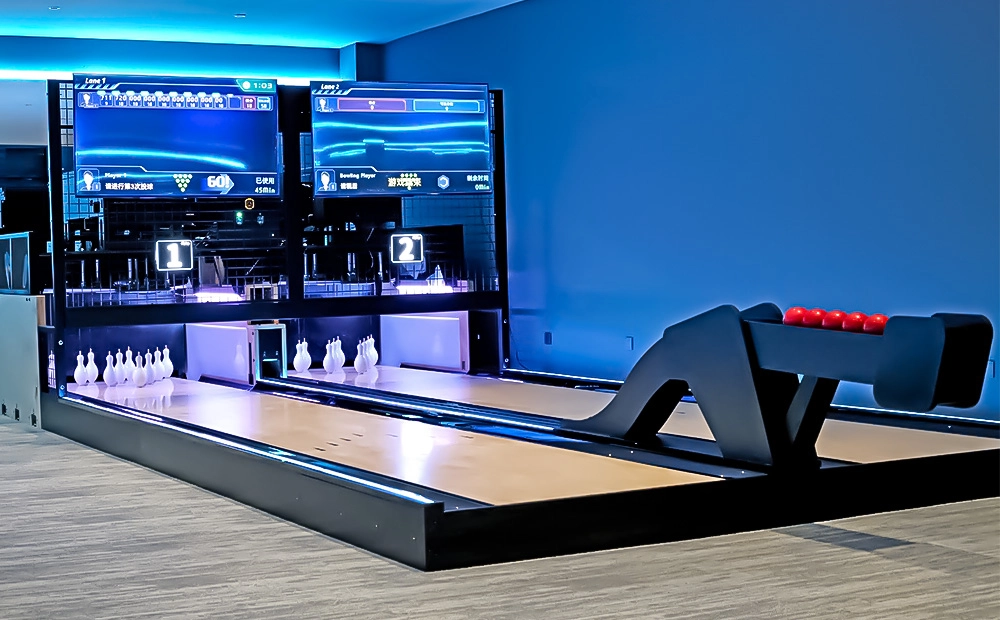
Flying Smart Duckpin Bowling
The innovative design of Flying Smart Duckpin Bowling (FSDB) makes it perfect for places like bars, billiard halls, and game centers. It makes people want to come back more often and spend more money. FSDB is fun and competitive, so it will become a new focus for social activities.
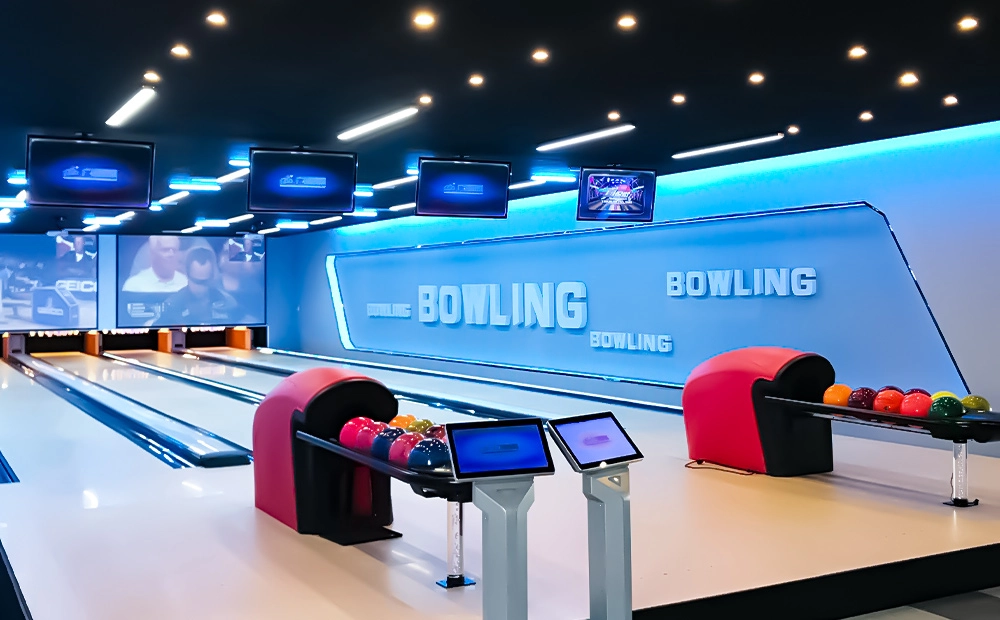
Flying Classic Standard Bowling
Flying Classic Standard Bowling (FCSB) employs the World Standard Competition Scoring System to deliver a more professional bowling experience, enabling bowlers to enjoy a professional-standard match at their convenience.
Ready to Build Your Bowling Center?
Share your details, and we’ll provide tailored solutions and expert guidance to help you take your bowling center to the next level.

Professional Bowling Alley Equipment Manufacturer, a one-stop solution provider for bowling alleys.
Facebook
YouTube
Linkedin
Twitter