














How much does a bowling set up cost? | Fly Bowling Expert Guide
- 1. What are the major equipment costs involved in setting up a bowling alley?
- 2. What does the total project cost look like by lane count?
- 3. What factors most influence the final cost of bowling equipment?
- 4. What are the ongoing annual maintenance costs?
- 5. How long does bowling equipment last?
- 6. How can I reduce setup costs without sacrificing operational quality?
1. What are the major equipment costs involved in setting up a bowling alley?
A complete commercial bowling installation consists of six components. Understanding what each costs—and what each does—prevents the most common budgeting mistake: confusing a supplier's equipment-only quote with the actual all-in cost.
Synthetic lane surface: $10,000–$15,000 per lane. Modern commercial lanes use High Pressure Laminate (HPL) or Synthetic Plank Laminate (SPL) panels bonded to a structural subfloor. They last 20–30 years with annual conditioning and resurfacing every 5–10 years. Traditional wood surfaces ($15,000–$18,000/lane) require resurfacing every 2–5 years—higher long-term cost for most operators.
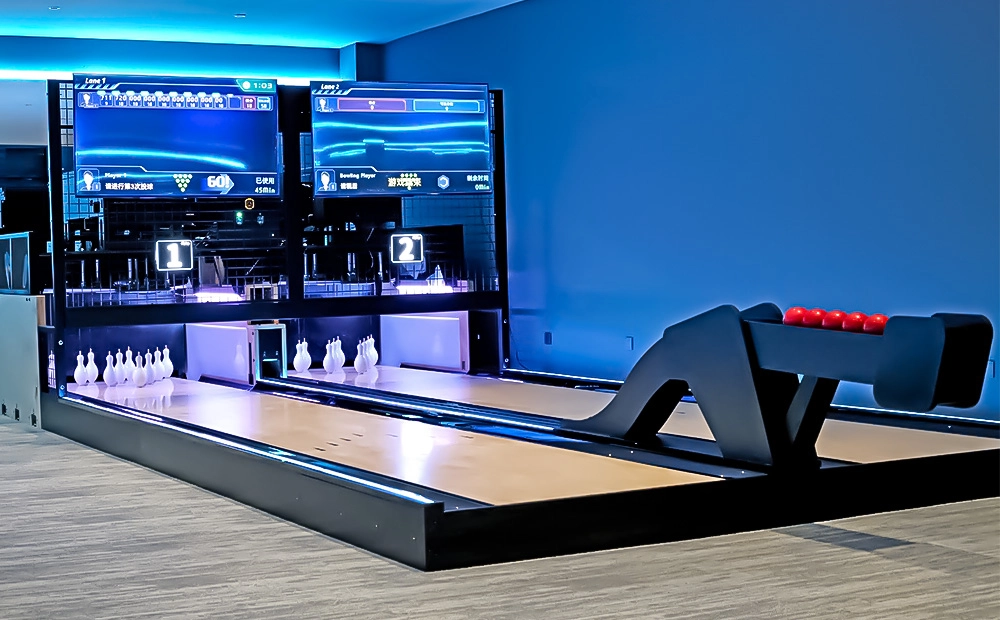
String pinsetter (new): $8,000–$12,000 per lane. QubicaAMF Frameworx, US Bowling HPL, and Flying Bowling AEROPIN are the leading options. Fewer than 100 moving parts; annual maintenance $200–$600/lane; USBC-certified for most formats since 2023. This is the default choice for new FEC and boutique projects.
Free-fall pinsetter (new): $15,000–$25,000+ per lane. Brunswick GS Series and AMF 82-70XLi are the established models. Approximately 4,000 moving parts; annual maintenance $1,500–$3,500/lane; requires a certified mechanic for service. Appropriate for venues where traditional sanctioned league bowling is the primary revenue driver.
Ball return system: $3,000–$6,000 per lane. Above-ground systems are standard for most commercial installations. Underground/concealed returns add $2,000–$4,000 per lane and require additional structural depth.
Scoring system: $4,000–$8,000 per lane. Current-generation systems (QubicaAMF Conqueror, Brunswick Vector Plus) include touchscreen lane consoles, overhead displays, mobile score viewing, food and beverage ordering integration, and operator dashboards. Confirm annual software licensing fees before purchasing—some systems charge $125–$210/lane/month, which can exceed original hardware cost over 10 years.
Furniture and seating: $2,000–$5,000 per lane. Standard commercial seating runs $2,000–$3,000/lane; premium lounge configurations (sofas, branded upholstery, custom tables) run $4,000–$5,000+. BPAA 2024 data shows venues that converted from fixed-seat to lounge-style configurations saw 18–25% higher food and beverage spend per visit—the furniture investment pays back through F&B revenue.
Shipping and installation: $3,000–$8,000 per lane. A two-lane project fills an 18-wheeler; logistics costs are not trivial. On-site installation crews typically work 4–7 days for a two-lane setup.
All-in equipment total per lane (string pinsetter): approximately $33,000–$57,000, covering all components above plus installation. This is equipment and installation only—it excludes building construction, HVAC, permits, and working capital.
2. What does the total project cost look like by lane count?
The equipment cost above is only part of the total project budget. Building construction or renovation is typically the largest single cost, often exceeding equipment.
Equipment-only investment (mid-range, new equipment):
- 4 lanes: $180,000–$320,000
- 8 lanes: $360,000–$640,000
- 12 lanes: $540,000–$960,000
- 16 lanes: $720,000–$1.3M
- 24 lanes: $1.1M–$1.9M
Total all-in project cost (equipment + building + permits + working capital):
- 4-lane boutique (retail conversion, leased): $600,000–$1.2M
- 8-lane FEC (retail conversion): $1.2M–$2.5M
- 12-lane FEC (retail conversion): $1.5M–$3M
- 12-lane FEC (new construction): $3M–$6M+
The most consequential cost decision is building strategy. Operators who convert existing retail space (former big-box stores are the most common option) reduce total project cost by 25–35% and open 6–12 months faster than those who build from scratch. For first-time operators, a retail conversion with a lease is almost always the lower-risk entry path.
Add a 10–15% contingency reserve to all estimates. Construction projects without contingency consistently face scope reduction or delayed openings when inevitable surprises arise.
3. What factors most influence the final cost of bowling equipment?
Pinsetter type is the single most consequential factor. Choosing string over free-fall saves $7,000–$13,000 per lane on purchase price and $1,300–$2,900 per lane per year on maintenance. On a 12-lane facility over 10 years, the difference is $180,000–$360,000 in maintenance and energy savings alone—before accounting for the staffing cost difference (general staff vs. certified mechanic).
New vs. refurbished equipment. Refurbished pinsetters and used lane surfaces cost 30–50% less upfront but carry no manufacturer warranty. For a primary-revenue bowling operation, the maintenance premium on used equipment typically erodes the savings within 3–5 years. Economy builds where bowling is a secondary attraction (hotel amenity, restaurant add-on) are the viable use case.
Lane count and volume pricing. Suppliers offer 8–15% discounts on packages of 8+ lanes. A 12-lane order achieves meaningfully lower per-lane cost than a 4-lane order from the same supplier.
Scoring system technology tier. Basic LCD displays cost $2,000–$3,000/lane. Full touchscreen systems with F&B integration cost $4,000–$8,000/lane. The premium pays back through higher revenue: BPAA 2024 data shows venues with integrated lane-side ordering generate 30–45% more revenue per lane hour during off-peak periods.
Interactive projection. Adding lane projection systems (HyperBowling, Brunswick Spark) costs $10,000–$15,000/lane and requires 12–14 ft minimum ceiling height. This investment targets corporate groups, birthday parties, and casual entertainment audiences who generate higher per-hour revenue than traditional bowlers. Venues with projection consistently report higher off-peak utilization.
Installation market. Labor costs vary significantly by region. Urban markets (New York, San Francisco, London, Sydney) add 20–40% to installation labor versus secondary markets. Equipment lead times from major manufacturers run 3–4 months minimum—factor this into your opening schedule before signing a lease.
4. What are the ongoing annual maintenance costs?
Maintenance is not a variable cost that can be deferred—deferred maintenance on bowling equipment causes downtime, which directly reduces revenue. Budget these costs from day one.
Lane conditioning: $500–$1,500/lane/year. Lane oil application (typically daily for a commercial center) and periodic cleaning are essential for consistent ball reaction and lane surface protection. Most operators use a lane conditioning machine ($10,000–$20,000 to purchase or lease) and proprietary oil/cleaner from their equipment supplier.
String pinsetter maintenance: $200–$600/lane/year. Routine tasks include string tension checks, pin detection sensor cleaning, and software calibration updates. General venue staff can handle most of this with proper training.
Free-fall pinsetter maintenance: $1,500–$3,500/lane/year. Requires a Brunswick or AMF-certified mechanic for most service work. Major overhauls every 5–7 years add $4,000–$8,000 per machine—a significant expense not captured in annual maintenance estimates.
Scoring software licensing: $1,200–$2,500/lane/year. Cloud-based scoring systems charge monthly licensing fees ($125–$210/lane/month is typical). Confirm the fee structure and what happens to your system if you stop paying before signing any equipment agreement.
Utilities (HVAC + equipment power): $2,000–$5,000/lane/year for a commercial center. Lane electronics and pinsetter motors run continuously during operating hours; climate control for a bowling facility is more demanding than standard commercial HVAC.
Total annual equipment operating cost for a 12-lane center with string pinsetters: approximately $55,000–$120,000/year. This is a material recurring cost that must be modeled before committing to a project budget—operators who underestimate it consistently face cash flow issues in years 2–3 after opening.
5. How long does bowling equipment last?
With proper maintenance, modern bowling equipment has a long service life:
Synthetic lane surfaces: 20–30 years. The surface layer requires resurfacing every 5–10 years depending on traffic volume and oil application discipline. Manufacturers including QubicaAMF, Brunswick, and US Bowling offer surface warranty programs. Synthetic surfaces last significantly longer than traditional wood (15–25 years) with substantially less maintenance.
String pinsetters: 15–20+ years. The low moving part count (fewer than 100) means less wear-related failure than free-fall systems. Regular string replacement and sensor maintenance are the primary recurring tasks. Flying Bowling's AEROPIN is rated at 10,000+ hours MTBF (Mean Time Between Failures).
Free-fall pinsetters: 20–30 years with adequate maintenance investment. Brunswick GS Series machines have demonstrated 30+ year operational lives at high-volume venues when properly serviced. The maintenance cost to achieve that longevity is substantially higher than string systems.
Scoring hardware: 8–12 years before hardware-level upgrade. Software and firmware updates are available throughout the hardware lifecycle; physical components (touchscreens, sensors, cameras) typically need replacement on the 8–12 year horizon.
Ball return systems: 15–20+ years with regular roller and track maintenance.
House balls (plastic/polyester): 8–15 years under commercial rental use. Harder outer shells last longer; regular surface inspection and prompt replacement of cracked or chipped balls reduces liability risk.
The practical implication: a well-specified new commercial installation should not require major capital reinvestment for 15–20 years. The ongoing cost is maintenance and software licensing, not equipment replacement.
6. How can I reduce setup costs without sacrificing operational quality?
Prioritize building strategy over equipment upgrades. The choice between new construction and retail conversion has a larger impact on total project cost than any equipment decision. A retail conversion saves 25–35% on construction and avoids the 6–12 month timeline premium of ground-up building.
Choose string pinsetters. The combination of lower purchase price ($8,000–$12,000 vs. $15,000–$25,000+), lower annual maintenance ($200–$600 vs. $1,500–$3,500/lane), and staff-manageable servicing makes string the financially superior choice for most new projects. The free-fall exception—venues where traditional sanctioned league play is the primary revenue driver—is real but narrow.
Invest in guest-facing technology, not mechanical upgrades guests never see. Modern scoring with F&B integration and lounge-quality seating consistently produce higher revenue per lane than premium mechanical equipment. A venue with standard string pinsetters and excellent lounge furniture outperforms one with premium free-fall equipment and basic seating.
Order in volume where feasible. An 8-lane order achieves meaningfully lower per-lane pricing than a 4-lane order. If your initial concept is 6 lanes, model whether 8 lanes produces better unit economics before finalizing scope.
Order equipment when construction starts, not when it finishes. Equipment lead times run 3–4 months minimum from major suppliers. This is one of the most common and preventable causes of opening timeline slippage.
Engage a specialist before finalizing your budget. A bowling facility consultant ($3,000–$8,000 for a market and cost feasibility study) can identify site-specific issues—structural constraints, ceiling height limitations, local labor rate premiums—that generic cost guides cannot predict. This is the cheapest insurance against discovering expensive problems after construction begins.
Flying Bowling manufactures USBC-certified string pinsetters (AEROPIN, FCSB), synthetic lane surfaces, ball return systems, and integrated scoring solutions, with CE certification and installation support across 40+ countries. Contact Flying Bowling at flybowling.com for equipment specifications, layout design, and project consultation.
- 1. What are the major equipment costs involved in setting up a bowling alley?
- 2. What does the total project cost look like by lane count?
- 3. What factors most influence the final cost of bowling equipment?
- 4. What are the ongoing annual maintenance costs?
- 5. How long does bowling equipment last?
- 6. How can I reduce setup costs without sacrificing operational quality?
Quality Bowling
You May Also Like
AEROPIN: USBC-Certified Commercial Bowling String Pinsetter for High-Traffic Venues
The AEROPIN is Flying Bowling's highest-specification string pinsetter, purpose-built for bowling center investors and operators who cannot afford downtime. Fully USBC-certified (Permit SP-11), it meets the strictest international competition standards while delivering the operational economics that protect your bottom line — a 10,000+ hour MTBF, sub-8-second pin cycle, and 15% lower energy consumption versus traditional systems.
Whether you are breaking ground on a new facility or modernizing an existing center, the AEROPIN integrates into your project as a complete, turnkey solution. Flying Bowling handles equipment supply, lane installation, commissioning, and after-sales support across 40+ countries — so your venue opens on schedule and runs without interruption from day one.
Flying Smart Duckpin Bowling
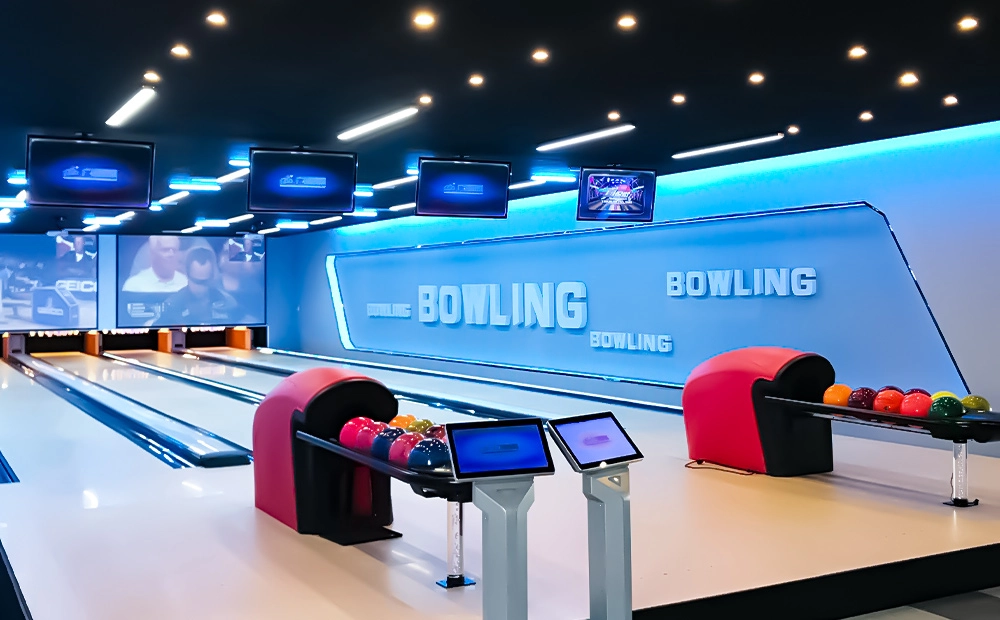
The innovative design of Flying Smart Duckpin Bowling (FSDB) makes it perfect for places like bars, billiard halls, and game centers. It makes people want to come back more often and spend more money. FSDB is fun and competitive, so it will become a new focus for social activities.
Flying Classic Standard Bowling
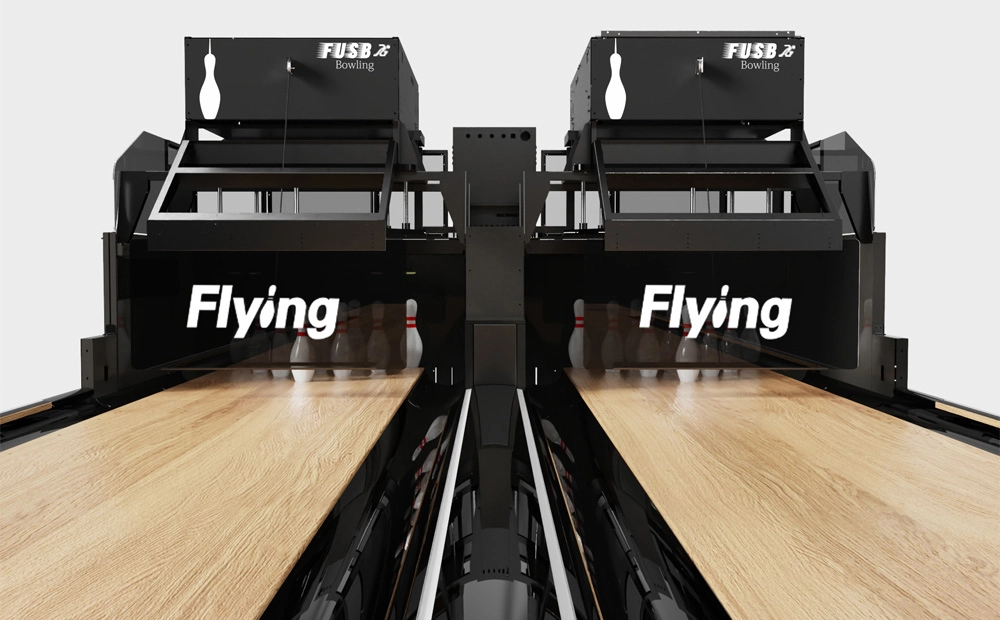
Flying Classic Standard Bowling (FCSB) employs the World Standard Competition Scoring System to deliver a more professional bowling experience, enabling bowlers to enjoy a professional-standard match at their convenience.
Get in touch
Contact us
If you contact us now for more details, we can provide you with a custom bowling alley service.
Our service team will get back to you within 24 hours, normally!

Facebook
YouTube
Linkedin
Twitter