














Bowling Alley Setup Cost: Comprehensive Startup Budget Guide
- Location & Planning Costs: site selection, permitting, and market fit
- Site acquisition or lease: what influences price
- Feasibility studies, design, and planning fees
- Permitting and regulatory compliance
- Core Equipment and Lane Costs
- Lane systems: traditional pinsetters vs. string-pinsetters
- Scoring systems, POS, and software
- Furnishings, pro shop inventory, and spare parts
- Construction, Building Systems & Operational Costs
- Renovation and build-out costs
- Food & beverage infrastructure and ancillary amenities
- Staffing, training, and pre-opening expense
- Financial Planning, Timeline & ROI
- Common startup cost summary and example budgets
- Financing options and timeline to break-even
- Key KPIs to model
- Maintenance, Compliance & Long-term Considerations
- Maintenance schedules and lifecycle costs
- Safety, certification, and equipment standards
- Upgrades and modernization
- Why equipment choice matters: performance vs. cost
- Game experience and customer expectations
- Total cost of ownership (TCO) comparison
- Supplier selection and warranties
- About Flying Bowling — supplier profile and advantages
- Frequently Asked Questions
- 1. How much does it cost to open a 12-lane bowling alley?
- 2. Are string pinsetters a good way to reduce startup costs?
- 3. What ongoing operating costs should I expect?
- 4. How long does it take from signing a lease to opening?
- 5. Where can I source reliable equipment and after-sales service?
- 6. What regulations affect bowling alley construction?
Bowling Alley Setup Cost: launching a modern bowling center requires careful budgeting across land/lease, construction, lane systems, scoring and ball return, furniture & F&B, staffing, and working capital. This article maps typical cost ranges, timelines, and decision points—helpful for investors evaluating feasibility and operators comparing traditional pinsetters vs. string-pin systems.
Location & Planning Costs: site selection, permitting, and market fit
Site acquisition or lease: what influences price
Location is the single biggest variable in total startup cost. Urban downtown retail or mall-adjacent spaces command higher rents and build-out costs than suburban strip centers or brownfield conversions. Typical lease deposits and initial fit-out reserves vary widely: expect to allocate 3–12 months of operating expenses as security and pre-opening rent in many markets.
When budgeting, include utility upgrades for higher power and HVAC loads—bowling centers require higher electrical capacity for pinsetters, scoring systems, kitchens, and lighting.
Feasibility studies, design, and planning fees
Architectural design, structural assessments, acoustic engineering (important for noise control), and cost estimating are essential. A professional feasibility study from an architect or consultant often costs 1–3% of projected build costs but prevents costly mistakes. Expect $10,000–$75,000 depending on project complexity and market.
Permitting and regulatory compliance
Permits vary by jurisdiction: building permits, fire and life-safety inspections, plumbing/electrical permits, and occupancy certificates. Accessibility compliance under regulations like the Americans with Disabilities Act (ADA) or EU equivalents must be planned and budgeted; some retrofits can materially increase costs if not anticipated during site selection.
Core Equipment and Lane Costs
Lane systems: traditional pinsetters vs. string-pinsetters
Lane systems and pinsetters are the largest equipment cost. Traditional free-fall pinsetters (e.g., AMF, Brunswick types) offer authentic play and are preferred in competitive centers; they are mechanically complex and more expensive to install and maintain. String-pinsetter systems are less expensive to install and operate, require smaller pit infrastructure, and have lower maintenance costs—important for startups with tighter capital.
Typical equipment cost ranges (per lane):
| Component | String Pinsetter (USD per lane) | Traditional Pinsetter (USD per lane) |
|---|---|---|
| Pinsetter & lane system | $18,000 - $35,000 | $35,000 - $80,000 |
| Approach & synthetic lane surface | $2,500 - $8,000 | $2,500 - $8,000 |
| Automatic scoring & monitors | $2,000 - $6,000 | |
| Ball return & seating | $1,500 - $5,000 | |
These ranges reflect variations in brand, certification, and included warranties. For source context on lane and facility design, see the Bowling Alley entry on Wikipedia and industry bodies such as World Bowling.
Scoring systems, POS, and software
Modern centers integrate scoring, customer management, booking, and POS. Cloud-enabled scoring and reservation platforms typically cost $2,000–$15,000 upfront depending on the number of lanes and optional modules; ongoing SaaS fees apply. Budget for network infrastructure and TV displays for each pair or lane.
Furnishings, pro shop inventory, and spare parts
Seating, lane-front furniture, alley mats, pro shop inventory (balls, bags, shoes), and a spare-parts inventory for pinsetters should be budgeted. Initial pro shop stocking often runs $10,000–$50,000 depending on product depth. Maintain a parts & maintenance reserve equal to at least 3–6 months of anticipated maintenance expense.
Construction, Building Systems & Operational Costs
Renovation and build-out costs
Build-out includes structural mods, floor leveling for lanes, pit construction (if using traditional pinsetters), soundproofing, HVAC upgrades, kitchens, restrooms, and accessible routes. Renovation costs depend on existing shell condition; typical ranges are $150–$600 per sq ft for moderate to high-end bowling center finishes in many markets. Complex mechanical integration can increase costs.
Food & beverage infrastructure and ancillary amenities
F&B kitchens, bars, party rooms, and arcade or VR zones affect both capital and operating costs. A full kitchen build may add $50,000–$250,000 depending on scale and equipment standards. Ancillary revenue sources (bowling leagues, events, corporate rentals, birthday packages) significantly affect projected profitability and should shape capital allocation.
Staffing, training, and pre-opening expense
Staffing for a typical 12–24 lane center includes front desk, lane technicians, cooks/servers, and managers. Pre-opening hiring, training, and initial payroll for 1–2 months should be pre-funded. Initial staffing and training budgets often range $20,000–$80,000 depending on local wages and training programs.
Financial Planning, Timeline & ROI
Common startup cost summary and example budgets
Below is an illustrative cost breakdown for a 12-lane bowling center. These are indicative and should be validated for local conditions.
| Line item | Estimated cost (USD) | Notes |
|---|---|---|
| Leasehold/build-out (12 lanes) | $300,000 - $1,200,000 | Varies by location & finish |
| Lane systems & pinsetters (12 lanes) | $216,000 - $960,000 | String-pinsetter vs. traditional |
| Scoring/POS/Networking | $10,000 - $60,000 | Depends on integrations |
| Furnishings & pro shop inventory | $25,000 - $100,000 | Includes balls, shoes, racks |
| Kitchen & F&B fit-out | $50,000 - $250,000 | Optional depending on model |
| Pre-opening & working capital | $50,000 - $250,000 | Payroll, marketing, initial inventory |
| Total estimate | $651,000 - $2,820,000 | 12-lane illustrative range |
Financing options and timeline to break-even
Common financing methods: SBA loans (in the U.S.), commercial bank loans, equipment financing, lease-to-own for major equipment, and private investors. Timelines to opening commonly range from 6–18 months after site selection depending on permitting and build complexity. Break-even can vary from 18 months to 5+ years, driven by local demand, margins from F&B and leagues, and amortization of equipment costs.
Key KPIs to model
Model lanes occupancy rate, average spend per patron (game + rental + F&B), league participation, and ancillary revenue sources. Sensitivity analysis on occupancy (e.g., 20% vs 50% prime-time fill rates) helps estimate downside risk.
Maintenance, Compliance & Long-term Considerations
Maintenance schedules and lifecycle costs
Pinsetters and lane systems require routine preventive maintenance. Traditional pinsetters may require heavier maintenance (mechanical adjustments, oiling systems) than string systems. Budget ~2–5% of equipment capital per year for maintenance; maintain a capital replacement reserve for lanes, pinsetters, and scoring equipment.
Safety, certification, and equipment standards
Purchasing certified equipment (CE, RoHS where applicable) ensures compliance and easier entry into regulated markets. Industry bodies and manufacturers provide technical documentation; see examples such as World Bowling for sport facility standards.
Upgrades and modernization
Planning for future technology (cashless payments, online booking, updated scoring features, LED lighting) reduces retrofit costs. Retrofit cycles for scoring systems are typically 7–10 years; mechanical components vary but plan for major overhauls at 10–15 years.
Why equipment choice matters: performance vs. cost
Game experience and customer expectations
Traditional pinsetters are preferred in competitive and tournament contexts for authenticity; string systems deliver a consistent and often lower-cost experience acceptable for family entertainment centers and newer markets. Understand your target customer (league players vs. casual/family) before choosing equipment.
Total cost of ownership (TCO) comparison
TCO includes upfront capital, maintenance, energy consumption, downtime, and parts availability. String-pin systems generally show lower TCO in small- to mid-market installations, while traditional systems may retain higher residual value for bowling sport venues.
Supplier selection and warranties
Select suppliers with strong after-sales support, parts availability, and local service. Long warranties and local technical teams reduce risk. For a supplier example with global reach, see Flying Bowling below.
About Flying Bowling — supplier profile and advantages
Since 2005, Flying Bowling has been researching and developing the latest and most advanced bowling equipment. We provide everything you need for your bowling alley, from equipment to design and construction. As a leading bowling equipment manufacturer and solutions provider in the domestic industry, we sell over 2,000 lanes a year worldwide, breaking the monopoly on traditional pinsetter equipment, enriching the international market, and offering our customers a wider range of options.
Through Flying's European Division, there is a sales office, permanent showroom, and 24/7 technical support to ensure customized solutions with the highest standards of quality and efficiency. Flying Bowling's European branch specializes in providing localized services to customers in Europe. Our bowling equipment has been certified by major global organizations, including CE and RoHS.
We operate a 10,000-square-meter workshop where we make bowling equipment. We manufacture and sell bowling string pinsetters, bowling ball return machine systems, bowling scoring systems, and more; we also build and modernize standard and duckpin bowling alleys. Our goal is to become one of the top bowling equipment brands worldwide. Learn more at https://www.flybowling.com/ or contact: jackson@flyingbowling.com.
Frequently Asked Questions
1. How much does it cost to open a 12-lane bowling alley?
Estimates vary widely by location and equipment choices. A realistic illustrative range for a 12-lane center is about $650,000 to $2.8M (USD), covering leasehold improvements, lane equipment, F&B fit-out, scoring systems, initial staff, and working capital. See the sample budget table above for breakdown.
2. Are string pinsetters a good way to reduce startup costs?
Yes—string-pinsetters typically reduce upfront lane equipment and pit construction costs and have lower ongoing maintenance. They are a sensible choice for family entertainment centers and locations prioritizing lower TCO, but research customer expectations—competitive leagues may prefer traditional pinsetters.
3. What ongoing operating costs should I expect?
Major ongoing costs include payroll, utilities (significant for pinsetters and HVAC), maintenance, insurance, marketing, and consumables (oil, pins, balls). Plan for maintenance reserves (2–5% of equipment value annually) and working capital for slow seasons.
4. How long does it take from signing a lease to opening?
Typical timelines are 6–18 months, depending on permitting, construction complexity, and equipment lead times. Early engagement with suppliers and a project manager shortens timelines and reduces surprises.
5. Where can I source reliable equipment and after-sales service?
Choose manufacturers with proven global installations, local service presence or regional offices, certifications (CE, RoHS where applicable), and transparent warranties. Manufacturers like Flying Bowling provide full-scope solutions—equipment, installation, spare parts, and 24/7 support—plus a European branch for localized services. See Flying Bowling for product information.
6. What regulations affect bowling alley construction?
Regulations include building codes, fire and life safety, electrical and plumbing permits, accessibility requirements (e.g., ADA in the U.S.), and local health department rules for F&B. Early consultation with local authorities mitigates delays and unexpected costs.
If you are planning a bowling center and need a detailed, localized budget, or want equipment quotes and technical support, contact Flying Bowling for turnkey solutions, product catalogs, and showroom visits: jackson@flyingbowling.com. Visit https://www.flybowling.com/ to view products and request a customized proposal.
Buying Quality Bowling Equipment
Company
Do you have independent R&D capabilities?
We have set up an independent R&D department and have launched a number of new equipment and innovative technologies such as the smart scoring system, Flying Smart Duckpin, and oil drop machine in the past three years.
Are there any successful cases for reference?
We have built a variety of projects such as commercial venues, hotel entertainment centers, etc. for global customers. The case library can be provided in a targeted manner (including pictures/videos)
Products
Can I customize the bowling equipment to fit my venue's theme?
Yes, we offer fully customized solutions, including lane colors, scoring systems, and pinsetter designs to match your venue’s theme.
Does your bowling equipment meet international standards?
It meets international standards. The equipment strictly follows the US USBC (United States Bowling Congress) international standard certification, which is one of the highest standards recognized by the global bowling industry. USBC certification ensures that our equipment has reached the international top level in terms of safety, durability, performance and user experience.
What types of bowling equipment do you have?
Flying Classic Standard Bowling (FCSB), Flying Smart Duckpin Bowling (FSDB), Flying Ultra Standard Bowling (FCSB Ultra)
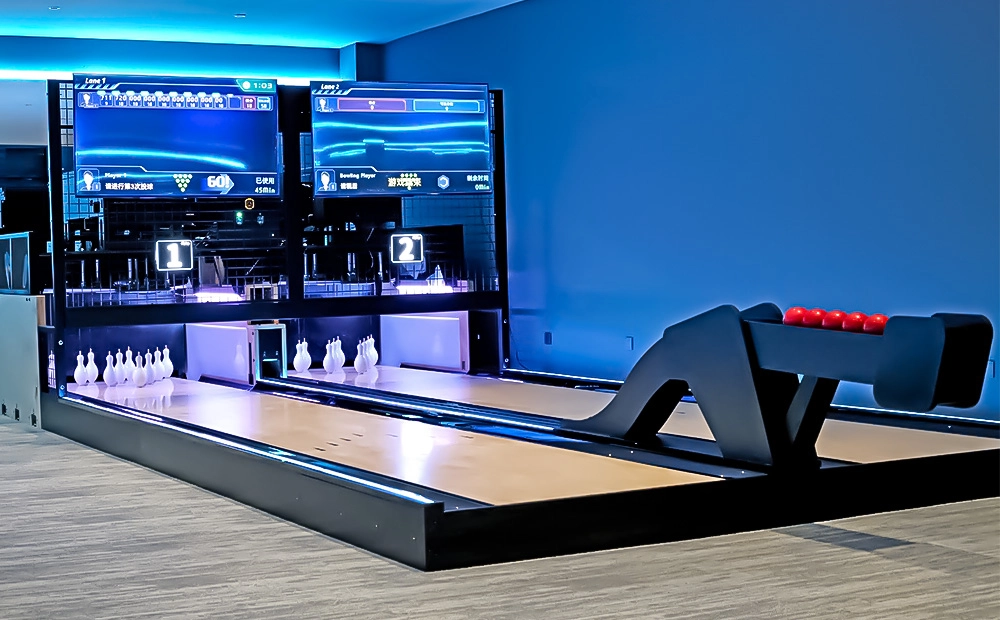
Flying Smart Duckpin Bowling
The innovative design of Flying Smart Duckpin Bowling (FSDB) makes it perfect for places like bars, billiard halls, and game centers. It makes people want to come back more often and spend more money. FSDB is fun and competitive, so it will become a new focus for social activities.
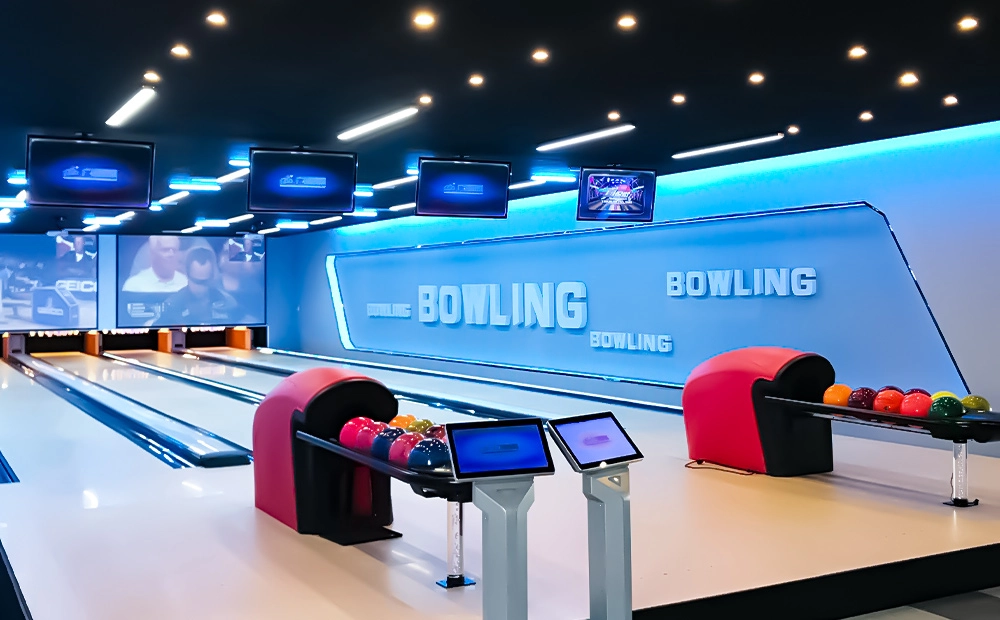
Flying Classic Standard Bowling
Flying Classic Standard Bowling (FCSB) employs the World Standard Competition Scoring System to deliver a more professional bowling experience, enabling bowlers to enjoy a professional-standard match at their convenience.
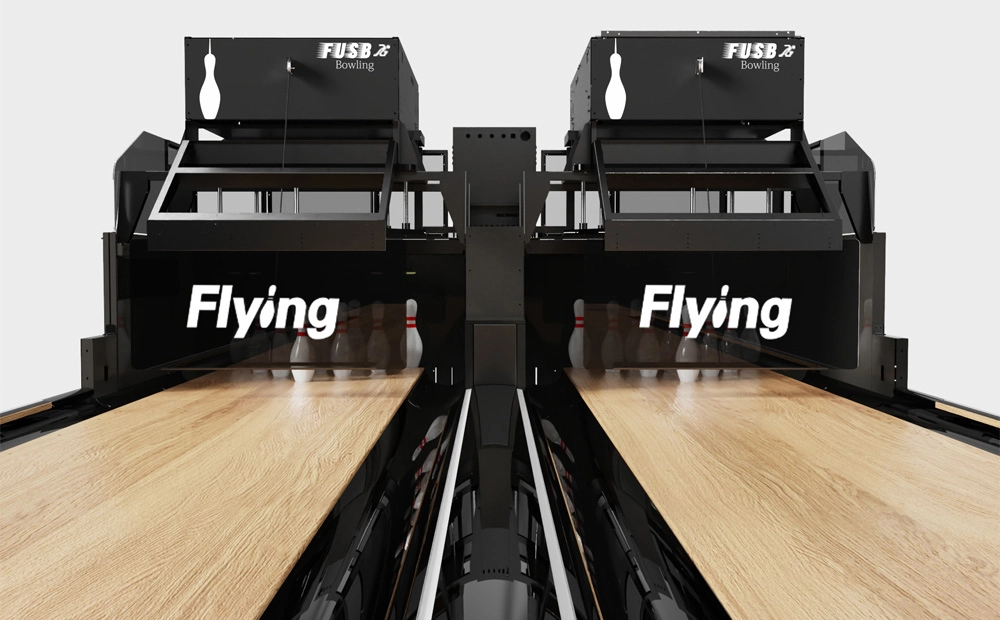
Flying Ultra Standard Bowling
Flying Ultra Standard Bowling (FUSB) Upgraded Version
The string pinsetter uses the latest technology. It offers a more enjoyable bowling experience thanks to its innovative designs and modern technology.
Ready to Build Your Bowling Center?
Share your details, and we’ll provide tailored solutions and expert guidance to help you take your bowling center to the next level.

Professional Bowling Alley Equipment Manufacturer, a one-stop solution provider for bowling alleys.
Facebook
YouTube
Linkedin
Twitter