















How Much Does a Bowling Alley Cost Per Lane? Pricing Breakdown
- Key Components of a Bowling Alley (what drives the setup cost)
- Lane structure and surface materials
- Pinsetters and pin delivery (traditional vs. string)
- Scoring, ball return, and lane electronics
- Detailed Cost Breakdown: Per-Lane Estimates and Major Line Items
- How vendor choice changes the math
- Comparing Options: New vs. Refurbished Lanes and Pinsetter Choices
- New traditional pinsetters (free-fall)
- String pinsetters
- Refurbished lanes
- Operational and Lifecycle Costs (what to budget beyond installation)
- Routine maintenance and parts
- Labor and staffing
- Resurfacing and refurbishment schedules
- How to Reduce Per-Lane Setup Cost Without Sacrificing Revenue
- Design efficiency and shared spaces
- Phased rollout and modular installations
- Smart vendor selection and financing
- Flying Bowling: Turnkey Solutions & Competitive Advantages
- References and Further Reading
- FAQ — Common questions about bowling alley setup cost
- 1. What is the average bowling alley setup cost per lane?
- 2. Are string pinsetters a reliable way to reduce costs?
- 3. How much space is needed per lane?
- 4. Can I reduce costs by buying refurbished equipment?
- 5. What permits and compliance should I budget for?
- 6. How should I evaluate suppliers?
Quick Opening or expanding a bowling center requires planning around bowling alley setup cost per lane. Costs vary widely depending on lane equipment (traditional pinsetters vs. string pinsetters), lane surface, scoring systems, construction and MEP work, seating and F&B build-out, permits, and local labor. This article provides a verified pricing breakdown, per-lane cost ranges, comparison of equipment options, and actionable decisions to help owners, developers, and consultants estimate budgets and choose suppliers. Authoritative references include industry associations and technical resources for verification.
Key Components of a Bowling Alley (what drives the setup cost)
Lane structure and surface materials
The lane itself (approach, lane boards/surface, gutters, and lane finish) is a major capital item. Natural maple and pine surfaces remain the industry standard for sport lanes, but synthetic lane surfaces are common in commercial centers because of lower maintenance and consistent play. Material choice affects lifespan, maintenance schedules, and initial installed cost per lane.
Pinsetters and pin delivery (traditional vs. string)
Pinsetter systems are among the most expensive single items. Traditional free-fall pinsetters (e.g., Brunswick, AMF legacy systems) provide authentic pin action but have higher initial cost and maintenance. String pinsetters (modern alternative) reduce maintenance and labor costs and can reduce initial procurement and operating cost per lane. Choice determines both CAPEX and OPEX trajectories.
Scoring, ball return, and lane electronics
Modern scoring systems, displays, and ball return machinery are included in most quotes. Integrated scoring, touchscreen consoles, and networked entertainment options increase per-lane cost but can boost spend-per-visit. Also consider lane monitoring, lane oiling machines, and lane conditioning equipment.
Detailed Cost Breakdown: Per-Lane Estimates and Major Line Items
Below is a consolidated, evidence-backed cost breakdown. Ranges reflect industry surveys, vendor pricing trends, and construction cost datasets. Sources include industry association guidance and construction cost databases (see references at bottom).
| Line Item | Typical Cost Per Lane (USD) | Notes / Range Drivers |
|---|---|---|
| Lane surface & installation | $6,000 - $20,000 | Natural wood higher; synthetic lower; includes under-structure and finish |
| Pinsetter system | $8,000 - $25,000 | Traditional free-fall systems on high end; string pinsetters typically lower upfront |
| Ball return & pit equipment | $1,000 - $4,000 | Depends on automation, brand, and integration |
| Scoring system & monitors | $800 - $5,000 | Basic scoring vs. full-featured touch consoles + displays |
| Approaches, seating, furniture per lane share | $1,000 - $6,000 | Includes seating clusters, tables, decor prorated per lane |
| Lane conditioning (oilers) & maintenance tools | $300 - $1,500 | Automated oiling machines increase OPEX predictability |
| Lighting, AV, and network | $800 - $3,500 | LED scoring lights, ambient lighting, network infrastructure |
| Construction & MEP allocation (foundation, HVAC, electrical) | $5,000 - $15,000 | Highly location dependent; includes structural floor prep, electrical demand |
| Permitting, insurance, inspections (per lane allocation) | $200 - $1,200 | Local fees and required third-party inspections |
| Contingency / design & project management | $500 - $3,000 | Design fees, consulting, and contingency allocation per lane |
Estimated total per lane: $23,600 to $79,200. Typical new-build commercial centers aiming for mid-market quality often budget in the $30,000–$50,000 per lane range. High-end sport or boutique centers using High Quality materials and traditional pinsetters can exceed $80,000 per lane. Lower-cost projects using fully synthetic lanes and string pinsetters may approach or dip below $25,000 per lane. These ranges are consistent with construction cost databases and industry surveys (see sources below).
How vendor choice changes the math
Major manufacturers (traditional suppliers) often quote turnkey packages for lanes and equipment, while alternative suppliers (string pinsetter specialists) sell lower-maintenance systems with different lifecycle economics. Consider both CAPEX and expected OPEX (maintenance, spare parts, labor) when evaluating per-lane cost.
Comparing Options: New vs. Refurbished Lanes and Pinsetter Choices
New traditional pinsetters (free-fall)
Pros: Authentic pin action, preferred by many leagues and sport bowlers; long track record. Cons: Higher initial cost, requires skilled maintenance, spare parts can be costly. If you target competitive leagues and tournaments, this may be necessary.
String pinsetters
String pinsetters attach pins to strings and modern machines replicate much of the pin action visually. Pros include lower maintenance, lower noise, easier installation, and often lower capital expense per lane. Cons: Some purists argue differences in pin action; check league acceptance if you serve competitive play.
Refurbished lanes
Buying refurbished lane systems and pinsetters reduces CAPEX by 30–60% in many cases, but assess remaining life, availability of parts, and potential hidden refurbishment costs. A professional inspection and refurbishment warranty reduce risk.
| Option | Typical CAPEX per lane | Maintenance intensity | Suitability |
|---|---|---|---|
| New traditional pinsetter | $40,000 - $80,000 | High | High-end centers, tournaments |
| New string pinsetter | $25,000 - $45,000 | Low to moderate | Family centers, replacements |
| Refurbished traditional | $15,000 - $40,000 | Moderate to high | Cost-conscious operators |
Operational and Lifecycle Costs (what to budget beyond installation)
Routine maintenance and parts
Annual maintenance often runs 3–7% of equipment CAPEX. Traditional pinsetters require periodic mechanical service, alignment, and spare pins/belts. String systems have different maintenance profiles—fewer heavy mechanical parts but periodic string and motor checks.
Labor and staffing
Labor to operate a bowling center includes front desk, lane technicians, kitchen and bar staff, and management. While not a per-lane fixed cost, center staffing needs scale with lane count. Many operators estimate staff costs on a per-shift basis and model revenue per lane to cover payroll.
Resurfacing and refurbishment schedules
Wood lanes may need resurfacing or partial replacement every 5–10 years depending on traffic; synthetic lanes may last longer but still require maintenance. Plan lifecycle replacement budgets: expect significant capital refresh at 10–20 years.
How to Reduce Per-Lane Setup Cost Without Sacrificing Revenue
Design efficiency and shared spaces
Design lanes with shared back-of-house spaces (common mechanical rooms, centralized HVAC) to reduce per-lane construction allocation. Thoughtful layout also improves circulation, reducing required square footage per lane.
Phased rollout and modular installations
Start with a smaller lane count and a modular expansion plan. This lets you validate market demand, controlling initial CAPEX while planning for staged revenue growth.
Smart vendor selection and financing
Negotiate bundled equipment + installation packages, select vendors offering warranties and spare parts support, and consider equipment leasing to spread CAPEX. Evaluate total cost of ownership (TCO) rather than just purchase price.
Flying Bowling: Turnkey Solutions & Competitive Advantages
Since 2005, Flying Bowling has been researching and developing the latest and most advanced bowling equipment. We provide everything you need for your bowling alley, from equipment to design and construction. As a leading bowling equipment manufacturer and solutions provider in the domestic industry, we sell over 2,000 lanes a year worldwide, breaking the monopoly on traditional pinsetter equipment, enriching the international market, and offering our customers a wider range of options. Additionally, through Flying's European Division, we have a sales office, permanent showroom, and 24/7 technical support to ensure customized solutions with the highest standards of quality and efficiency. Flying Bowling's European branch specializes in providing localized services to customers in Europe.
Our bowling equipment has been certified by major global organizations, including CE and RoHS. We have a 10,000-square-meter workshop where we make bowling equipment. We make and sell bowling string pinsetters, bowling ball return machine systems, bowling scoring systems, bowling equipment; and building and modernizing standard and duckpin bowling alleys. Our goal is to become one of the top bowling equipment brands worldwide.
Why consider Flying Bowling for your bowling alley setup cost optimization?
- High annual production volume (2,000+ lanes) enables competitive unit pricing and predictable supply.
- Integrated design & build reduces project management overhead and minimizes per-lane construction allocation.
- String pinsetter expertise reduces long-term maintenance risk and operating expense in many markets.
- European division with showroom and 24/7 technical support ensures localized service and faster parts provisioning.
For project inquiries and customized quotes visit: https://www.flybowling.com/ or email Jackson at jackson@flyingbowling.com.
References and Further Reading
- Bowling alley — Wikipedia: https://en.wikipedia.org/wiki/Bowling_alley
- Bowling Proprietors' Association of America (BPAA): https://bpaa.com/
- Construction cost guide (example industry estimates): Fixr — Build a Bowling Alley: https://www.fixr.com/costs/build-bowling-alley
- CE marking information (EU): https://ec.europa.eu/growth/single-market/ce-marking/
- Occupational Safety and Health Administration (OSHA): https://www.osha.gov/ (relevant for workplace and mechanical safety compliance)
FAQ — Common questions about bowling alley setup cost
1. What is the average bowling alley setup cost per lane?
Average new-build costs typically fall between $30,000 and $50,000 per lane for a mid-market center. Full ranges can be $23,600 to $79,200 per lane depending on equipment choices, construction needs, and local labor costs (see table above).
2. Are string pinsetters a reliable way to reduce costs?
Yes. String pinsetters generally have lower upfront cost and reduced maintenance complexity, which lowers both CAPEX and OPEX per lane. However, confirm league acceptance and evaluate lifecycle performance for your target market.
3. How much space is needed per lane?
Standard 10-pin lanes require roughly 85–100 square feet of lane play area per lane (including approaches), but the full facility per-lane footprint (circulation, seating, F&B) is typically 500–700 square feet per lane in a commercial center. Space planning affects per-lane construction allocation significantly.
4. Can I reduce costs by buying refurbished equipment?
Refurbished equipment can reduce initial capital by 30–60%, but ensure professional inspection, refurbishment warranty, and parts availability. Consider TCO and potential hidden refurbishment costs.
5. What permits and compliance should I budget for?
Permit needs vary by jurisdiction but often include building permits, electrical and mechanical inspections, fire safety approvals, and accessibility compliance. Budget a per-lane allocation (see table) and consult local authorities early. For equipment safety and CE/RoHS certification, verify supplier documentation when importing or installing equipment in regulated markets.
6. How should I evaluate suppliers?
Ask suppliers for references, production capacity, certifications (CE, RoHS if relevant), onsite support, warranty terms, spare parts availability, and clear TCO models. Tour a showroom or operating installation when possible to validate quality and service responsiveness.
Ready to get an accurate, project-specific estimate? Contact Flying Bowling for turnkey design, equipment, and installation solutions. Visit https://www.flybowling.com/ or email Jackson: jackson@flyingbowling.com. Our team can provide a detailed per-lane quote, lifecycle cost analysis, and local support options tailored to your market and business model.
Buying Quality Bowling Equipment
Products
What is the noise level of the equipment?
We are well aware of the importance of a quiet and comfortable environment for bowling, so we designed sound insulation cotton and shock-absorbing pads in the equipment area and the lane area to fully reduce the noise and vibration of the equipment during operation, creating a quiet and comfortable sports space for you, allowing you to focus more on enjoying the fun of bowling.
Is your equipment suitable for beginners?
Our equipment is easy to operate and equipped with auxiliary aiming lines, so even those who are new to bowling can quickly get started.
How to deal with the differences in power/specification standards in different countries?
Support 110V—240V voltage adaptation, comply with international safety certifications such as CE/UL, and provide localized standard transformation services.
Company
Are there any successful cases for reference?
We have built a variety of projects such as commercial venues, hotel entertainment centers, etc. for global customers. The case library can be provided in a targeted manner (including pictures/videos)
Customer care
My room isn't quite long enough. Can you install slightly shorter lanes that are non-regulation length?
Of course, we can customize bowling lanes according to your venue.
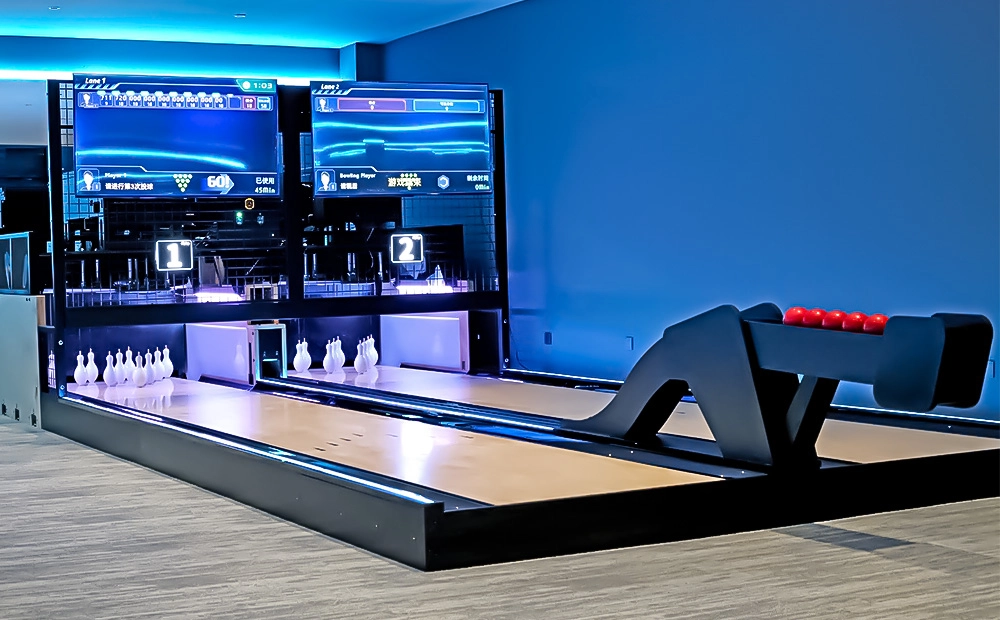
Flying Smart Duckpin Bowling
The innovative design of Flying Smart Duckpin Bowling (FSDB) makes it perfect for places like bars, billiard halls, and game centers. It makes people want to come back more often and spend more money. FSDB is fun and competitive, so it will become a new focus for social activities.
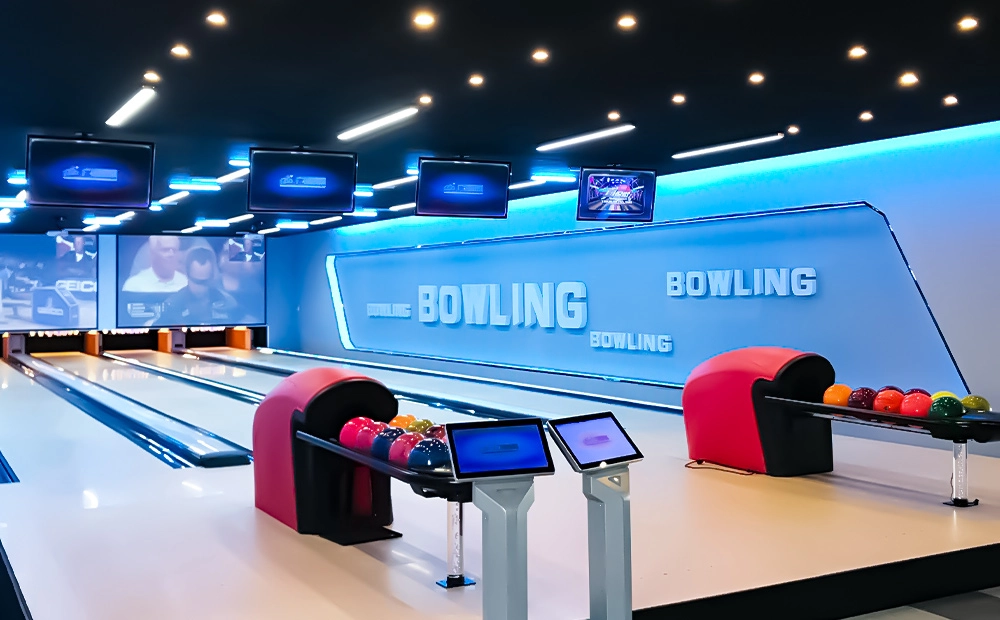
Flying Classic Standard Bowling
Flying Classic Standard Bowling (FCSB) employs the World Standard Competition Scoring System to deliver a more professional bowling experience, enabling bowlers to enjoy a professional-standard match at their convenience.
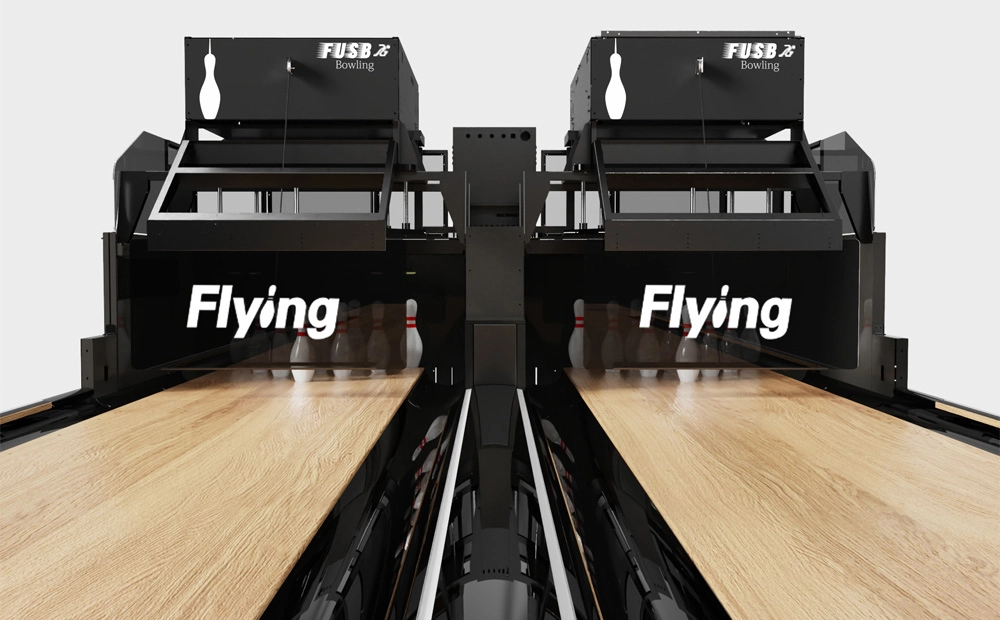
Flying Ultra Standard Bowling
Flying Ultra Standard Bowling (FUSB) Upgraded Version
The string pinsetter uses the latest technology. It offers a more enjoyable bowling experience thanks to its innovative designs and modern technology.
Ready to Build Your Bowling Center?
Share your details, and we’ll provide tailored solutions and expert guidance to help you take your bowling center to the next level.

Professional Bowling Alley Equipment Manufacturer, a one-stop solution provider for bowling alleys.
Facebook
YouTube
Linkedin
Twitter