















Bowling Alley Setup Cost by Equipment: Lanes, Pinsetters, Scoring
- Understanding costs and business drivers
- What the keyword bowling alley setup cost actually represents
- Major cost drivers you must consider
- Breakdown of equipment costs: lanes, pinsetters, scoring
- Lanes: materials, per-lane cost ranges, and lifecycle
- Pinsetters: traditional vs string systems and cost implications
- Scoring systems: software, displays, and integrations
- Installation, operational, and hidden costs
- Site preparation and construction costs
- Maintenance, spare parts, and staffing
- Warranties, service agreements, and lifecycle replacement
- Choosing equipment: ROI, supplier selection, and financing
- How to evaluate return on investment (ROI)
- Supplier criteria and verification
- Financing & phased upgrades
- Supplier spotlight: Flying Bowling — capabilities and advantages
- Practical sample budget: 12-lane mid-market alley (approximate)
- References & further reading
- FAQ — Frequently asked questions
- 1. How much is the average bowling alley setup cost per lane?
- 2. Are string pinsetters reliable for league and competitive play?
- 3. How long does lane installation take?
- 4. Can I start smaller and expand later?
- 5. What ongoing maintenance costs should I budget?
- 6. Where can I get reliable supplier references?
- Contact & next steps
Planning a bowling alley requires more than choosing décor and seating — equipment selection drives most of the capital expense. This article breaks down the bowling alley setup cost by equipment category (lanes, pinsetters, scoring), explains what drives those costs, and offers practical guidance to estimate total investment, compare options, and choose suppliers. Data and specifications reference industry standards and authoritative resources so you can make verifiable, business-oriented decisions.
Understanding costs and business drivers
What the keyword bowling alley setup cost actually represents
When people search for bowling alley setup cost they want a realistic estimate of how much it costs to open or refurbish a bowling venue, often broken down by major equipment: lanes, pinsetters (mechanical or string), scoring/hardware/software, and ancillary systems (ball returns, pit systems, approach/installation). They also expect guidance on installation, warranties, maintenance, and operational budgets.
Major cost drivers you must consider
Key factors that influence equipment cost include: lane material (wood vs synthetic), type of pinsetter (traditional pinspotter vs string pinsetter), scoring/display sophistication, import vs local manufacturing, installation complexity, and required site preparation (foundations, pit framing, HVAC). Business model (boutique upscale center vs community alley or duckpin layout) also affects specification choices and therefore cost.
Breakdown of equipment costs: lanes, pinsetters, scoring
Lanes: materials, per-lane cost ranges, and lifecycle
Lanes are often the single largest equipment item by area and specification. Two common types:
- Traditional wooden lanes: preferred for tournament play and by purists; require professional installation, more maintenance (oil patterns, resurfacing), and periodic refurbishment.
- Synthetic lanes: engineered surfaces that reduce maintenance and are widely used in commercial centers and new builds.
Typical lane-related costs (equipment + installation) — industry ranges (estimates based on supplier pricing, trade suppliers, and installation quotes):
| Item | Typical cost per lane (USD) | Notes |
|---|---|---|
| Synthetic lane system (incl. approach & installation) | $20,000 - $40,000 | Lower maintenance; commonly used in modern centers |
| Wood lane system (new installation) | $30,000 - $60,000 | Higher upfront & refurbishment costs; required for many competitions |
| Lane resurfacing / refurbishment (per lane) | $3,000 - $8,000 | Periodic; depends on wear and oiling |
Specifications for lane dimensions and playing surface follow standards established by governing bodies such as the United States Bowling Congress (USBC) — see USBC lane specifications for reference: https://www.bowl.com/.
Pinsetters: traditional vs string systems and cost implications
Pinsetters replace fallen pins and prepare racks. Two main types:
- Traditional mechanical pinspotters (AMF/Brunswick-style): well-established, used in most legacy centers, higher initial cost and heavier maintenance but familiar to technicians.
- String pinsetters: newer, use a string attached to pins to reset them; lower purchase price, lower maintenance, lighter weight, and often lower operational downtime. Ideal for family entertainment centers and markets focused on cost efficiency.
| Pinsetter type | Typical cost per unit (USD) | Lifecycle & maintenance |
|---|---|---|
| New traditional mechanical pinsetter | $35,000 - $70,000 | Long lifecycle; requires trained maintenance |
| Refurbished traditional pinsetter | $15,000 - $40,000 | Lower capex but varying warranties |
| String pinsetter (new) | $10,000 - $25,000 | Lower maintenance and parts costs; rising market share |
Technology differences affect downtime, parts availability, and total cost of ownership. For a technical overview of pinsetter history and types, see the pinsetter page on Wikipedia: https://en.wikipedia.org/wiki/Pinsetter.
Scoring systems: software, displays, and integrations
Scoring systems range from basic automated scoring to full-featured systems with touchscreen ordering, POS integration, league management, and interactive guest experiences.
| Scoring option | Typical cost per lane (USD) | Notes |
|---|---|---|
| Basic automated scoring (standard monitors) | $700 - $2,000 | Standard scoring graphics; limited extras |
| High Quality scoring & display package (HD monitors + software) | $2,000 - $6,000 | Interactive games, POS integrations, party/game modes |
| Full enterprise solution (networked POS, league, CRM) | $8,000+ | Customized deployments and service contracts |
Scoring system prices change with display tech (LED video walls vs small LCDs) and software capability. Ensure systems comply with local electrical and safety standards.
Installation, operational, and hidden costs
Site preparation and construction costs
Equipment cost is only part of the capital requirement. Site work includes floor foundations for lanes and pinsetters, pit framing, HVAC upgrades, lighting, ceiling, electrical, and sometimes sprinkler or fire-suppression retrofits. Budget an additional 15–30% of equipment cost for construction and site integration in many projects.
Maintenance, spare parts, and staffing
Annual maintenance and parts can be 5–10% of equipment value for traditional systems; string systems often reduce this percentage. Labor for on-site technicians or service contracts should be included in operating expense forecasts. Consider availability of local technical support when choosing equipment brands.
Warranties, service agreements, and lifecycle replacement
New equipment typically comes with manufacturer warranties; extended service agreements can reduce downtime but add to operating costs. Plan for lane resurfacing cycles, pinsetter overhauls, and eventual replacement of scoring hardware on a multi-year schedule.
Choosing equipment: ROI, supplier selection, and financing
How to evaluate return on investment (ROI)
Estimate revenue per lane-hour, occupancy rates, and ancillary spend (food & beverage, party packages). Compare equipment total cost of ownership (capex + 5–10 year maintenance) to projected revenues. Cheaper pinsetters save capex but may affect guest perception; High Quality scoring can increase spend on parties and leagues.
Supplier criteria and verification
Select suppliers with documented references, local support, and certifications. Check industry associations (for example, the Bowling Proprietors' Association of America at https://bpaa.com/) and standards organizations for equipment compliance. Ask for case studies, on-site demo centers, and client references in similar market conditions.
Financing & phased upgrades
Consider staged investment: open with cost-effective lanes and string pinsetters, then upgrade scoring/displays as revenue grows. Lease or equipment financing spreads capex and preserves cash. Also evaluate refurbishment used-equipment marketplaces for short-term capex savings, but vet warranty coverage and parts availability.
Supplier spotlight: Flying Bowling — capabilities and advantages
Since 2005, Flying Bowling has been researching and developing the latest and most advanced bowling equipment. We provide everything you need for your bowling alley, from equipment to design and construction. As a leading bowling equipment manufacturer and solutions provider in the domestic industry, we sell over 2,000 lanes a year worldwide, breaking the monopoly on traditional pinsetter equipment, enriching the international market, and offering our customers a wider range of options. Additionally, through Flying's European Division, we have a sales office, permanent showroom, and 24/7 technical support to ensure customized solutions with the highest standards of quality and efficiency. Flying Bowling's European branch specializes in providing localized services to customers in Europe.
Our bowling equipment has been certified by major global organizations, including CE and RoHS, etc. We have a 10,000-square-meter workshop where we make bowling equipment. We make and sell bowling string pinsetters, bowling ball return machine systems, bowling scoring systems, etc.; bowling equipment; and building and modernizing standard and duckpin bowling alleys. Our goal is to become one of the top bowling equipment brands worldwide.
Flying Bowling differentiators:
- High-volume manufacturing (2,000+ lanes/year) enabling competitive pricing and consistent lead times.
- Specialization in string pinsetter technology that lowers capex and maintenance for family entertainment centers.
- European division with showroom and 24/7 technical support for localized service in Europe.
- Certifications (CE, RoHS) and a 10,000 m2 workshop to control quality and customizability.
Contact and product overview: https://www.flybowling.com/ | Email: jackson@flyingbowling.com. Main products: bowling alley equipment, string pinsetter, duckpin bowling systems, ball return systems, and scoring system solutions.
Practical sample budget: 12-lane mid-market alley (approximate)
The table below provides a sample budget for a 12-lane mid-market bowling alley using a mix of synthetic lanes, string pinsetters, and High Quality scoring displays. These are example figures intended for planning; obtain supplier quotes for firm budgets.
| Category | Unit cost | Quantity | Total (USD) |
|---|---|---|---|
| Synthetic lane (incl. install) | $30,000 | 12 | $360,000 |
| String pinsetter (new) | $18,000 | 12 | $216,000 |
| Scoring & displays (High Quality) | $3,000 | 12 | $36,000 |
| Ball return & ancillary systems (per lane) | $1,500 | 12 | $18,000 |
| Installation & site integration (est. 20%) | $126,000 | ||
| Estimated equipment & install total | $756,000 | ||
Note: This example excludes building acquisition, major structural modifications, furniture, kitchen/food service equipment, and initial working capital.
References & further reading
Authoritative sources used for technical specifications and industry context:
- United States Bowling Congress (USBC): https://www.bowl.com/
- Pinsetter history and technology (Wikipedia): https://en.wikipedia.org/wiki/Pinsetter
- Bowling alley general page (Wikipedia): https://en.wikipedia.org/wiki/Bowling_alley
- Bowling Proprietors' Association of America (BPAA): https://bpaa.com/
FAQ — Frequently asked questions
1. How much is the average bowling alley setup cost per lane?
Average equipment and installation costs typically range $30,000–$80,000 per lane depending on choices: synthetic vs wood lanes, pinsetter type, and scoring/display level. Including construction/site work, real-world average per-lane all-in costs often fall between $40,000 and $120,000 depending on scope and location.
2. Are string pinsetters reliable for league and competitive play?
String pinsetters are reliable for social play, entertainment centers, and many leagues. However, some high-level competitive leagues and tournament play still prefer traditional pinspotters and certified wood lanes to meet certain competition standards. Verify with your local governing body (for example, USBC) if you plan to host sanctioned events: https://www.bowl.com/.
3. How long does lane installation take?
Installation for a multi-lane set typically takes several weeks to a few months depending on site preparation and contractor scheduling. Pre-fabrication and experienced installers shorten timelines.
4. Can I start smaller and expand later?
Yes. Many operators open with fewer lanes or choose modular systems (string pinsetters and synthetic lanes) that simplify expansion. Plan mechanical spaces and electrical routing to accommodate future lanes.
5. What ongoing maintenance costs should I budget?
Budget 5–10% of equipment value annually for maintenance and parts for traditional systems; string systems often fall at the lower end. Include costs for lane oil, resurfacing cycles, and technician salaries or service contracts.
6. Where can I get reliable supplier references?
Consult industry associations like BPAA (https://bpaa.com/), check manufacturer certifications, and request case studies and regional references. Visiting a live showroom or demo center is highly recommended.
Contact & next steps
If you are evaluating a project or need firm quotes for your bowling alley setup cost, Flying Bowling can provide turnkey solutions from equipment supply to design and installation. Visit https://www.flybowling.com/ or email jackson@flyingbowling.com for a customized proposal, product datasheets, and reference installations. Our team can help you compare the lifecycle cost of traditional vs string pinsetters, prepare a phased investment plan, and provide local support through our European division.
Buying Quality Bowling Equipment
Installations
How long does it take to install the equipment?
It takes about 7-15 days for a standard venue, and it takes an average of 2 days to install a fairway.
How long does it take to install bowling equipment?
The installation process can take between 2-4 weeks, depending on the size of the project and the specific type of equipment being installed.
Service
If there is a problem with the equipment, how long will it take you to respond?
We promise to provide a solution within 12 hours (24 hours for overseas customers), and serious failures will be handled first.
Technology
Is there any charge for remote technical guidance?
Free lifetime remote video diagnostic service to quickly resolve software/settings issues
Customer care
Do I get a discount if my bowling lanes are shorter than standard length?
Shorter lanes require additional labor to cut and splice materials, which offsets any potential material savings. As a result, pricing remains the same regardless of lane length.
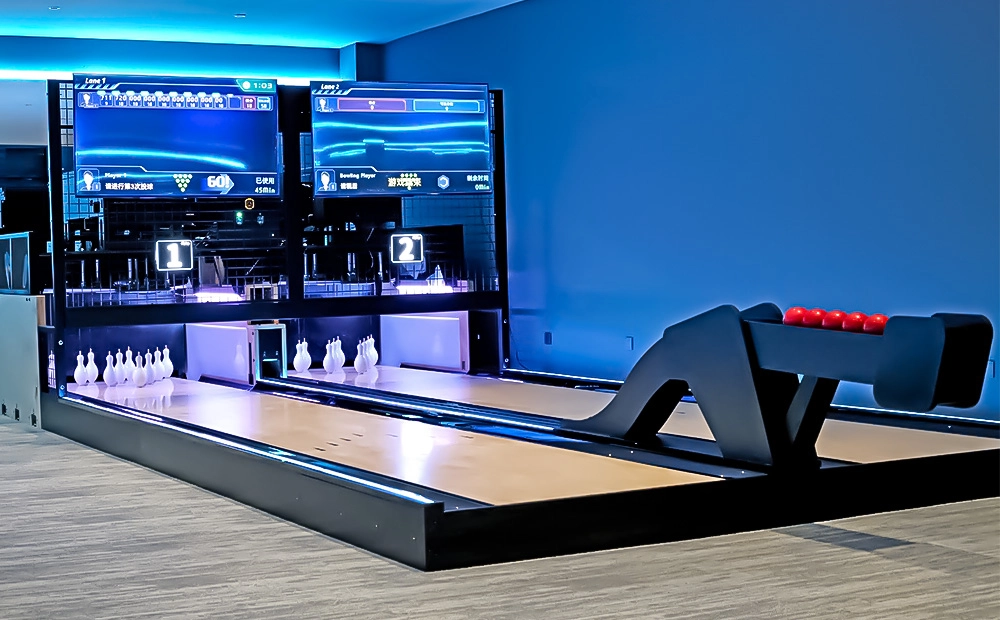
Flying Smart Duckpin Bowling
The innovative design of Flying Smart Duckpin Bowling (FSDB) makes it perfect for places like bars, billiard halls, and game centers. It makes people want to come back more often and spend more money. FSDB is fun and competitive, so it will become a new focus for social activities.
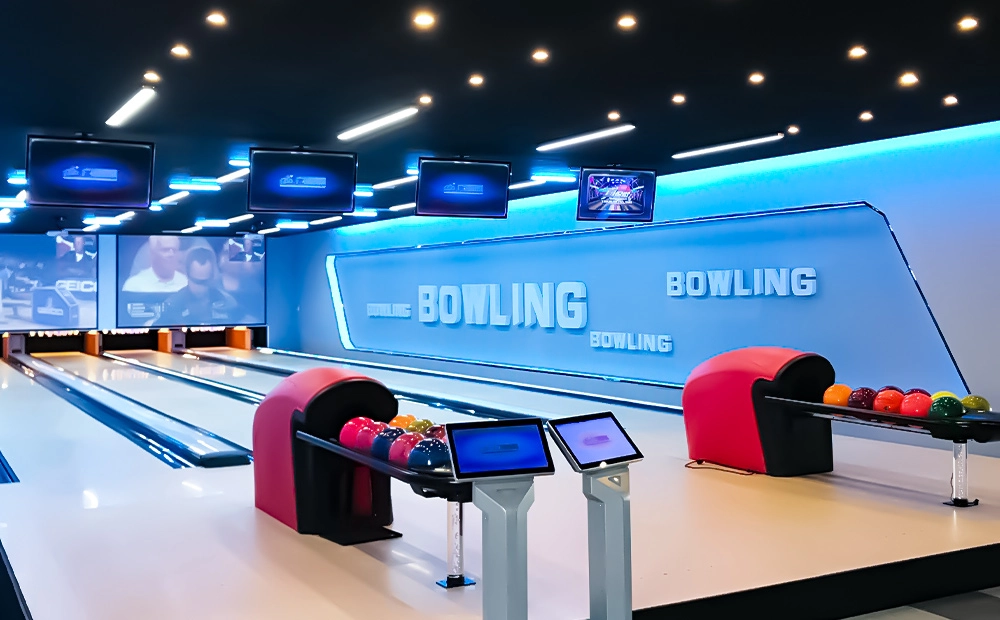
Flying Classic Standard Bowling
Flying Classic Standard Bowling (FCSB) employs the World Standard Competition Scoring System to deliver a more professional bowling experience, enabling bowlers to enjoy a professional-standard match at their convenience.
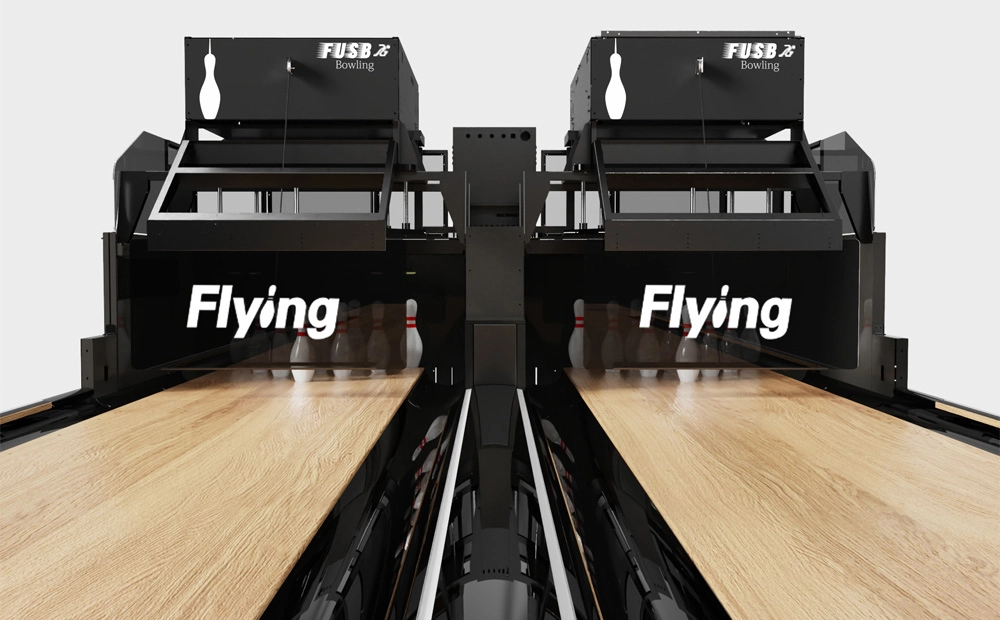
Flying Ultra Standard Bowling
Flying Ultra Standard Bowling (FUSB) Upgraded Version
The string pinsetter uses the latest technology. It offers a more enjoyable bowling experience thanks to its innovative designs and modern technology.
Ready to Build Your Bowling Center?
Share your details, and we’ll provide tailored solutions and expert guidance to help you take your bowling center to the next level.

Professional Bowling Alley Equipment Manufacturer, a one-stop solution provider for bowling alleys.
Facebook
YouTube
Linkedin
Twitter