















The Ultimate 2026 Bowling Alley Builder Handbook: From Blueprint to Grand Opening
- What Does a Professional Bowling Alley Builder Do?
- Key Takeaways: 2026 Bowling Construction Guide
- Phase 1: The Blueprint – Planning, Architecture, and Dimensions
- Phase 2: Choosing Your Equipment and 2026 Technologies
- Phase 3: The Construction Phase – Execution and Installation
- Understanding Costs and ROI for 2026 Builds
- Expert Tips: Common Mistakes to Avoid During Your Build
- Partnering with an Industry-Leading Bowling Alley Builder
- Conclusion
- How much does it cost to build a bowling alley in 2026?
- How much space is needed for a residential bowling alley?
- What is the difference between string pinsetters and traditional pinsetters?
- How long does it take to build a custom bowling alley?
- Can I install a bowling lane in my basement?
- What are the standard dimensions of a regulation bowling lane?
- What is the expected ROI for a boutique bowling entertainment center?
- How do I choose the best bowling alley builder for my project?
If you are considering custom bowling lane construction for a commercial venue or a high-end luxury home, the landscape of the bowling industry in 2026 offers more innovative and efficient solutions than ever before. From augmented reality scoring to low-maintenance string pinsetters, today's modern alleys are highly optimized entertainment ecosystems. However, transforming an empty architectural shell into a fully functioning, USBC-certified bowling center requires exact planning, specialized knowledge, and flawlessly executed logistics.
This comprehensive handbook provides an authoritative roadmap to navigating the complexities of modern bowling alley construction. By breaking down the fundamental phases—from spatial blueprints and equipment selection to financial ROI and common pitfalls—you will gain the strategic insights needed to bring your vision to life. Read on to discover how partnering with the right experts can turn your blueprint into a highly profitable grand opening.
What Does a Professional Bowling Alley Builder Do?
A professional bowling alley builder is a specialized contractor who designs, engineers, and constructs custom bowling lanes for commercial entertainment centers or luxury residential homes. They manage the entire turnkey process, from architectural layout to final regulatory testing.
The "how" and "why" behind their expertise are rooted in the highly technical nature of the sport. Bowling requires microscopic precision; even a fraction of an inch of variance in a lane's level can ruin the player experience and void certifications. Partnering with a specialized bowling alley builder ensures that all structural, electrical, and aesthetic components harmonize perfectly. Rather than coordinating between a dozen different subcontractors, a master builder consolidates the workflow.
Here is exactly what a specialized builder manages during a project:
- Architectural Layout & Assessment: Evaluating the building's load-bearing capacity and mapping out the 87-foot minimum footprint required for a regulation lane setup.
- Foundation & Soundproofing: Preparing the sub-floor and installing acoustic materials to prevent vibration and noise pollution.
- Equipment Installation: Sourcing and installing state-of-the-art pinsetters, synthetic lanes, ball returns, and digital scoring interfaces.
- Final Certification: Conducting rigorous leveling and performance tests to ensure the alley meets strict professional standards.
Key Takeaways: 2026 Bowling Construction Guide
Building a bowling alley requires meticulous pre-planning, from understanding structural space dimensions to selecting the right pinsetter technology. Engaging commercial turnkey bowling solutions streamlines this process, ensuring you meet spatial needs while integrating tech-forward systems for lower maintenance.
To guarantee a successful project in 2026, stakeholders must focus on three primary pillars: spatial reality, technological integration, and vendor consolidation. Without a firm grasp of these elements, projects frequently run over budget or fail to meet the high expectations of modern consumers.
The core elements of a modern build include:
- Space Requirements: A standard regulation lane demands a minimum footprint of 87 feet in length. This measurement excludes necessary public seating, approach zones, and concourses.
- Tech Forward: Modern 2026 builds heavily favor string pinsetters and cloud-based scoring. These systems are prized for drastically lowering maintenance requirements and achieving high energy efficiency.
- Turnkey Value: Hiring an end-to-end builder reduces multi-vendor friction, controls overhead costs, and significantly accelerates your timeline from the initial blueprint to the grand opening.
- Quick Summary: Success relies on meticulous pre-planning. A hyper-focus on structural dimensions and optimal pinsetter technology is the foundation of a profitable entertainment center.
Phase 1: The Blueprint – Planning, Architecture, and Dimensions
The blueprint phase involves evaluating structural requirements, mapping out exact lane dimensions, designing the player experience, and navigating local zoning laws. Proper planning ensures that your residential bowling alley installation or commercial build meets strict safety and spatial regulations.

During the blueprint phase, architects and engineers must collaborate closely to ensure the physical environment can support the massive weight and specialized dimensions of a bowling alley. Because lanes require entirely level surfaces, existing floors often need substantial reinforcement or complete reconstruction. Furthermore, Acoustic Soundproofing is paramount, particularly in residential settings or multi-use commercial developments, to mitigate the loud impacts of heavy bowling balls and falling pins.
Key steps during the blueprint phase include:
- Evaluating Structural Requirements: Assessing load-bearing floors, reinforcing ceiling heights (a minimum of 9 feet is recommended), and installing advanced soundproofing layers.
- Mapping Exact Dimensions: Allocating space for the 60-foot regulation lane, the 15-foot approach area, and the 4-to-6-foot mechanical pit depth for pinsetters. Alternatively, designing shortened boutique lanes for tighter footprints.
- Designing the Player Experience: Strategically integrating commercial furniture, ambient LED lighting, and premium food and beverage service layouts to maximize dwell time.
- Navigating Regulations: Securing zoning approvals, building permits, and environmental compliance certificates required for large-scale entertainment venues.
Phase 2: Choosing Your Equipment and 2026 Technologies
Choosing modern equipment means prioritizing the efficiency of eco-friendly string pinsetters over traditional machines, selecting durable synthetic lane surfaces, and integrating next-generation AR technologies. These selections maximize operational lifespan, lower energy consumption, and significantly enhance the bowler's interactive experience.
The technological landscape of bowling has undergone a massive shift. Historically, bowling centers relied on complex, free-fall mechanical pinsetters that required full-time mechanics. Today, the industry has embraced string pinsetter technology. In fact, as standardized by the United States Bowling Congress, string pinsetters were officially certified for independent competition effective August 1, 2023. This monumental shift verified that string machines offer competitive parity while slashing operational costs. Furthermore, as reported by Wikipedia, string pinsetters are fundamentally less expensive and easier to maintain, motivating bowling centers worldwide to phase them in.
Critical equipment decisions include:
- Pinsetter Showdown: Analyzing the incredible ROI of string pinsetters (which feature 80% fewer moving parts) versus traditional free-fall machines.
- Synthetic Lane Surfaces: Upgrading to modern synthetic panels that offer a maximum lifespan and optimal oil distribution, far outlasting traditional wood lanes.
- Next-Generation Technology: Integrating Augmented Reality (AR) lane projections and interactive BES X/Sync scoring systems to gamify the experience for casual players.
- Green Bowling Initiatives: Choosing eco-friendly materials and energy-efficient machinery to maintain sustainable, low-impact operations.
Phase 3: The Construction Phase – Execution and Installation
The construction phase executes the blueprint through material staging, sub-floor leveling, lane panel installation, and hardware wiring. Flawless execution during this stage guarantees accurate ball roll and a seamless integration of digital scoreboards and cloud-based management systems.
Once the room is prepped, the logistical ballet of installation begins. A single bowling lane weighs thousands of pounds, requiring specialized staging to safely deliver materials into the building. The most critical aspect of this phase is the Sub-Floor Leveling. Installers use laser-guided tools to ensure the foundation is perfectly flat. Even a one-millimeter slope can cause a bowling ball to drift off course, ruining the integrity of the game.
The structured execution process includes:
- Material Loading and Staging: Managing the heavy-lift logistics of delivering lane panels, pinsetters, and ball returns to the active build site.
- Sub-Floor Preparation: Engineering precise leveling grids across the entire 87-foot span to guarantee an accurate, predictable ball roll.
- Lane Assembly: Systematically installing the synthetic lane panels, protective gutters, automated bumpers, and sub-surface ball return systems.
- Wiring and Configuration: Connecting the complex hardware needed for overhead digital scoreboards, point-of-sale systems, and cloud-based venue management software.
Understanding Costs and ROI for 2026 Builds
Understanding bowling alley ROI and equipment costs requires analyzing upfront construction expenses against long-term operational savings. Commercial installations typically cost $45,000 to $65,000 per lane, while luxury residential projects range from $75,000 to $120,000 due to bespoke finishes.
While the initial capital expenditure is significant, Boutique Entertainment Centers (BECs) are seeing faster returns on investment than ever before. By pairing bowling with high-margin food and beverage offerings, arcade attractions, and VIP lane rentals, operators can drastically increase their revenue per square foot. Furthermore, by utilizing modern, low-maintenance equipment, the monthly operational overhead is dramatically reduced, accelerating the path to profitability.
Key financial considerations include:
- Average Cost Per Lane: Commercial projects average $45,000–$65,000 per lane, while high-end residential lanes demand $75,000–$120,000 for specialized soundproofing and custom aesthetics.
- Upfront vs. Long-Term Costs: Balancing the initial construction capital against the massive operational and maintenance savings provided by modern string pinsetters.
- Maximizing Boutique ROI: Leveraging hyper-bowling software and premium food/beverage pairings to attract high-spending corporate and party demographics.
- Navigating Financing: Exploring commercial financing options, equipment leasing, and capital investment strategies for new entertainment centers.
Expert Tips: Common Mistakes to Avoid During Your Build
Avoiding common mistakes during your build involves properly planning for soundproofing, ensuring adequate HVAC capacity, procuring post-launch maintenance tools, and selecting a unified vendor. Sidestepping these errors prevents costly delays, ensures regulatory compliance, and guarantees a smooth grand opening.
First-time builders often underestimate the mechanical and environmental demands of a bowling alley. Heavy machinery generates heat, and bowling balls generate noise. Without proactive engineering, a newly built alley can quickly become an uncomfortable and unmanageable space. Engaging experienced professionals prevents these costly oversights.
Avoid these critical mistakes:
- Mistake 1: Underestimating the need for premium soundproofing and acoustic treatments, especially in residential basements or multi-use commercial buildings.
- Mistake 2: Failing to plan adequate HVAC cooling and dedicated power supply requirements to support heavy, continuous machinery operation.
- Mistake 3: Overlooking immediate post-launch lane maintenance protocols, such as failing to procure an automated oiling machine during the initial budgeting phase.
- Mistake 4: Choosing disparate, uncoordinated vendors instead of partnering with a unified, turnkey bowling alley builder who manages the entire ecosystem.
Partnering with an Industry-Leading Bowling Alley Builder
Partnering with an industry-leading bowling alley builder provides end-to-end turnkey service, global expertise, and custom fabrication that significantly reduces build times. An expert partner prioritizes your long-term success through seamless installation, comprehensive staff training, and ongoing preventative maintenance support.
To guarantee a flawless execution, your project requires an expert partner with a proven global track record. This is where Guangzhou Flying Bowling Co., Ltd., operating since 2005, excels. Manufacturing and selling over 2,000 lanes worldwide every year, they have broken the traditional pinsetter monopoly to offer highly competitive, USBC-certified equipment. With a massive 10,000㎡ production workshop and international CE and RoHS certifications, their hardware ensures stable, reliable performance. Furthermore, their overseas branches in the US, Europe, and South America provide localized, fast-response after-sales support.
The benefits of a premier partnership include:
- End-to-End Turnkey Service: Comprehensive support ranging from initial 3D architectural renders to the final lane certification and grand opening.
- Case Study Success: Demonstrating how custom fabrication and a seamless installation process have successfully reduced build times by 20% for recent entertainment clients.
- Global Reliability: Utilizing USBC-certified string pinsetters, reliable ball returns, and state-of-the-art scoring systems manufactured in-house.
- Long-Term Support: Ensuring operational success by integrating comprehensive staff training and 24/7 preventative technical support.
Conclusion
Building a bowling alley in 2026 is a highly rewarding investment when executed with precision, modern technology, and expert planning. From the initial blueprint phase to the final equipment installation, following a structured roadmap ensures a profitable and visually stunning grand opening. Whether you are constructing a boutique commercial center or a private luxury lane, integrating eco-friendly equipment and working with a turnkey provider will safeguard your investment and maximize your long-term returns. Contact us today to optimize your custom bowling lane construction strategy.
How much does it cost to build a bowling alley in 2026?
Costs vary significantly based on location, technology, and scale. A commercial installation typically ranges from $45,000 to $65,000 per lane, including equipment and installation. High-end residential custom lanes can cost between $75,000 and $120,000 per lane due to bespoke finishes and specialized soundproofing.
How much space is needed for a residential bowling alley?
A regulation bowling lane requires a space at least 87 feet long. This includes the lane itself (60 feet), the approach area (15 feet), and the pinsetter machinery space behind the lane. Width-wise, a single lane requires about 6 to 7 feet, but a two-lane pair requires roughly 11.5 feet.
What is the difference between string pinsetters and traditional pinsetters?
Traditional pinsetters are free-fall machines with hundreds of moving parts, requiring specialized mechanics for maintenance. String pinsetters use heavy-duty nylon cords to retract and reset pins, resulting in 80% fewer moving parts. String machines are highly favored in 2026 for their lower energy consumption, reduced maintenance costs, and high reliability.
How long does it take to build a custom bowling alley?
The timeline from blueprint to grand opening generally spans 3 to 6 months for a standard project. Initial design, architectural approvals, and equipment manufacturing take the first 8-12 weeks. The physical installation of the lanes and equipment usually takes 2 to 4 weeks once the site is fully prepped.
Can I install a bowling lane in my basement?
Yes, basement installations are incredibly popular for luxury residential homes. The main challenges are ensuring an unobstructed length of at least 87 feet and having sufficient ceiling height (minimum 9 feet recommended). Proper sub-floor leveling, structural reinforcement, and acoustic soundproofing are critical for basement builds.
What are the standard dimensions of a regulation bowling lane?
A standard regulation lane is exactly 60 feet from the foul line to the headpin. The lane surface is 41.5 inches wide, containing 39 separate wood or synthetic boards. The approach area is a minimum of 15 feet long to allow bowlers adequate space for their run-up.
What is the expected ROI for a boutique bowling entertainment center?
Boutique entertainment centers (BECs) typically see a faster ROI than traditional bowling alleys, often within 3 to 5 years. This is driven by high-margin food and beverage sales, VIP lane rentals, and integrated arcade attractions. Utilizing energy-efficient equipment like string pinsetters further accelerates ROI by minimizing operational overhead.
How do I choose the best bowling alley builder for my project?
Look for a builder that offers true 'turnkey' solutions, managing both the construction and equipment installation. Check their portfolio for projects similar to your vision (e.g., luxury residential vs. large-scale commercial). Ensure they offer 2026-relevant technologies, comprehensive warranties, and ongoing maintenance support.
Buying Quality Bowling Equipment
Service
If there is a problem with the equipment, how long will it take you to respond?
We promise to provide a solution within 12 hours (24 hours for overseas customers), and serious failures will be handled first.
How to complain if you are not satisfied with the after-sales service?
You can directly contact the Global Service Director (email: mike@flyingbowling.com/phone: 0086 18011785867), and we promise to issue a solution within 24 hours.
Company
Do you have independent R&D capabilities?
We have set up an independent R&D department and have launched a number of new equipment and innovative technologies such as the smart scoring system, Flying Smart Duckpin, and oil drop machine in the past three years.
Do you have internationally certified production qualifications?
Our factory has passed ISO 9001 quality management system certification, and our products meet ASTM international bowling equipment standards.
Products
What is the noise level of the equipment?
We are well aware of the importance of a quiet and comfortable environment for bowling, so we designed sound insulation cotton and shock-absorbing pads in the equipment area and the lane area to fully reduce the noise and vibration of the equipment during operation, creating a quiet and comfortable sports space for you, allowing you to focus more on enjoying the fun of bowling.
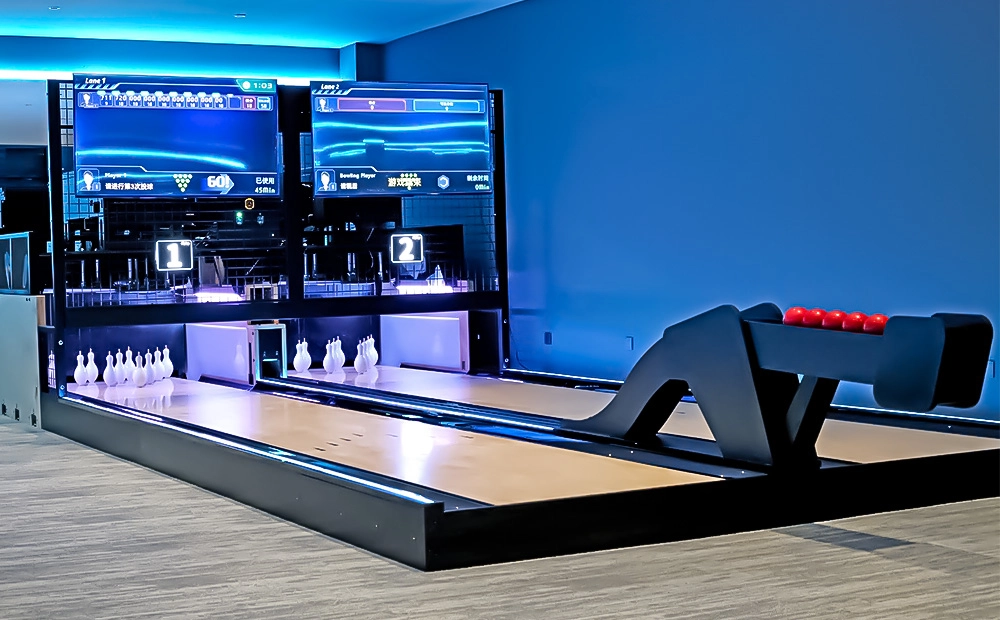
Flying Smart Duckpin Bowling
The innovative design of Flying Smart Duckpin Bowling (FSDB) makes it perfect for places like bars, billiard halls, and game centers. It makes people want to come back more often and spend more money. FSDB is fun and competitive, so it will become a new focus for social activities.
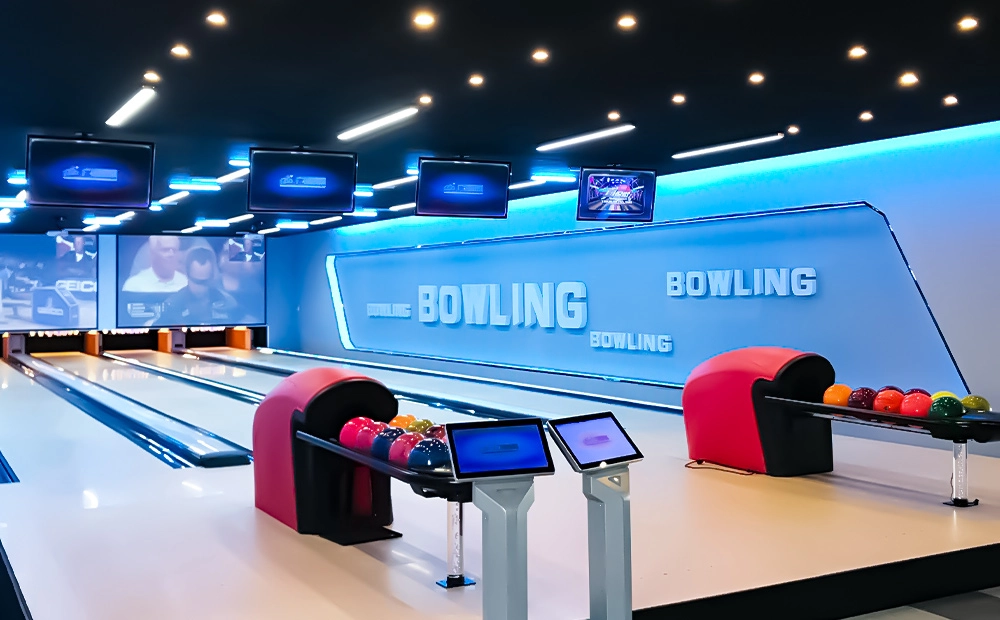
Flying Classic Standard Bowling
Flying Classic Standard Bowling (FCSB) employs the World Standard Competition Scoring System to deliver a more professional bowling experience, enabling bowlers to enjoy a professional-standard match at their convenience.
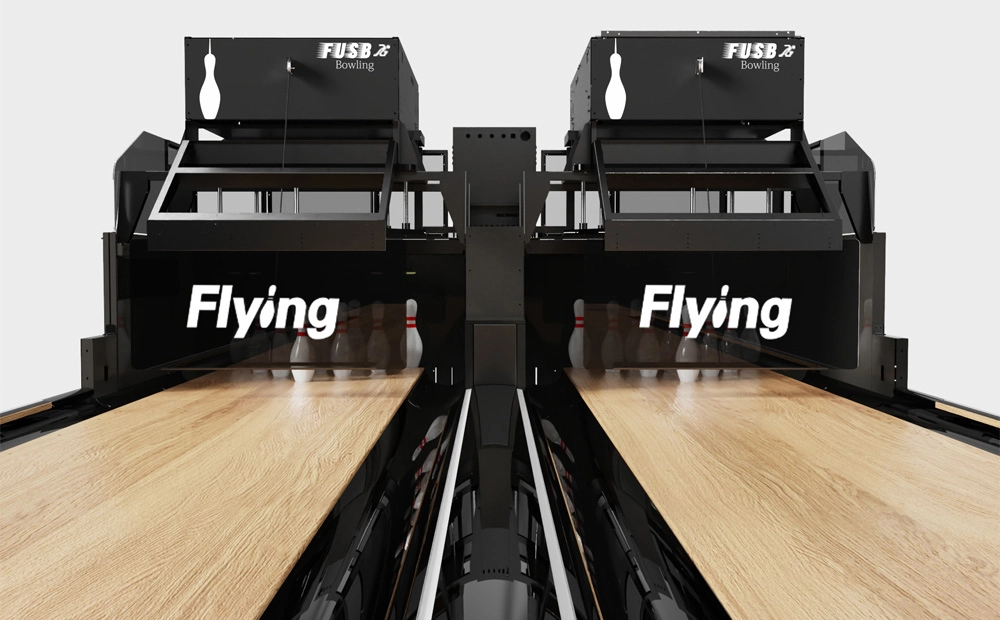
Flying Ultra Standard Bowling
Flying Ultra Standard Bowling (FUSB) Upgraded Version
The string pinsetter uses the latest technology. It offers a more enjoyable bowling experience thanks to its innovative designs and modern technology.
Ready to Build Your Bowling Center?
Share your details, and we’ll provide tailored solutions and expert guidance to help you take your bowling center to the next level.

Professional Bowling Alley Equipment Manufacturer, a one-stop solution provider for bowling alleys.
Facebook
YouTube
Linkedin
Twitter